Education, Individual Impact Drive Mission of New Climate Change Center
/Former Connecticut Commissioner of Environmental Protection and Administrator of the federal Environmental Protection Agency Gina McCarthy has made the shift from government to academia, with the launch of The Center for Climate, Health, and the Global Environment (C-CHANGE) at the Harvard T.H. Chan School of Public Health.
C-CHANGE is a new collaboration between Harvard University and Google that will seek to reduce the use of harmful chemicals in building products and materials. C-CHANGE is committed to transforming science into meaningful actions that will deliver a healthier, more just, and sustainable world, according to the university.
The Center aims to ensure that government officials, business leaders, and the public have access to the best science so they can understand the health and environmental challenges they face, why it matters to them, and how they can get engaged.
McCarthy headed the Connecticut DEP from 2004 to early 2009, and left to become head of EPA's air and radiation office before advancing to the nation’s top environmental protection job in 2013.
Appearing on Conversations on Health Care, a podcast produced by Middletown-based Community Health Center Inc., McCarthy discussed past, present and future. On the program, hosted by President and Co-founder Mark Masselli and Senior Vice President and Clinical Director Margaret Flinter, McCarthy said C-CHANGE was working to make climate change “very personal, and actionable to individuals, and families and businesses.” She added, “information is power… I want people to have that information.”
McCarthy said she understands the concerns of some in the environmental community regarding Trump Administration efforts to roll back many of the Obama-era policies, but she said it will be tougher to accomplish than most believe.
“What we did was follow the science, we followed the law, we did great public process around it and I think we did a really good job,” McCarthy said, noting that many of the rule-change proposals of the past year or so are not yet final, and may not become final. “They’re going to have a very hard time.”
 Her work at C-CHANGE is designed to accelerate and strengthen public education on climate change and pollution issues, bringing the science down to the individual level, highlighting the impacts on people, rather than the planet.
Reflecting on her time leading EPA, McCarthy said “We showed you can make progress environmentally, to preserve and protect public health, and our natural resources, but you can also, at the same time, do them in very cost effective, reasonable ways that in fact enhanced our economy and jobs.”
Last spring, Gov. Malloy appointed McCarthy to serve as a member of the Board of Directors of the Connecticut Green Bank.
At the C-CHANGE kick-off this spring, Harvard Chan School Dean Michelle Williams said “The Center will pave the way for new research and student engagement on energy systems, food and nutrition, healthier buildings, and products to benefit our school, our country, and the world.” McCarthy spoke about the importance of broadening support for environmental and climate action by calling attention to the impact of climate change on people’s health and the solutions to address it.
“Climate change isn’t about saving the planet and it’s not about politics, it’s about our kids and making sure they have the opportunity for a healthy, sustainable world,” said McCarthy. “C-CHANGE will ensure that cutting-edge science produced by Harvard Chan School is actionable—that the public understands it, and that it gets into the hands of decision-makers so that science drives decisions.”
C-CHANGE, the Harvard Office for Sustainability, and Google will work together to develop a set of public tools and resources that use the latest scientific research to inform decision-making by large institutions, purchasers, and manufacturers to help transform the marketplace to healthier alternatives. The collaboration, to the university, aims to improve public health and the well-being of communities, reduce the use of harmful chemicals and leverage lessons learned to create a model that can be replicated by other organizations.
Moving forward, the two groups intend to continue partnering with Harvard’s schools to use the campus as a living lab to test new ideas and verify performance.
 The No. 1 company on Forbes' list was Iowa-based
 Each of the six locations is highlighted on the site with information on attractions, events, restaurants, accommodations and shopping.
 ithin the past year. Bridgeport also received a walk score of 68, along with a bike score of 50. Stamford earned a walk score of 54, bike score of 39 and transit score of 38. Waterbury’s walk score was 49; bike score was 25. Danbury’s walk score was 38.
 The state currently operates advanced manufacturing programs at Asnuntuck, Housatonic, Manchester, Middlesex, Naugatuck Valley, Quinnebaug Valley and Three Rivers community colleges.
 The three institutions will work during the next few months to develop the curriculum, establish an advisory board, create a virtual inter-institutional platform, and plan to start recruiting for the first cohort of students. All three institutions have a lengthy pedigree in engineering, and effective programs to advance entrepreneurship at the undergraduate level. UNH

 The survey analysis is administered for the Points of Light Foundation by True Impact, a company specializing in helping organizations maximize and measure their social and business value, and analyzed by VeraWorks. The survey instrument consists of quantitative and multiple-choice questions that inform the Civic 50 scoring process. It is the only survey and ranking system that exclusively measures corporate involvement in communities.
 In its Corporate Social Responsibility
  prise 31 percent of Aetna’s employees, which was a key driver of our new program to provide up to $10,000 to qualified recent college graduates to help them repay education loans.”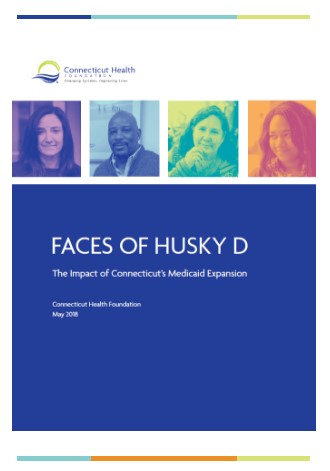
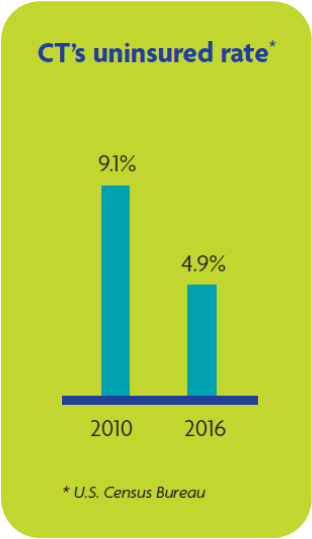
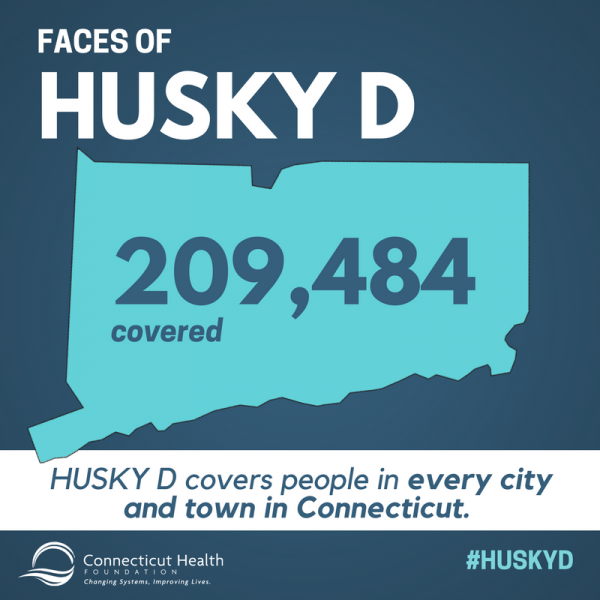 han 90 percent of the cost of the program, allowing Connecticut to cover more than 200,000 people with a relatively small budgetary impact.” Currently, the federal government pays 94 percent of the cost of coverage and the state pays 6 percent. The report also identifies challenges associated with HUSKY D, including concerns raised by health care providers about Medicaid payment rates and uncertainty in federal funding.
 The purpose of the pilot program, according to OPM, is to encourage and allow for the testing of fully autonomous vehicles (FAV) on local highways in Connecticut. The goal for the pilot program is to allow a variety of FAV testing to occur in four municipalities throughout the state, bringing Connecticut to the forefront of the innovative and burgeoning autonomous vehicle industry.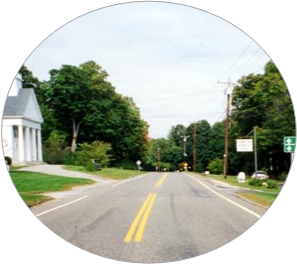
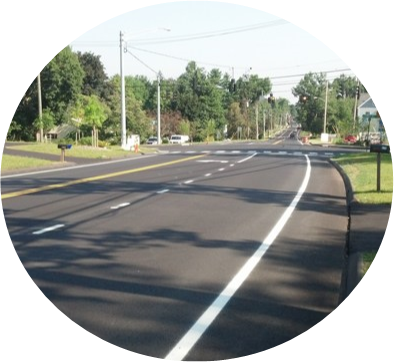 The state law outlines a framework of the minimum requirements to be included in agreements between municipalities and autonomous vehicle testers approved for participating in the Fully Autonomous Vehicle Testing Pilot Program (FAVTPP). The Connecticut law, according to the
  Westport (477), Cromwell (486) and New Fairfield (493).