Early Childhood Education Earns Strong Support in Both Political Parties, Poll Finds
/As the national political conventions get underway, advocates of early childhood education are pointing to the results of a new national poll to underscore widespread support that transcends political party. In the midst of a polarizing election cycle, 90 percent of voters – including 78 percent of Trump supporters and 97 percent of Clinton supporters – agree that Congress and the next president must make quality early childhood education more accessible and affordable to low- and middle-income families, according to the national survey.
The survey, conducted for the advocacy organization First Five Years, found that by a three-to-one margin, voters prefer the next president be someone who focuses on solutions to the country’s problems, and they’ve identified investment in early childhood education as an important solution.
Key voter groups want the federal government to help states and local communities improve access to quality early childhood education – incuding 85 percent of Hispanics, 79 percent of suburban women, 65 percent of moderate/liberal Republicans, and 58 percent of Republican women, according to the poll released by First Five Years Fund (FFYF).
“Early childhood education isn’t a partisan issue, and the poll demonstrates that Americans of all political stripes are united in their demands to make quality early childhood education more accessible and affordable,” said Kris Perry, Executive Director of the First Five Years Fund. “Candidates looking to connect with voters should be hearing loud and clear that Americans see a need for quality early learning, ranking it a top priority alongside education broadly and good-paying jobs.”
At Connecticut Voices for Children, a highly regarded research and advocacy organization in Connecticut, officials agreed that “early childhood is an issue where Democrats and Republicans can find common ground, where all candidates must devote time and attention, and ultimately where they should invest in the health and well-being of young children, families and the economy.”
In the national poll, over two-thirds of respondents believe children do not start kindergarten with the knowledge and skills they need, driven in part by a lack of affordable and successful early childhood education programs. Americans also want to rethink our education priorities, with the majority calling for more or equal investment in early education over college.
The poll also found that voters want America’s leaders to prioritize early education: 72 percent say that ages one to five are the most important for learning. In addition, a majority of Republicans, Democrats, and Independents want to invest in multiple education opportunities, including home visiting, early learning programs, and preschool services.
The poll was commissioned by the First Five Years Fund in conjunction with a bipartisan polling team of Public Opinion Strategies (R) and Hart Research (D). The sample was distributed proportionately throughout the country and is demographically representative of the electorate.
According to First Five Years, “Early childhood education for low-income children is one of the best ways to promote upward mobility that pays off for individuals and society. Every child needs effective early childhood education and development from birth to age five; research shows that low-income children are the least likely to get it. Those who experience quality early care and learning have better education, health, social and economic outcomes in life-increasing their productivity and reducing the need for spending later on.”
 Connecticut Voices for Children Executive Director Ellen Shemitz said the poll results indicate that there are potentially great rewards for leaders to work on this issue, and not many penalties. In addition, the results show the public’s willingness to devote money to this issue, and that people are looking to their elected leaders to make these investments, Shemitz pointed out.
Regarding Connecticut’s efforts to encourage and support early childhood education, officials at Connecticut Voices point out that “while we do invest in early childhood care and education more than many states, there is room for improvement to ensure both program quality and program access for children and families who need high-quality programming.”
The Connecticut Office of Early Childhood, established in 2014, recently urged public schools to focus on the attendance of kindergarten students, citing the importance of early childhood education for later academic success.
The Office’s website indicated that “study after study confirms the value of high-quality early childhood education for developing the cognitive, social and emotional skills that children need to succeed in kindergarten. But unless children attend these programs on a regular basis, they are not likely to benefit fully.”
 The site pointed out that “unless we pay attention to attendance even among young children, we are missing the opportunity to use early educational experiences to build an essential skill: showing up on time, every day to school. A growing body of research and practitioner experience shows that paying attention to attendance for our youngest children is essential.
According to the Early Childhood website, “studies have found that children who are chronically absent in preschool are five times more likely to miss more days of kindergarten. For the 2014-15 school year, 12 percent of CT’s kindergarteners were chronically absent, that is almost 550 kindergarteners who were regularly not in school. Additionally, children who are chronically absent in kindergarten and first grade are likely to have poor attendance 5 years later.”
Last month, Connecticut Early Childhood Commissioner Dr. Myra Jones-Taylor testified before the U.S. Senate Health, Education, Labor and Pensions Committee, urging Congress to allocate additional federal dollars to states for implementing key policy changes, first approved in 2014, to child care programs.
The Commissioner testified that the focus on quality, continuity of care, and basic health and safety are long overdue – and that focus should be celebrated. She pointed out, however, that the challenge for Connecticut and many other states is that the changes significantly increase the annual cost of care per child.


 suranceQuotes, found that the average increase in premiums across the country when a teen driver is added to an existing policy is 79 percent. That is a slight improvement from a few years ago, when the increase nationwide averaged 84 percent.
 Perhaps the most significant underlying factor is that each state regulates insurance differently, and those regulatory differences account for some of the variations in the study’s findings, according to insuranceQuotes. For instance, Hawaii is the only state that doesn't allow insurance providers to consider age, gender or length of driving experience when determining premiums. That means that the cost for teens doesn't differ much from the cost for adults buying auto insurance. This may also account for lower increases in states such as New York, Michigan and North Carolina, where insurance is regulated more strictly and rating factors are more stringent, insuranceQuotes points out. The increases in those states when adding a teen to an existing policy were all below 60 percent, among the lowest increases in the nation.


 In recent years, the Connecticut program, coordinated by Connecticut’s Old State House with support from Connecticut Humanities, has grow in numbers and in the quality of the students’ work, organizers point out. This year, Connecticut History Day had 10,600 points of contact with Connecticut students, teachers, parents and history professionals, including workshops for 4,500 students—twice last year’s number.


 Among the nation’s top businesses for new dad, an analysis by the website Fatherly, determined that two Connecticut-based companies – alcoholic beverages producer Diageo and financial data and analysis provider FactSet, earned slots in the top 50. Fatherly is a digital lifestyle guide for men entering parenthood.
 were Netflix, Spotify, Facebook, Patagonia, Bank of America, Pinterest, Google, Microsoft, Twitter, Airbnb, Johnson & Johnson, Accenture, MasterCard, Intuit and Intel.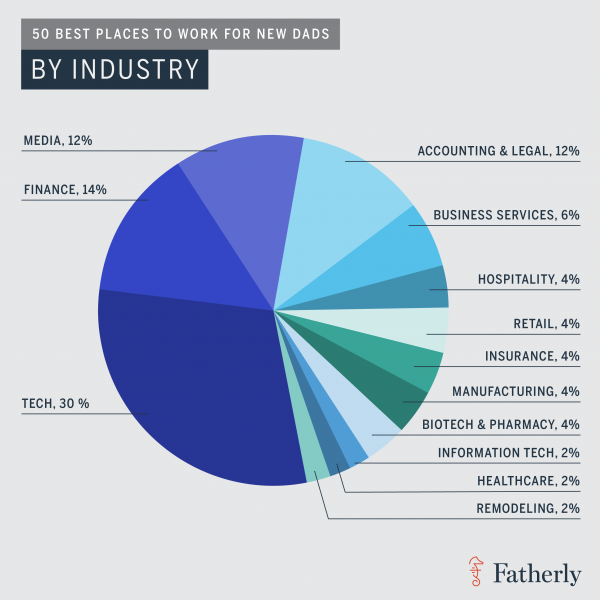
 rs Commission. Replacing them will be the Commission on Women, Children and Seniors and a Commission that merges the Latino, African-American and Asian Pacific American Commissions.
 The Latino and Puerto Rican Affairs Commission (LPRAC) was created by an act of the Connecticut General Assembly (CGA) in 1994. This 21 member non-partisan commission is mandated to make recommendations to the CGA and the Governor for new or enhanced policies that will foster progress in achieving health, safety, educational success, economic self-sufficiency, and end discrimination in Connecticut. As of 2014, the state’s Hispanic population exceeded 500,000, about 15 percent of the state’s overall population.
 ”
” Another Connecticut school has received national recognition, as Military Times ranked the School of Business at Quinnipiac University as the best business school for veterans in Connecticut and the 24th best in the nation, according to its Best for Vets: Business Schools 2016 rankings.





 The Child Care metrics included Day-Care Quality, Child-Care Costs, Access to Pediatric Services, and WalletHub’s “Best School Systems” Ranking. The Professional Opportunities category included Gender Pay Gap, Ratio of Female Executives to Male Executives, Median Women’s Salary, Percentage of Families in Poverty, Female Unemployment Rate, and Gender-Representation Gap in Different Economic Sectors. The Work-Life Balance category included Parental Leave Policy, Length of the Average Woman’s Work Week, and Women’s Average Commute Time.