Pay to Play Worsens Widening Economic Gap Evident in America's Schools, Putnam Says in Hartford
/The growing number of public schools that require students to pay a fee to participate in after school activities, such as sports or music, is exacerbating the economic class disparities in America’s schools, and diminishing opportunities for students from families of limited financial means. “Play to play must end,” said social scientist Robert Putnam, a professor of public policy at Harvard University, and author of the best-selling book Our Kids: The American Dream in Crisis, appearing in Hartford in a special event sponsored by the Hartford Foundation for Public Giving.
Putnam, who rose to cultural prominence in 2000 with his book “Bowling Alone: The Collapse and Revival of the American Community,” mixed riveting stories of the vastly different life experiences of the nation’s children, depending upon the financial wherewithal of their parents, and the dangers to every aspect of society - rich and poor - of permitting the growing disparities to continue unchecked.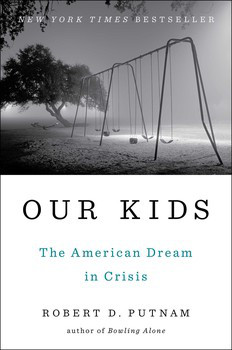
According to his data, 86 percent of students from the highest-income families participate in extracurricular activities — slightly higher than during the 1970s — but participation among the lowest-income families is down about 15 percentage points, to 65 percent.
“No one talked (50 years ago) about soft skills, but voters and school administrators understood that football, chorus, and the debate club taught valuable lessons that should be open to all kids, regardless of their family background,” Putnam writes in the book.
Pay to play policies have been evident in Connecticut, as elsewhere across the country, for some time, as reflected in data compiled by the state Office of Legislative Research (OLR) in 2012. The OLR report included information from 116 school districts. Of these, “44 charged a participation fee for high school athletics. The fees range from $25 per sport to $1,450 for ice hockey. Twenty nine school districts include a maximum amount that a student, family, or both can be charged during a single school year. Schools without a cap are generally those that charge the lowest fees.”
Following that report, legislation that would have prohibited local and regional boards of education from charging any student activity fees to students who are unable to pay such fees was considered in 2013 but not approved by the state legislature.
Last month, education officials in Norwalk proposed requiring student athletes to pay $100 each to participate athletic programs. Published reports indicated that students who participate in high school musicals in the city pay about $200 as a participation fee.
Putnam noted that although many school districts that charge such fees provide for waivers for financial need, those tend not to be used because students would rather drop a sport than be stigmatized as poor and needy. And he emphasized that dropping out of participation in after school activities worsens development and lessens chances to break away from a life of diminished opportunities. The absence of such extra-curricular participation adversely impacts both future circumstances and physiological developmental, Putnam said.
The OLR data indicated that in Trumbull, for example, a family could pay as much as $750 (or $900 including hockey) for students’ participation in sports; in South Windsor the payment was capped at $500 per family, or $800 including hockey. In Region 10, which includes the towns of Burlington and Harwinton, there was a maximum of $450 per family for participation in sports.
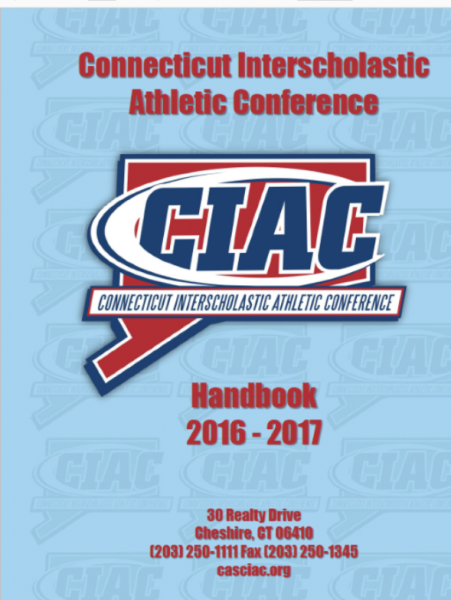 The Connecticut Interscholastic Athletic Conference Handbook for 2016-17 includes reference to the organization’s “strong opposition to the local board of education policies which establish a fee system for students who wish to participate in co-curricular or extra-curricular activities, athletic and/or non-athletic.”
Among the organizational policy positions included in the handbook, the Administrators of Health and Physical Education “feel a direct assessment on the individual families of athletes is contrary to the educational philosophy so deeply rooted in our nation, and is wrong because it places an undue tax on selected members of the community.”
“Athletics as an extra-curricular activity is unique in that it provides a possible predictor of student success in later life; and affords adolescent boys and girls an opportunity to establish a physical and social identity along with the intellectual identity they develop while in the classroom,” the Administrators of Health and Physical Education policy statement says.
The handbook section on “pay to play” continues, indicating that “In support of that notion is a pair of studies conducted by the American Testing Service and College Entrance Examining Board. The former completed a study comparing four factors thought to be possible predictors of student success: achievement in extracurricular activities, high grades in high school, and high grades in college as well as high scores on the SAT. It was found that the only factor which could be validly used to predict success in later life was achievement in extra-curricular activities.”
Adds the Connecticut Association of Public School Superintendents: “Free public education includes the student’s right to participate in activities offered by a school district. The student should not be denied participation because of lack of funds or the refusal to pay a fee.”
Putnam, speaking at the Bushnell Center for the Performing Arts to a nearly filled Belding Theater audience, recalled attending Yale University in Connecticut, and speaking in Hartford 16 years ago, when Bowling Alone was published. He stressed that there are fewer mixed-income neighborhoods than there were 50 years ago, and as a result children are less likely to go to school with people of a different social class. 
The top third of US society – whether defined by education or income – are investing more in family life, community networks and civic activities than their parents, while the bottom third are in retreat, as families fracture and both adults and children disengage from mainstream society, he pointed out. That is evident in a range of statistics, he said, proceeding to share a series of graphs and charts that underscored his thesis.
Putnam identified causes of the widening opportunity gap for the current generation of young people as the collapse of the working class family, a substantial increase in single-parent homes among the poor, economic insecurity among growing cadre of working class people, and a cultural change of people no longer looking out for other people’s kids in a way that happened in the past. The definition of “our kids,” he said, has narrowed for a community’s children, to the biological children of individual families.
This gap amounts, Putnam emphasizes, is a “crisis” for the American dream of equal opportunity. Advantages pile up for the kids born to the right parents, all but guaranteeing their own success in life – in stark contrast to the fates of those struggling at the bottom.
Among the statistics of concern raised by Putnam: affluent children with low high-school test scores are as likely to get a college degree (30%) as high-scoring kids from poor families (29%). And he called for a focus less on the costs of community college and more on helping students unfamiliar with the bureaucracy and processes of college work their way through it. “We need navigators to help these students navigate the process,” he said, making a comparison to health care, where newly diagnosed cancer patients, unfamiliar with the world they have just entered, increasingly have “health care navigators” assigned to them as guides to deal with the uncertainty they face.
Despite the preponderance of evidence showing stark disparities, Putnam says he is optimistic that the trends can be reversed. “American did it once before, after the turn of the last century,” he explains, and can do so again. He suggests that the remedy will more likely be driven from the grassroots, in individual communities, than from policies adopted by the federal government.


 Connecticut Voices for Children Executive Director Ellen Shemitz said the poll results indicate that there are potentially great rewards for leaders to work on this issue, and not many penalties. In addition, the results show the public’s willingness to devote money to this issue, and that people are looking to their elected leaders to make these investments, Shemitz pointed out.
 The site pointed out that “unless we pay attention to attendance even among young children, we are missing the opportunity to use early educational experiences to build an essential skill: showing up on time, every day to school. A growing body of research and practitioner experience shows that paying attention to attendance for our youngest children is essential.

 suranceQuotes, found that the average increase in premiums across the country when a teen driver is added to an existing policy is 79 percent. That is a slight improvement from a few years ago, when the increase nationwide averaged 84 percent.
 Perhaps the most significant underlying factor is that each state regulates insurance differently, and those regulatory differences account for some of the variations in the study’s findings, according to insuranceQuotes. For instance, Hawaii is the only state that doesn't allow insurance providers to consider age, gender or length of driving experience when determining premiums. That means that the cost for teens doesn't differ much from the cost for adults buying auto insurance. This may also account for lower increases in states such as New York, Michigan and North Carolina, where insurance is regulated more strictly and rating factors are more stringent, insuranceQuotes points out. The increases in those states when adding a teen to an existing policy were all below 60 percent, among the lowest increases in the nation.


 In recent years, the Connecticut program, coordinated by Connecticut’s Old State House with support from Connecticut Humanities, has grow in numbers and in the quality of the students’ work, organizers point out. This year, Connecticut History Day had 10,600 points of contact with Connecticut students, teachers, parents and history professionals, including workshops for 4,500 students—twice last year’s number.


 Among the nation’s top businesses for new dad, an analysis by the website Fatherly, determined that two Connecticut-based companies – alcoholic beverages producer Diageo and financial data and analysis provider FactSet, earned slots in the top 50. Fatherly is a digital lifestyle guide for men entering parenthood.
 were Netflix, Spotify, Facebook, Patagonia, Bank of America, Pinterest, Google, Microsoft, Twitter, Airbnb, Johnson & Johnson, Accenture, MasterCard, Intuit and Intel.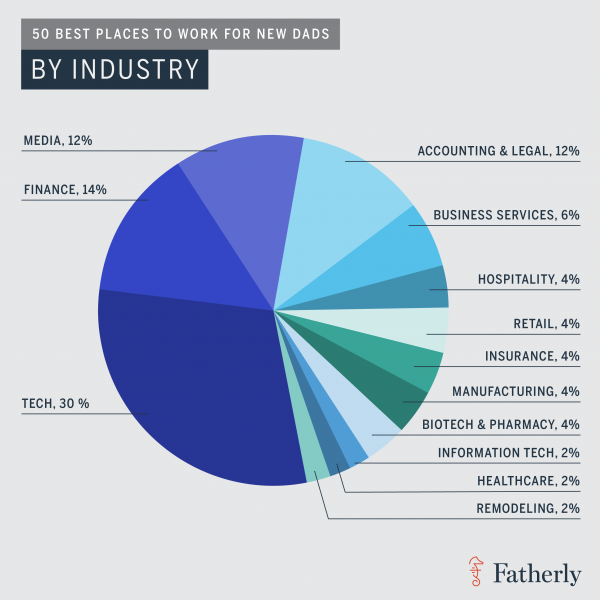
 rs Commission. Replacing them will be the Commission on Women, Children and Seniors and a Commission that merges the Latino, African-American and Asian Pacific American Commissions.

 The Latino and Puerto Rican Affairs Commission (LPRAC) was created by an act of the Connecticut General Assembly (CGA) in 1994. This 21 member non-partisan commission is mandated to make recommendations to the CGA and the Governor for new or enhanced policies that will foster progress in achieving health, safety, educational success, economic self-sufficiency, and end discrimination in Connecticut. As of 2014, the state’s Hispanic population exceeded 500,000, about 15 percent of the state’s overall population.
 ”
” Another Connecticut school has received national recognition, as Military Times ranked the School of Business at Quinnipiac University as the best business school for veterans in Connecticut and the 24th best in the nation, according to its Best for Vets: Business Schools 2016 rankings.