CT Has 3rd Lowest Teen Birth Rate in U.S.

Connecticut has the third lowest teen birth rate in the nation, and ranks among the states with the lowest incidence of low birthweight babies, preterm birth rate and percent of births to unmarried mothers, according to data from the National Center for Health Statistics of the Centers for Disease Control and Prevention. The data, reflecting statistics from calendar year 2014, indicate that Connecticut ranked  32nd in Percent of Births to Unmarried Mothers, 30th among the states in Low Birthweight Rate, and 28th in Preterm Birth Rate.  The state ranked 48th in Teen Birth Rate, third lowest in the U.S.

teen birth rateThe NCHS data also ranked Connecticut 12th in the Cesarean Delivery Rate.

The Teen Birth Rate, determined by the number of births per 1,000 females age 15-19, was 24.2 nationally.  In Connecticut, it was 11.5.  The only states with a lower rate were Massachusetts at 10.6 and New Hampshire at 11.0.  Among the other states with low teen birth rates, well below the national average, were New Jersey, Vermont, Minnesota, Rhode Island, New York, Maine and Maryland.

The highest rates were in Arkansas (39.5), Oklahoma (38.5), Mississippi (38.), Texas (37.8) and New Mexico (37.8).

birthsRegarding the percentage of babies born to unmarried mothers, a statistic long tracked by federal health officials, three states saw more than half the children born in that category.  The highest percentages were in Mississippi (54.0%), Louisiana (52.7) and New Mexico (51.3%).

Connecticut ranked 32nd, at 37.1 percent, slightly lower than the national average of 40.2 percent.  The state with the lowest rate was Utah, at 18.6 percent, followed by Colorado (22.4%), Idaho (27.8%), Washington (32.1%) and Minnesota (32.3%).

Pay to Play Worsens Widening Economic Gap Evident in America's Schools, Putnam Says in Hartford

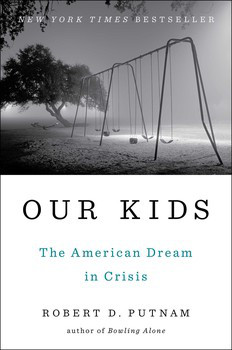
The growing number of public schools that require students to pay a fee to participate in after school activities, such as sports or music, is exacerbating the economic class disparities in America’s schools, and diminishing opportunities for students from families of limited financial means. “Play to play must end,” said social scientist Robert Putnam, a professor of public policy at Harvard University, and author of the best-selling book Our Kids: The American Dream in Crisis, appearing in Hartford in a special event sponsored by the Hartford Foundation for Public Giving.

Putnam, who rose to cultural prominence in 2000 with his book “Bowling Alone: The Collapse and Revival of the American Community,” mixed riveting stories of the vastly different life experiences of the nation’s children, depending upon the financial wherewithal of their parents, and the dangers to every aspect of society - rich and poor - of permitting the growing disparities to continue unchecked.putnam_our-kids-9781476769899_lg
According to his data, 86 percent of students from the highest-income families participate in extracurricular activities — slightly higher than during the 1970s — but participation among the lowest-income families is down about 15 percentage points, to 65 percent.

“No one talked (50 years ago) about soft skills, but voters and school administrators understood that football, chorus, and the debate club taught valuable lessons that should be open to all kids, regardless of their family background,” Putnam writes in the book.

Pay to play policies have been evident in Connecticut, as elsewhere across the country, for some time, as reflected in data compiled by the state Office of Legislative Research (OLR) in 2012.  The OLR report included information from 116 school districts. Of these, “44 charged a participation fee for high school athletics. The fees range from $25 per sport to $1,450 for ice hockey. Twenty nine school districts include a maximum amount that a student, family, or both can be charged during a single school year. Schools without a cap are generally those that charge the lowest fees.”

Following that report, legislation that would have prohibited local and regional boards of education from charging any student activity fees to students who are unable to pay such fees was considered in 2013 but not approved by the state legislature.HartfordFoundation

Last month, education officials in Norwalk proposed requiring student athletes to pay $100 each to participate athletic programs. Published reports indicated that students who participate in high school musicals in the city pay about $200 as a participation fee.

Putnam noted that although many school districts that charge such fees provide for waivers for financial need, those tend not to be used because students would rather drop a sport than be stigmatized as  poor and needy.  And he emphasized that dropping out of participation in after school activities worsens development and lessens chances to break away from a life of diminished opportunities.  The absence of such extra-curricular participation adversely impacts both future circumstances and physiological developmental, Putnam said.

The OLR data indicated that in Trumbull, for example, a family could pay as much as $750 (or $900 including hockey) for students’ participation in sports; in South Windsor the payment was capped at $500 per family, or $800 including hockey.  In Region 10, which includes the towns of Burlington and Harwinton, there was a maximum of $450 per family for participation in sports.
CIACThe Connecticut Interscholastic Athletic Conference Handbook for 2016-17 includes reference to the organization’s “strong opposition to the local board of education policies which establish a fee system for students who wish to participate in co-curricular or extra-curricular activities, athletic and/or non-athletic.”

Among the organizational policy positions included in the handbook, the Administrators of Health and Physical Education “feel a direct assessment on the individual families of athletes is contrary to the educational philosophy so deeply rooted in our nation, and is wrong because it places an undue tax on selected members of the community.”

“Athletics as an extra-curricular activity is unique in that it provides a possible predictor of student success in later life; and affords adolescent boys and girls an opportunity to establish a physical and social identity along with the intellectual identity they develop while in the classroom,” the Administrators of Health and Physical Education policy statement says.

The handbook section on “pay to play” continues, indicating that “In support of that notion is a pair of studies conducted by the American Testing Service and College Entrance Examining Board. The former completed a study comparing four factors thought to be possible predictors of student success: achievement in extracurricular activities, high grades in high school, and high grades in college as well as high scores on the SAT. It was found that the only factor which could be validly used to predict success in later life was achievement in extra-curricular activities.”

Adds the Connecticut Association of Public School Superintendents: “Free public education includes the student’s right to participate in activities offered by a school district. The student should not be denied participation because of lack of funds or the refusal to pay a fee.”

Putnam, speaking at the Bushnell Center for the Performing Arts to a nearly filled Belding Theater audience, recalled attending Yale University in Connecticut, and speaking in Hartford 16 years ago, when Bowling Alone was published.  He stressed that there are fewer mixed-income neighborhoods than there were 50 years ago, and as a result children are less likely to go to school with people of a different social class.  Putnam

The top third of US society – whether defined by education or income – are investing more in family life, community networks and civic activities than their parents, while the bottom third are in retreat, as families fracture and both adults and children disengage from mainstream society, he pointed out. That is evident in a range of statistics,  he said, proceeding to share a series of graphs and charts that underscored his thesis.

Putnam identified causes of the widening opportunity gap for the current generation of young people as the collapse of the working class family, a substantial increase in single-parent homes among the poor, economic insecurity among growing cadre of working class people, and a cultural change of people no longer looking out for other people’s kids in a way that happened in the past.  The definition of “our kids,” he said, has narrowed for a community’s children, to the biological children of individual families.

This gap amounts, Putnam emphasizes, is a “crisis” for the American dream of equal opportunity. Advantages pile up for the kids born to the right parents, all but guaranteeing their own success in life – in stark contrast to the fates of those struggling at the bottom.

Among the statistics of concern raised by Putnam: affluent children with low high-school test scores are as likely to get a college degree (30%) as high-scoring kids from poor families (29%).  And he called for a focus less on the costs of community college and more on helping students unfamiliar with the bureaucracy and processes of college work their way through it.  “We need navigators to help these students navigate the process,” he said, making a comparison to health care, where newly diagnosed cancer patients, unfamiliar with the world they have just entered, increasingly have “health care navigators” assigned to them as guides to deal with the uncertainty they face.

Despite the preponderance of evidence showing stark disparities, Putnam says he is optimistic that the trends can be reversed.  “American did it once before, after the turn of the last century,” he explains, and can do so again.  He suggests that the remedy will more likely be driven from the grassroots, in individual communities, than from policies adopted by the federal government.

Early Childhood Education Earns Strong Support in Both Political Parties, Poll Finds

As the national political conventions get underway, advocates of early childhood education are pointing to the results of a new national poll to underscore widespread support that transcends political party. In the midst of a polarizing election cycle, 90 percent of voters – including 78 percent of Trump supporters and 97 percent of Clinton supporters – agree that Congress and the next president must make quality early childhood education more accessible and affordable to low- and middle-income families, according to the national survey.

The survey, conducted for the advocacy organization First Five Years, found that by a three-to-one margin, voters prefer the next president be someone who focuses on solutions to the country’s problems, and they’ve identified investment in early childhood education as an important solution.early childhood

Key voter groups want the federal government to help states and local communities improve access to quality early childhood education – incuding 85 percent of Hispanics, 79 percent of suburban women, 65 percent of moderate/liberal Republicans, and 58 percent of Republican women, according to the poll released by First Five Years Fund (FFYF).

“Early childhood education isn’t a partisan issue, and the poll demonstrates that Americans of all political stripes are united in their demands to make quality early childhood education more accessible and affordable,” said Kris Perry, Executive Director of the First Five Years Fund. “Candidates looking to connect with voters should be hearing loud and clear that Americans see a need for quality early learning, ranking it a top priority alongside education broadly and good-paying jobs.”

At Connecticut Voices for Children, a highly regarded research and advocacy organization in Connecticut, officials agreed that “early childhood is an issue where Democrats and Republicans can find common ground, where all candidates must devote time and attention, and ultimately where they should invest in the health and well-being of young children, families and the economy.”survey says 1

In the national poll, over two-thirds of respondents believe children do not start kindergarten with the knowledge and skills they need, driven in part by a lack of affordable and successful early childhood education programs. Americans also want to rethink our education priorities, with the majority calling for more or equal investment in early education over college.

The poll also found that voters want America’s leaders to prioritize early education: 72 percent say that ages one to five are the most important for learning. In addition, a majority of Republicans, Democrats, and Independents want to invest in multiple education opportunities, including home visiting, early learning programs, and preschool services.

The poll was commissioned by the First Five Years Fund in conjunction with a bipartisan polling team of Public Opinion Strategies (R) and Hart Research (D). The sample was distributed proportionately throughout the country and is demographically representative of the electorate. 

According to First Five Years, “Early childhood education for low-income children is one of the best ways to promote upward mobility that pays off for individuals and society. Every child needs effective early childhood education and development from birth to age five; research shows that low-income children are the least likely to get it. Those who experience quality early care and learning have better education, health, social and economic outcomes in life-increasing their productivity and reducing the need for spending later on.”

survey says 2Connecticut Voices for Children Executive Director Ellen Shemitz said the poll results indicate that there are potentially great rewards for leaders to work on this issue, and not many penalties.  In addition, the results show the public’s willingness to devote money to this issue, and that people are looking to their elected leaders to make these investments, Shemitz pointed out.

Regarding Connecticut’s efforts to encourage and support early childhood education, officials at Connecticut Voices point out that “while we do invest in early childhood care and education more than many states, there is room for improvement to ensure both program quality and program access for children and families who need high-quality programming.”

The Connecticut Office of Early Childhood, established in 2014, recently urged public schools to focus on the attendance of kindergarten students, citing the importance of early childhood education for later academic success.

The Office’s website indicated that “study after study confirms the value of high-quality early childhood education for developing the cognitive, social and emotional skills that children need to succeed in kindergarten. But unless children attend these programs on a regular basis, they are not likely to benefit fully.”

FFYF_1The site pointed out that “unless we pay attention to attendance even among young children, we are missing the opportunity to use early educational experiences to build an essential skill: showing up on time, every day to school. A growing body of research and practitioner experience shows that paying attention to attendance for our youngest children is essential.


According to the Early Childhood website, “studies have found that children who are chronically absent in preschool are five times more likely to miss more days of kindergarten. For the 2014-15 school year, 12 percent of CT’s kindergarteners were chronically absent, that is almost 550 kindergarteners who were regularly not in school. Additionally, children who are chronically absent in kindergarten and first grade are likely to have poor attendance 5 years later.”

Last month, Connecticut Early Childhood Commissioner Dr. Myra Jones-Taylor testified before the U.S. Senate Health, Education, Labor and Pensions Committee, urging Congress to allocate additional federal dollars to states for implementing key policy changes, first approved in 2014, to child care programs.

The Commissioner testified that the focus on quality, continuity of care, and basic health and safety are long overdue – and that focus should be celebrated. She pointed out, however, that the challenge for Connecticut and many other states is that the changes significantly increase the annual cost of care per child.


Former UConn QB Cochran Says Football Puts Players in Harm’s Way, Urges End to "Cycle of Silence"

Former UConn quarterback Casey Cochran, who retired from the sport at age 20 after suffering his 13th concussion, said this week that “There are problems with the game that need to be addressed. As it is played right now, tackle football — with its pads and helmets — puts players in harm’s way, all of the time, regardless of age and ability.” Cochran, writing a first-person story about his experiences with football and concussions in The Players’ Tribune, an online site founded by Derek Jeter, issued an alert to others who’ve journeyed through the sport, or continue to compete:

“I want to say to all former, current and future athletes who have or will suffer a concussion: Do not hide it. Tell your coaches, medical staff, parents, friends and teammates. Get treatment. The cycle of silence hurts more and more people each year.”

Cochran, from Monroe, explained that in the 18 months since his decision, after suffering a concussion on the last play of the first game of UConn’s 2014 season, against Brigham Young University, “I still feel the lingering effects from my many concussions. Life is a balancing act now. Some days it’s hard to wake up before noon. Sometimes I don’t want to leave my bed at all. In high school, I had a 3.9 GPA. Now I have trouble focusing and performing well in my graduate-school classes.”Cochran

He warned that “Those who play football, particularly those who begin in their youth, are given a glamorized version of the sport – one where camaraderie, discipline, toughness and leadership are highlighted and the wretchedness is ignored and swept under the rug. As a result, we fall in love with and value the good and push aside the bad.”

Cochran recalled that “I probably should have stopped playing football in eighth grade after my third concussion, but I was afraid to speak up. Afraid of disappointing people who had invested in my career. Afraid of who was I was without football. I wish I hadn’t hid the three concussions I had in one week during my junior year of high school, but I was afraid that college recruiters would find out.”

Even with increasing awareness of the risks of concussions, Cochran said the near and long-term effects haven’t led to enough changes.  “The only word I know to describe the first few moments after a concussion is limbo — there are a few moments between the world that you were just a part of and your new brain-injured reality,” Cochran explained.  “My head was seized with tremendous pressure, and that same awful, familiar depression from previous head injuries came over me — like a dark, heavy blanket, swallowing me up.”

With it all, he retains optimism: “There is life outside of the white lines. A lot of life. Stepping away from football was one of the scariest things I’ve ever had to do. I felt lost for a long time. For a little over a year, I felt like I was somewhere, deep in the ocean, being pulled by the currents. But what pulled me back from the depths was hope. Hope that things would get better.”logo

He now finds purpose in being an advocate for player safety, speaking to audiences, doing interviews and writing a book about his experiences.  To those going through what he did, during his 14 years of playing football, he says “If you feel alone, you aren’t. Chances are, there are a lot of people out there who have some idea of what you’re going through. Just keep looking. Reach out.”

Added Cochran: “Sometimes it’s nice to admit that things aren’t O.K.: ‘Hello, my name is Casey, and I have anxiety and depression.’ It may be permanent. It may be just the beginning. I don’t know what the future has in store for me and it will be some time before the medical field can paint a clearer picture for me. I may have CTE right now. I might have dementia at 50. My entire future is uncertain.”

Add a Teen Driver to Policy? Rates Double in CT, 8th Highest Increase in Nation

Adding a teen driver to the family automobile insurance policy drives up rates.  That’s true everywhere across the United States, and in Connecticut the increase is among the highest in the nation, almost doubling the policy's premium. A new survey reveals that the average premium increase in Connecticut when adding a teen driver to an existing policy is 96.3 percent, which is the 8th highest increase in the U.S.  The only states with higher jumps in premiums are New Hampshire, Rhode Island, Arizona, Wyoming, Ohio, Oregon and Maine.

The study, by inCT top 10suranceQuotes, found that the average increase in premiums across the country when a teen driver is added to an existing policy is 79 percent.  That is a slight improvement from a few years ago, when the increase nationwide averaged 84 percent.

The study also found that it costs more to add a young male driver than a female driver to an existing policy - adding a male teen to a married couple's policy results in a national average premium increase of 91 percent, compared to an increase of 67 percent for a female.  The difference is wider the younger the driver.  For 16 year old male driver is added, for example, the premium cost more than doubles on an existing policy.

Connecticut has consistently been ranked in the top ten, with among the highest increases when a teenage driver is added to an existing policy.  A year ago, Connecticut was ranked 7th, with a 98.3 percent increase in insurance rates after adding a teen driver.  The previous year, Connecticut ranked 5th in the annual survey, with an increase of 102.4 percent in the policy cost when a teen driver was added.counties

According to the data, the largest increases in Connecticut were in New Haven County, more than 11 percent higher than the statewide average.  Tolland, Windham, Middlesex and New London counties were slightly lower than the statewide average; Hartford and Fairfield counties slightly higher.

Laura Adams, senior insurance analyst at insuranceQuotes stressed that states differ considerably when it comes to the cost of insuring a teenage driver – noting that a teen added to a married adult's auto policy in New Hampshire results in an average annual premium increase of 125 percent, while in Hawaii the average increase is just 17 percent.  New Hampshire had the highest increase in each of the past three years.

"Insurance companies have pretty wide lattitude in many states in the reasons for raising rates, and in some states adding a teen really moves the needle," Adams told CT by the Numbers.  As for Connecticut, Adams said she doesn't see any reprieve anytime soon.  "Teen drivers are among the riskiest, and companies take advantage of the opportunity to raise rates."

genderPerhaps the most significant underlying factor is that each state regulates insurance differently, and those regulatory differences account for some of the variations in the study’s findings, according to insuranceQuotes.  For instance, Hawaii is the only state that doesn't allow insurance providers to consider age, gender or length of driving experience when determining premiums. That means that the cost for teens doesn't differ much from the cost for adults buying auto insurance.  This may also account for lower increases in states such as New York, Michigan and North Carolina, where insurance is regulated more strictly and rating factors are more stringent, insuranceQuotes points out.   The increases in those states when adding a teen to an existing policy were all below 60 percent, among the lowest increases in the nation.


Adams noted that people often notice the difference in rates when they move to another state.  "You are penalized for where you live.  States handle this very differently."

She added that "regardless of the costs to insure your teen driver, safety is the No. 1 priority. We suggest parents educate teens on the dangers of driving, especially when it comes to texting while driving, or driving under the influence.”

Kathy Bernstein, senior manager of the National Safety Council's Teen Driving Initiatives, told insuranceQuotes that the riskiness of teens behind the wheel may be "leveling off."  For instance, in 1978 there were nearly 10,000 teen driver deaths, according to the Insurance Institute for Highway Safety (IIHS). That number has dropped every year since then. In 2014, the number of teen driver deaths was about 2,600.  The percentage of teens on the road has steadily declined as well. According to a recent study from the University of Michigan, 69 percent of 17-year-old Americans had a license 30 years ago. Now, less than half have a license - 45 percent.

Adams indicated that as teen drivers get older and gain driving experience, rates tend to come down, unless, of course, they happen to have an accident in which they are at fault.  In those instances, "very high rates" result.

For the annual study, insuranceQuotes and Quadrant Information Services examined the economic impact of adding a driver between the ages of 16 and 19 to a family's existing car insurance policy.  The insuranceQuotes website provides consumers with a free, easy way to compare insurance quotes online for auto, home, health, life and business policies.

rates increase

Connecticut Students Know Much About History; Stand Out in National Contest

Hamilton.  Say the name these days, and people almost reflexively think of the hit Broadway show.  But for Connecticut students Juliana Rodrigues, Max Bueno, Samantha Gilbert, Emily Strickland, and Joseph Zarif from Memorial Middle School in Middlebury, Hamilton brings to mind more recent history. The students won two Special Awards for their project, Alexander Hamilton Explores a Financial System for the New Nation of America, at the National History Day Competition for middle school and high school students, held this month in Maryland.  They middle-schoolers won the U.S.  Constitution Award and the Special Award in History in the Federal Government.323943_orig

Connecticut History Day is a program for students in grades 6-12 that encourages exploration of local, state, national, and world history.  After selecting a historical topic that relates to an annual theme, students conduct extensive research using libraries, archives, museums, and oral history interviews. Students analyze and interpret their findings, draw conclusions about their topic's significance in history, and create final projects that demonstrate their work.

Connecticut History Day is one of 57 affiliate programs of the highly regarded National History Day program. Student projects developed by students in Connecticut are entered into a series of competitions, from the local to the national level, where professional historians and educators evaluate them.

The students from Middlebury were not the only Connecticut students to shine on the national stage this year.5856079_orig

  • Mia Porcello, a middle school student from St. Timothy School in West Hartford, captured a national title by winning First Place in the Junior Individual Exhibit Category for her entry Florence Wald: Exploring Medical Boundaries, Exchanging Hospitals to Hospice.
  • Shay Pezzulo, a high school student from Classical Magnet School in Hartford, captured CHD’s second national title of the year by winning First Place in the Senior Individual Website Category for her entry Duel and Duality: New Journalism, New York. Pezzulo also attended "Breakfast on the Hill" with members of Congress during her trip to the NHD Contest - an event sponsored by the National Endowment for the Humanities.
  • The Outstanding Connecticut Entry Award from the Senior Division was awarded to Nicole Wood, Juliana Salamone, Katherine Hurst and Flora Dievenich for their group project, Women Airforce Service Pilots and the Flight for Equality. They are students at Greenwich High School and were also finalists in the Senior Group Performance Category.
  • The Outstanding Connecticut Entry Award from the Junior Division was awarded to Hunter Dale and Noah Vasington for their group project, Branch Rickey: Branching Off to New Ideas. They are students at Mansfield Middle School in Storrs and were also finalists in the Junior Group Exhibit Category.
  • Rosie the Riveter, an exhibit created by Claire Graham, Hana Previte, Isabel Saltzman, and Lauren White was one of only 57 projects featured at the National Museum of American History’s "National History Night" on Wednesday, June 15. They are students at Wilton High School.

The students, who helped Connecticut stand-out at the national competition, range from first-time program participants to history day veterans and from AP students to students who are struggling in school, according to officials.  The national competition was held June 12-16 at the University of Maryland.

logo_nationalHistoryDay2016In recent years, the Connecticut program, coordinated by Connecticut’s Old State House with support from Connecticut Humanities, has grow in numbers and in the quality of the students’ work, organizers point out. This year, Connecticut History Day had 10,600 points of contact with Connecticut students, teachers, parents and history professionals, including workshops for 4,500 students—twice last year’s number.



"Good strategic thinking by our History Day team has increased the number of students who learn and grow through this program," said Sally Whipple, Executive Director of Connecticut's Old State House. "Old State House workshops, resources and coaching have helped students develop high quality projects based on sound research. We serve thousands of students through this program, but more important than the number served, is the quality of that service. Students develop critical thinking, writing and research skills, along with increased confidence, curiosity and the ability to ask and find answers to compelling questions. The Old State House staff strives to do this every day through all of its programs. It's great to see student work that we've helped nurture receive the highest National History Day honors possible."

This is the fifth consecutive year that Connecticut students have placed at the national contest and appears to be the first time that Connecticut students have won two first place awards. The initiative in Connecticut is in line with the state’s relatively new Social Studies Framework and helps students build confidence, as well – as does the recognition, both in state and at the national level. 9075899_orig

Earlier this year, state contest winners were determined at a day-long event hosted at Central Connecticut State University.  That followed regional contests held in Torrington, New Haven, Fairfield, Mansfield, Manchester and Hartford. Among the statewide category winners, at the high school level,  were students from Hartford, Farmington, Manchester, Norwich, Weston, Wilton, Westport, Southbury, Woodbury, Greenwich, Ellington, New Haven and Wallingford.  Topics ranged from the Panama Canal to Pequot Ware, Immigration Policy to Women Airforce Pilots, 20th Century Psychiatry to War of the Worlds, Cheney Brothers to Langston Hughes.

The road to National History Day (NHD) begins in Connecticut’s classrooms and home schools where well over 2,000 students choose topics reflecting an annual NHD theme, conduct research and analysis and create an exhibit, performance, website, paper or documentary that shares their findings. Of these, more than 1,250 students competed in this year’s regional contests, with over 400 of the winners going on to the State Contest, which sends first and second-place winners on to Nationals.

https://youtu.be/6pt2R_5cXQs


Connecticut Is 2016’s 2nd Best State for Working Dads; Two Norwalk Businesses Earn Spot Among Nation’s Top 50 for New Dads

Working fathers in Connecticut are in a great place, according to a newly released analysis.  Connecticut is ranked only behind only Minnesota as the 2nd Best State for Working Dads, a glimpse of good news as Father’s Day approaches. Nearly 93 percent of dads with kids younger than 18 in the labor force, according to the personal-finance website WalletHub, which conducted an in-depth analysis of the Best & Worst States for Working Dads.fathers day

The top 10 states were Minnesota, Connecticut, Vermont, Massachusetts, New Jersey, Wisconsin, Iowa, Kansas, Virginia and North Dakota.  At the bottom of the list were Mississippi, West Virginia, Alaska and Nevada.

WalletHub analyzed the work-life balance, health conditions, financial well-being and child-rearing environments for working dads in the 50 U.S. states and the District of Columbia, using 20 key metrics, which range from day care quality to male life expectancy.

To identify the best and worst states for working dads, WalletHub analyzed the various factors in the work-life balance that affect paternal roles in the 50 states and the District of Columbia, focused on four key dimensions of fatherhood: 1) Economic & Social Well-Being, 2) Work-Life Balance, 3) Child Care and 4) Health.  Among the 20 factors included were parental leave policy, commute time, day care quality, pediatric services, median income, unemployment rate, and mental health.wallethub

Leading to its overall ranking of second in the analysis, Connecticut was 13th in “economic and social well-being,” third in “work-life balance,” eighth in “child care,” and third in “health.”  Among the sub-categories, Connecticut was:

  • 2nd – Male Life Expectancy at Birth
  • 2nd – % of Kids Younger than 18 with Dad Present Living in Poverty
  • 2nd – “Parental Leave Policy” Score
  • 6th – Access to Pediatric Services
  • 6th – % of Men Who Report Adequate or Any Physical Activity
  • 7th – Male Uninsured Rate
  • 14th – Average Freshman Graduation Rate for Men
  • 16th – Mortality Rate due to Heart Disease per 100,000 Men
  • 17th – Mean Hours Worked per Day Among Males
  • 19th - Median Income for Families (Dad Present) with Kids Younger than 18 Years, Adjusted for Cost of Living

50 new dadsAmong the nation’s top businesses for new dad, an analysis by the website Fatherly, determined that two Connecticut-based companies – alcoholic beverages producer Diageo and financial data and analysis provider FactSet, earned slots in the top 50.  Fatherly is a digital lifestyle guide for men entering parenthood.
Just a handful of states had companies on the list:  California (18), New York (9), Oregon (4), Massachusetts (3) and Georgia, North Carolina, Washington DC, and Connecticut, with two each.

Norwalk’s Diageo ranked 34th, and was praised for policies that include “employees receive up to 8 hours of school activity leave (up to 40 hours per year) so you won’t have to miss your kid’s big game or school play.”  FactSet, headquartered in Norwalk, ranked 46th.  The company was praised because it “recently upped it’s paternity leave from one week to 4.”  FactSet has 8,000 employees in 21 countries.  Diageo is a global leader in beverage alcohol with iconic brands in spirits, beer and wine, producing well-known brands from more than 200 sites in over 30 countries.

The top companiesdiagio factset were Netflix, Spotify, Facebook, Patagonia, Bank of America, Pinterest, Google, Microsoft, Twitter, Airbnb, Johnson & Johnson, Accenture, MasterCard, Intuit and Intel.
In addition, nine small businesses described as “leading the way,” were change.org (San Francisco), Laughing Planet Café (Portland), Upworthy (New York), Blue Corona (Maryland),  Badger Balm (New Hampshire), Square Root (Austin), Able Lending (Austin), Happy Family (New York) and ustwo (New York).

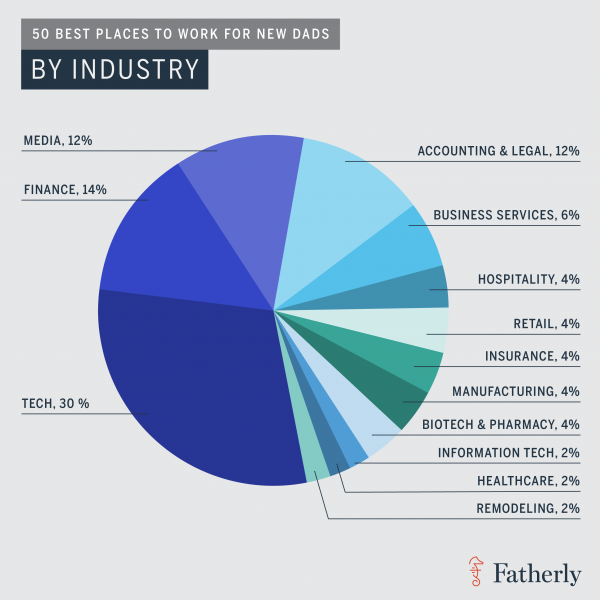
When Fatherly’s 50 Best Places To Work For New Dads was a year ago, nearly half the companies featured offered between one and 2 Fatherly_BestDadJobs_Sendoff-01-1weeks of paid leave to fathers. Twelve months later, 7.5 weeks is the average, 35 percent of companies offer between 6 and 8 weeks, and another 12 companies offer between 10 weeks and a full year, the website pointed out, attributing much of the increase to tech companies, which make up nearly a third of companies on the top 50 list.

Data used to create the WalletHub report were obtained from the U.S. Census Bureau, the U.S. Bureau of Labor Statistics, the Council for Community and Economic Research, the Centers for Disease Control and Prevention, the National Center for Education Statistics, the National Partnership for Women & Families, the American Urological Association, the Social Science Research Council, Child Care Aware of America and WalletHub research.

Six State Commissions, Victims of Budget Consolidations, Disappear After Decades-Long Record of Achievement

After 43 years, the ironically-named Permanent Commission on the Status of Women began the organization’s final newsletter with an ironic observation:  “the PCSW had its most successful legislative session ever, celebrating the passage of four bills instrumental in protecting women's health and safety.” The PCSW is one of six legislative commissions eliminated in a last-minute budget compromise at the end of the legislative session a month ago.  The six ceased to exist on Thursday (June 9).  In their place will be two Commissions, each a mash-up of three of the organizations.

Wiped from the roster of state agencies are the PCSW, Legislative Commission on Aging, Commission on Children, Latino and Puerto Rican Affairs Commission, African American Affairs Commission and Asian Pacific American Affailogo-for-webrs Commission.  Replacing them will be the Commission on Women, Children and Seniors and a Commission that merges the Latino, African-American and Asian Pacific American Commissions.
All staff members were effectively laid off, some applied for the handful of jobs that are to exist in support of the new Commissions.  The volunteer Commissioners will be holdovers, meaning that 63 Commissions will remain in place to set policy direction.

The 23 year old Commission on Aging was eliminated as Connecticut rapidly approaches a new, long-term reality—older adults will comprise an increasingly large proportion of the population.  At least 20 percent of almost every town’s population in the state will be 65 years of age or older by 2025, with some towns exceeding 40 percent.  Already, Connecticut is the 7th oldest state in the nation.Official_Logo_md

The Asian Pacific American Affairs Commission, the most recent of the six, was established in 2008 to respond to a growing population in Connecticut.  With the smallest budget, the agency struggled to gain traction, and was just beginning to fulfill its mission when the end arrived.  Connecticut's Asian American population grew from 95,368 in 2000 to 157,088 in 2010 – a 65% increase. Asians represent the majority minority in 40 percent of Connecticut school districts, according to the Commission. apacc_logo5-300x151

The Permanent Commission on the Status of Women was formed in 1973 to study and improve Connecticut women’s economic security, health and safety; to promote consideration of qualified women to leadership positions; and to work toward the elimination of gender discrimination.

Over the next four decades, the organization played a pivotal role in the passage of more than 50 significant pieces of legislation, often placing Connecticut at the forefront of progress towards greater justice or equal treatment for women.

That was certainly true in 2016, in what turned out to be, as was once said in a different context, the best of times and the worst of times.  This year, PCSW advocated for major initiatives that gained legislative approval:

  • Allow judges to remove firearms during temporary restraining orders in domestic violence;
  • Make affirmative consent the standard for investigating alleged campus sexual assaults;
  • Establish a working group to study possible labor violations in the nail salon industry;
  • Eliminate the discriminatory tax on feminine hygiene products and diapers;
  • Dramatically strengthen anti-trafficking laws by: shifting the focus of arrests in prostitution cases to the "demand side"; raising penalties against buyers of sex; removing the "mistake of age" defense; and requiring hotels and motels to keep records of those who rent rooms by the hour; and
  • Give judges authority to remove parental rights from rapists in cases of clear and convincing evidence of sexual assault resulting in pregnancy.

Established in 1997, the mission of the African-American Affairs Commission (AAAC) was to improve and promote the economic development, education, health and political well-being of the African-American community in the State of Connecticut.  The Commission has been at the forefront of a range of issues impacting the African American community in Connecticut, and its demise occurs when race relations and equal opportunity remain under heavy scrutiny in Connecticut and across the country.   AAAC Logo

Glenn A. Cassis Executive Director of the African-American Affairs Commission, when the consolidation plan was announced, said merging the panels will cause "irreparable damage to the African-American community in Connecticut."

"The elimination of AAAC tells the African-American community that their issues are not important to the state,'' Cassis wrote in an open letter to the leaders of the General Assembly. "The message that resonates is that despite the successful efforts of the past to eliminate the disparities that exist for this constituency in education, health, economic development, criminal justice and incarceration, and social well-being have become marginalized. Years of progress made has been cut short from being fully impacted to the level that this growing segment of Connecticut’s population deserves and expects."

downloadThe Latino and Puerto Rican Affairs Commission (LPRAC) was created by an act of the Connecticut General Assembly (CGA) in 1994. This 21 member non-partisan commission is mandated to make recommendations to the CGA and the Governor for new or enhanced policies that will foster progress in achieving health, safety, educational success, economic self-sufficiency, and end discrimination in Connecticut.  As of 2014, the state’s Hispanic population exceeded 500,000, about 15 percent of the state’s overall population.

In an Open Letter, LPRAC Executive Director Werner Oyanadel said “The decision to eliminate LRPAC does not in any way diminish the significant pride of the Commissioners and LPRAC staff, present and past, in the far-reaching and often ground-breaking work that has been accomplished to advance the quality of life for our state’s steadily growing Latino population.”  He added that “the end of a distinguished and impactful decades-long history does not diminish or eviscerate the landmark laws, policy-changing research and enduring impact of LPRAC on countless families, businesses and individuals of Hispanic heritage, and all the citizens of Connecticut.”

The Commission on Children, established in 1985, was borne of the legislature’s desire for the development of “policies that would ensure the health, safety, and education of Connecticut children.”  Said long-time Executive Director Elaine Zimmerman: “We feel we’ve succeeded beyond anyone’s wildest hopes, taking a leading role in issues as important—and diverse—as closing the achievement gap in reading, school climate, immunization, disaster planning for families, school readiness, children’s mental health, home visitation, youth employment, equity, and poverty reduction.landmarks

One of the testimonials on the PCSW website, said succinctly: “The commission boldly tackles the issues that matter to my survival and prosperity! Their work to identify and eradicate inequality (whether of the deliberate kind or not), to serve as a public voice for women’s issues which are underrepresented in all public spheres, and to engage the public is integral in working toward a fair and just society.”

Regarding the state’s Latino population, Oyanadel said “the successor combined Commission will not be nearly the same; we can only hope that its impact will not be diluted or weakened, though we are concerned that our community will have a softer voice advocating for those issues of particular importance in and impact on the Latino community.”

Back in 2011, when consolidations and eliminations were under consideration by legislators, but ultimately not approved, as was the case repeatedly since the 2008 recession, Gov. Malloy told the CT Mirror: "If they asked my advice, I'd consolidate a bunch of them."

And in 2016, it came to pass.

National Recognition for Charter Oak, Quinnipiac, Fairfield As State Stand-outs

Charter Oak State College, Connecticut’s public online college, has been ranked #2 of 100 colleges scored in the recently compiled Best College for Returning Adults. The national rank was awarded by College Factual and reported on the Forbes.com website. “We are very proud of this ranking. It speaks to the flexibility of and demand for our online workforce relevant programs, such as our new Master of Science in Organizational Effectiveness and Leadership, and the intense and successful focus on our mission of helping adults complete college degrees,” said Ed Klonoski, President, Charter Oak State College.

College Factual’s rankings specifically address “non-traditional students who actually make up the majority of degree-seekers” and include the following categories: students returning to college after dropping out or transferring; working adults seeking flexible options; students seeking distance learning options; and professional who want to utilize life experience to earn college credit.

Of Charter Oak, the website indicated “about 80% of the public school’s students are part-timers, and its online courses in liberal arts studies are among its most popular for returning adults.”  Factors deemed as “high importance” by College Factual were accreditation and early career salary boost.

Founded in 1973, Charter Oak State College is Connecticut’s only public online college, offering associate and bachelor’s degree completion programs in high-demand fields including Health Information Management, Health Care Administration, Cyber Security and Business Administration.

school logosAnother Connecticut school has received national recognition, as Military Times ranked the School of Business at Quinnipiac University as the best business school for veterans in Connecticut and the 24th best in the nation, according to its Best for Vets: Business Schools 2016 rankings.

The organization, made up of Army Times, Navy Times, Air Force Times and Marine Corps Times, focused on culture and curriculum that cater to military veterans when conducting and scoring the fourth annual Best for Vets: Business Schools survey, a highly respected analysis of a graduate business school's complete offerings for veterans. As with all of the Best for Vets rankings, Best for Vets: Business Schools is an editorially independent news project that evaluates the many factors that make an institution a good fit for military veterans.

"Veterans have told us they were attracted to a business degree because it wouldn't tie them down to a certain industry," said Amanda Miller, editor of Best for Vets. "The survey lets us recognize the graduate business schools with close military connections that truly take vets' success to heart."Forbes

Matthew O'Connor, dean of the School of Business, said, "The School of Business is proud to be selected as a 2016 Best for Vets Business School by the Military Times. As an AACSB-accredited business school, we offer a wide variety of high-quality business programs and student services”

He added, “Our excellent internship program and enviable track record for helping graduates secure full-time employment is particularly attractive to veterans. Quinnipiac is proud of the service of military personnel and veterans and celebrates the contributions they make to our University."

The rankings were published in full in the issues of Army Times, Navy Times, Air Force Times and Marine Corps Times and online.

Quinnipiac University also recently announced that the Hamden-based university will be adding a School of Engineering in the fall, breaking off from what has been the School of Business and Engineering, which offered engineering courses to students during the past four years.  The School of Engineering becomes that university’s ninth school leading to a bachelor of science degrees. It will of offer engineering degrees in civil, industrial, mechanical, software engineering and computer science.

Dr. Justin Kile has been appointed the founding dean of the new school after previously serving as Quinnipiac’s associate dean of engineering since 2013. He will guide the school through the Accreditation Board for Engineering and Technology’s yearlong approval process.

Regarding business schools in the state, Bloomberg recently concuded a study of the best U.S. undergraduate business schools, ranking Fairfield No. 1 in Connecticut with an overall national ranking of 43rd.The school jumped 15 spots from last year's rankings.
The other Connecticut business schools on the list were University of Connecticut, ranked 72nd; Quinnipiac University, 91st; Sacred Heart University, 92nd; University of Hartford, 101st; and the U.S. Coast Guard Academy, ranked at number 104. The elements that contributed to the rankings included an employer survey, student survey, starting salaries of graduates and internships available as part of the curriculum.

Another distinction for Fairfield University: the school is among nine universities nationwide to receive accreditation from the International Dyslexia Association (IDA) and its affiliate, the Center for Effective Reading Instruction, for having met the standards outlined in IDA’s Knowledge and Practice Standards for Teachers of Reading.dyslexia

The Certificate of Advanced Study (6th year), Reading and Language Development program in GSEAP received the designation.

The IDA Standards provide a framework for course content in university and other teacher preparation programs, offering research-supported documentation of what teachers ought to know and be able to demonstrate when teaching dyslexic students.  The standards also apply to the teaching of other struggling readers or the general student population.

The goal of the standards initiative is to promote consistent and high-quality teacher preparation to improve outcomes for those who struggle with written language. Fairfield’s Sixth Year Professional Certificate in Reading and Language Development is open to those who have received their master’s in education degree.

"We are very excited about this national recognition from IDA. Elementary teachers and even Reading Specialists are not prepared with the tools and training to diagnose and intervene with children with dyslexia; this program addresses that," said Robert Hannafin, Phd., Dean of GSEAP. "We are committed to helping all students read and particularly struggling readers."

Number of Special Education Students in CT Schools Continues to Increase, Data Shows

The number of Connecticut students in kindergarten through 12th grade with disabilities eligible for special education and related services has increased by nearly 6,000 between the 2008-09 school year and the current school year, as the overall student population has dropped by more than 32,500 students in that time. Data included in a new website developed by the Connecticut State Department of Education indicates that the prevalence of special education in Connecticut schools has increased from 11.6 percent of students to 13.4 percent of students over the past seven years.stat

The prevalence of autism has doubled in the overall school population, from eight-tenths of one percent in 2008-09 to 1.6 percent in the current year.  The percentage of students with learning disability has also increased, while the percentage with speech or language impairment has dropped, as a percentage of the overall student population.

Overall, the Special Education K-12 count in 2008-09 was 64,187 students.  In the 2015-16 school year, the number has climbed to 70,055, an eight percent increase, even as the total student count has gone from 555,411 to 522,906.

The website points out that “Prevalence rate is a statistic about the identification of students with disabilities eligible for special education and related services,” adding that “Connecticut has seen increases in the number and percent of students with disabilities statewide over the last five years.”

The site also notes that the overall decreasing public school enrollment causes the prevalence rate to appear to grow at a must faster rate than one would perceive from actual special education count data.web FT

Connecticut State Department of Education Commissioner Dianna R. Wentzell launched the new website, www.edsight.ct.gov, in late April.  It is designed to strengthen transparency and streamline online access to important school and district information.  The site integrates information from over 30 different sources – some reported by districts and others from external sources.

“The launch of our new data portal is a critical step in our mission to ensure all Connecticut students have access to the kind of high-quality education that prepares them for success in college, career and civic life,” Commissioner Wentzell said.

Over the coming months, additional information and reports will be made accessible to the public through this portal. The site is the culmination of more than two years of work and development by the Department with support from important partners, including the state Department of Administrative Services.

The Department also joined the world of social media last week with the launch of an official Facebook page and Twitter account. The Department’s Facebook page address is http://www.facebook.com/ctdepartmentofeducation. On Twitter, the Department is @EducateCT.

SpedTable_Prev