With Varied Stories to Tell, State Authors Win 2017 Connecticut Book Awards
/The Connecticut Book Awards returned from a five-year hiatus with a rousing ceremony and the selection of winners from among finalists in four categories: Fiction, Non-Fiction, Poetry and Young Readers. The competition was coordinated by Connecticut Humanities and the Connecticut Center for the Book, and the awards ceremony was held Sunday at the Mark Twain House & Museum in Hartford.
West Hartford author Okey Ndibe was awarded the 2017 Connecticut Book Award for Non-Fiction for Never Look an American in the Eye, published by Soho Press. The Fiction winner was Robert H. Patton of Darien for Cajun Waltz, published by Thomas Dunne Books. In the Young Readers, The Weight of Zero, written by Karen Fortunati and published by Delacorte Press, was selected. The Poetry winner was Fugitives by Danielle Pieratti, published by Lost Horse Press.
One hundred nine titles were submitted as candidates for the Book Awards between January 1 and April 19, 2017 and after review against the guidelines, one hundred titles were admitted into the judging process. Books published in 2016 were eligible for the awards.
Each category had five judges with expertise in the literary arts. They reviewed the titles over three months using criteria appropriate to the category. Seventeen titles made it to the finalist list. Nominated authors must currently reside in Connecticut and must have lived in the state at least three successive years or have been born in the state, or the book must be substantially set in Connecticut.
In accepting the award, Ndibe, a journalist and educator, said that “literature is central to what binds us together as a community.” Ndibe’s funny, charming, and penetrating memoir tells of his move from Nigeria to America, examines the differences between Nigerian and American etiquette and politics; recalls an incident of racial profiling just thirteen days after he arrived in the US, in which he was mistaken for a bank robber; considers American stereotypes about Africa (and vice-versa); and juxtaposes African folk tales with Wall Street.
Fortunati, who described her debut novel as a “story of hope and resilience” in accepting the award, recently completed Trinity College’s master’s program in American Studies. She recalled that as part of her studies, she visited the Mark Twain House & Museum, which made the ceremony location especially fitting.
The book’s subject is mental illness, specifically bipolar disorder, and “it explores the shame, stigma and anxiety that often complicate the management of this chronic condition,” Fortunati explains on her website. “The issue is personal to me having witnessed the impact of depression and bipolar disorder in relatives and friends. My goal was to write a story of hope for teens who struggle with mental illness.”
 Pieratti, who teaches English at South Windsor High School, relocated to Connecticut from upstate New York five years ago. She said “I have been nurtured by this state since I moved here,” and expressed appreciation to her colleagues in South Windsor. She has taught at the college and high school level, and was recipient of the Idaho prize for Poetry in 2015. Her poetry “explores the mundane moments and materials that make up ordinary days and finds there the ambiguities of mystery, shadow, and song,” the CT Center for the Book indicated.
Cajun Waltz, the Fiction winner by Robert H. Patton, is set in southwest Louisiana, a "tale of family, music, love, and picturesque mayhem" that explores “three generations of the volatile clan” as they “grapple with the region’s economic struggles and racial tensions.”
In addition to the award recipients, Gray Jacobik, University Professor Emerita at Eastern Connecticut State University, received Lifetime Achievement recognition in Poetry.
The awards were presented annually between 2002 and 2011, and were re-established by CT Humanities this year. The nominated books for the 2017 Connecticut Book Awards, by category:
Fiction
- Back Lash by Chris Knopf
- I’ll Take You There by Wally Lamb
- Shadows of Paris by Eric D. Lehman
- Cajun Waltz by Robert H. Patton
- Beneath a Shooting Star by Susan Harrison Rashid
Non-Fiction
- Rare Light by Anne Dawson
- Never Look an American in the Eye by Okey Ndibe
- The Lost White Tribe by Michael Robinson
Poetry
- The Banquet by Gray Jacobik
- Barrel Children by Rayon Lennon
- The Meeting House by Marilyn Nelson
- Fugitives by Danielle Pieratti
Young Readers
- All Rise for the Honorable Perry T. Cook by Leslie Connor
- The Weight of Zero by Karen Fortunati
- Ada’s Violin by Susan Hood
- The Unexpected Everything by Morgan Matson
- Good Night, Bat! Good Morning, Squirrel! by Paul Meisel
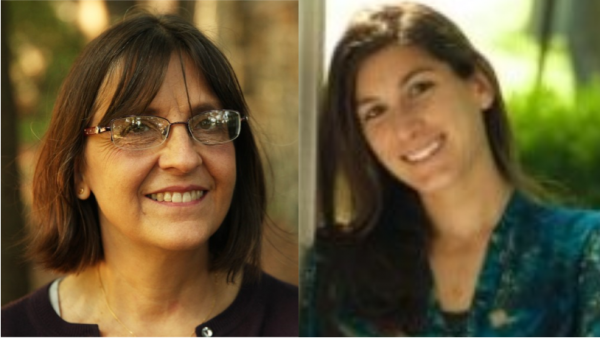
Images above (L to R): Okey Ndibe, Karen Fortunati, Danielle Pieratti, Robert H. Patton

 District teams identify one exemplary teacher from within their teaching populations. Each district nominee completes the state application in the ensuing months and submits it to the State Department of Education. Applications are distributed to members of a reading committee, and the results are tabulated to identify approximately fifteen semi-finalists.


 Food and beverage companies often target marketing for nutrient-poor products such as candy, sugary drinks, snack foods, and fast-food restaurants to Hispanic audiences, including youth, the researchers state. They cite previous research that has documented disproportionate exposure to unhealthy food marketing by Hispanic youth in their communities and on TV, but theirs is the first examination of the phenomenon on the internet.
 g vulnerable populations,” according to the publication’s website, “with the goal of providing optimal outcomes and ultimately health equity for all.” The journal intends to provide coverage ranging from translational research to prevention, diagnosis, treatment, and management of disease and illness, in order to serve as a primary resource for organizations and individuals who serve these populations at the community, state, regional, tribal, and national levels.

 his 12 year old son and a friend play a game in their backyard in Fairfield, using a perforated plastic golf ball and a broomstick handle. They had given up on baseball and softball – not enough players for two teams, not enough space for a field, and too many broken windows.
 The National Toy Hall of Fame receives thousands of nominations annually. Whiffle Ball was nominated, but not selected, in 2015. The final 2017 toy inductees, chosen on the advice of a national selection advisory committee, will be announced at The Strong museum on Thursday, November 9. Only two or three of these finalists will join other iconic toys in the hall and sit alongside past inductees such as Barbie, LEGO, Monopoly, Rubik’s Cube, and Star Wars action figures.
 The Strong’s National Toy Hall of Fame recognizes toys that have engaged and delighted multiple generations, inspiring them to learn, create, and discover through play. Criteria for induction include: Icon-status (the toy is widely recognized, respected, and remembered); Longevity (the toy is more than a passing fad and has enjoyed popularity over multiple generations); Discovery (the toy fosters learning, creativity, or discovery through play); and Innovation (the toy profoundly changed play or toy design).

 There are a series of steps that your body goes through to develop immunity through vaccination, the


 In Stamford, CHDI assisted in training school social workers and psychologists to deliver

 The National Institutes of Health estimates that between six to 17 percent of school-age children have some form of dyslexia, although not all of those students have been identified by their schools.


 In May, Jepsen announced that Connecticut joined with 46 other states and the District of Columbia in an $18.5 million settlement with the Target Corporation to resolve the states' investigation into the retail company's 2013 data breach. The settlement represented the largest multistate data breach settlement achieved to date. That breach affected more than 41 million customer payment card accounts and contact information for more than 60 million customers. Connecticut will receive $1,012,936 from the settlement, which will be deposited in the state's General Fund.