Goodbye Columbus? Indigenous Peoples Day Gains Another CT School District
/West Hartford’s Board of Education voted this month to mark Indigenous People’s Day, rather than Columbus Day, in the town’s schools beginning next year. Bridgeport schools made the change in 2015, and the New London school district replaced Columbus Day with Indigenous Peoples Day in 2016. There are no Connecticut municipalities that have voted to change the name of Columbus Day. In 2017, Rep. Josh Elliott of Hamden introduced legislation at the state level to make the change, but the proposal died in a legislative committee and was not voted on by either the House or Senate.
 Instead of honoring Christopher Columbus, the Indigenous Peoples’ Day recognizes Native Americans, who were the first inhabitants of the land that later became the United States of America. Advocates for the switch to Indigenous Peoples Day argue that Columbus did not “discover” America in 1492 but instead began the colonization of it.
The states of Minnesota, Alaska and South Dakota celebrate Indigenous People’s Day or Native Americans Day, instead of Columbus Day.
TIME magazine has reported that with the exception of Santa Cruz, Calif., and the state of South Dakota, which adopted the similar Native American Day in place of Columbus Day in 1990, the jurisdictions that have chosen to celebrate Indigenous Peoples Day have done so relatively recently, with cities like Minneapolis and Seattle voting to celebrate Indigenous Peoples Day instead in 2014, and Los Angeles doing so last year, with the observance to begin in 2019. In 2016, the state of Vermont (by gubernatorial proclamation) and city of Phoenix, AZ celebrated Indigenous Peoples Day. When the city of Austin adopted Indigenous Peoples’ Day in October 2017, the resolution stated that the city wanted to encourage schools to teach this history.
For decades, Native American activists have advocated abolishing Columbus Day, which became a federal holiday in 1937. On the 300th anniversary of Columbus’ landing, the Society of St. Tammany, or the Columbian Order, organized the first celebration of Columbus Day on Oct. 12, 1792, according to the Library of Congress. In 1934, President Franklin D. Roosevelt designated Oct. 12 as the national holiday called Columbus Day. It became a federal holiday honored annually on the second Monday in October in 1971.
Tracey Wilson, a former social studies teacher at Conard who is also town historian, told we-ha.com that it’s important to “help our students distinguish between nostalgia and history.” Today’s world is different than it was when Columbus Day was first celebrated in 1892 and when the day became a national holiday in 1934, she said.
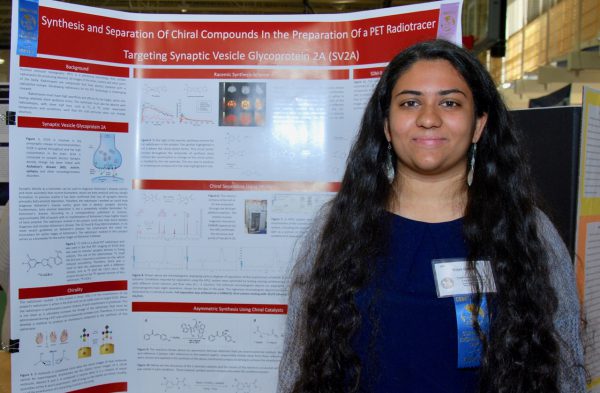 The primary objective of the fair is to attract young people to careers in mathematics, science, and engineering while developing critical thinking and public speaking skills. Through their participation in the fair, students are encouraged to pursue independent work using proper research methods.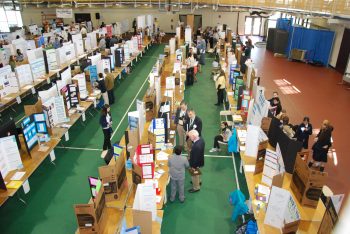
 teachers and administrators are armed,” 85 percent said they would not; 15 percent thought they would.

 The deadline for submission for the 2018 Connecticut Book Awards is April 20, 2018. Finalists will be announced in September and winners announced in October. For more information, visit:
  The most expensive average elementary school tuition cost is also on the East Coast, and Connecticut leads the way. The average private elementary school tuition is $13,412, with Massachusetts ($10,822), New Hampshire ($10,773), Virginia ($10,755), and New York ($10,513) rounding out the top five.
 In a
In a 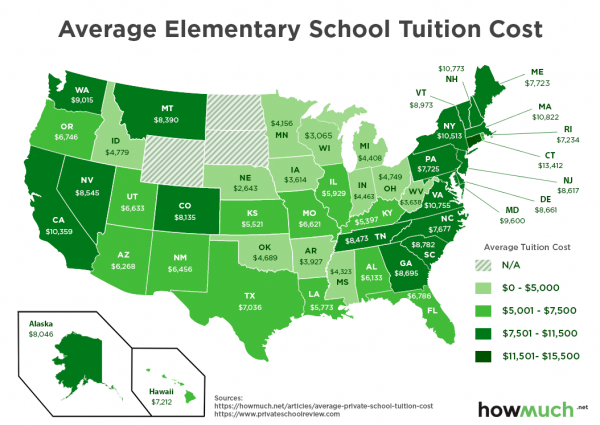

 The report defines Eastern Connecticut as the Community Foundation of Eastern Connecticut service area: 42 towns that include 453,000 people, 227,000 women. The population of the region is 80% white, 9% Latina, 4% Black and 4% Asian. Approximately 33,700 residents, or 7 percent, are foreign born. Looking ahead, the report noted that the population of women ages 65 and up is projected to grow significantly over the next decade; estimated to increase 44 percent by 2025.


 According to “The State of Languages in the U.S.: A Statistical Portrait,” Connecticut was one of seven states, along with New Jersey, Pennsylvania, Maryland, Vermont, New Hampshire and Wisconsin, where more than 30 percent of K-12 students were enrolled in language. As of 2014, only twelve states had more than one in four elementary- and secondary-school students studying languages other than English.
 image of Michelle Obama’s face,” the researchers pointed out.
 The Yale School of Public Health also