Connecticut Adds High School Certificate of Global Engagement
/Much has been said but less has been done to encourage Connecticut students to prepare for an ever more connected and interdependent world. Until now. The State Board of Education has voted to establish a Connecticut Certificate of Global Engagement, which high school students can earn by completing specific aspects of the curriculum, and aims to prepare “globally competent students who are college and career ready.” The Certificate would be noted on high school transcripts.
The Connecticut Certificate of Global Engagement was established, according to the curriculum overview, “to recognize public high school graduates who have successfully completed a global education curriculum and engaged in co-curricular activities and experiences that fostered the development of global competencies and global citizenship.”
“In today’s intricately interconnected world, informed citizens require an increasingly broader base of knowledge and perspective, because local communities, societies and economies are directly affected by events and trends that occur well beyond national borders,” the newly adopted curriculum guidelines point out.
The Certificate is based on the guidelines of the Connecticut Social Studies Frameworks and American Council on the Teaching of Foreign Languages (ACTFL) World Readiness Standards, and builds upon the recommendations of the Council of Chief State School Officers (CCSSO). It supports student literacy as defined  by the Common Core Standards and provides a pathway for 21st Century Skills.
Officials stress that the Certificate does not require additional resources in local school districts, “as all coursework would already be part of the curriculum. The Certificate, however, gives school districts an opportunity to evaluate the entire school curriculum through the lens of global knowledge.”
The mission of the Certificate program, officials explain, is to provide Connecticut students a “pathway to gain global knowledge and skills that will increase their competitiveness and ability to succeed in college and career and their participation as informed citizens. In today’s global marketplace, it is in the long-term economic, social, and democratic interests of the United States, Connecticut, and local communities to encourage and facilitate international connections in the community, state and beyond.”
To be recognized for the Certificate, students will need to complete the following requirements:
- coursework in world languages;
- coursework with strong global implications and analysis;
- extracurricular activities and experiences with global themes; and
- a global service learning or action project.
The guidelines indicate that through coursework and co-curricular activities, globally competent students will demonstrate the following competencies:
- investigate and express ideas about the world beyond their immediate environment;
- recognize and articulate their own and others’ perspectives;
- communicate ideas effectively with diverse audiences; and
- translate ideas into appropriate actions to address a contemporary global issue.
 Globally-Focused Coursework would require at least 7.0 credits or demonstration of mastery and Globally-focused Student Activities would require competency in global citizenship through active participation in “at least one or more co-curricular and other school-sponsored or endorsed activities over at least 3 years of their high school experience with suggested involvement of a total of at least 15 hours.”
The guidelines for the Certificate of Global engagement were approved at the Board’s May 2 meeting and is now available for high schools throughout the state to implement. A copy of the guidelines appears on the State Department of Education website alongside the state’s Social Studies Frameworks and Resources.
The curriculum plan was developed by a 24-member committee including Stephen Armstrong, the state’s Social Studies Consultant in the Department’s Academic Office, David Bosso, President of the Connecticut Council for the Social Studies, Robert Rader, Executive Director of the Connecticut Association of Boards of Education, high school teachers, superintendents, language specialists, college professors and representatives of the World Affairs Council of Connecticut.

 The top five female names in Connecticut in 2017 were Olivia (230), Emma (219), Ava (169), Mia (162) and Sophia (159). The leading names selected for boys were Noah (222), Liam (208), Logan (189) Jacob (187), and Michael (175).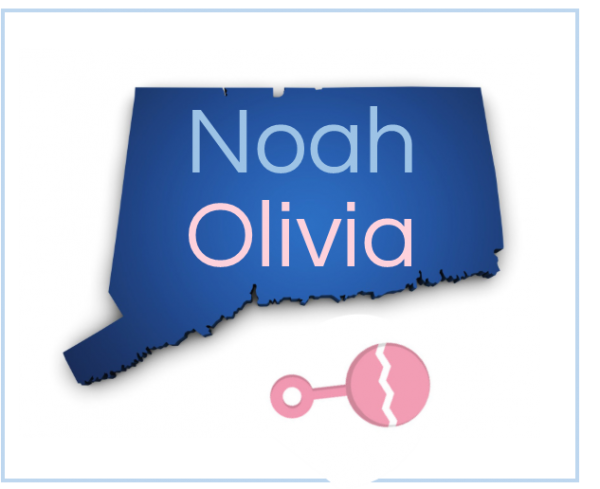


 “We understand, by all accounts, many of them may be using products that closely resemble a USB flash drive, have high levels of nicotine and emissions that are hard to see. These characteristics may facilitate youth use, by making the products more attractive to children and teens. These products are also more difficult for parents and teachers to recognize or detect. Several of these products fall under the JUUL brand, but other brands, such as myblu and KandyPens, that have similar characteristics are emerging.”
 Fran Rabinowitz has been a dedicated and respected Connecticut educational leader for over 30 years. Prior to her appointment at CAPSS, she served as Associate Commissioner of Education for the State of Connecticut, Superintendent of Hamden Public Schools, and Interim Superintendent of Bridgeport Public Schools.

 Instead of honoring Christopher Columbus, the Indigenous Peoples’ Day recognizes Native Americans, who were the first inhabitants of the land that later became the United States of America. Advocates for the switch to Indigenous Peoples Day argue that Columbus did not “discover” America in 1492 but instead began the colonization of it.
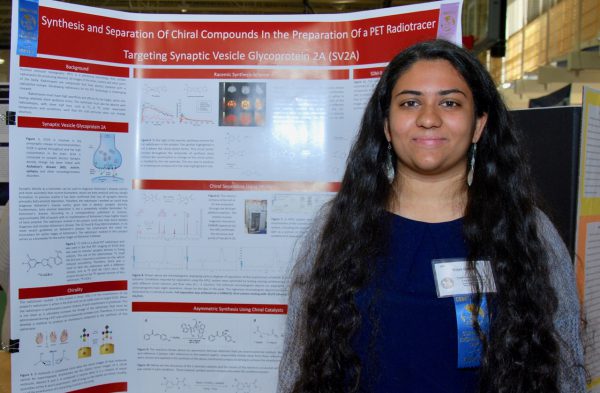 The primary objective of the fair is to attract young people to careers in mathematics, science, and engineering while developing critical thinking and public speaking skills. Through their participation in the fair, students are encouraged to pursue independent work using proper research methods.
 teachers and administrators are armed,” 85 percent said they would not; 15 percent thought they would.

 The deadline for submission for the 2018 Connecticut Book Awards is April 20, 2018. Finalists will be announced in September and winners announced in October. For more information, visit: