Legal Challenge Seeks to End Prison Gerrymandering in CT
/In 2010, New York State enacted legislation to ensure that incarcerated persons are be counted as residents of their home communities when state and local legislative districts are redrawn in New York, in an initiative designed to end what has come to be called “prison gerrymandering.” Connecticut has repeatedly considered legislation during the past decade – in 2011, 2013, 2015 and 2016 - that would make the same policy change, but that legislation has failed to pass. A 2013 report by the Prison Policy initiative and Common Cause found that almost half of the state's prison population comes from the state's five largest cities, but almost two-thirds of the state’s prison cells are located in just five small towns - Cheshire, East Lyme, Enfield, Somers, and Suffield.
Because prisons are disproportionately built in rural areas but most incarcerated people call urban areas home, counting prisoners where they are incarcerated rather than in their home municipality results in a “systematic transfer of population and political clout” from urban to rural areas, according to the Prison Policy Initiative.
 That shift of political influence has ramification across the electoral system, and was the impetus for a lawsuit filed this summer against the state of Connecticut by the NAACP to force an end to the practice. It is the first of its kind, and being widely watched.
The NAACP points out that Connecticut, like many states, disenfranchises prisoners and has concentrated its prisons primarily in rural areas. The effect is that white, rural voters in the districts where prisons are located have their electoral power unconstitutionally inflated, at the expense of voters of color in other, over-crowded districts.
The plaintiffs seek to compel the State of Connecticut to adopt a new redistricting map that counts incarcerated individuals in their home state legislative districts rather than in the districts where they are being incarcerated, thereby safeguarding the Fourteenth Amendment principle of “one person, one vote.”
Although a number of states continue to engage in this practice, the NAACP explains, Connecticut has some of the worst discrepancies in population numbers between its prison districts and most populated districts.
According to the complaint filed in U.S. District Court, when prisoners are reallocated to their home districts, the population of the 59th House District, which includes Enfield and East Windsor, where three state prisons are located, has an overall population that is more than 15% smaller than the most populated district in the state. The effect is that the vote of a person in that prison district counts for 15% more than each vote of a person in the largest district.
“This is about making sure everyone gets an equal voice,” said Germano Kimbro, a formerly incarcerated individual and plaintiff in the case. A resident of the 97th House District, located in New Haven, one of the most overcrowded state legislative districts in Connecticut, Kimbro argues “My vote shouldn’t count less than someone else’s just because they live near a state prison.”
The NAACP, together with the NAACP Connecticut State Conference and individual NAACP members who live in five of the most overcrowded Connecticut state legislative districts, filed the suit. The plaintiffs in the lawsuit are represented by the Rule of Law Clinic at Yale Law School and the NAACP.
“Each person’s vote is to be equal to that of their fellow citizens,” explains Alden Pinkham, a student in Yale Law School’s Rule of Law Clinic. “Using prisoners to inflate the population of the districts where prisons are located violates this principle.”
Seven states (Colorado, Mississippi, New Jersey, Virginia, Maryland, Michigan, and New York) encourage or even require local governments to exclude prison populations during redistricting. The next legal filings in the case are due just after Labor Day. A conclusion is not anticipated prior to the 2018 November elections, but with an eye toward 2020.

 Anti-media rhetoric from President Trump, which was a constant during his campaign and since, has spurred interest in the topic. The discussions in Avon, which are free, will be led by local educators and historians and continue into the fall.
 The Popularity of Alexander Hamilton - Thursday, September 13, 2018, 3:00 pm: An illustrated talk about the inspiring story of the Alexander Hamilton, and his contributions, struggles, and tragic death. After years of being perceived as having only a supporting role, Hamilton’s star has risen, confirming his belief that “Those who stand for nothing fall for anything.” The discussion will be led by Bev York, Education Director for the Windham Textile and History Museum.

 Her work at C-CHANGE is designed to accelerate and strengthen public education on climate change and pollution issues, bringing the science down to the individual level, highlighting the impacts on people, rather than the planet.

 Each of the six locations is highlighted on the site with information on attractions, events, restaurants, accommodations and shopping.
 ithin the past year. Bridgeport also received a walk score of 68, along with a bike score of 50. Stamford earned a walk score of 54, bike score of 39 and transit score of 38. Waterbury’s walk score was 49; bike score was 25. Danbury’s walk score was 38.

 Atop the rankings in the pediatric specialty were Children’s National Medical Center (Washington, DC), Children’s Hospital of Philadelphia, Boston Children’s Hospital, Children’s Hospital Colorado, Cincinnati Children’s Hospital Medical Center, Rainbow Babies and Children’s Hospital (Cleveland), UCSF Benioff Children’s Hospital of San Francisco and Oakland, New York-Presbyterian Morgan Stanley-Komansky Children’s Hospital, St. Louis Children’s Hospital-Washington University, and C.S. Mott Children’s Hospital – Michigan Medicine (Ann Arbor).
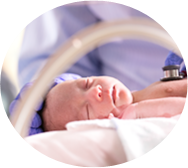 e, infection rates in the NICU and other data collected from a detailed U.S. News clinical survey of children's hospitals, produced 85 percent of each hospital's score. The other 15 percent reflects nominations from pediatric specialists and subspecialists who responded to surveys in 2016, 2017 and 2018 and recommended the hospital for serious cases in their specialty.