Concussion Education Plan Due to School Districts on January 1; Advisory Panel Meets Today
/Three weeks from now, Connecticut should have in place a state concussion education plan to be used by local and regional boards of education. That’s according to a law passed by state legislators earlier this year in response to growing concerns about the potential lifelong effects of concussions on students injured in school sports. Local school boards will be responsible for implementing the plan using written materials, online training or videos, or in-person training.
The Connecticut Youth Concussion Advisory Group, coordinating the state’s effort, has met four times this fall. Minutes of the most recent meeting, on November 6, were posted to the group’s website more than a month later, just days ahead of the meeting scheduled for Thursday, December 11. That meeting is to include an update on the Concussion Education Plan, according to the meeting agenda.
Although the law was approved in May, it was highlighted in public ceremonies in September in Westport, the hometown of three mothers who were instrumental in advocating for passage of the law. Each of their sons’ lives were changed by concussions. Ann Sherwood, Pippa Bell Ader and Diana Coyne came together to form the Parents Concussion Coalition, FOX Connecti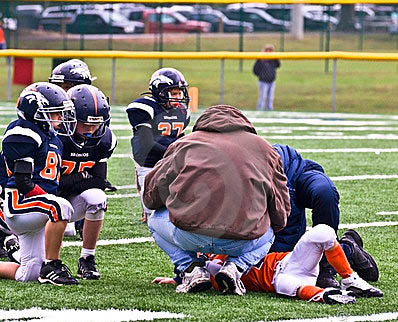 cut reported.
Public Act 14-66 requires the state Department of Education to consult with the state Department of Public Health, the governing authority for intramural and interscholastic athletics, an appropriate organization representing licensed athletic trainers, and an organization representing county medical associations to do the following:
- By January 1, 2015, develop a concussion education plan to be used by local and regional boards of education. Boards of education will be responsible for implementing such plan using written materials, online training or videos, or in person training.
- Develop a signed informed consent, which must include a summary of the concussion education plan, and a summary of the local board’s policies regarding concussions. For the school year beginning July 1, 2105, local boards of education must prohibit a student athlete from participating in intramural or interscholastic athletic activities unless the student athlete and a parent or guardian returns such form.
- Collect and report to DPH all occurrences of concussions, including the nature and extent of the concussion and the circumstances in which the student sustained the concussion.
The law also requires that a training course regarding concussions be developed or approved, and that “a refresher course regarding concussions, including current best practices, and, for football coaches, current best practices around the frequency of games and full contact practices and scrimmages.” That provision was effective on October 1. 
At the November meeting of the Advisory Group, “there was discussion regarding the pros and cons of mandating a specific time frame between stages of recovery from a concussion versus considering each case individually and relying on the student’s physician,” the meeting minutes reported. Among materials reviewed were a Concussion Web page, Concussion Education Initiative Course feedback, and an annual review and refresher course.
Regarding data collection, the Advisory Group “discussed what will work best for schools; what is an ideal versus realistic approach.”
The Connecticut Interscholastic Athletic Conference (CIAC) Board of Control is requiring all CIAC member schools (including private and parochial schools not covered by the law) to develop a plan and begin implementation in the 2014-15 school year.
Westport’s Staples High School is among the Connecticut school that now provide concussion protocols on their websites, so that students, parents, coaches and the community are aware of expected practices. According to the Staples site, “links include concussion education, the concussion care plan that is to b e filled out by your physician when a concussion occurs, our procedures for concussion management, and our Return to Play protocol that will be followed by all athletes before returning to competition after sustaining a concussion.”
Connecticut was one of the first states in the nation to adopt a concussion law, in 2010, following Oregon and Washington, which implemented similar statutes in 2009. The law dealt primarily with training requirements for coaches.
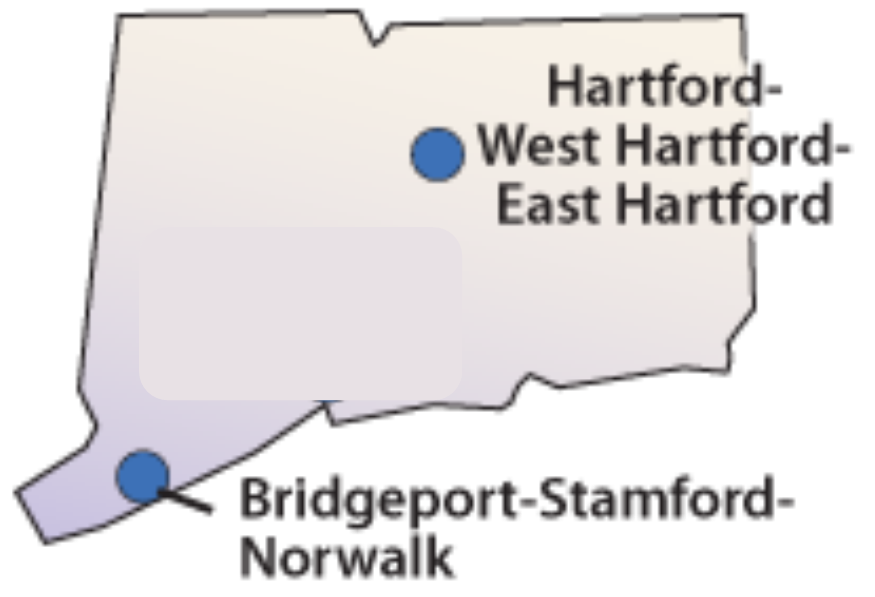 me in the Bridgeport-Stamford-Norwalk metropolitan area was $42,757, and the Hartford-West Hartford-East Hartford region was $42,322 for 18-34 year olds working full-time, according to the data, highlighted in an article posted to The Atlantic’s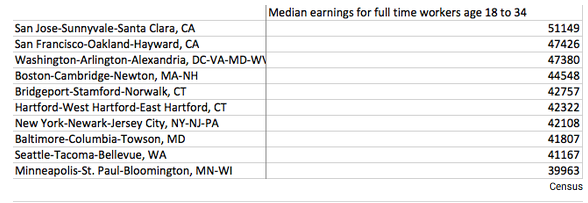
 “looking remarkably attractive.”

 ent where people with autism or sensory needs, along with their families, can enjoy coming to the theatre together and will feel comfortable, supported and free to be themselves.”

 sness” category.





 Making the grade are Bridgeport, Hartford, and New Haven. Their respective round one opponents make the Connecticut cities strong underdogs in need of a sizable population surge. Bridgeport goes up against San Francisco, Hartford faces Baltimore, and New Haven is up against Portland. (No, not Portland, Connecticut.)
 one of two versions of the game, geographic level: metro areas or states. Then they click on the name of the city in each match-up that you think has the larger population. Green shows a correct answer, red indicates an incorrect answer. Players are urged to “see how close you can come to a perfect score of 63” and then asked to “mouse-over results to view the most current population estimates for each pair.”



 The report also indicated that more than 80% of litigants appear without lawyers in matters as important as evictions, mortgage foreclosures, child custody and child support proceedings, and debt collection cases. “Making courts user-friendly for these self-represented litigants is imperative if we are to keep the promise of equal justice for all,” the report indicated. In comparing the 50 states’ systems for self-represented litigants, Connecticut ranked #9. The top states were Hawaii, California, Delaware, Arizona, Iowa, Indiana, Washington, Massachusetts and Connecticut.

 ld University at #396. Outside the top 400 from Connecticut were Wesleyan University, Yale University, Quinnipiac University and Trinity College.
 ity in New Jersey, Florida Agricultural and Mechanical University, Florida International University, and six institutions in California, including California State Polytechnic University, the University of California and Cal State.