Small Business Friendliness in CT Improved to D+ in 2013, Data Shows

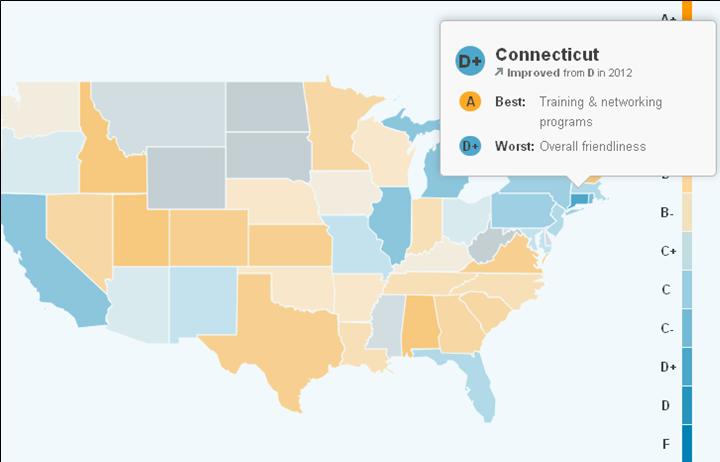
Connecticut’s small business climate is improving – slowly.  That’s according to the 2013 Small Business Friendliness Survey by Thumbtack.com, in partnership with the Ewing Marion Kauffman Foundation, which ranked the state #35 for overall small business friendliness.

The 2013 study draws upon data from over 7,000 small business owners nationwide and shows that Connecticut improved its overall grade slightly, rising from a 'D' in 2012 to a 'D+' in state mapthis year's study.

Although the state struggled overall, the study authors reported, it received high marks in several categories. Some of the key findings for Connecticut include:

Connecticut earned an 'A' for the state's small business training and networking programs, which ranked among the top-5 nationally. Business owners were critical of Connecticut's regulatory systems, giving the state a 'C' in this category, although this was an improvement from the 'D+' grade received last year.

Among its neighbors, Connecticut ranked just behind New York (which had trailed Connecticut in last year's study) and Massachusetts, but ahead of Rhode Island for overall small business-friendliness.

The state’s overall grades, and comparison with last year, in the 11 categories compared in the survey:

D+         Overall friendliness (D last year)

D+         Ease of starting a business  (C last year)

B            Ease of hiring (C last year)

C             Regulations  (D+ last year)

B-            Health & Safety  (C+ last year)CT welcomes you

C-            Employment, labor & hiring  (D+ last year)

C-            Tax code (D last year)

C             Licensing  (D+ last year)

D+          Environmental (D+ last year)

C-            Zoning (C+ last year)

A             Training & networking program

The study aims to learn what small businesses believe constitutes a healthy political and regulatory climate by having them rate how it is to do business in their specific location along various metrics.

Over 99% of U.S. employer firms qualify as small businesses, and they employ half of all private sector employees. Over the past two decades, almost two-thirds of net new private sector jobs have come from small businesses, and that number has accelerated in recent years.

The thumbtack survey also compared the age and size of the businesses with those of the general business population. The Small Business Adkauffman-details-logoministration reports that 69% of small businesses are at least two years old, and 51% are at least five years old.  The survey sample is very close to these numbers, with 76% over two years old and 57% at least five years old.

According to US Census data, 91.6% of small businesses have between one and four employees. Another 3.8% have 5-9 employees, and 4.6% have 10 or more employees. The survey respondents followed a very similar distribution: 89.3% have between one and four employees, 6.7% have 5-9 employees, and 4% have 10 or more employees.

Some of the key findings at the national level include:

  • Professional licensing requirements were 30 percent more important than taxes in determining a state's overall business-friendliness, confirming the findings from last year's study. Furthermore, this year's research revealed that 40 percent of U.S. small businesses are subject to licensing regulations by multiple jurisdictions or levels of government.
  • Utah was the top rated state, and Austin, TX was the top rated city. At the other end of the spectrum, Rhode Island and Newark, NJ were the lowest rated state and city.
  • The ease of obtaining health insurance was an important factor for many businesses. One-third of small business owners rated obtaining and keeping health insurance as "Very Difficult," versus only 6 percent who rated it "Very Easy."
  • Small businesses were relatively unconcerned with tax rates – more than half of small business owners felt they pay about the right share of taxes.

The top 10 states were Utah, Alabama, New Hampshire, Idaho, Texas, Virginia, Kansas, Colorado, South Carolina, Georgia, Minnesota, Nevada and North Carolina. Professional/nonprofessional services make up a large share of Thumbtack’s clients, so fewer manufacturers and retailers were surveyed, which may have impacted the survey results.

"It is critical to the economic health of every city and state to create an entrepreneur-friendly environment," said Dane Stangler, director of Research and Policy at the Kauffman Foundation. "Policymakers put themselves in the best position to encourage sustainable growth and long-term prosperity by listening to the voices of small business owners themselves."

College Coaches Are Highest Paid Public Employees in 40 of 50 States, Including CT

When UConn announced the hiring of Bob Diaco as new head football coach earlier this month few flinched at the compensation – a reported five-year $8 million contract.  Diaco, who served on the Notre Dame coaching staff as the defensive coordinator for the past four years and the assistant head coach for the past two, was the 2012 winner of the Frank Broyles Award, given to the top assistant college football coach in the country and was the first Irish assistant to receive the prestigious award. He was a semifinalist for the award in 2011.

Earlier this year, the Yankee Institute for Public Policycoaches salaries compiled a list of the highest paid state employees, and three UConn coaches led the list:

  • 1. Calhoun, James A., Men's Basketball Head Coach, UConn $2,865,769
  • 2. Auriemma, Geno, Women's Basketball Head Coach, UConn $1,829,052
  • 3. Pasqualoni, Paul L., Football Head Coach, UConn $1,613,920  (dismissed as coach earlier this fall)

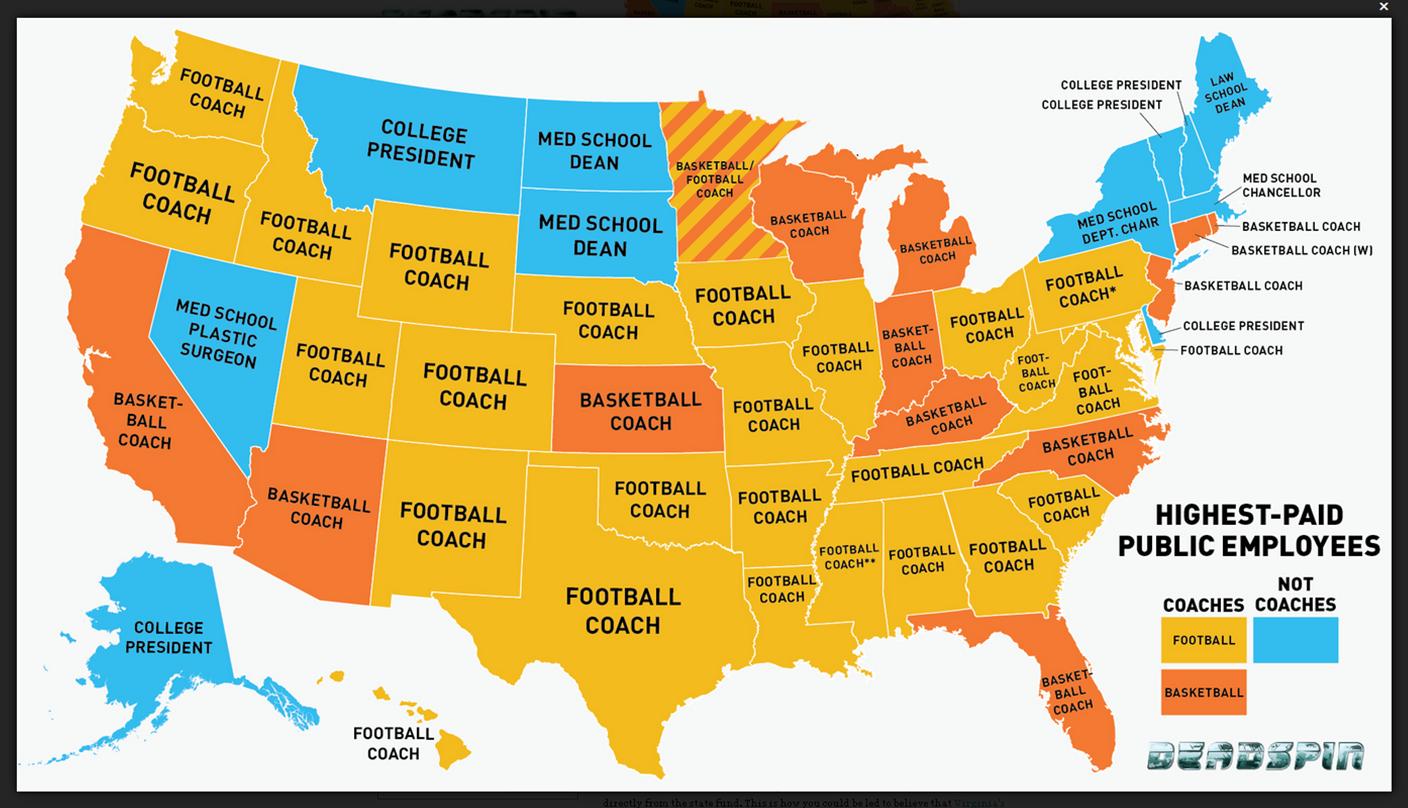
As it turns out, that is not unusual.  According to data compiled by the website Deadspin, the ranks of the highest-paid active public employees in states across the country include 27 football coaches, 13 basketball coaches, one hockey coach, and  10 state employees with responsibilities outside of athletics.  That’s 80 percent of the states with a public employee salary roster led by a coach.

Perhaps surprisingly, the states of New York, Massachusetts, Vermont, New Hampshire and Maine are among those where a college president, law school dean medical school dean or department chair top the state employee salary list.  In Rhode Island, it is the men’s basketball coach, and in Connecticut, with the retirement of Jim Calhoun, the leader is now women’s basketball coach Geno Auriemma.

Last December, UConn and head men's basketball coach Kevin Ollie, a 1995 UConn graduate,  announced a new agreement to run from January 1, 2013 through April 15, 2018.  Under the coaching contract, Ollie receives a base salary of $400,000 per calendar year and for 2013 he will receive $800,000 for institutional speaking engagements and media related appearances for a total of $1,200,000, according to the University's announcement. The payment for institutional speaking engagements will increase by $50,000 each year. Ollie's total compensation for each year of the agreement will be: 2013-$1,200,000; 2014-$1,250,000; 2015-$1,300,000; 2016-$1,325,000; 2017-$1,340,000; 2018-$502,500 (annualized from Jan. 1-April 15).

The website reports that “looking at data from 2011-2012, athletic departments at 99 major schools lost an average of $5 million once you take out revenue generated from "student fees" and "university subsidies.”

Rounding out the top 10 list in Connecticut, as of 2012:

  • 3. Onyiuke, Hilary Chief, Division of Neurosurgery UConn Health Center $1,030,732
  • 4. Nulsen, John Director, Center for Advanced Reproductive Services, UConn Health Center $917,373
  • 5. Makkar, Hanspaul Chief, Division of Pediatric Dermatology, UConn Health Center $916,600
  • 6. Whalen, James Vice Chair, Dermatology UConn Health Center $884,602
  • 7. Laurencin, Cato CEO, Connecticut Institute for Clinical and Translational Science, UConn Health Center, $701,576
  • 8. Herbst, Susan ,President, UConn $612,500
  • 9. McFadden, David, Chief, Department of Surgery, UConn Health Center $576,923
  • 10. Manuel, Warde Athletic Director UConn $551,305


Bridgeport-Stamford-Norwalk Above National Average in Sustaining Startups, Study Finds

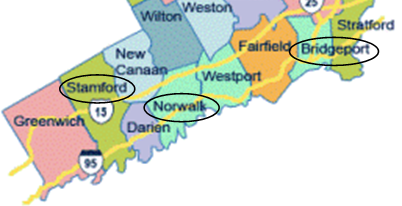
A new report assessing trends in start-up companies in 40 major metropolitan areas in the U.S. over the past two decades has found that the Bridgeport-Stamford-Norwalk corridor has performed well compared with similar regions in weathering, and rebounding from, the national economic downturn’s impact on the level of start-ups.

The report by the Kauffman Foundation, “The Most Entrepreneurial Metropolitan Area?,” was recently presented to the U.S. Conference of Mayors on Entrepreneurship, the first such confestart uprence of municipal leaders devoted solely to exploring entrepreneurship.

In reviewing Metropolitan Statistical Areas (MSA) with a population of between 500,000 and one million people, the report found that the Bridgeport-Stamford-Norwalk MSA placed “toward the top of the group, consistently above the year-to-year changes.”  In addition, the data indicate that Bridgeport-Stamford-Norwalk “did not fall as far during the (economic) downturn, so it appears to have fared slightly better.”

The paper compared the trends in the 40 metropolitan areas with high numbers of start-up businesses to the significant national downwkauffman-details-logoard trend in overall new firm formation starting after 2006.  Nationally, the trend reversed and started to recover in 2011. No metropolitan area escaped this downward trend, but there are differences among regions in the timing of the downturn and subsequent recovery.

In counting the number of times that the annual percentage change in start-up density for each of the MSA’s, within the same size class, five of the MSA’s – including Bridgeport-Stamford-Norwalk – were “above average 12 times thorough the period” reviewed. The others to attain that “level of consistency” were Tulsa, OK; Omaha-Council Bluffs, NE-IA; Little Rock-North Little Rock-Conway, AR; and Knoxville, TN.

map

The report also found that the largest MSAs – those with populations greater than 1 million – fared slightly better through the recession and have experienced slightly stronger recoveries, though none has returned to pre-downturn levels.

The report compared MSAs with relatively larger populations and high startup densities from among the nation’s 366 MSAs.  The MSAs were divided into four groups for purposes of comparison, those with greater than 1 million population, those with 500,001 to 1 million, those between 250,000 and 500,000, and those smaller than 250,000.

The federal government’s Office of Management and Budget (OMB) provides official definitions for MSAs in the United States:  densely populated areas with close economic ties.

LEGO KidsFest in Connecticut This Weekend, State Experiences Company’s Growth, Strength

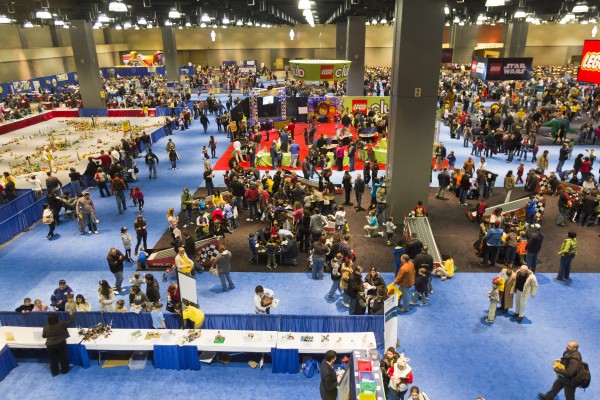
There’s no mistaking the popularity of LEGO.  The colorful bricks are ever-present in playrooms, bedrooms, and under couch cushions everywhere.  The passion for the colorful bricks will be on display this weekend (Dec. 6-8, 2013)  in Connecticut when the LEGO Kidsfest returns to the Connecticut Convention Center in Hartford for a weekend of creativity and construction, concluding the year’s six-city tour, and the first time it’s been back in Connecticut in two years.  (Tickets for Saturday are already sold out, with limited availabilities for Friday and Sunday sessions. )KidsFest

Beyond this weekend’s event, the Connecticut connections to LEGO may be surprising.

The LEGO KidsFest is a nationally-traveling giant LEGO expo held over three days and filled with interactive, creative and educational activities for the whole family. Connecticut is central to the LEGO universe.  LEGO Systems, Inc. is the North American division of The LEGO Group, a privately-held, family-owned company based in Billund, Denmark, one of the world’s leading manufacturers of creatively educational play materials for children.  The LEGO Kidsfest, however, is produced by LIFE Marketing and Events, located in West Hartford.

LEGO floorAt each tour stop, the LEGO KidsFest partners with national and local organizations and businesses whose products, services and promotional efforts are kid-friendly and beneficial to attendees. Next year, the tour will again run in seven cities: North Carolina: February 28–March 2;  Michigan: April 25–27;  Alberta, Canada: May 16–18;  Georgia: June 27–29;  Texas: August 29–31;  Virginia: October 3–5; and Indiana: November 7–9.  In 2011, the KidsFest was held in five cities, and has steadily grown in popularity.  Sellouts have been regular occurrences throughout 2013.

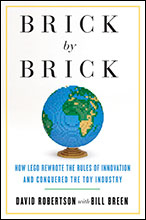
In the new book “Brick by Brick:  How Lego Rewrote the Rules of Innovation and Conquered the Global Toy Industry,” published by Crown Business division of Random House, author David C. Robertson points out that Lego “is driven by two desires.  The first is to inspire imaginative play and creative expression in as many kids and kids-at-heart as possible, in as many ways as possible.”  The second is to out-innovate every company it comes up against.”

The book, which explores Lego’s resurgence from near oblivion over the past two decBrickbyBrickades, outlines the company’s trials, tribulations (including near-bankruptcy in 2003), innovations and success, observing that “The LEGO Group’s leaders believe that to discover the next big growth opportunity, the company must adhere to a fundamental truth about innovation:  the more experiments you launch, the more likely it is that one will strike gold.”   KIdsFest is but one example.

The company is also expanding is footprint in Connecticut, having announced earlier this year that it was leasing an additional 80,198 square feet in the Enfield Business Park.  The company eventually plans to add more than 200 employees.

“We have about 600 employees in Enfield currently, and the space will provide desks for an additional 250 — not all of whom will be hired immediately,” Michael McNally, Lego’s brand manager said in April. The company in 2011 started to reconfigure its former manufacturing space into administrative offices. The building houses workers in finance, human resources, information technology, consumer services, direct-to-consumer retail, as well as Lego Master Builders.

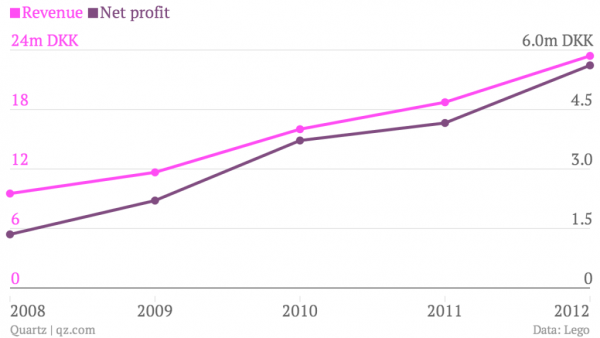
revenue-net-profit_chartbuilderLast month, it was reported that LEGO, already the second-biggest toy maker in the world, after Mattel, is continuing its expansion. In 2014, it will go from having one global headquarters, in Denmark, to five. The company is expanding its offices in London, Singapore, Shanghai and Enfield, Connecticut to form a network of global hubs.

The globe depicted on the cover of Robertson’s book, made of LEGO bricks, of course, is a fitting representation of the company’s growth – with Connecticut playing a noteworthy role.

Rising Star No More, Visitors Now Urged to DASH

Hartford’s downtown circulating bus – developed as an easily accessible means of moving tourists and convention goers around the city – was re-launched this fall with a new name, distinctive new coat of paint and renewed enthusiasm.

Previously operating as the Star Shuttle since September 2005, nearly 728,700 passengers have used the specially designated bus service, which connects the Connecticut Convention Center, the Riverfront, the CT Science Center, the Arts and Entertainment District, various restaurants, and downtown hotels.

Now, it has received an all-orange makeover, along with the new name – DASH.

The change follows the change in Hartford's tourism campaign branding from "New England's Rising Star" to "Hartford Has It" and continues as  a collaboratiodashn among CT TRANSIT, CT DOT, the City of Hartford, the Capitol Region Development Authority, the Hartford Business Improvement District, the Hartford Metro Alliance, and the Connecticut Convention & Sports Bureau.

A year ago, the Hartford Business Improvement District tapped the collective creativity of capitol region residents to help re-name the free downtown circulator.  Local resident David Ceder suggested “dash”. Ceder explained "I am excidashart_webted the time has come to showcase the rebranding and new shuttle name! I chose "dash" not only because of the acronym (Downtown Area SHuttle) but also because it's an action word --"dash," to me, is exciting, inviting, and invokes you to hop on and discover Downtown."

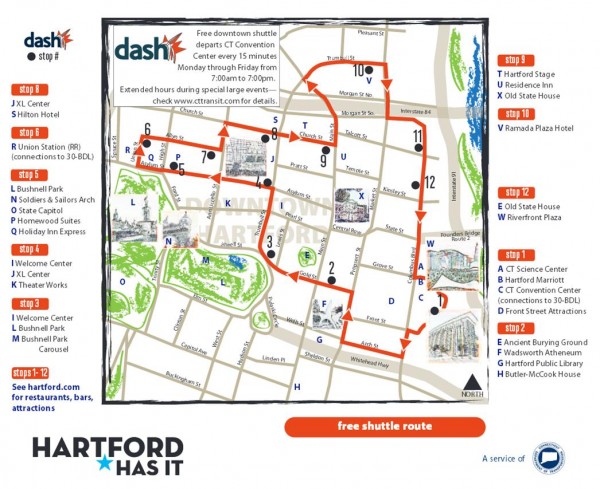
The bright orange DASH bus has been accompanied by updated signs downtown and an interactive map to help passengers know where to go to get on the free shuttle. Regular DASH service operates every weekday from 7:00 a.m. to 7:00 p.m., departing every 15 minutes from the Connecticut Convention Center.

During major downtown events, enhancements may include later evening service on weekdays, as well as service on Saturdays and Sundays. The specific services planned for each major event are posted on the CT TRANSIT website. The dash Shuttle does not operate on weekends when there is no downtown event scheduled.  The free shuttle also offers convenient connections to both the Bradley Flyer bus and to regular local CT TRANSIT bus service.

An out-of-town visitor to a convention earlier this year – before the name change -  praised the service. "My daughter and I ...have been using the Shuttle extensively to navigate the conference sites. I cannot say enough good things about ALL of the bus drivers. Thanks for making our trip so much fun."

Should you be  wondering, two buses have received the DASH makeover, adash mapnd the vehicles alternate in providing the service.  The DASH shuttle is a service of the CT Department of Transportation and operated by CT TRANSIT. Information on the route and extended service hours can be found at www.cttransit.com.

Local Entrepreneur Brings Social Benefits to Coffee Sales with Innovative Product

It took root when he was a 9-year-old earning nickels and dimes at the Hartford Regional Market,  gained impetus at Hartford High School and was cultivated at the University of Richmond.  By the time Ray Fraser graduated college in 2011 with a business degree in marketing and finance, he was convinced that his life’s work would not center solely on making a profit, but on simultaneously making the world a better place.  He’s doing just that, one tree at a time.

With a relentless work ethic and an engaging, easy-going personal style, Fraser’s start-up business – growing rapidly in just a few months – is called Tree Sleeves.  His mission:  to produce and sell reusable cup sleeves that combine comfort and utility with charity – “to help eradicate the cycle of deforestation affecting our planet.”

 For every Tree Sleeve sold, a tree is planted in a part of the world affected by deforestation.  It is a simple but profound concept, and the reaction has been overwhelmingly positive from a rapidly growing roster of retailers and consumers.  With a retail price of only $2.00 - a Tree Sleeve is perfect for daily use while on the go, quite affordable, and reusable.

Fraser has never shied away from challenges – in fact, he has consistently sought them out since he first visited the local Regional Market and asked what he could do to earn some money.  Told he needed to dump some boxes, he did – and came away with a nickel for his efforts.  Thus began a working relationship – and first-hand glimpse of what it takes to succeed in business – that continued as a part-time job through high school.  (The pay improved somewhat over time.)

As a teenager, Fraser was an Eagle Scout (his Eagle project was organizing a blood drive accompanied by a canned food drive for a homeless shelter) and an athlete who excelled in football, wrestling and track.  He discovered a knack – and enjoyment – in working with people, as well as an aptitude for business.  He would be the first in his family to attend college, encouraged by his parents, a machinist and teacher who resettled in Hartford from the West Indies and took education and diligence seriously.  Missing a day of scRay-005hool for being sick, Fraser recalls, was simply not an option.

In college, he developed an affinity for brands with a cause, and in addition to working as a Resident Assistant on campus, had motivating internships with United Technologies in Connecticut and Saks Fifth Avenue in New York City.  Both would express interest in hiring him after graduation, but by senior year Fraser had decided to chart his own entrepreneurial path, the example of Tom’s Shoes founder Blake Mycoskie (the subject of a college research paper), among others, serving as his frame of reference.

“I had looked at the corporate ladder,” Fraser recalled recently, “and I wanted to have a bigger impact, to do more than just bring home a paycheck.  I wanted to expand my mind, and make a difference.”

tree sleeveInnovative Idea

After graduating from college and returning to Hartford, Fraser tried to develop an entrepreneurial business with friends that didn’t quite come together, stymied by software development issues.  Then one day in January, in a local Starbucks working on elements of that initial attempt at enterprise, the frequency which employees needed to empty trash cans overflowing with disposable cardboard sleeves caught his attention, and imagination.  He thought there must be a better way, and then went about inventing it.

“They’d empty the trash, and then two hours later they’d do it again.  The waste was astronomical.  When I looked into the numbers on paper sleeves, I was shocked.  We throw away 3 billion a year,” he emphasized.  “That translates into thousands of trees cut down needlessly each year.”

The traditional disposable cardboard cup sleevemakes carrying easier and holding the cup possible by providing an extra barrier to reduce the heat from the cup. Based on his extensive and resolute research, Fraser has done the disposable cup holder one better, with purpose.

It didn’t happen overnight.  He visited local coffee shops to talk to owners about their business, customers, and interest in a potential product.  He had informal conversations with friends, inquiring whether they’d buy a reusable sleeve, and what attributes would make it attractive.  (Being good for the environment was a recurring theme.) He scoured the internet in search of potential manufacturers, first in this country, then overseas.  He taught himself about nations that produce coffee, and learned of the challenges many face due to deforestation.

photo 1Building A Business

Fraser carefully nurtured relationships, engendering trust and crafting a business that he sees as having limitless potential – and enduring impact.  He developed and produced an attractive, lightweight design made of 100% food grade silicone, a reusable sleeve that makes going green easy.

Research completed and initial business relationships established, it was time to take a leap of faith.  With initial start-up funds borrowed, the 24-year-old ordered 1,000 silicon sleeves in July.  He was quite optimistic that he would be able to sell them to retailers.  But not certain.

After printing some promotional signs from his computer, buying handful of baskets at the local dollar store and a fistful of rubber bands at an office supplies store, Fraser set out to area coffee shops, bundles of product in hand.

One of the coffee shop owners he visited months previously to engage in speculative conversation was not surprised when he returned with a well-produced product – but he didn’t necessarily expect he’d be back.

“He was a nice polite young man, but I didn’t know that he’d actually do something.  We try to encourage renewables, so I thought I’d buy some, and if people liked the idea, they’d buy it,” said Bill Sze, owner of Jojo’s Coffee Roasting Company, with locations in Hartford and New Haven.  His initial order was for 100, this summer.  “I’ve been going through them at a good rate.  Most people like the idea.”  Sze just re-ordered, another 100 for each location.

Within a couple of months, Fraser – pounding the pavement and meeting with coffee shop owners – had Tree Sleeve locations grow from a handful, to a dozen, to now nearly 30.  By late October, he ordered the second batch of 1,000 to be manufactured, and continues to visit coffee shops personally, extolling the virtues of a product that allows purchasers to impact the planet, and people’s lives.

Along the way, he has patched together an informal set of advisors, including two of his former professors at Richmond, two volunteers from the Hartford chapter of SCORE (Senior Corps of Retired Executives), a local marketing professional that he learned of through CT NEXT, and a growing array of local coffee shop owners willing to give the product a try.

Another of the initial locations, J. Rene Coffee Roasters in West Hartford Center, has also re-ordered in recent weeks, based on solid sales.  Current locations include Avon, Stamford, Windsor, New Haven, Middletown, and Shelton.   But Fraser’s sites are set on a broader reach, and impact.

Having An Impact

The initial tree planting is being handled by Eden Reforestation Projects.  Since 2005, the California-based Eden has employed thousands of workers in Ethiopia, Madagascar, and Haiti who have planted millions of seedlings that are growing into healthy forests. They will be planting trees quarterly for Tree Sleeves, and Fraser now looks forward to 2,000 trees being planted in December.

Eden’s website explains that radical deforestation is a major cause of extreme poverty and oppression in impoverished nations, and that deforestation, which can result in soil erosion and destructive flooding, contributes to the climate change crisis.

The local start-up company’s slogan of “Grab 1 Plant 1” is quite concise: GRAB 1 - customers purchase tree sleeves and the company provides the necessary funding to a non-profit tree planting partner; PLANT 1 - Tree Sleeve's nonprofit partner plants and nurses tree seedlings in greenhouses located within deforested parts of the world. Upon maturity, trees are then transported and planted in areas most affected.photo

With patent pending, Tree Sleeves are currently manufactured overseas, but Fraser hopes that as the business grows he will be able to bring manufacturing to the U.S., while keeping prices affordable for consumers and continuing to impact the environment and vast populations.  Not unexpectedly, he is optimistic.  “Our generation wants to make a difference.  Impact is huge for me, and this is a huge issue.  I want to be the one who helps to solve it.”

Always looking ahead, co-branding, college stores and internet sales may be on the horizon, Fraser says, and perhaps a college intern to provide support.  Right now, to help pay for the gas his car requires to get him around the region, Fraser is working an overnight job at a local warehouse distribution center while building his own business by day.

Don’t even ask when he manages to sleep -that’s not a priority.  Fraser has been taking samples of Tree Sleeves to retailers since early summer, shows no sign of slowing down, and is encouraged by the response.  He’s also quite proud to be launching his business in the city where he grew up.  “It feels good.  I went away to school, I came back.  We certainly have the resources here to get this off to a great start.”

Virtual Wedding Planning Website Wins Top Prize in Entrepreneurial Competition

The entrepreneurial spirit of a Connecticut-based business was the big winner as Voncierge, a virtual wedding planning start-up seeking financial resources to expand its innovative services nationwide, earned the top prize in a “Shark-Tank”-like competition at the Western Mass Business Expo in Springfield, MA. 

Founder and CEO Mee-Jung Jang impressed a panel of expert judges and an enthusiastic audience of business professionals in her spirited “pitch” highlighting the fledgling company’s business plan and growth-to-date.

In winning the First AnVoncierge Logonual Pitch Competition – besting nine other entrepreneurial companies – Voncierge won $1,500 to assist the company and one year’s worth of free space at the Business Growth Center at Springfield Technology Park.  

The company is striving to change the way brides plan their wedding. Jang, a Harvard undergrad and Yale Law School graduate, was working as an intellectual property attorney in Manhattan when she got engaged, and her wedding-planning experience proved to be a challenge – and thus, Voncierge was born. 

On the Voncierge website, brides can search for vendors — bridal salons, florists, stationers, bakeries, officiants, photographers, venues and planners — in their city and schedule appointments with them.  They can also view a list of all confirmed, requested and past appointments – and also keep track of favorite vendors and wedding dresses. To aid their searVoncierge_MeeJung Jang_Photoch, they can submit their wedding date, budget and dress size. Voncierge has a unique search and tag feature where every image is tagged with the relevant vendor.
“In this modern day and time, brides still need to sit by the phone all day to book their bridal appointments. How annoying! We decided someone had to do something about it. So we built Voncierge,” the company’s website explains. The start-up was initially named Little Dress Book, but has since been renamed as Voncierge (for “virtual concierge”). It was launched in New York City last year, and Jang has since relocated to Hartford as she continues to grow the business from Connecticut.

The company is expanding its site and services city-by-city, with a smattering of listings in distant locations from Las Vegas to Dallas to New York – and more in-between.  Even at this early stage, more than 100 wedding vendors are already listed. 

“The plan is to make Voncierge available to people all over the country,” Jang explains. “We are talking with salons, venues and vendors across the country, and are continuing to add to the site.  It is tremendously well-received wherever we go, and we’re confident that the site will scale effectively and bring brides and businesses together in mutually beneficial ways.”

To participate on the site, vendors pay a fee for every appointment booked. The service is free for brides. Each vendor has a profile on the site displaying relevant information and photographs that brides can review before booking.

“When I started planning my wedding, I was still working as an attorney at a cBusiness Expo pitch winnersorporate law firm, which meant I barely had time to sleep or eat—so sitting by the phone playing phone tag with vendors did not make me happy,” Jang said.  “I knew there had to be a better way, so I set out to create it.” 

In her formal pitch presentation, Jang said she was seeking to have the Voncierge site become “ubiquitous,” with a strong presence on social media.  Joining her in developing Voncierge is chief technology officer Morry Belkin, a Carnegie Mellon graduate with more than 15 years of business experience ranging from start-ups to Fortune 500 companies. 

If the successful pitch in Springfield is any indication, prospects for the start-up appear promising.  To build a sales and marketing team and advance product development, Jang is currently seeking investments in the company. She is also looking to hire a sales associate to join her team.

The Business Growth Center at Springfield Technology Park – where Voncierge now has a year’s worth of free business space – offers a range of business services, including access to the Small Business Development Center Network, the U.S. Small Business Administration, and Business Growth Center Affiliates Program, all aimed at supporting and assisting start-up businesses.  Center Director Marla Michel was on-hand at the Business Expo November 6 to congratulate Jang and personally extend the free space offer. 

The entrepreneurial competition at the Business Expo was coordinated by Valley Venture Mentors, which provides a range of mentoring services for start-up businesses, including the ten companies that participated. They offer support to the entrepreneurial ecosystem by uniting carefully selected startups together with high quality business mentors at structured monthly pitch and planning sessions.

The other start-up businesses recognized by the judges and audience as the top presenters were Celia Grace, Kloudbook and PeopleHedge.  The Western Mass Business Expo was developed and coordinated by the publication Business West, the business journal of Western Massachusetts.  It was produced by Connecticut-based Rider Productions.

CT’s Workforce in Leisure & Hospitality Industries Among Smallest in U.S.

The percentage of Connecticut’s workforce in the leisure and hospitality industries is among the smallest in the country.  New data indicates that the state ranks 45th, with 9.6 percent of all workers employed in  the field.  The national average is 11.4 percent of workers.

The top-ranked state in leisure and hospitality workers is Nevada, with 28 percent, followed by Hawaii with 18 percent and Montana at 14 percent.  Just behind the top three states are Wyoming, Florida, Maine, Colorado, South Carolina, South Dakota, Rhode Island New Hampshire and Vermont, among the 17 states exceeding the national average.  Massachusetts ranks at #23, just under the national average.

Workforce in leisure and hospitality is defined as the percent of employees (on nonfarm payrolls) who are employed in leisure and hospitality, including arts, entertainment, recreation, accommodation and food service.  Earlier this year, published reports indicated that employment in this sector – then at 10.5 percent of the U.S. workforce – was at a record high since the government began tracking such data in 1939.

Connecticut in45 recent years has dramatically stepped up efforts to promote the state to visitors, launching the “Still Revolutionary” marketing campaign slogan and increasing the state’s tourism budget which had been all but eliminated by the previous state administration.  Increased tourism is said to impact the leisure and hospitality industries.

The only states with a smaller percentage than Connecticut in the leisure and hospitality industry are Iowa, Nebraska, Kansas, Arkansas, and North Dakota.

The data on workforce in leisure and hospitality were collected as part of the Current Employment Statistics (CES) program, a monthly survey of about 141,000 businesses and government agencies, in order to provide detailed industry data on employment, hours and earnings of workers on nonfarm payrolls. The workforce data are updated monthly by the U.S. Bureau of Labor Statistics (BLS).  The data used is updated through September 2013 and published by Bloomberg Visual Data.

Nationwide employment in the leisure and hospitality sector rose to 13.66 million jobs in August, based on seasonally adjusted data from the U.S. Bureau of Labor Statistics, the Business Journals reported.

The BLS reports that the arts and entertainment sector generally includes (1) establishments that are involved in producing, promoting, or participating in live performances, events, or exhibits intended for public viewing; (2) establishments that preserve and exhibit objects and sites of historical, cultural, or educational interest; and (3) establishments that operate facilities or provide services that enable patrons to participate in recreational activities or pursue amusement, hobby, and leisure-time interests.

The Accommodation and Food Services sector, according to BLS, comprises establishments providing customers with lodging and/or preparing meals, snacks, and beverages for immediate consumption. The sector includes both accommodation and food services establishments because the two activities are often combined at the same establishment.

Note:  Concerns have been raised regarding the manner in which casino employees are categorized, which may impact the data.

CT Drops Among States But Exceeds National Average in Opportunities Available to Residents

A new report and analysis focusing on four “impact areas” of daily life – opportunity, economy, education and community - has determined that Connecticut exceeds the national average in each category, by at least five percentage points and as much as nearly seven.  Overall, the state ranked 13th in the U.S., with a score of 56.9 out of 100 in the study's index, designed to measure economic, academic, civic and other key factors.  The state ranked 10th a year ago, and is the only state to fall out of the top 10.

The top 10 states in the latest analysis are Vermont, Minnesota, North Dakota, New Hampshire, Nebraska, Iowa, Massachusetts, New Jersey, South Dakota and Maryland.   In addition to Connecticut, three other states (Montana, Oregon and Pennsylvania) dropped as many as three slots in the state-by-state rankings.

According to the report, developed by Measure of America  and Opportunity Nation, Connecticut did better than the national average in  mean household income, the number of banking institutions, and the percentage of households with high speed internet.  The state also exceeded the national average in the percentage of 3- and 4-year olds attending preschool and the percentage of the population (age 25 and older) with an associate degree or higher.  The unemployment rate in Connecticut was higher than the national average, but the percentage of the population with earnings below the poverty line was less than the average nationally.

Perhaps surprisingly, the percentage of students who graduate from high school on time (within four years) is below the national average – 75.1 percent in Opportunity-Nation-LogoConnecticut as compared with 78.2 percent nationally.
The Opportunity Index focuses on the conditions present in different communities and is designed to connect economic, academic, civic and other factors together to help identify solutions to lagging conditions for opportunity and economic mobility.  From preschool enrollment to income inequality, from volunteerism to access to healthy food, expanding opportunity depends on the intersection of multiple factors, Opportunity Nation's website explains.  The Index is designed to provide policymakers and community leaders with a powerful tool to advance opportunity-related issues and work, advocate for positive change and track progress over time.  

In the area of community health and civic life, the level of volunteerism among Connecticut residents exceeds the national average, as does the   number of primary care providers (per 100,000 population) and the percentage of adults who are involved in social, civic, sports and religious groups.  Violent crime is below the national average and the percentage of youth, ages 16-24, not in school and not working is also below the national average, at 12.3 percent as compared with 14.6 percent nationwide.

Nationally, almost 6 million young people are neither in school nor working, according to the study - almost 15 percent of those aged 16 to 24 nationwide who are neither employed or in school, the Associated Press reported.  In Connecticut, 12.3 percent of those aged 16 to 24 are not working either at a job or in class, the study found.

The study also determined that 49 states have seen an increase in the number of families living in poverty and 45 states have seen household median incomes fall in the last year, the AP reported.

13

Social Enterprises Honored at Statewide Event; New Entrepreneurs Lead the Way

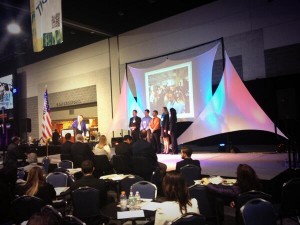
Six outstanding new Connecticut-based social enterprises, led by entrepreneurs in a range of businesses and industries, earned public recognition – and cash prizes – at the Third Annual Social Enterprise Awards held by reSET, the Social Enterprise Trust.  Nearly 200 people were in attendance for the awards ceremony, held at The Society Room in Hartford.

There were 54 social entrepreneurs from across the state vying for recognition in the 2013 Social Enterprise Challenge; applicants were narrowed down to 10 finalists who were evaluated by a panel of business experts.

The top five sociresetal enterprises were honored at the Social Enterprise Awards celebration for having the best and most sustainable social enterprise business plans, and for effectively demonstrating that their businesses could improve the community and create jobs, and generate both purpose and profit.

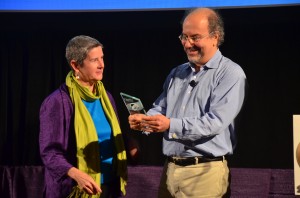
reSET also honored the renowned social enterprise Honest Tea with the reSET Social Enterprise Innovator Award for its community impact and corporate conduct, which has inspired others.  Honest Tea values simplicity, fair dealings, partnerships, the environment, and sustainability.  Dr. Barry Nalebuff, Milton Steinbach Professor of Management at the Yale School of Management, and co-founder of the company, accepted the award on behalf of Honest Tea, and conducted a presentation outlining the company's early years and evolution.

The winners of the Social Enterprise Challenge were:

farmivoreRay Xiong, New Haven, Farmivore (The Boehringer Ingelheim More Health through Innovation Award) Farmivore offers community supported agriculture co-ops with affordable e-commerce and marketing platforms, and provides consumers with an easy way to search, pay for, and join a community supported agriculture program. Ray.xiong@aya.yale.edu

Lon SeidmPageLines- IMN.pngan, Ivoryton, Windsor, and West Hartford, Independent Media Network, LLC (The reSET Community Impact Award) Independent Media Network provides training sessions and informational meetings with community members while providing accurate and valuable information to the community, in order to preserve independent media. lon@imnct.com

Leslie Krumholz, Guilford, Good Streegood streetsts. Good Streets is a social enterprise that brings Main Street businesses on line to help consumers find great local establishments. Neighborhood business owners and customers can use this trusted site and in so doing receive authentic reviews, which helps to create dialogue and collaboration between local businesses and their customers. leslie@imbya.com

Rodger LaChance, East Windsor, Yummy CT.  Yummy CT takes a farmers market and puts it on an old school bus to help distribute fresh, YCTConnecticut- grown fruits, vegetables, and specialty foods to Connecticut communities that are considered food deserts. The objective is to provide fresh healthy foods to communities that otherwise would have limited access. reldistributors@gmail.com

Dr. David Shearer, Old Saybrook, Therapeutic Research Foundation. TRF’s mission is to develop innovative, affordable, and therapeutic medical solutions to address the unmet global health needs of all people, even the solutions considered less profitable by other mainstream medical research companies. dshearer@tr-f.oTRFrg

For the first time this year, reSET added an award to reflect the community’s voice through a People’s Choice Award. The public was able to vote on their favorite among the 10 finalists by viewing videos created by finalists and posted on reSET’s website. The People’s Choice winner was:

David J. Rubin, Simsbury, ElectroSpin University. ElectroSpin University is promoting a healthier, more fit, and eco-friendly culture through a one-of-a-kind group indoor cycling class titled Rage and Recharge that uses electric dance music to make playlists scientifically designed to improve exercise efficiency. The team is also working on ways of recapturing energy expended through exercise and pumping it back into the community’s electrical grid. rubin@electroSpinu.com

“reSET was so pleased to celebrate the accomplishments of entrepreneurs across Connecticut who demonstrate a deep commitment to helping out communities become safer, happier, and healthier places for all of our citizens,” said Program Director Michelle Cote.  “Each awarded business reinforces the idea that it is possible to generate profit and serve a social purpose at the same time.”

In the spirit of growing social enterprise in Connecticut, “A Taste of Social Enterprise” also celebrated locally-grown food and featured local farms and businesses that served up a menu showcasing Connecticut-SEA 2grown foods, from the Kitchen at Billings Forge and The G Stream.

reSET has supported the launch of 19 new social enterprises in Connecticut  and supported the success or growth of nine social enterprises. reSET has also established the Social Enterprise Investment Fund, which will begin to offer loans to investment-ready social entrepreneurs in January 2014.

Photo:  Dr. Barry Nalebuff accepts the reSET Social Enterprise Innovator Award from reSET CEO, Kate Emery.  [Editor's Note:  CT by the Numbers is a member of the Independent Media Network.]