Pasta Making Business Continues to Grow, Government Continues to Help
/Sometimes, home-grown businesses decide to stay in Connecticut. That was the case this fall as Carla’s Pasta – an American Dream business success story – reportedly spurned an offer to relocate to a western state, and chose instead to expand in South Windsor, aided by a significant tax abatement.
The company produces filled pastas, Italian sauces and pestos, appetizers, and entrees. The brainchild of Carla Squatrito, the business now employs 156 people, including her sons, Sandro Squatrito and Sergio Squatrito, who are vice presidents of business development and operations, respectively. The Italian food product manufacturer, which was launched in 1978, in Manchester and moved to South Windsor in 1997. 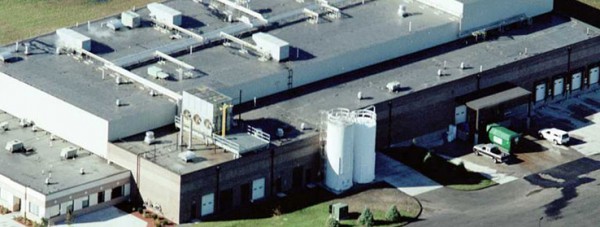
The latest expansion deal, as reported by the Journal Inquirer, will see the town give the family-run Carla’s Pasta a 70 percent tax abatement for seven years, reducing the company’s tax burden by well over $200,000 per year. The planned expansion is expected to generate 60 to 100 new jobs, and is due to be completed next fall. In 2013, Carla's completed a 30,000-square-foot expansion of its South Windsor facility, the Hartford Business Journal reported.
Town Manager Matthew Galligan, the JI reported, said the state of Utah was courting the company, but Carla’s ultimately decided to stay in town as a result of the deal that was approved by the Town Council.
Carla, a native of the small Italian village of Madonna del’Olmetto, emigrated to the U.S. at age 27. Her business began as a means of bringing “home-made filled pastas, Italian Sauces and Pestos, made from fresh ingredients, the flavors of her youth” to local customers, retail and later wholesale. Since 2010, Carla has been recognized by the National Women Business Owners Corporation as an outstanding CEO.
The company distributes its pasta to restaurants, institutions and supermarkets. In 2012, the company estimated that it was making about 2 million pounds of pasta per month, with projections to increase that number by a third.
The company received a bridge loan of $2,175,000 from Connecticut Innovations that year to help purchase and install a fuel cell along with a $750,000 grant from the Connecticut Clean Energy Fund. The state assistance was aimed at supporting the company efforts to be environmentally conscious and energy efficient.
In Oct. 2015, the company launched its own retail brand, Cucina di Carla. Among the distinctive products inspired by the season: autumn-inspired cinnamon clove pasta ravioli filled with golden pumpkin, whole milk ricotta and Fall spices.
https://vimeo.com/150720277


 In recent months, First Niagara did consolidate five Connecticut branches (Woodstock, Dayville, Hamden, East Haven and Madison), and all of the employees who worked at those branches were offered positions within the bank, officials indicated, and no layoffs were associated with that consolidation.
 Recent articles by The New York Times and Atlantic are referred to, noting that they also reflected poorly on the state’s current condition. National Review adds to the journalistic observations of a state filled with seemingly intractable dilemmas, noting that “Connecticut’s tax system is currently so dependent on the incomes of Fairfield County high-earners — as Governor Malloy has often made clear — that even the slightest variations can trigger a budget crisis.” The article adds, however, that “finance lies somewhere near the bottom of a long list of factors in explaining the current state of Connecticut.”
 Employers in Durable Goods Manufacturing, Nondurable Goods Manufacturing and Other Services plan to reduce staffing levels, while hiring in Construction is expected to remain unchanged, according to the survey.
 In the Northeast, 20 percent of employers surveyed anticipate stronger hiring activity in Quarter 4 2016. Connecticut employers expectations are somewhat lower.

 Studies show that there is no unmet demand for natural gas in Connecticut, opponents of the planned pipeline said, stressing that gas pipelines are routinely only half full now and electricity demand in New England has remained virtually flat over more than 10 years. Proponents have
  FBI Special Agent Judy Eide, a 25-year veteran currently assigned to the Bureau’s New Haven Division Computer Crime squad and a coordinator of the Connecticut Chapter of InfraGard, will be one of the speakers. Also on the program is Mark Ramsey the Chief Information Security Officer for ASSA ABLOY – Americas and President of the Connecticut Chapter of InfraGard. Ramsey also teaches at Fairfield University, and previously held information security positions at Stanley Black & Decker and General Electric.
 “We want this to be a must-attend event for anyone responsible for strategic technical decisions within their organization,” says Steven Bulmer, Walker’s vice president of professional services. “Tech Impact is really a self-defining event based upon the intense interest and demand from our clients, especially for information security services.”
 At #296 is Glastonbury-based Fiondella Milone & LaSaracina. FML was founded in 2002 “for the purpose of providing professional auditing, tax and business consulting services to a wide range of clients and industries throughout the Northeast,” the company’s website indicates. After working together at Ernst & Young, the firm’s founding partners, Jeff Fiondella, Frank Milone and Lisa LaSaracina launched FML.
 counting newsletter and the award-winning National Benchmarking Report.
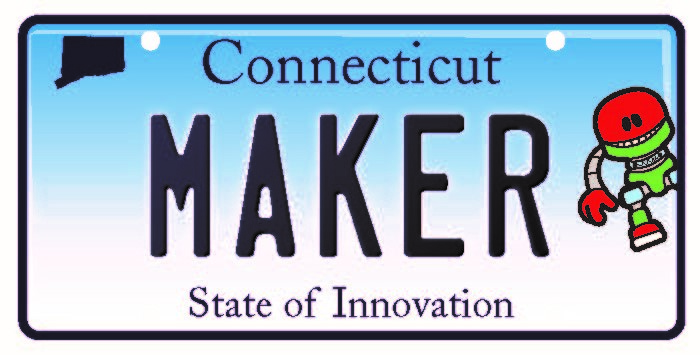 When individuals purchase a Keep Kids Safe plate, a portion of the fee goes to the Keep Kids Safe Fund, which “makes many worthy projects happen for youngsters.” The fund awards grants to schools, hospitals, municipalities and other non-profit organizations working to make all Connecticut children safer from severe and preventable injuries, according to the DMV website.
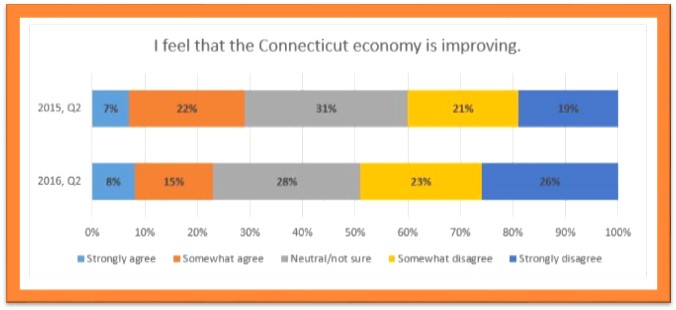
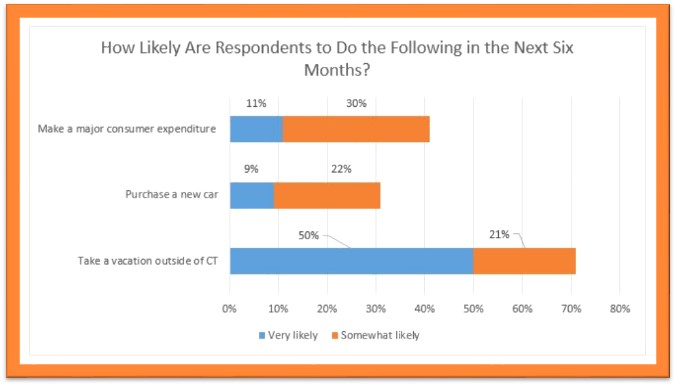 Increasingly, residents believe that jobs are “very hard to get” in Connecticut compared with six months ago (from about one-quarter to one-third of those surveyed in Q2 2016 versus Q2 2015), and are, in growing numbers, saying they would rather leave than stay.
 Forty-three percent, an increase from 40 percent in the year’s first quarter, answered “all of the above” when asked if education, libraries, public health, public safety and animal control could be provided regionally. Among those services individually, there was slightly greater support for a regional approach to public safety, slightly less for each of the others. The largest increase was for “all” of the services.