Diverse Hispanic Workforce More Likely to Face Challenges, Report Finds
/There are about 24 million workers of Hispanic descent in the United States. While this group is frequently referred to as a single entity, the reality is that these workers come from a variety of ethnic backgrounds, each with their own challenges in the labor market.
A new report from the Center for Economic and Policy Research (CEPR) provides an overview of the diverse backgrounds of the Hispanic workforce, and shows how each group experiences unique challenges in the labor market, specifically in terms of unemployment, wages, poverty, language barriers, and access to health and retirement benefits.
The report, “Hispanic Workers in the United States” also shows that union representation has helped to address some of these challenges. Some highlights from the report include:
- Workers of Mexican descent are by far the largest subgroup of the Hispanic workforce (14.9 million);
- Women make up only 43.3 percent of the overall Hispanic workforce, but they are a majority of several subgroups, including Panamanians (58.1 percent), Bolivians (53.2 percent), and Paraguayans (51.0 percent);
 About two-thirds of Hispanic workers are U.S. citizens – Puerto Ricans (98.7 percent) and Spaniards (90.9 percent) are the groups most likely to be citizens;
- Hispanic workers in general are more likely than workers of any other race/ethnicity to be in poverty. Among Hispanics, Guatemalans are most likely to be members of the working poor (19.1 percent);
- About 30 percent of Hispanic workers do not have health insurance, but over half of Guatemalan and Honduran workers lack health insurance.
 Connecticut’s population is 15 percent Hispanic, the 11th largest Hispanic statewide population share nationally, according to the Pew Hispanic Center. The Latino population increased by 50 percent in Connecticut from 2000 to 2010. The highest percentage of Hispanics in Connecticut municipalities are in Hartford, Willimantic, Bridgeport, New Britain, Waterbury, Meriden, New Haven, New London, Stamford and Danbury, according to Zip Atlas. In Connecticut, Mexicans are the second largest Hispanic community in the state behind Puerto Rican residents, CT Mirror has reported. Willimantic, New Haven and Norwalk have the three highest Mexican populations in Connecticut, with 5.24 percent, 2.8 percent and 2.28 percent, according to 2013 data.
The American Immigration Council reports that the Latino share of Connecticut’s population grew from 6.5% in 1990, to 9.4% in 2000, to 14.7% (or 527,163 people) in 2013. In 2009, 94.4% of children in Latino families in Connecticut were U.S. citizens.
Orlando Rodriguez, former legislative analyst at the now-defunct state Latino and Puerto Rican Affairs Commission, told ctlatinonews.com last year that Connecticut’s future is largely dependent on how successful Latinos are in getting into the middle class, and how successful the state is in being able to create middle class jobs for them.
“Simply put,” he said, “The numbers are growing, and if Latinos don’t enter the middle class of Connecticut in large numbers, the state’s economy will feel it negatively…and if they do enter it in large numbers, the economy will grow.”
Cherrie Bucknor, author of the CEPR report explained, “Understanding the diversity and challenges faced by Hispanic workers is key to making better policy decisions.” The Center for Economic and Policy Research (CEPR) is an independent, nonpartisan think tank that was established to promote democratic debate on the most important economic and social issues that affect people's lives.



 In recent months, First Niagara did consolidate five Connecticut branches (Woodstock, Dayville, Hamden, East Haven and Madison), and all of the employees who worked at those branches were offered positions within the bank, officials indicated, and no layoffs were associated with that consolidation.
 Recent articles by The New York Times and Atlantic are referred to, noting that they also reflected poorly on the state’s current condition. National Review adds to the journalistic observations of a state filled with seemingly intractable dilemmas, noting that “Connecticut’s tax system is currently so dependent on the incomes of Fairfield County high-earners — as Governor Malloy has often made clear — that even the slightest variations can trigger a budget crisis.” The article adds, however, that “finance lies somewhere near the bottom of a long list of factors in explaining the current state of Connecticut.”
 Employers in Durable Goods Manufacturing, Nondurable Goods Manufacturing and Other Services plan to reduce staffing levels, while hiring in Construction is expected to remain unchanged, according to the survey.
 In the Northeast, 20 percent of employers surveyed anticipate stronger hiring activity in Quarter 4 2016. Connecticut employers expectations are somewhat lower.
 Studies show that there is no unmet demand for natural gas in Connecticut, opponents of the planned pipeline said, stressing that gas pipelines are routinely only half full now and electricity demand in New England has remained virtually flat over more than 10 years. Proponents have
  FBI Special Agent Judy Eide, a 25-year veteran currently assigned to the Bureau’s New Haven Division Computer Crime squad and a coordinator of the Connecticut Chapter of InfraGard, will be one of the speakers. Also on the program is Mark Ramsey the Chief Information Security Officer for ASSA ABLOY – Americas and President of the Connecticut Chapter of InfraGard. Ramsey also teaches at Fairfield University, and previously held information security positions at Stanley Black & Decker and General Electric.
 “We want this to be a must-attend event for anyone responsible for strategic technical decisions within their organization,” says Steven Bulmer, Walker’s vice president of professional services. “Tech Impact is really a self-defining event based upon the intense interest and demand from our clients, especially for information security services.”
 At #296 is Glastonbury-based Fiondella Milone & LaSaracina. FML was founded in 2002 “for the purpose of providing professional auditing, tax and business consulting services to a wide range of clients and industries throughout the Northeast,” the company’s website indicates. After working together at Ernst & Young, the firm’s founding partners, Jeff Fiondella, Frank Milone and Lisa LaSaracina launched FML.
 counting newsletter and the award-winning National Benchmarking Report.
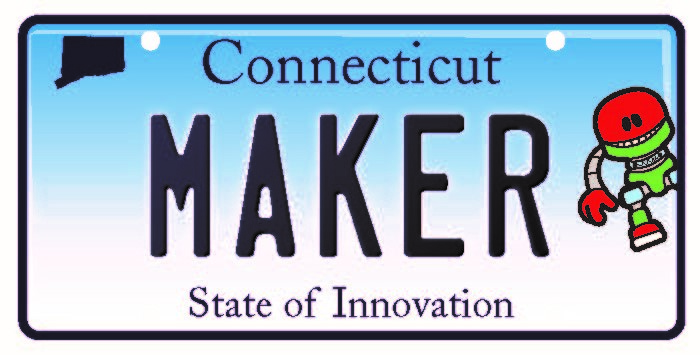 When individuals purchase a Keep Kids Safe plate, a portion of the fee goes to the Keep Kids Safe Fund, which “makes many worthy projects happen for youngsters.” The fund awards grants to schools, hospitals, municipalities and other non-profit organizations working to make all Connecticut children safer from severe and preventable injuries, according to the DMV website.