Hartford, New Haven As “Suburbs” of Boston and New York Raises Possibilities - and Pushback
/The objective was to provide evidence that Connecticut is on the cusp of a transit renaissance. But a “thought leader” article by a prominent faculty member at the University of Connecticut School of Business – an acknowledged expert in transportation and its impact on residential property values – has drawn a range of reactions from municipal, business and transportation officials in Connecticut, including some pushback. The article, by UConn associate professor of real estate and finance Jeffrey Cohen, stated that “with high speed, inter-state transportation, it would be much easier for Greater Hartford and New Haven to thrive as suburbs of Boston and New York City. Imagine how great it would be to hop on a fast train to Logan Airport, JFK or LaGuardia. The world would be at our doorsteps, and our doorsteps would be there for the world to explore.”
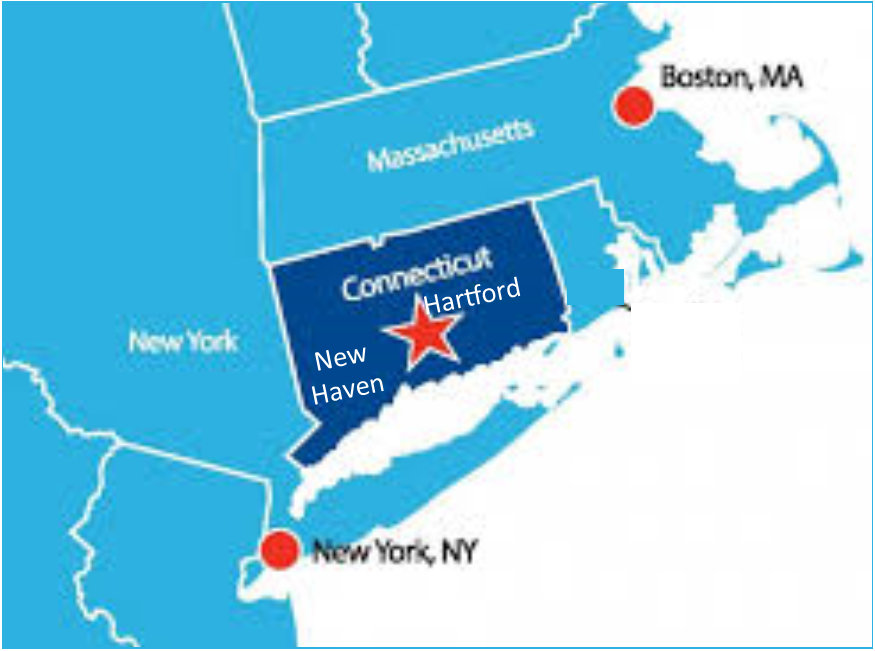 The characterization of two of the state’s largest cities as potential “suburbs” of New York and Boston, seemingly overlooking Bradley International Airport and Tweed-New Haven in the process, has raised questions from officials.
“As the second-largest airport in New England and the recently ranked third-best airport in the country, Bradley Airport offers convenience and efficiency that the airports in Boston and New York cannot match. Enhanced rail connectivity to the airport would be a major win for passengers throughout Connecticut and Western Massachusetts, and we would encourage UConn to consider maximizing the airport in its own state rather than promoting the outsourcing of Connecticut’s economy to its neighbors,” Connecticut Airport Authority Executive Director Kevin A. Dillon, A.A.E, told CT by the Numbers.
“While the Connecticut Airport Authority is supportive of high-speed rail connectivity in Connecticut, it is unfortunate that UConn would not recognize the benefit of promoting and utilizing Bradley International Airport as the primary airport for travelers in the region,” Dillon added.
“With regard to Bradley, Aer Lingus’ commitment to another four years of service between Hartford and Dublin is a huge boon to our economic development efforts and we hope other airlines will take note and pursue additional domestic and international routes,” said MetroHartford Alliance’s Brian Boyer, Vice President of Communications, Marketing, and Media and Public Relations. “It’s time to continue showing loyalty to our hometown airport as we position ourselves as a global region attracting international companies. With the ease of use at Bradley, brief 90-minute layovers in Dublin en route to destinations throughout Europe, pre-screening on return flights to clear customs before arrival in Hartford and the prospect of attracting new airlines, this flight is a win-win for our community.”
While some officials saw possibilities, as did Cohen, in the potential impact of continued enhancements to the state’s transportation system, they also acknowledged that those changes were not immediate and current assets should be maximized.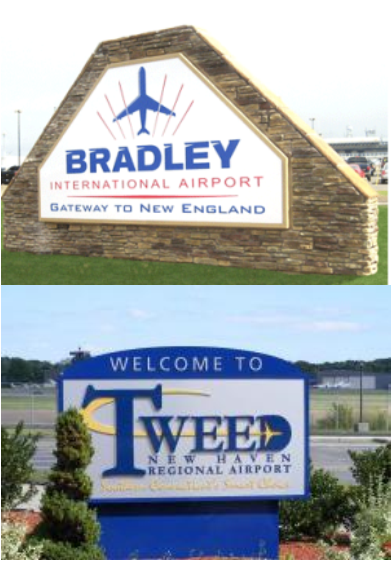
“Fast-growing healthcare, pharmaceutical, and technology sectors of the New Haven economy would be well-served with easier access to major markets in New York and Boston, and the international transportation options in those cities as well,” pointed out New Haven Mayor Toni N. Harp. “We know one-hour train service between New Haven and New York is technologically feasible: what we need to complete the project is the collective will to make it so.”
“High speed rail offers tremendous opportunities for New Haven. Our proximity to New York City is already a great selling point for the region, if the commute time became significantly shorter, then we are that much more attractive as a location. We should strive for this type of transportation improvement,” said Garrett Sheehan, president of the Greater New Haven Chamber of Commerce.
Sheehan went on to emphasize that “planning for the future of transportation should not take away from the present. This type of high speed rail is years away. In New Haven, we have an incredible transportation asset in Tweed-New Haven airport. It is already located within the city limits and just short drive from anywhere in this region. The Chamber supports expanding the airport’s runway and investing in Tweed to bring back more flights and destinations. Even a handful of more flights would be beneficial to the economic growth of our region.”
 Cohen, who has received national recognition in his field, praised the CTrail Hartford line - which connects New Haven, Hartford, and Springfield, MA - and CTfasttrak bus line – which links Hartford and New Britain - noting that “we are starting to see residential and business development near the stations, and this is one of the big benefits of transit.”
He added that “Some people in New York are starting to discover the hidden treasure of relatively low-priced real estate, along with the good schools, beautiful parks, and savory restaurants in central Connecticut.”
“An ideal location with easy access to major cities in the Northeast and Mid-Atlantic, we are proud to be at a point where talent and businesses from these markets should consider Hartford as an opportunity for economic growth and development,” the MetroHartford Alliance’s Boyer noted. “Transportation plays an integral role in this growth and with the new Hartford Rail Line and the continued growth at Bradley International Airport as one of the nation’s top mid-sized airports, we look forward to working with our community and prospective businesses to ensure long-term economic growth for generations.”

 Leading the way in the five-year analysis, released this month, are Barnstable in Massachusetts, at 13.7 percent employment growth; in New Hampshire it is Portsmouth at 10.1 percent, in Rhode Island, Providence/Warwick at 7.7 percent; Maine the greatest job growth has been in Portland/South Portland at 7.1 percent. Vermont is the only New England state with a leading city growing jobs at lower rate than Connecticut’s – Burlington/South Burlington at .8 percent. Only Alaska and Wyoming are lower, rounding out the 50 states.
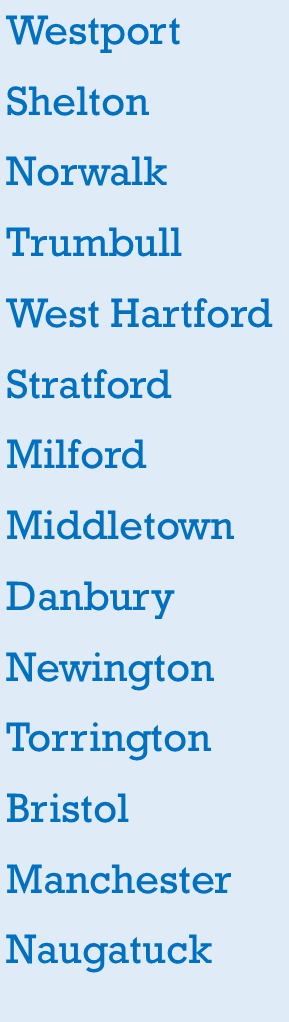 The analysis, by the financial services website WalletHub, was based on 40 key indicators of livability, ranging from housing costs to school-system quality to restaurants per capita. The indicators were grouped into five categories – affordability, economic health, education & health, safety, and quality of life.
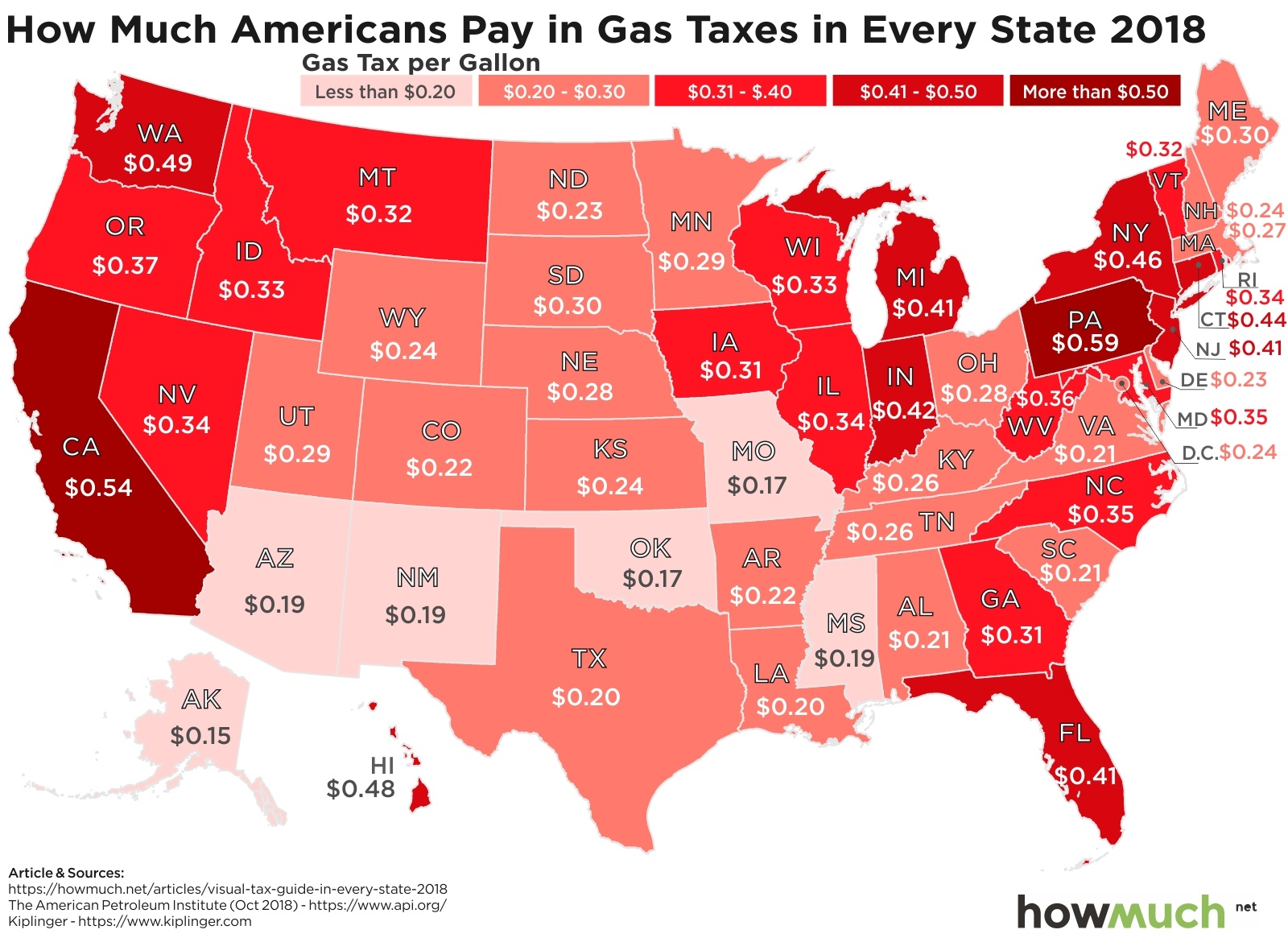
 In total, 27 states have raised or reformed their gas taxes since 2013. Indiana instituted a 10-cent increase in 2017; Oregon approved a 10-cent phase-in that began this year. The South Carolina legislature overrode a Governor’s veto to enact a 12-cent-per- gallon increase in the tax rate to be phased in over 6 years, according to data compiled by the Institute on Taxation and Economic Policy. Oklahoma’s legislature approved a 3 cent increase this year - that state’s first since 1987.
 The survey revealed that residents are not satisfied with the current health care system: 80 percent agree or strongly agree that “the system needs to change.” When given more than 20 options, they focused on the high prices charged by industry players, citing most frequently as a “major reason” for high health care costs:


 The comprehensive assessment of Hartford’s ecosystem also noted that “Hartford’s [startup] founders claim to have the right ambition to go global,” concluding that “Hartford’s startups have more potential to strengthen Global Market Reach and Global Connectedness.” In a number of areas analyzed in the assessment, Hartford is seen as having potential to strengthen the local startup community, its reach beyond Hartford, and the demographic of startup teams.


 The VentureClash competition started with applications from 300 companies from more than 15 countries. After two rounds of judging, nine finalists were named, and they then went on to compete at the live pitch event. The judges included investors and subject-matter experts from Greycroft Partners, Oak HC/FT, Real Ventures, Stanley Ventures, Teamworthy Ventures, Travelers and the Royal Bank of Scotland.


 “This aging population has contributed to diminished economic growth, with Connecticut being one of only four states in the country with contracting output. This occurred while its population growth was nearly at the bottom for all states, along with having one of the largest contractions of prime working-age adults,” S&P noted in their analysis. “The outlook is equally dim. We expect the state's higher concentration of middle-aged and elderly residents compared with young adults and children to worsen.”
 It went on to explain that “upon further look, there is a profound distinction among the projected population shift when broken down by age. Between 2010 and 2040, Connecticut’s age 65 years and over population is on pace to increase by 57%. However, its population between the ages of 20-64 is projected to grow less than 2% and the population age 18 and under is projected to decline by 7%.”