Fake News More Believable Than Real News; Researchers Cite Familiarity As Reason
/New research from Yale University indicates that fake news flourishes in large measure from its repetition – and can be more convincing than real news. The believably of fake news, according to the just-concluded study, is familiarity.
Last year’s Presidential election brought considerable attention to the phenomenon of “fake news,” described as entirely fabricated and often highly partisan content that is presented as factual news. Disinformation of this sort poses a major threat to democracy, the researchers point out, after examining the success of fake news, particularly on social media.
Prior work has shown that familiarity increases perceived accuracy of entirely plausible and innocuous (but not necessarily true) statements. The Yale researchers investigated whether this effect extends to highly implausible and partisan statements. Alarmingly, they found that it does.
Using actual fake news headlines presented as they are seen on Facebook, their 46-page research paper shows that even a single exposure increases perceptions of accuracy. The researchers found that “increased perceptions of accuracy for familiar fake news headlines occurs even when the stories are labeled as contested by fact checkers, or are inconsistent with the reader’s political ideology. The effect is also evident when there is no conscious awareness of having previously seen the headline.”
“Collectively, our results indicate familiarity is used heuristically to infer accuracy. Thus, the spread of fake news is supported by persistent low-level cognitive processes that make even highly implausible and partisan claims more believable with repetition. Our results suggest that political echo chambers not only isolate one from opposing views, but also help to create incubation chambers for blatantly false (but highly salient and politicized) fake news stories.”
Three Yale University researchers - Gordon Pennycook a postdoctural fellow in the Department of Psychology, Tyrone D. Cannon, Professor of Psychology and Psychiatry and Director of the Clinical Neuroscience Lab, and David G. Rand, Associate Professor of Psychology, Economics & Management in the School of Management – are raising alarms about the effectiveness of so-called “fake news.” Their paper, "Prior Exposure Increases Perceived Acc uracy of Fake News," appears on SSSN, a site "devoted to the rapid worldwide dissemination of research."
“News stories … were fabricated and promoted on social media in order to deceive the public for ideological and/or financial gain. An analysis of the top performing news articles in the months leading up to the election revealed that the top fake news articles actually outperformed the top real news articles on Facebook (in terms of shares, likes, and comments). Although it is unclear to what extent fake news influenced the outcome of the Presidential Election, there is no question that many people were deceived by entirely fabricated (and often quite fanciful) fake news stories,” the researchers explained.
“These findings have important implications for our society, and the functioning of democracy which relies on an informed electorate. For example, the familiarity effect we demonstrate suggests a potential self-reinforcing cycle of online falsehoods: the sharing of fake news on social media leads to increased familiarity, which leads to increased perceptions of accuracy, which presumably leads to more sharing, which necessarily leads to increased familiarity, which leads to further increases in perceptions of accuracy, and so on.”
They further point out that the “feedback cycle is likely to be particular pernicious when coupled with so-called ‘echo chambers’ in which people mostly interact online with others who share the same political opinions.” Their results suggest that echo chambers not only isolate one from opposing views, but also help to create “incubation chambers for blatantly false (but highly salient and politicized) fake news stories.”
These findings have implications beyond just fake news on social media, according to the researchers. They suggest that "politicians who continuously repeat false statements will be successful, at least to some extent, in convincing people those statements are in fact true.”
PHOTO: David G. Rand, Tyrone Cannon, Gordon Pennycook
 and Minnesota. Connecticut exceeded the national average in all three components – Jobs and Local Economy, Education, and Community Health and Civic Life.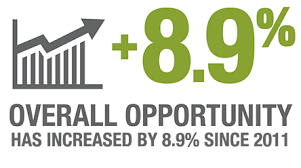
 Prevention and the U.S. Department of Justice.

 Nearly two-thirds of those surveyed in Connecticut (64%) called for “using technology to enhance the way students learn in the classroom” – the highest percentage among the six New England states. A majority called for “more significant efforts to close achievement gaps” (59%), more effective teachers (62%) and changes to the ways schools are funded (57%). The state legislature in Connecticut is currently considering changes in the school funding formula proposed by Gov. Malloy in the wake of a state court decision.


 “The U.S. population is increasingly diverse. Cultural competency is essential to deliver health care services that meet the needs of each individual and improves overall health,” said Christina Stasiuk, D.O., National Medical Director for Health Equity at Cigna.

 Connecticut’s best ranked Congressional district is the 2nd, in Eastern Connecticut, with an 8.7 percent of youth ages 16-24 disconnected, ranking 60th among the nation’s 435 Congressional districts. Next best if Connecticut’s 5th district, in Western Connecticut, ranked 116th with 9.9 percent disconnected youth. The 3rd C.D. ranks 134th, at 10.1 percent; the 4th C.D ranks 104th with 10.3 percent; and the 1st C.D. ranks 167th at 10.9 percent.
 The Office “actively assists local, national and international motion picture, TV and media production entities with finding locations in Connecticut, rules and procedures, securing permits, hiring local cast and crew and other services,” according to the agency’s website. In addition, the Office “represents the state and its agencies, municipalities and resident media professionals in interactions with media production entities and the industry at large.”
 venue in the city. Ralph Edwards/Stu Billett Productions received nearly $4 million in tax credits in fiscal year 2016, spending just over $13 million in the state on a number of prominent program productions.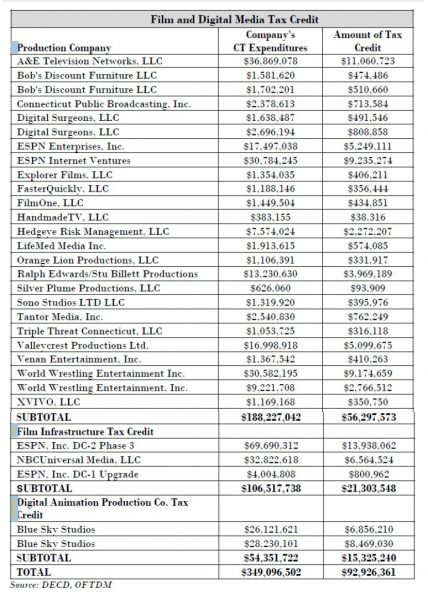

 The five-story building will see researchers will move in to the new space this summer, beginning in July. It will be the first structure on the Storrs campus to utilize an “open lab” concept for research. The shared research space and open floor plan is intended to make it easier for scientists from different disciplines to collaborate, fostering innovation,

 “More than Food focuses on promoting healthy food in pantries and helping people access other resources to find a job. We’re proud to support a partnership that is trying to find a solution to the hunger problem,” said Chris Traczyk, executive director of the Farmington Bank Community Foundation. “It’s a comprehensive, collective-impact project.” Dr. Katie Martin, assistant professor and director of the Public Health Program at USJ, and her research team developed a nutrition stoplight system called Supporting Wellness at Pantries, or “SWAP”, which helps food pantry clients choose healthier foods.