National Startup Analysis Sees Potential, Standout Efforts Underway in Hartford
/A new analysis of the status of the business startup community in six American cities – including Hartford – has found that Connecticut’s Capitol City has “strong startup potential,” and in some ways is already standing out among peers and competitors.
Startup Genome, with support from the Kauffman Foundation, selected six U.S. metropolitan areas that are not in the top 40 most populous and which have been faring less well economically than the country as a whole for a deeper analysis. In addition to Hartford, the analysis includes Albuquerque, Fresno, New Orleans, Reno and Springfield, MA.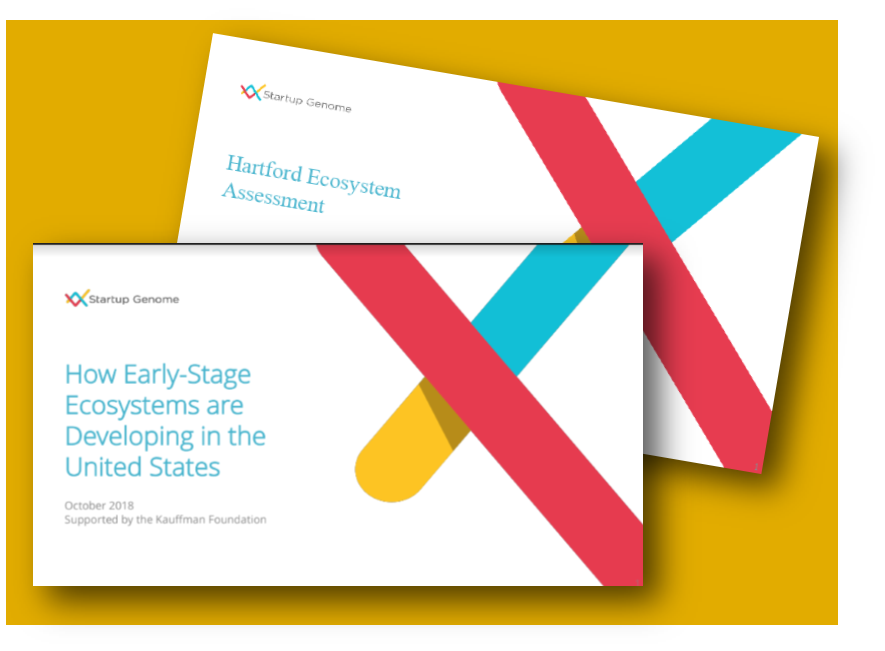
“In each of these metros, efforts are underway to support entrepreneurs, create more startups, and generate stronger economic trajectories. Like many other American cities (and elsewhere), they’ve been through economic ups and downs and now see startups as their next best hope for sustainable and broadly-shared growth,” the report, released this week, points out. Startup Genome works to increase the success rate of startups and improve the performance of startups across more than 30 countries.
“Every startup ecosystem shows room for growth and improvement, and Hartford has key strengths to build on. The city's strong heritage in insurance is already being leveraged by many stakeholders and the ecosystem is clearly attracting experienced talent to start and join companies,” Dane Stangler, president & chief policy officer of Startup Genome told CT by the Numbers.
In Hartford, reSET, which specializes in encouraging and assisting entrepreneurship and social enterprise, was among several local partners with whom Startup Genome worked to gather data from more than 300 respondents. Additional partners were the MetroHartford Alliance, Wesleyan University, UConn’s Connecticut Center for Entrepreneurship and Innovation, Upward Hartford, as well as Launch EZ, the West Hartford Chamber of Commerce and others.
“More broadly, Hartford shows greater diversity than peer ecosystems and already has a few hundred startups operating. By continuing to strengthen the local culture and focusing on startup success in key areas, the Hartford economy will enjoy higher levels of job creation and growth,” Stangler added.
Hartford and the other cities were determined to be in the Early Activation phase of the Ecosystem Lifecycle, with a mix of prominent attributes and areas with potential yet to be realized. In its analysis, the report indicates that “just in the span of a few years the startup scene has exploded,” in Hartford, noting that:
- investors and experts in Hartford provide more hours of help to founders than in the other cities, and more than the global average. (Experts include university faculty, corporate employees, mentors, and others.)
- nearly four in 10 founders in Hartford are women, which is twice the global average across all ecosystems in the Startup Genome database.
- 11 percent of startup founders in Hartford are immigrants, the second-highest in the sample.
“We’re so grateful that Startup Genome was able to include Hartford in its recent analysis of early-stage ecosystems, thanks to support from the Kauffman Foundation,” said reSET Managing Director Ojala Naeem. “Our great city is too often overlooked, and with local and state funding being what they are, national attention on all of the amazing businesses making an impact here is more important than ever. We have so many smart and motivated entrepreneurs who are worthy of investment consideration. They just need a spotlight.”
 The comprehensive assessment of Hartford’s ecosystem also noted that “Hartford’s [startup] founders claim to have the right ambition to go global,” concluding that “Hartford’s startups have more potential to strengthen Global Market Reach and Global Connectedness.” In a number of areas analyzed in the assessment, Hartford is seen as having potential to strengthen the local startup community, its reach beyond Hartford, and the demographic of startup teams.
During the past seven years Startup Genome has provided a way for entrepreneurs everywhere to “tell us about their journeys and their regions - giving their local expertise a voice at the policy-making table.” The organization’s primary research with founders, supplemented with secondary research and data from global and local partners, helps create the world’s most comprehensive research on startups. Approximately 10,000 startup founders fill out global survey providing direct input each year.

“Hartford has some record of successes – generating more will help ecosystem size and performance,” Startup Genome observed in its assessment of Hartford.


 “I am delighted the city has joined Sustainable CT in our latest efforts to develop and implement sustainability and renewable energy initiatives in Norwalk,” said Mayor Harry Rilling. “Being energy conscience is the right thing to do as we all have a moral obligation to lessen our environmental impact. I am glad the city has taken a leadership role and joined this important sustainability initiative.” Norwalk’s Council approved the resolution to join Sustainable CT in mid-August and designated the Common Council Planning Committee as the “Sustainability Team” for the program. Norwalk was officially registered with Sustainable CT on August 24.
 American Innovation $1 coins, to be issued at a rate of four new coins per year, will bear a reverse image or images emblematic of a significant innovation, an innovator, or a group of innovators from each of the 50 states, the District of Columbia, and the territories of the United States. Published reports indicate that the $1 coins would sell for more than face value — up to $1.32 — providing a healthy profit for the federal government since the coins cost less than 35 cents to make.

 The review of the research, conducted by Connecticut-based Rodriguez Data Solutions, points out that policymakers often promote K-12 regionalization as a way to achieve cost savings, but often fail to consider the consequences for student educational achievement. The report reviewed initiatives to promote K-12 regionalization in several states including Connecticut, Maine, New York and Vermont. Among the findings:

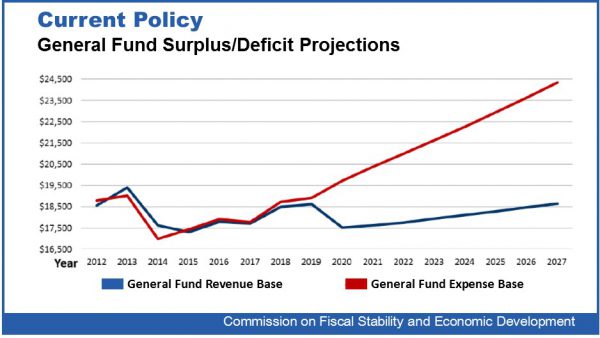 Smith and Robert Patricelli, former CEO & Founder of Women's Health USA, who co-chaired the panel, were featured along with Commission member Cindi Bigelow, CEO of Bigelow Tea, at an event coordinated by the Hartford Business Journal last week. It was one of nearly 100 forums, discussions and one-on-one meetings that the co-chairs and other commission members have had since their findings and recommendations were issued.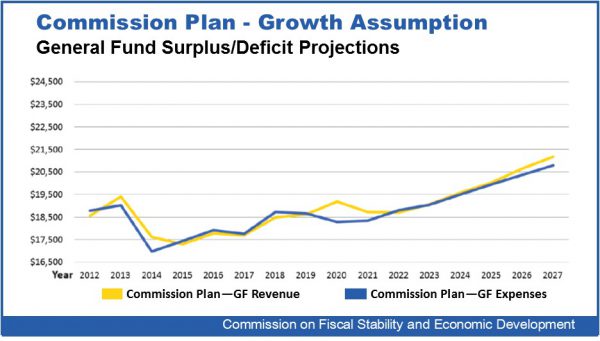
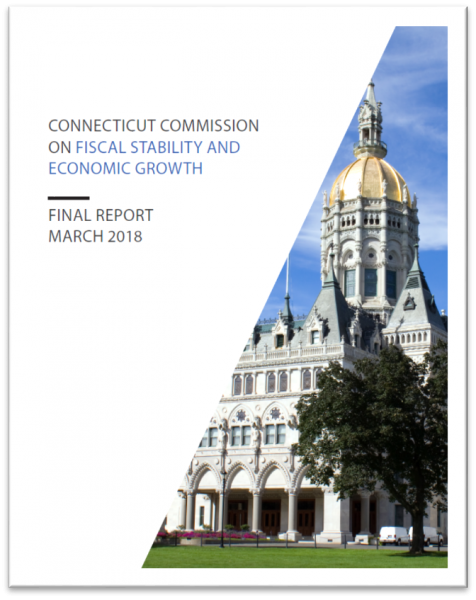 The co-chairs say it is understandable that more was not done with the Commission’s recommendations during the short 2018 legislative session, largely because an election was just around the corner. Instead, the legislature opted to have the Office of Policy and Management (OPM) coordinate two studies, soon to get underway. One would look at the Commission’s recommendations that involve “rebalancing of state taxes to better stimulate economic growth without raising net new taxes”; the other would conduct a study of the proposal for reform of the Teachers' Retirement System.


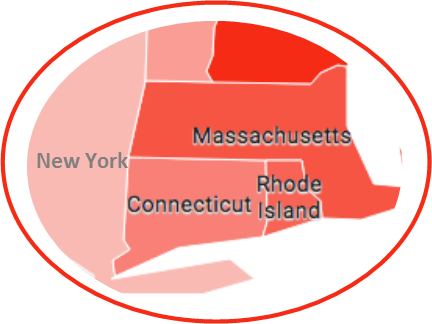 Even in advance of the merger plan, the Board of Regents has been extending lower tuition offers in every direction, reaching out to students in Massachusetts, Rhode Island, New York and even New Jersey, making offers that the Regents hope will be tough to refuse.