Coalition Calls for Public Input, Comprehensive Analysis, Greater Scrutiny of Cigna-Anthem Merger
/A coalition of consumer and medical organizations is calling for greater public input into the Connecticut Insurance Department’s review of the proposed Anthem-Cigna health insurance mega-merger, and is expressing concerns about the potential “negative impact on both the cost and quality of care in Connecticut” of that merger and the proposed Aetna-Humana merger. The groups – Universal Health Care Foundation, Connecticut Citizen Action Group and the Connecticut State Medical Society – formed the “Connecticut Campaign for Consumer Choice” coalition and urged state Insurance Commissioner Katherine Wade to “ensure an open, transparent hearing process in Connecticut, where policy holders, physicians and other interested parties are given maximum opportunity to share their views.”
In a letter to Wade, the organizations urged a series of actions as part of the Anthem-Cigna review “to protect our health care options in Connecticut” – that a public hearing be held at a time and place that “allows for maximum public participation,” that interested parties be granted intervenor status (which would allow witnesses to be called and cross examined), and that a department commission a study that will “analyze the potential impact on cost, access, and the Connecticut economy, including jobs,” as part of the agency’s deliberations on the merger proposal. 
Bloomfield-based Cigna and Indianapolis-based Anthem are two of the nation’s five largest health insurance companies. It is anticipated that a hearing would be held sometime this spring, but plans have not yet been announced. The coalition leaders indicated that “all eyes from around the country will be on Connecticut,” as home of two of the nation’s leading health insurance companies.
They also launched a new website, www.consumerchoicect.org, which will provide the public with information about the proposed mergers. The site states that “what’s really happening is that fewer choices mean higher costs for consumers and employers. With fewer insurers for the remaining three national companies to compete against, there will be less of an incentive to keep costs low or develop innovative serv ices to bring in new customers.”
Connecticut Insurance Department spokeswoman Donna Tommelleo said the department "is reviewing the proposed acquisition in accordance with all applicable Insurance Holding Company Statutes. The Form A application is posted on Home Page of the Department’s Web site for public view and the site is updated frequently as more documents are filed. After the application is fully reviewed and deemed complete by the Department there will be public hearing held within 30 days. The public will be given ample opportunity to provide both written and oral comment." She indicated that "the Department respects the coalition’s interest in the matter.” The Anthem-CIGNA merger was filed with the state Insurance Department last September.
In advocating for the merger, Anthem has established a website that highlights the company’s views on the benefits of a merged company, at www.betterhealthcaretogether.com The site indicates that “the combined companies will operate more efficiently to reduce operational costs and, at the same time, further our ability to manage what drives costs, helping to create more affordable health care for consumers.”
Matthew Katz, executive director of the Connecticut State Medical Society, said that the merger “could be the demise of already struggling private practices,” and will a dversely impact patient costs and access to care. "Goliaths will not benefit consumer choice," he said. The Society opposes the merger, as do the other organizations in the coalition. They indicated that a fair, open, transparent review process would make it more difficult for the merger to be approved as being in the public interest.
Noting that Wade serves as chair of the National Association of Insurance Commissioners working group on the Anthem-Cigna mercer, and that the working group’s proceedings are not open to the public, the coalition leaders stressed the importance of an open and comprehensive process in Connecticut.
The letter to Commissioner Wade, dated March 22, was signed by Frances Padilla, president of the Universal Health Care Foundation of Connecticut, Tom Swan, executive director of the Connecticut Citizen Action Group, and Matthew Katz, Chief Executive Officer of the Connecticut State Medical Society.
The Connecticut State Medical Society is a federation of eight component county medical associations, with total membership exceeding some 7,000 physicians. Universal Health Care Foundation of Connecticut is an independent, non-profit philanthropy, supporting research-based policy, advocacy and public education that “advances the achievement of quality, affordable health care for everyone in the state.” CCAG, founded four decades ago by consumer advocate Ralph Nader, has "created change on the issues members care about including quality, affordable health care, protection of consumers, the environment, and democracy."
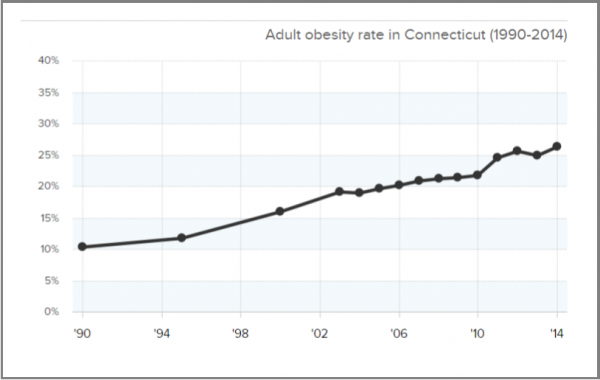
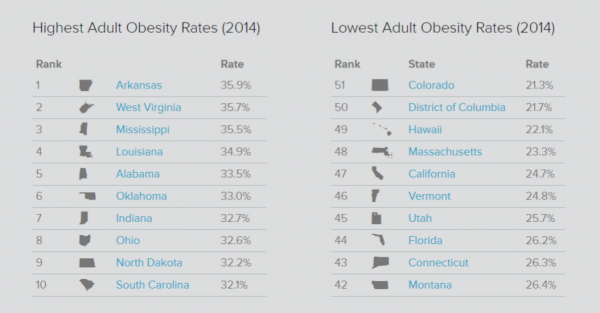
 The need for stronger action is underscored by recent statistics. In Connecticut, one of every three kindergartners is overweight or obese, as is one of every three low-income children. Children who are overweight or obese are more likely, according to the policy brief, to have:
 A number of the proposals have been successfully implemented in other jurisdictions, including states and cities. Marlene Schwartz, Director of UConn's Rudd Center for Food Policy and Obesity, noted that Connecticut has long been a leader in providing nutritional lunches in schools, and said that now the state’s attention needs to move to the earlier years of childhood. “The field has realized that we need to start even earlier,” she said. Rudd also indicated that determining "policy changes that might help reduce the disparities" in Connecticut, which are apparent in race, ethnicity and socioeconomic data, is also essential.

 The recommendations, described as “affordable, achievable, common sense measures,” were prepared for CHDI as part of a grant to the UConn Rudd Center for Food Policy and Obesity, funded by the Children’s Fund of Connecticut. The author was public health policy consultant Roberta R. Friedman, ScM.
 IMPACT “Preventing Childhood Obesity: Maternal-Child Life Course Approach” in 2014. The report reviewed scientific research on the causes of obesity and explored implications for prevention and early intervention. In 2015, the Children’s Fund of Connecticut funded four obesity prevention projects in Connecticut that addressed health messaging, data development, policy development and baby-friendly hospitals.

 r of unsheltered individuals in those cities went up 10.5 percent and the number of unsheltered people in homeless families grew by 18.8 percent, Governing revealed.


 ents currently working on the Hartford Hand initiative. Each week, Welch and colleagues Yonathan Moshayev, Jake Green, Amber Sayer, and Stephen Sousa, spend several hours improving the current design to make the unique Hartford Hand a reality for patients.



 Just over the city line in West Hartford, ShopRite supermarket (corner of Kane and Prospect Streets) is offering a series of free courses with a registered dietician to help individuals know “where to start on your path to becoming healthier.” The “Eat Well Be Happy” Weight Management Series begins on February 24, and will be held every Wednesday from 6-7:30 p.m., for six weeks. Each class focuses on a different topic including: meal planning, portion control, importance of fiber, protein and hydration and controlling sugar cravings, among others. Individual consultation is also available, and all nutritional services are available to customers free of charge. (Interested individuals can contact shana.griffin@wakefern.com)

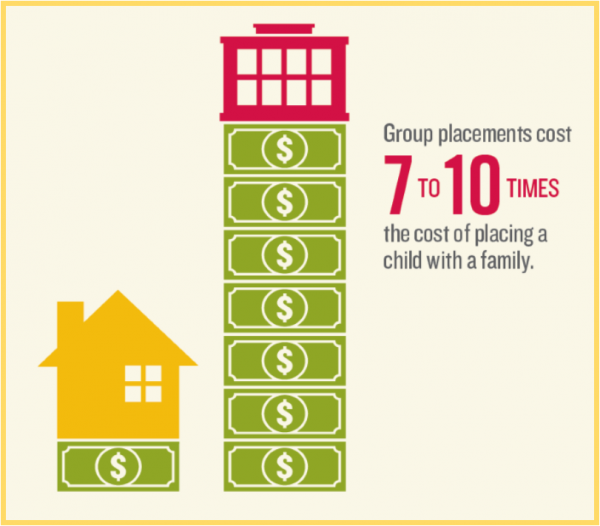
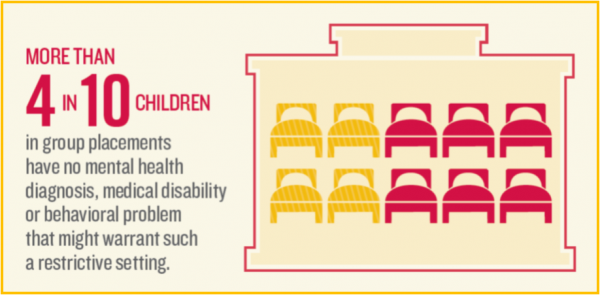
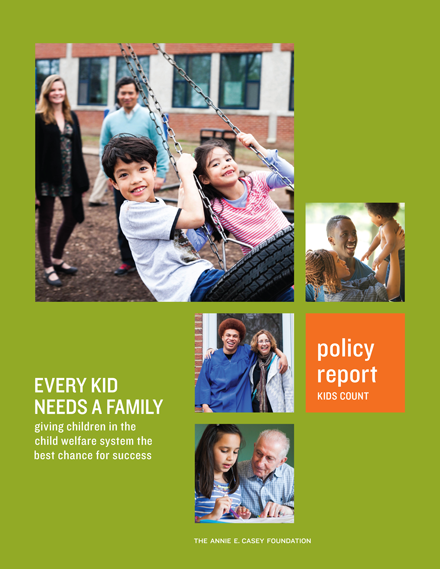 y percent of the children in group placements have no documented behavioral or medical need that would warrant placement in such a restrictive setting.

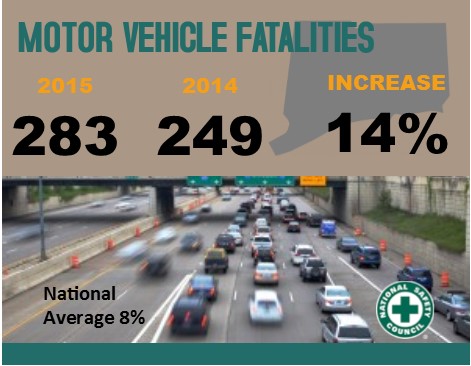 Nationally, 2015 saw the largest single-year percent increase in motor vehicle deaths since 1966. Estimates from the National Safety Council (NSC) show an 8 percent increase in 2015 compared with 2014 – with substantial changes in some states, including Connecticut. There were 283 motor-vehicle related deaths in Connecticut last year, compared with 249 in 2014 and 276 in 2013.

 safety, the National Safety Council recommends drivers: