Legislature to Examine Why Zero Convictions for Human Trafficking, Even As Incidents Increase in CT
/Human trafficking is a form of modern-day slavery. This crime occurs when a trafficker uses force, fraud or coercion to control another person for the purpose of engaging in commercial sex acts or soliciting labor or services against his/her will. It is happening in Connecticut. Connecticut’s Permanent Commission on the Status of Women (PCSW) is convening a Joint Informational Forum with the state legislature’s Judiciary, Public Safety and Security, and Children’s Committees on Thursday, March 31 at the Legislative Office Building to examine the issue, the response of law enforcement and other agencies in Connecticut, and where changes in state law need to be made.
A decade ago, in 2006, Connecticut enacted Public Act 06-43, which created the felony charge of trafficking in persons.
“And yet, since then, only 10 arrests have been made and there have been no convictions,” according to PCSW, which noted that during that same time, the Department of Children and Families has received more than 400 referrals of individuals with high-risk indicators for human trafficking that demanded a collaborative response, including the participation of law enforcement. Those numbers have climbed each year, with 133 referrals in 2015, according to the Governor’s office. 
“We decided to convene trafficking experts because, as we learn more about human trafficking, in particular sex trafficking of adults and minors, we need to ensure that victims are supported and that law enforcement and prosecutors have the tools to adequately punish traffickers, those buying sex, and those permitting and facilitating the sale of sex in Connecticut,” said Jillian Gilchrest, senior policy analyst for the PCSW, and chair of the state's Trafficking in Persons Council.
“Although the legislature has made great strides to increase awareness and enhance training programs against human trafficking, and especially the sex trafficking of minors – the truth is that this modern-day slavery is a national issue,” said State Rep. Noreen Kokoruda, the ranking member of the General Assembly’s Committee on Children. “Connecticut must take the critical steps necessary to combat human trafficking and to make sure that the legislation we passed is enforced. In order to proactively address this issue, we need a collaborative effort from all agencies; this issue is simply too important to ignore.”
Data from the National Human Trafficking Resource Center (NHTRC) indicates that in 2015 there were 120 calls made and 39 human trafficking cases reported in Connecticut – the highest numbers in the past three years. The statistics are based on phone calls, emails, and webforms received by the NHTRC that reference Connecticut. The NHTRC works with service providers, law enforcement, and other professionals in Connecticut to serve victims and survivors of trafficking, respond to human trafficking cases, and share information and resources.
Since 2007, the NHTRC has received more than 600 calls to their hotline that reference Connecticut. As Connecticut’s felony crime of trafficking in persons, Connecticut Statute §53a-192a approaches its 10-year- anniversary, members of the Judiciary, Public Safety, and Children’s Committees are interested in understanding why no one has been convicted under §53a-192a and what policy or legislative changes can help remove current barriers to prosecution in these cases, officials said.
 In Connecticut, a person is guilty of trafficking in persons when such person compels or induces another person to engage in sexual contact or provide labor or services by means of force, threat of force, fraud or coercion. Anyone under the age of 18 engaged in commercial sexual exploitation is deemed a victim of domestic minor sex trafficking irrespective of the use of force, threat of force, fraud or coercion.
In a January report to the state legislature, the Trafficking in Persons Council pointed out that “Connecticut is not unique; there are many states that have yet to prosecute a trafficking case. In fact, according to the U.S. Department of State, as of 2011 only 18 states brought forward human trafficking cases under state human trafficking statutes.”
A series of proposals are now being considered by the state legislature. In recent testimony, the PCSW pointed out that “the demand side of human trafficking and prostitution has all but been ignored in Connecticut. Arrests have been concentrated first on prostitutes, and secondarily on those buying sex. In fact, in the last 10 years in Connecticut, prostitutes were convicted at a rate of 7 times that of those charged with patronizing a prostitute It’s a basic premise of supply and demand: if you reduce the demand, you reduce the supply, which in this case, is the purchase of women and children for sex.”
In legislative testimony last month, the PCSW pointed out that “more and more trafficking and prostitution are being arranged online and taking place at hotels and motels throughout Connecticut. According to the National Human Trafficking Resource Center (NHTRC), Hotels and Motels are among the top venues for sex trafficking in Connecticut.” PCSW stressed that “as we learn more about human trafficking, and what the crime looks like in Connecticut, we must ensure that our policies keep pace with that reality.” Among the proposals is one designed to “give more tools to investigators,” Gov. Malloy and Lt. Gov. Wyman recently told a legislative committee.
The Trafficking in Persons (TIP) Council is chaired and convened by the Permanent Commission on the Status of Women and consists of representatives from State agencies, the Judicial Branch, law enforcement, motor transport and community-based organizations that work with victims of sexual and domestic violence, immigrants, and refugees, and address behavioral health needs, social justice, and human rights.
The report recommended that “Connecticut must ensure the creation of laws that address the continuum of exploitation, the implementation of laws, and the pursuit of criminal punishments for such cases. Sentences should take into account the severity of an individual’s involvement in trafficking, imposed sentences for related crimes, and the judiciary’s right to impose punishments consistent with its laws.”
Regarding victims of trafficking in Connecticut, the report recommended that “Key victim protection efforts include 3 "Rs" - rescue, rehabilitation, and reintegration. It is important that human trafficking victims are provided access to health care, counseling, legal and shelter services in ways that are not prejudicial to victims’ rights, dignity, or psychological well-being. Effective partnerships between law enforcement and service providers mean victims feel protected and such partnerships help to facilitate participation in criminal justice and civil proceedings.”
According to Rep. Rosa C. Rebimbas, ranking member of the Judiciary Committee, “Connecticut has made great strides to protect vulnerable women and children with strong laws against human trafficking, and resources to help them escape from the horrors of human trafficking, yet we are still behind when it comes to prosecution of the criminals who perpetrate such heinous offenses. We will continue to press for stronger laws to protect Connecticut residents, and to bring justice on their behalf.”

 ices to bring in new customers.”
 dversely impact patient costs and access to care. "Goliaths will not benefit consumer choice," he said. The Society opposes the merger, as do the other organizations in the coalition. They indicated that a fair, open, transparent review process would make it more difficult for the merger to be approved as being in the public interest.
 The need for stronger action is underscored by recent statistics. In Connecticut, one of every three kindergartners is overweight or obese, as is one of every three low-income children. Children who are overweight or obese are more likely, according to the policy brief, to have:
 A number of the proposals have been successfully implemented in other jurisdictions, including states and cities. Marlene Schwartz, Director of UConn's Rudd Center for Food Policy and Obesity, noted that Connecticut has long been a leader in providing nutritional lunches in schools, and said that now the state’s attention needs to move to the earlier years of childhood. “The field has realized that we need to start even earlier,” she said. Rudd also indicated that determining "policy changes that might help reduce the disparities" in Connecticut, which are apparent in race, ethnicity and socioeconomic data, is also essential.
 The recommendations, described as “affordable, achievable, common sense measures,” were prepared for CHDI as part of a grant to the UConn Rudd Center for Food Policy and Obesity, funded by the Children’s Fund of Connecticut. The author was public health policy consultant Roberta R. Friedman, ScM.
 IMPACT “Preventing Childhood Obesity: Maternal-Child Life Course Approach” in 2014. The report reviewed scientific research on the causes of obesity and explored implications for prevention and early intervention. In 2015, the Children’s Fund of Connecticut funded four obesity prevention projects in Connecticut that addressed health messaging, data development, policy development and baby-friendly hospitals.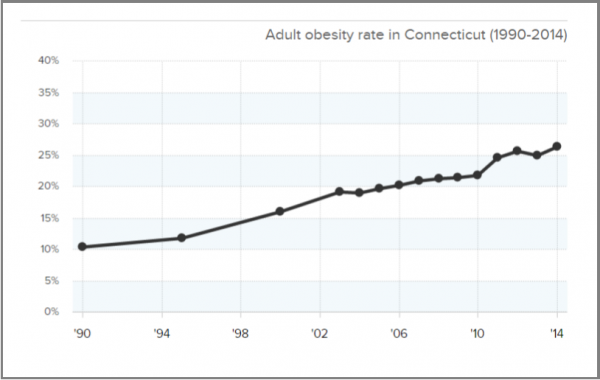


 r of unsheltered individuals in those cities went up 10.5 percent and the number of unsheltered people in homeless families grew by 18.8 percent, Governing revealed.
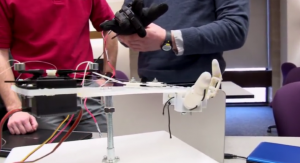
 ents currently working on the Hartford Hand initiative. Each week, Welch and colleagues Yonathan Moshayev, Jake Green, Amber Sayer, and Stephen Sousa, spend several hours improving the current design to make the unique Hartford Hand a reality for patients.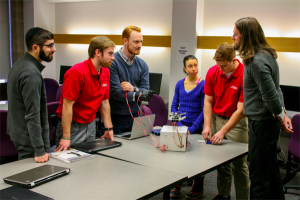


 Just over the city line in West Hartford, ShopRite supermarket (corner of Kane and Prospect Streets) is offering a series of free courses with a registered dietician to help individuals know “where to start on your path to becoming healthier.” The “Eat Well Be Happy” Weight Management Series begins on February 24, and will be held every Wednesday from 6-7:30 p.m., for six weeks. Each class focuses on a different topic including: meal planning, portion control, importance of fiber, protein and hydration and controlling sugar cravings, among others. Individual consultation is also available, and all nutritional services are available to customers free of charge. (Interested individuals can contact shana.griffin@wakefern.com)
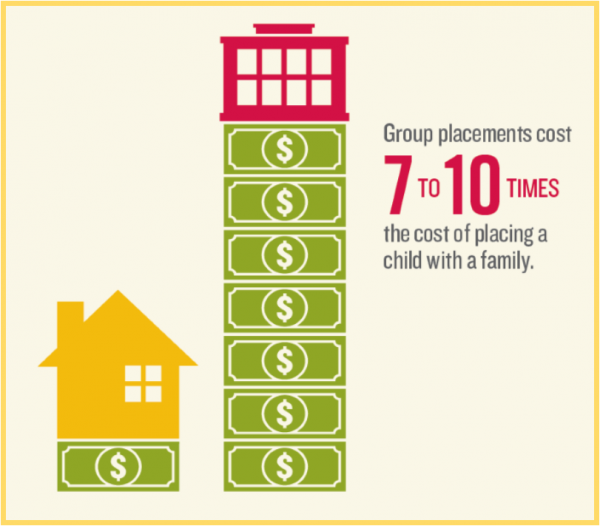
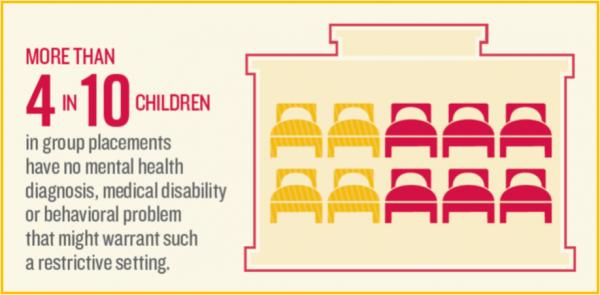
 y percent of the children in group placements have no documented behavioral or medical need that would warrant placement in such a restrictive setting.