Connecticut’s Anxiety Above National Average, Analysis of Google Searches Shows
/High anxiety. It is apparently as American as apple pie. At least that is what an analysis of Google searches is showing. And Connecticut is above average, although less anxious than the rest of New England.
In a state-by-state comparison of anxiety levels based on Google searches, topping the list was Maine, 21 percent above the national average. At the other end of the spectrum was Oregon, 26 percent below the U.S. average. 
The states with the highest percentages of Google searches for “anxious” and related terms include Maine, New Hampshire, Vermont, Massachusetts, Rhode Island, Pennsylvania, West Virginia and North Dakota. The least anxious: Oregon, Nevada, Virginia, Kansas, Alaska and Hawaii.
The New York Times reports that Google’s measure of anxiety includes a broad range of searches, including “anxiety help,” “anxious” and “anxiety symptoms.”
“While Google searches may not be a perfect measure of anxiety,” a Times columnist reports, “there is increasing evidence that searches on a health condition highly correlate with the number of people suffering from that condition.” The rates of Google searches for anxiety in a state also correlate with survey measures of anxiety, explained Seth Stephens-Davidowitz, an economist and a contributing opinion writer for the Times.
Nationwide over the past eight years, Google search rates for anxiety have more than doubled. They are higher this year than they have been in any year since Google searches were first tracked in 2004, according to Stephens-Davidowitz. Anxiety, however, is not uniquely American. A review of online searches in the United Kingdom in 2014 found that 'What is anxiety?' was one of the top 10 most searched for questions.
 Among the leading searches this year in the U.S. are driving anxiety, travel anxiety, separation anxiety, anxiety at work, anxiety at school and anxiety at home. Connecticut is the only New England state where the rate of Google searches for anxiety is not more than 10 percent above the national average. The analysis indicates that “Americans anxieties are up 150 percent compared with 2004, based on internet searches.” And still climbing.
The two leading drivers, according to the analysis:
- Poverty, and/or a major recession. States that were more deeply affected by the Great Recession saw bigger increases in anxiety during and after the recession. The estimate is that each percentage point increase in unemployment is associated with a 1.4 percent increase in anxiety. Google searches for anxiety tend to be higher in places with lower levels of education, lower median incomes and a larger part of the population living in rural areas, the analysis discovered.
- High opiate prescription rates — and high search rates for opiate withdrawal — are among the places with the highest search rates for panic attacks. These areas include Appalachia and the South. During years in which many people complained of opiate withdrawal, many people also complained about panic attacks. Searches for opiate withdrawal consistently start high at the beginning of the year. They mostly drop through the year, although they rise in the summer and then surge around Christmas.
Some have raised questions about the inferences in the analysis, wondering if opiate usage, for example, is a cause or effect reflected in the Google searches. Others have suggested that merely the act of using Google to investigate real or perceived symptoms can make an individual more anxious, and more likely to search Google again, and the pattern could then repeat, leading to more frequent searches.


 The New Haven Register


 running in communities including Hartford, New Britain, Trumbull, Bethel, Stamford, Norwalk, Manchester, Milford, Danbury, New Milford, Ridgefield, Brookfield, Wallingford. Another is expected soon in East Haven.
 s," the organization said following publication of the study.
 The NCHS data also ranked Connecticut 12th in the Cesarean Delivery Rate.
 Regarding the percentage of babies born to unmarried mothers, a statistic long tracked by federal health officials, three states saw more than half the children born in that category. The highest percentages were in Mississippi (54.0%), Louisiana (52.7) and New Mexico (51.3%).

 The keynote address will be provided by Camara P. Jones, MD, MPH, PhD, research director on social determinants of health and equity in the Division of Adult and Community Health, National Center for Chronic Disease Prevention and Health Promotion and President of the American Public Health Association (APHA).
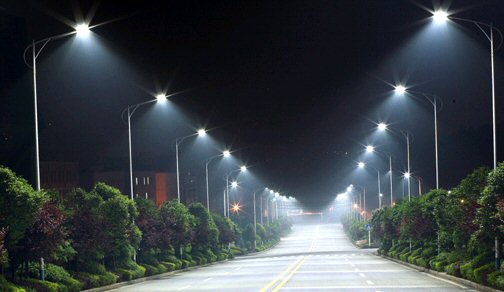



 In addition to its impact on drivers, the AMA notes that blue-rich LED streetlights operate at a wavelength that most adversely suppresses melatonin during night. It is estimated that white LED lamps have five times greater impact on circadian sleep rhythms than conventional street lamps, the AMA indicated. Recent large surveys, according to the AMA, found that brighter residential nighttime lighting is associated with reduced sleep times, dissatisfaction with sleep quality, excessive sleepiness, impaired daytime functioning and obesity.
 The Conversation website is a collaboration between editors and academics to provide "informed news analysis and commentary that’s free to read and republish." It
 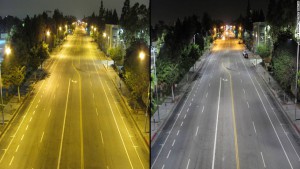 PHOTO: Traditional street lighting (left) vs. LED lighting (right).