Heart Disease, Cancer Leading Causes of Death in CT; Septicemia Deaths Among Highest in USA
/Heart disease, cancer and accidents were the leading causes of death in Connecticut according to data released by the National Center for Health Statistics of the Centers for Disease Control and Prevention. The other major causes of death in Connecticut include chronic lower respiratory diseases, stroke, alzheimer’s disease, diabetes, influenza/pneumonia, kidney disease and septicemia.
In all but two instances, Connecticut ranked in the lowest quintile among the states, ranking 40th in the rate of heart disease deaths, 43rd in cancer deaths, 48th in d eaths due to diabetes, and 48th in deaths caused by stroke. The state ranked 15th, however, in deaths caused by septicemia and 35th in accidental deaths.
Septicemia, or sepsis, is a life-threatening complication of an infection in the bloodstream. Sepsis is the body’s overwhelming response to infection which can lead to tissue damage, organ failure, and death. It kills 258,000 Americans each year, according to the Sepsis Alliance, but remains largely unknown. Although it is among the 10 most frequent causes of death nationwide, in a 2015 online survey of 2,000 participants, only 47 percent of Americans were aware of sepsis, the Alliance reported. The deaths this year of actress Patty Duke and boxing legend Muhammad Ali have brought some increased attention to sepsis.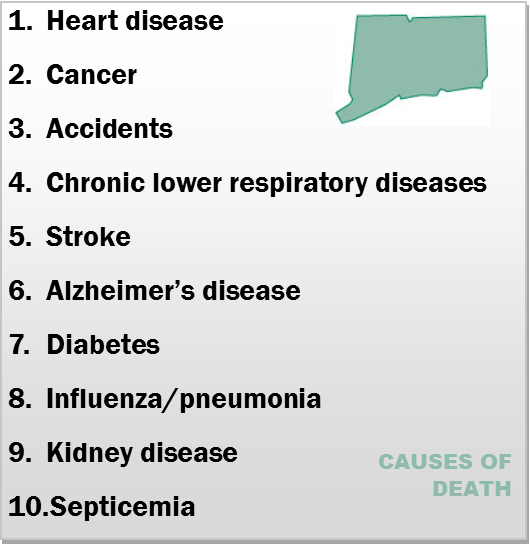
Connecticut had 578 recorded deaths caused by septicemia, a rate of 12.6 per 100,000 total population, in 2014, according to the CDC data. The United States rate was 10.7. The highest death rates from septicemia were in Mississippi, Louisiana, Alabama, Texas, New Jersey, Kentucky, Arkansas, Maryland, Georgia, and Virginia.
There were 7,018 deaths from heart disease and 6,621 from cancer in Connecticut in 2014, according to the data. The next most frequent cause of death, accidents, totaled 1,642, followed by chronic lower respiratory diseases, which caused, 1,368 deaths, and stroke, which caused 1,266.
Connecticut’s rate of deaths per thousand population by stroke, 26.3, is among the nation’s lowest. The national rate is 36.5. The only states with lower rates of stroke deaths are Rhode Island and New York. Connecticut is tied with Arizona, just ahead of Massachusetts, New Hampshire and Wyoming. The highest rate of deaths from stroke are in Mississippi, Alabama, Tennessee, Louisiana and Arkansas.
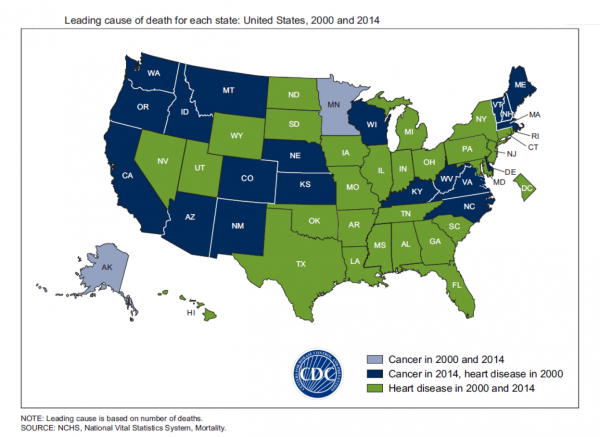
Heart disease has long been the leading cause of death for all U.S. states, with cancer as the second leading cause, according to the CDC. In 1990, Alaska became the first state to experience a switch in ranks between these two causes. In 2000, Minnesota experienced the same switch. As of 2014, there are now 22 states with cancer as the leading cause of death. Heart disease remains the leading cause in Connecticut.
In 2013, the leading causes of death in Connecticut were heart disease (7.090), cancer (6,619), chronic lower respiratory diseases, accidents, stroke, alzheimer's disease, diabetes, influenze/pneumonia, kidney disease and suicide.
 In addition to the expert panel on opioid abuse, there will be more than 30 presenters on public health topics, a presentation on the history of CPHA and public health in the
 state, and a look forward to the future and innovations on the horizon in health research, policy, and community programs.
 She seeks to broaden the national health debate to include not only universal access to high quality health care but also attention to the social determinants of health (including poverty) and the social determinants of equity (including racism). As a methodologist, she has developed new ways for comparing full distributions of data (rather than means or proportions) in order to investigate population-level risk factors and propose population-level interventions.
 “The practice of selling look-alike Smart Snacks in schools likely benefits the brands,” says Harris, “but may not improve children’s overall diet, and undermines schools’ ability to teach and model good nutrition.”
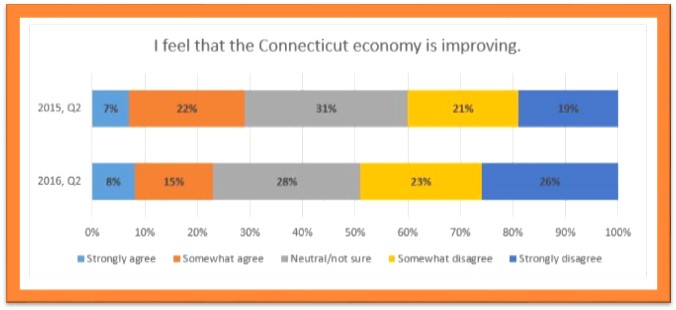
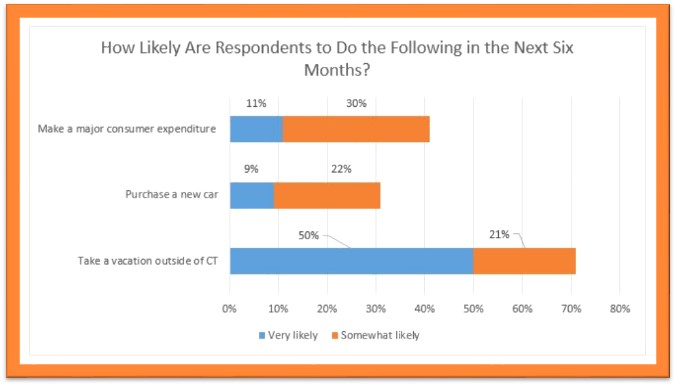 Increasingly, residents believe that jobs are “very hard to get” in Connecticut compared with six months ago (from about one-quarter to one-third of those surveyed in Q2 2016 versus Q2 2015), and are, in growing numbers, saying they would rather leave than stay.
 Forty-three percent, an increase from 40 percent in the year’s first quarter, answered “all of the above” when asked if education, libraries, public health, public safety and animal control could be provided regionally. Among those services individually, there was slightly greater support for a regional approach to public safety, slightly less for each of the others. The largest increase was for “all” of the services.
 Among the leading searches this year in the U.S. are driving anxiety, travel anxiety, separation anxiety, anxiety at work, anxiety at school and anxiety at home. Connecticut is the only New England state where the rate of Google searches for anxiety is not more than 10 percent above the national average. The analysis indicates that “Americans anxieties are up 150 percent compared with 2004, based on internet searches.” And still climbing.


 The New Haven Register


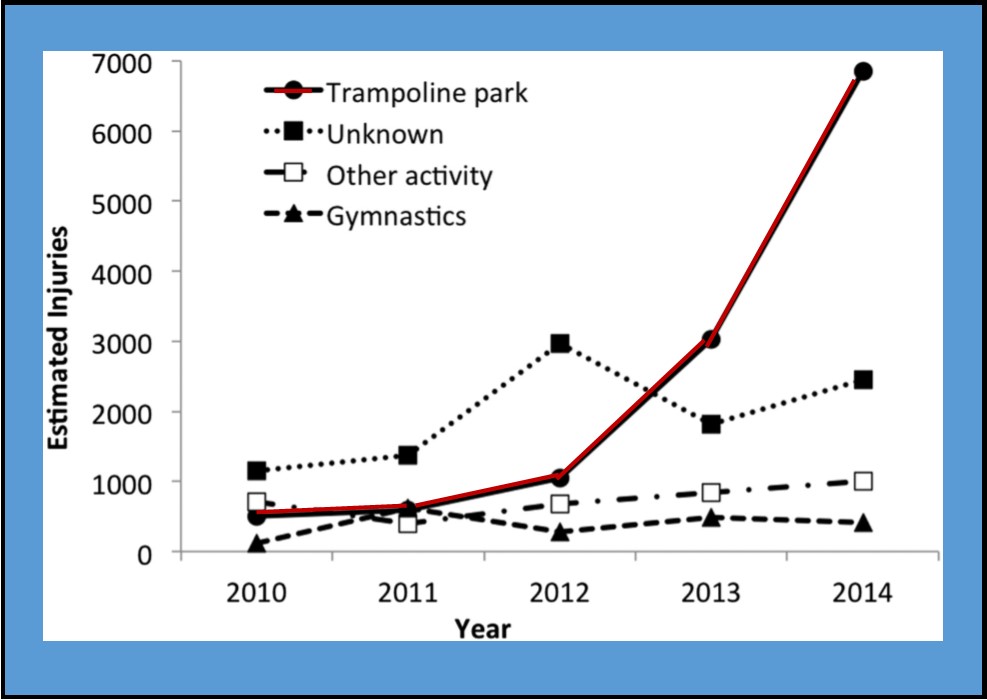 running in communities including Hartford, New Britain, Trumbull, Bethel, Stamford, Norwalk, Manchester, Milford, Danbury, New Milford, Ridgefield, Brookfield, Wallingford. Another is expected soon in East Haven.
 s," the organization said following publication of the study.
 The NCHS data also ranked Connecticut 12th in the Cesarean Delivery Rate.
 Regarding the percentage of babies born to unmarried mothers, a statistic long tracked by federal health officials, three states saw more than half the children born in that category. The highest percentages were in Mississippi (54.0%), Louisiana (52.7) and New Mexico (51.3%).