Health Reform Efforts Earn CT a C+, Survey Says
/Connecticut health care thought leaders have again given the state a C+ grade for health reform, as the state’s GPA dropped slightly from 2.4 to 2.2. Connecticut’s grade for effort didn’t change from last year – holding steady at a B-/C+ (GPA 2.5) in the annual survey by the Connecticut Health Policy Project, as part of their efforts to increase public awareness of health care issues among state residents.
Connecticut continues to earn higher marks for Medicaid and the health insurance exchange, according to the survey. Grades for patient-centered medical homes were down from recent years. Lowest marks went to efforts to address the health care workforce, the only area that received a D grade overall.
Unlike past years, thought leaders gave more C’s across the majority of issue areas, mirroring the overall grade for the first time. A new question assessing the level of trust between stakeholders in Connecticut health policymaking elicited low responses, averaging only 26 out of 100 possible points, with zero to ten being the most common response. Low trust scores were found in every stakeholder group.
 The Connecticut Health Policy Project is a non-profit, non-partisan research and educational organization dedicated to improving access to affordable, quality health care for all Connecticut residents.
Sixty-one thought leaders across Connecticut’s health fields and sectors were surveyed online between December 20, 2016 and February 9, 2017. Forty-one (67%) responded. The invitation list was collected from membership of health-related state councils, board and committees, and leadership of health-related organizations.
Respondents represented community organizations, foundations, providers, payers, consumer advocates, labor, media, business people, insurance brokers, and academics. To ensure independent responses, state officials responsible for reform were not surveyed, officials said.

 “Unlike mental health consultation,” the report states, “overall health consultation is not supported with state level infrastructure and payments for health consultants to early Childhood Education sites. For private child care or preschool programs, the cost to hire a health consultant is borne by the program, with no system in place to ensure the quality of the CCHC workforce or ensure that health consultation is implemented to maximize the health and safety of children in child care.”


 The researchers say it’s important to look at the context in which foods are presented as well as the frequency, observing that the people they interviewed rarely noticed that food was mentioned in children’s books, nor what messages were being conveyed, UConn Today reported.
 In 2016, Connecticut had a Well-Being Index score of 61.7, which is lower than the national Well-Being Index score of 62.1. The report, which is part of the Gallup-Healthways State of American Well-Being series, examines well-being across the nation, including how well-being varies by state and which states lead and lag across the five elements of well-being. They are: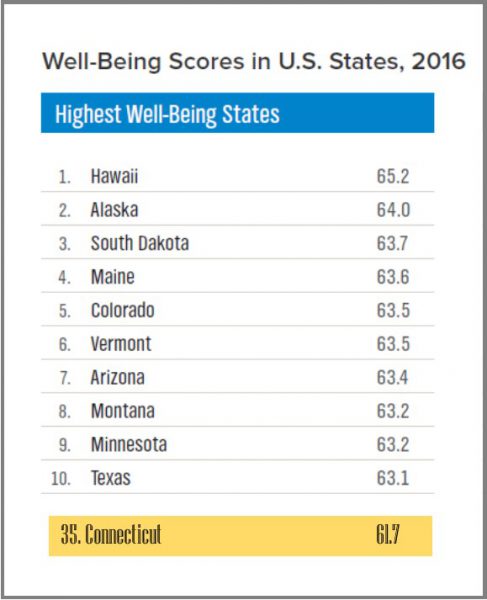

 The findings of a state review would be reported to the legislature and governor to evaluate the appropriateness of the price increases in question.
 The report, “Broken Promises to our Children: A State-by-State Look at the 1998 State Tobacco Settlement 17 Years Later," said the state was spending $1.2 million in FY 2016 to fight tobacco use. That's compared to an estimated marketing investment of $80.4 million by tobacco companies in Connecticut that year. The national average shows a margin of 20.1 to 1. At that time, Connecticut ranked 38th in spending on a percentage basis. The state has consistently spend

 Tammy Sneed, Director of Gender Responsive Adolescent Services at Department of Children and Families and co-chair of DCF’s Human Anti-Trafficking Response Team, said: “Reports of children suspected to be victims of domestic minor sex trafficking are increasing every year -- and, in 2016, there were just under 200 such referrals. For every child victim, the number of buyers on a given day in Connecticut is unfathomable. Some children report 10 to 15 buyers per night, which leads us to estimate that a minimum of 2,000 buyers in Connecticut bought sex from children last year.”
 “Demand keeps sexual exploitation and trafficking profitable,” says Beth Hamilton, associate director of the Alliance to End Sexual Violence (formerly CONNSACS). “We’ve started seeing the criminal justice system hold traffickers responsible, but we do not often see the people who purchase sex being held accountable for their role in keeping the industry thriving. If we want to end commercial sexual exploitation, we need to focus on ending demand and creating survivor-centered services.”


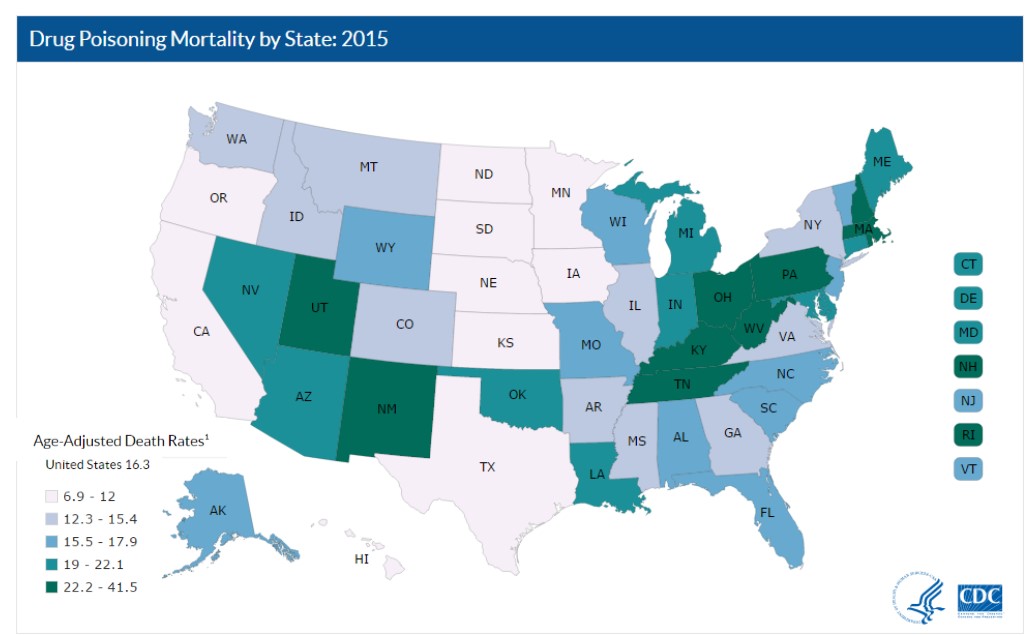 The five states with the highest rates of death due to drug overdose were West Virginia (41.5 per 100,000), New Hampshire (34.3 per 100,000), Kentucky (29.9 per 100,000), Ohio (29.9 per 100,000), and Rhode Island (28.2 per 100,000).