Immigration Is Key to Connecticut's Economic Strength, Report Shows
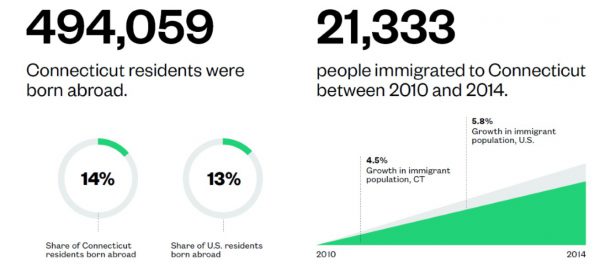
/By 2014, Connecticut was home to almost half a million people who were born abroad. In Connecticut, like the country as a whole, immigrants are currently punching far above their weight class as entrepreneurs, according to a report issued last year highlighting the impact of immigrants in the state. Foreign-born workers make up 21.3 percent of all entrepreneurs in the state, despite accounting for 13.7 percent of Connecticut’s population. Their firms generated $1.1 billion in business income in 2014, according to the report.
The report, “The Contributions of New Americans in Connecticut,” was prepared by the Partnership for a New American Economy, an organization that “brings together more than 500 Republican, Democratic and Independent mayors and business leaders who support sensible immigration reforms that will help create jobs for Americans.”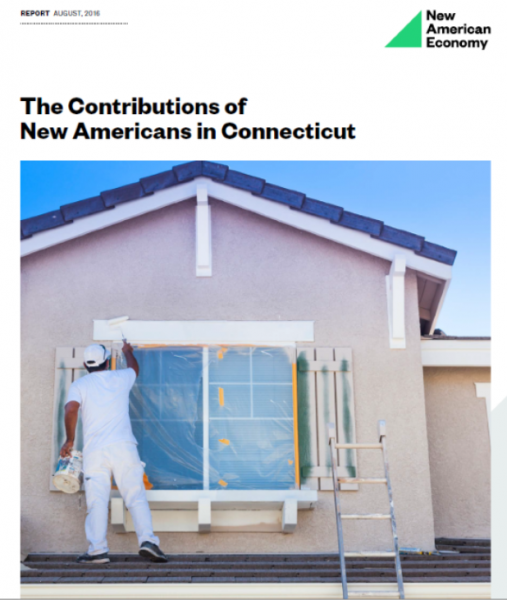
Immigrants are nothing new in Connecticut. Even the Land of Steady Habits keeps changing. In 1990, the state was already home to more than 279,000 immigrants, a group that made up 8.5 percent of Connecticut’s population overall. By 2010, the number of immigrants in this small state had grown to almost 473,000 people. By 2014, Connecticut was home to almost half a million people who were born abroad.
The report research also found:
- Of the 18 Fortune 500 firms based in the state, 50 percent have at least one founder who was an immigrant or the child of an immigrant. For the country as a whole, the equivalent figure is 41.4 percent.
- In Connecticut immigrants held $13.8 billion in spending power in 2014, defined in this brief as the net income available to a family after paying federal, state, and local taxes.
- In Connecticut 69.8 percent of the foreign-born population is working aged, defined in the report as between the ages 25 and 64, while only 50.8 percent of the native-born population is. That 19 percentage point gap has major implications for the state’s workforce.
- Foreign-born residents makeup more than one in three employees in the state’s computer systems design and related services industry. They also account for 32.2 percent of the state’s workers in medical equipment and supplies, contributing to Connecticut’s sizeable medical devices and supplies manufacturing industry, which generated more than $2.1 billion in sales in 2012.
- Despite making up 13.7 percent of the state’s population, foreign-born Connecticut residents made up 23.8 percent of STEM workers in the state in 2014.
Research for the report also found that in 2016 nearly one in three physicians in Connecticut graduated from a foreign medical school, “a likely sign they were born elsewhere.” Only six other U.S. states had a higher share of foreign-educated physicians. Immigrant healthcare practitioners also made up 15.3 percent of the state’s nurses in 2014, as well as 29.5 percent of those working as nursing, psychiatric, or home health aides. Both those figures were higher than the national average.


 ess to the issue of childhood drownings. Steven Hernández,, Executive Director of the Commission on Women,
  The statistics about children’s drowning deaths have not changed over time, implying that current strategies for prevention are not enough, officials said. Increasing children’s access to swim lessons, encouraging schools to teach water safety skills to students and giving parents easy-to-use and engaging tools to talk to their children about how to be safe around water are just a few actions that can have a big effect in reducing drowning rates, officials stressed.
 The overall rankings were weighted 80-20 between Entertainment & Recreation and Nightlife. The Entertainment & Recreation categories included restaurants, beaches, movie theaters, national parks, arts venues, and state spending on parks and recreation. The nightlife category included average beer & wine prices, movie costs, music festivals and access to bars.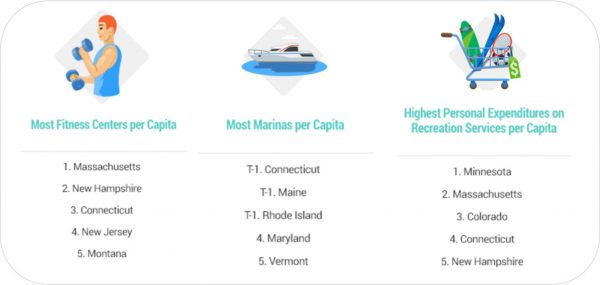

 “The U.S. population is increasingly diverse. Cultural competency is essential to deliver health care services that meet the needs of each individual and improves overall health,” said Christina Stasiuk, D.O., National Medical Director for Health Equity at Cigna.


 “More than Food focuses on promoting healthy food in pantries and helping people access other resources to find a job. We’re proud to support a partnership that is trying to find a solution to the hunger problem,” said Chris Traczyk, executive director of the Farmington Bank Community Foundation. “It’s a comprehensive, collective-impact project.” Dr. Katie Martin, assistant professor and director of the Public Health Program at USJ, and her research team developed a nutrition stoplight system called Supporting Wellness at Pantries, or “SWAP”, which helps food pantry clients choose healthier foods.
 d childcare slots for fifteen percent of the county’s children ages 0 to 2, and enough subsidized slots to cover only twenty-two percent of these youngest children in low-income households.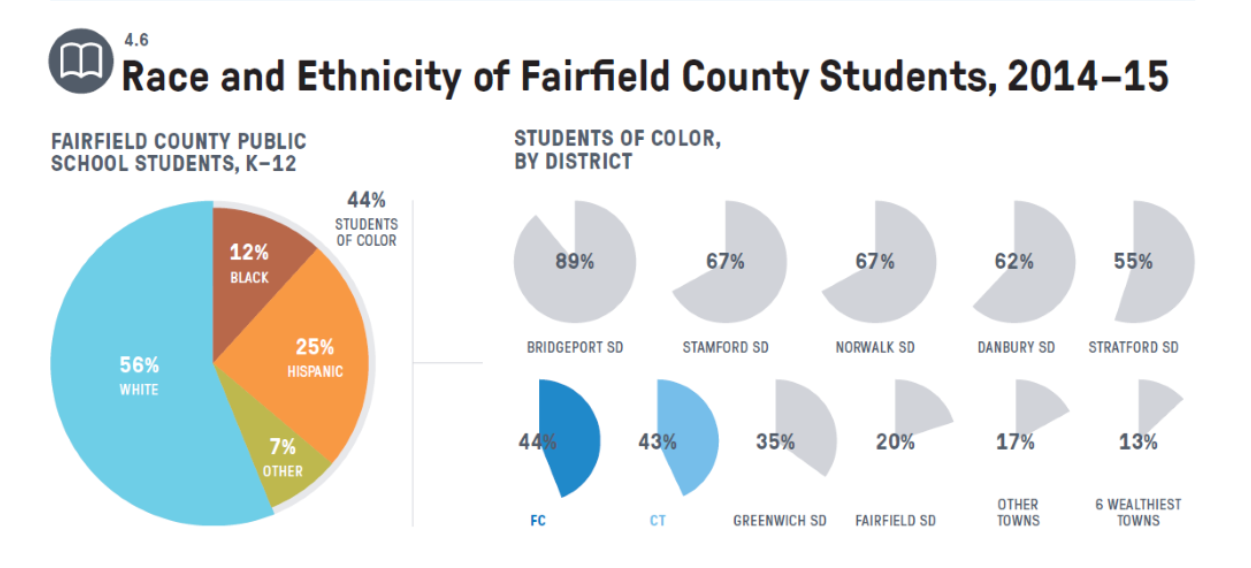


 ped the list in two additional categories: Lowest Percentage of Adults Who Experienced Pain in the Past Year Due to Oral Condition and Lowest Sugar-Sweetened Beverage Consumption Among Adolescents. The state also ranked in a tie for third for having the lowest percentage of elderly population with no natural teeth.
 serves as an expert resource on oral health policy; and publicizes oral health policy analysis and recommendations.