
Stamford Taking Strides to Respond to Student Mental Health Concerns; Research Recommendations Lead to Progress
/Stamford Public Schools, acting on recommendations developed by the Child Health and Development Institute of Connecticut (CHDI), is making strides in addressing students mental health needs that may provide effective approaches for schools systems in Connecticut and nationwide that are looking to better address mental health issues, especially in light of increased public attention on issues from suicide prevention to trauma response.
“While appreciating that the schools’ primary role is to educate children, many districts such as Stamford are increasingly seeking ways to address behavioral health concerns as an important way of supporting academic achievement, school climate and overall well-being,” said Dr. Jeana Bracey, Director of School Community Initiatives at CHDI.
Results reported in an Issue Brief published by CHDI highlight some of the measurable “improved outcomes” in Stamford Public Schools following an intensive study and systemic recommendations for what is described as a “trauma-informed model for school mental health”:
- Data from 76 Stamford students who completed specific programs in FY 17 and 31 students in FY 16, showed significant reductions in PTSD symptoms and problem severity symptoms.
- Feedback from parents and teachers indicate a decrease in the severity of behavioral concerns in the classrooms and at home.
- School personnel report important changes in culture and climate that reflect an understanding of trauma, how it impacts students, and how to better address students’ needs using supportive and restorative approaches, rather than punitive measures.
The review of Stamford’s mental health services and supports for K-12 students, initiated in 2014 following a series of student suicides and an increase in the number of students experiencing suicidal thoughts and hospitalization, included an examination of the behavioral health needs of students, as well as the districts’ strengths and areas of concern in addressing these needs. The process included focus groups and interviews and led to recommendations for improving Stamford’s school-based and school-linked mental health services and supports in four priority areas initially:
- Ensuring Sufficient Clinical Staff Capacity
- Providing Professional Development in Mental Health
- Engaging in Mental Health Planning and Oversight
- Promoting Data Collection and Evaluation
In the 2 ½ years since CHDI began to work with Stamford, the local school district has expanded the number of evidence-based services for students from zero to four, implemented district-wide trauma and behavioral health training and supports for staff, and collaborated to build internal capacity and integrate community and state resources and services for students.
Overall, officials report positive feedback from parents, teachers and other school personnel to the changes, and their impact on students and the school communities.
The Issue Brief notes that “Lessons learned in Stamford can help guide other districts seeking to improve their mental health services and supports.” Among the recommendations to achieve a system “that is more responsive to the needs of their students,” are a commitment from district administrators and school board members, a comprehensive needs assessment, an examination of public and private funding sources, a blending of school-based and community-based services, establishment of peer groups to support mental health staff, and creating small pilot projects that would provide information that would inform subsequent efforts.
 In Stamford, CHDI assisted in training school social workers and psychologists to deliver Cognitive Behavioral Intervention for Trauma in Schools (CBITS), a school-based group intervention for grades 5-12, and its counterpart for younger elementary school children, Bounceback. CBITS began in July 2015 and has been used in 46 schools across the state, reaching more than 800 students. The results in Stamford mirrored those in other communities utilizing the approach; it has been shown to reduce PTSD and depression symptoms and psychosocial dysfunction in children who have experienced trauma.
Significantly, of the children who likely met the criteria for PTSD prior to treatment, approximately half of them no longer met the criteria for PTSD after 10 sessions of CBITS/Bounce Back.
The Child Health and Development Institute (CHDI)’s goal is to improve the health and well-being of Connecticut’s children by building stronger and more effective health and mental health systems that result in better outcomes for all children in Connecticut, especially the underserved. The organization pursues these objectives with research, evaluation, training and technical assistance and support for demonstration projects that inform system change.


 The report noted that “Medicaid beneficiaries are prescribed opioids at twice the rate of the rest of the population, and research indicates they are at 3 to 6 times greater risk of a fatal overdose.” The report also observed the impact of the epidemic on the nation’s prison population: Eighty percent of prisoners have a history of drug abuse; 50 percent are addicted to drugs; 60 to 80 percent of prisoners abusing drugs commit a new crime after release; and approximately 95 percent of addicted prisoners relapse when they’re released, according to National Association of Drug Court Professionals (NADCP) data.

 iven the nation’s key public health target of limiting added sugars in children’s diets, flavored milk has come under scrutiny in the context of school nutrition, UConn Today recently reported.

 Among adults who admit to not always using safety belts in the back seat, 4 out of 5 surveyed say short trips or traveling by taxi or ride-hailing service are times they don't bother to use the belt. Nearly 40 percent of people surveyed said they sometimes don't buckle up in the rear seat because there is no law requiring it. If there were such a law, 60 percent of respondents said it would convince them to use belts in the back seat. A greater percentage said they would be more likely to buckle up if the driver could get pulled over because someone in the back wasn't buckled.

 The Governors Highway Safety Association issued a report in 2015, "Unbuckled In Back," analyzing the difference in highway fatalities between states that require rear seat passengers to buckle up and those that do not, the Hartford Courant reported. At a Connecticut legislative hearing that year, the paper noted, state Transportation Commissioner James Redeker said that everyone in a passenger vehicle should buckle up, saying statistics show "people become projectiles because they're not strapped in a safety device."
 A pilot partnership between the AGP and CCSU establishes a new base of operations for the

 Márquez-Greene will also work with the School of Education & Professional Studies to establish a Center for Social & Emotional Learning to provide education, training, and research to the campus, community, and state. Other expected collaborations include the training of CCSU undergraduate and graduate students in the Marriage & Family Therapy, Psychology, and Counseling programs in the use of social-emotional curriculum in the classroom.


 Rounding out the top 10 are Wisconsin, Iowa, New Hampshire, Louisiana, Rhode Island, Colorado, Nebraska and South Dakota. The states were ranked based on the most gyms using these four categories: total number of gyms, state population in 2016, people per gym, and gyms per capita (100,000 people). Totals were based on the 14 largest gym chains in America. There were more than 36,000 health clubs in the U.S. last year, up from 29,000 a decade ago.

 The index publication is supported by the Anthem Blue Cross and Blue Shield Foundation. It is a scientific snapshot of the health and fitness status at a metropolitan level using data made up of personal health, community and environmental factors.

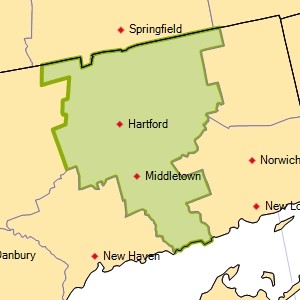 The region’s personal health rank was 13; its community/environmental indicators rank was 25, leading to an overall ranking of 13th. The analysis points to “Areas of Excellence,” in the region, including: