Olympic Coverage Starts in Rio But Reaches Us Through Stamford, Connecticut
/The 2012 London Olympic Games, the most watched event in U.S. television history with 217 million viewers, is so four years ago. NBC Sports, with the epicenter of its operations in Stamford, is looking to break its own Olympic and world record with coverage from Rio. So far, it seems to be working.
 Just over three years ago, NBC Sports launched a new state-of-the-art 300,000 square foot facility headquartered in Stamford, on a thirty-three acre campus (formerly the home of Clairol). The facility brought NBC Sports, NBC Sports Network, NBC Olympics, NBC Sports Digital, and NBC Regional Networks all under one roof. Connecticut’s First Five program, providing financial incentives to major business entities to relocate to the state, helped get the deal done. At the ribbon cutting for the facility in July 2013, just off exit 9 along I-95, NBC Sports Group Chairman Mark Lazarus said it was “built for every conceivable media platform, known today or yet to be built or conceived.”
This month, much of what we see of the Olympics in Rio, across a range of media platforms, has come through Stamford.
NBC reports that over the past six nights, the network’s primetime Olympics coverage has averaged three times more households watching than the other television networks combined, across the ten NBC owned and operated stations – including NBC Connecticut. Digital viewership is outpacing the numbers achieved during the London Games, and has grown in recent days mirroring the Olympic achievements of American athletes.
All the video coverage comes to Stamford from Rio and then is relayed to a variety of NBC Universal platforms — the NBC broadcast television network; cable channels, such as the NBC Sports, MSNBC and CNBC; plus websites and apps. Telemundo and NBC Universal are narrating events in Spanish and focusing on sports popular in Latin America, Paul Janensch, a former local newspaper editor, noted recently. A total of 6,700 hours of content are being televised and streamed, with much of it live. NBC is telecasting Rio events on five cable channels, compared with two for the 2008 summer games in Beijing.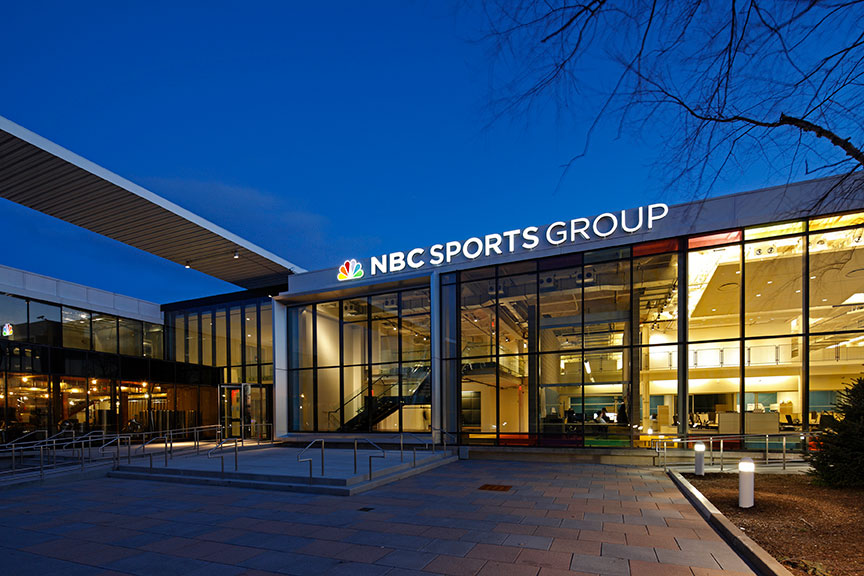
“Naturally, due to the volume of events and sports and amount of talent and employees, it's a vast challenge,” said Kaare Numme, NBC Sports’ at-home coordinator producer for the Rio games, told the Stamford Advocate, before the Games began. “This will be our largest single event happening.” Lazarus has called the Rio Olympics the “biggest media event in history.”
Published reports indicate that the number of employees and other personnel involved in the Stamford operations for the Olympic games has grown to nearly 1,400. That is nearly double the routine staffing levels, and considerably higher than the approximately 1,000 people involved in coverage of the 2014 Winter Olympics. It is virtually a 24 hour-a-day operation (and some days may indeed be round-the-clock) with 6 AM to 2AM the regular work day for the duration of the Games.
There has been some pushback on NBC’s coverage, some from a generation more accustomed to viewing-on-demand and watching commercial-free. And NBC announcers have had some unforced errors, which are commonplace these days largely due to the pervas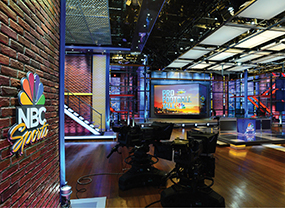 iveness of social media. In addition, ratings from the Opening Ceremonies on NBC television were down substantially from the London Games. But that seems to have been the floor, not the ceiling, for viewership levels.
As part of the expansion for the Olympic coverage, NBC Sports built two new control rooms and brought in another portable center in Stamford, the Advocate reported. It also installed an additional 13 announcing booths to bring its total to 18, nearly double the quantity used to telecast the London games four years ago.
In a section of the facility dubbed The Highlights Factory, about 200 highlights and features packages will be produced each day during the games, Eric Hamilton, NBC Sports’ director of digital Olympic video production, told the Advocate. “You might be able to watch one of seven different streams of gymnastics on the first day of gymnastics,” Hamilton said. “You can really channel surf in a big way.” Scores of edit rooms and graphics suites fill the sprawling center.
There is more to come in Stamford. In addition to a range of sports programming throughout the year, NBC Sports owns the rights to the Olympics through the 2020 Summer Olympics, at which point the network will have presented 12 consecutive and 17 total Olympic Games, the most for a U.S. media company in both categories.
https://youtu.be/rXO5zRj6rFg


 The entire statewide system in Connecticut, purchased through A&T, cost $13.26 million with annual maintenance costs of about $3.2 million, Stephen Verbil, a telecommunications manager with the Division of the Statewide Emergency Communications,
  The same measure showed the age 20-34 demographic group, at 0.22 percent, was considerably below the rate for other age groups. (This rate means that 221 out of every 100,000 adults in this age group became entrepreneurs in a given month.) The data also indicates that the rate of new entrepreneurs for the age 20-34 group is down from the high point for this age group of 0.28 percent in 1996.


 Individual municipalities and state agencies also have options to purchase additional products as needed, such as 3-D building footprints, planimetrics, landcover maps, impervious surface maps and more, according to company officials.
 "Our flight team did an exceptional job of outmaneuvering the unusual weather present during the collection period (in Connecticut)," says Shawn Benham, Sanborn project manager. "The savings truly are astronomical when you merge many smaller project areas into a single large project because of the fixed costs associated with each mobilization," added Arshat in statement released by the company.


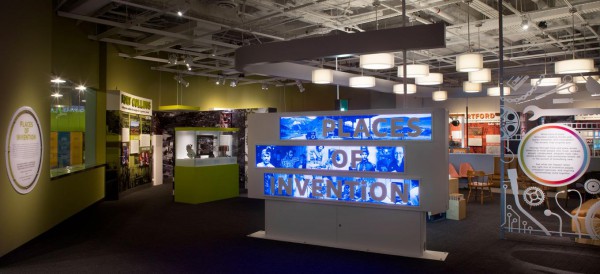 Describing Hartford’s prominent manufacturing history, Hinz said “Hartford, CT, is a classic story in the history of American technology. If you have ever wondered why people refer to “Yankee ingenuity,” this is what they are talking about.” He adds, “In the mid and late 1800s, the United States overtakes Great Britain as the world’s foremost economic superpower, largely on the strength of its prowess in inventing and manufacturing new technologies. Hartford is at the center of that revolution.”
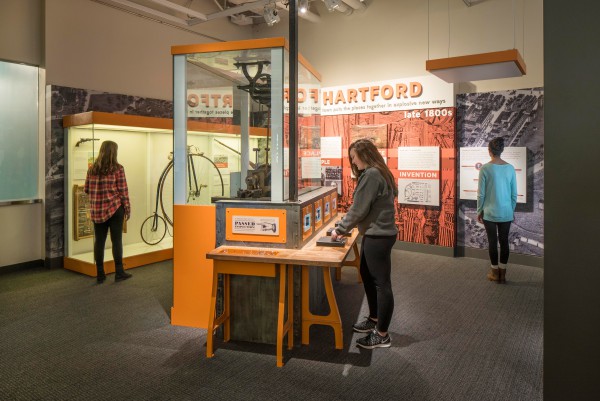 The exhibit notes that by the 1850’s “Hartford became the center of production for a wide array of products—including firearms by Colt, Richard Gatling and John Browning; Weed sewing machines; Royal and Underwood typewriters; Columbia bicycles; and even Pope automobiles.”
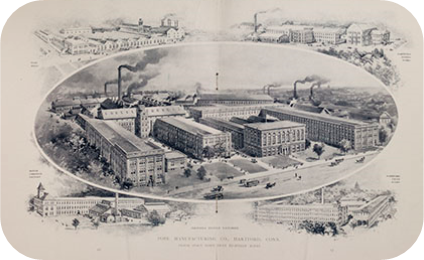 rode his high-wheeler from the station down Capitol Avenue to the Weed Sewing Machine Company.’”
 Jeanne Manzelli, a resident of Windsor, has a
  BFA in Sculpture from the Massachusetts College of Art and her MED in Art Education from the University of Massachusetts, Amherst. Her experience includes a 20 year career in design, manufacture, appraisal and sale of jewelry, two decades as mural artist working closely with interior designers as an industry professional, and 14 years teaching basic and advanced drawing, sculpture and 3D design as well as color theory at Tunxis Community College.



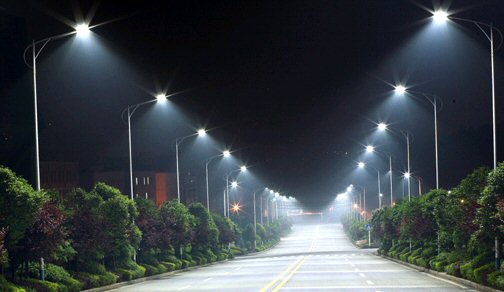
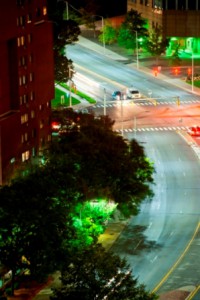 In addition to its impact on drivers, the AMA notes that blue-rich LED streetlights operate at a wavelength that most adversely suppresses melatonin during night. It is estimated that white LED lamps have five times greater impact on circadian sleep rhythms than conventional street lamps, the AMA indicated. Recent large surveys, according to the AMA, found that brighter residential nighttime lighting is associated with reduced sleep times, dissatisfaction with sleep quality, excessive sleepiness, impaired daytime functioning and obesity.
 The Conversation website is a collaboration between editors and academics to provide "informed news analysis and commentary that’s free to read and republish." It
 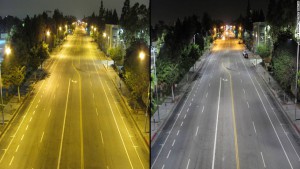 PHOTO: Traditional street lighting (left) vs. LED lighting (right).