Subway Looks to Technology to Spur Growth, Reinvigorate Brand
/If it seems like Subway restaurants have stepped up the use of technology to combat the company’s first dip in growth in memory, you’re right. Low-tech is out and high-tech is increasingly in at the Connecticut-based sandwich franchise mega-chain. Subway is aggresively introducing touch-screen ordering kiosks and a new mobile app – an effort to close the gap with competitors that have credited technology with helping boost sales. Subway is also testing dedicated pickup areas for mobile orders, a first for the company.
“It’s really a vision and strategy in how we want to evolve,” Carman Wenkoff, Subway’s chief information and digital officer, said in an interview with Bloomberg. “Customers are demanding a more complete experience.”
Subway launched a “bot” for Facebook Messenger in April that allows guests to order sandwiches and salads. The first-of-its-kind sandwich ordering bot was announced at the F8 Facebook Developer Conference with Agilitee, one of Subway’s digital partners, and is an innovation driven by the company's year-old Subway Digital division.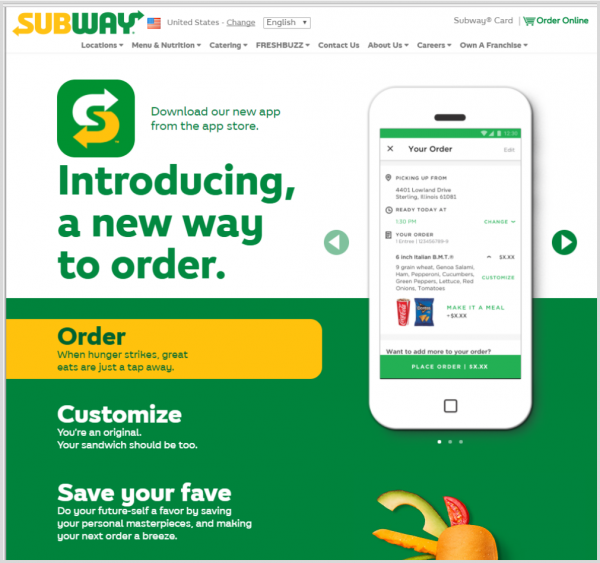
Customers can use the bot to order a sandwich or salad, customize it with their favorite bread; cheese; vegetables; and sauce, and pay on any device that supports Messenger. The bot for Messenger is described by the company as the latest addition to the brand’s mobile order systems that includes web ordering and app ordering. The new mobile app is available in about 26,500 of the chain’s 27,000 U.S. stores, which the company says is the largest deployments of a Messenger bot in the restaurant industry.
Subway has a presence in 112 countries, with more than 44,600 franchised locations. The company reports 7.5 million sandwiches a day served around the world. Subway has more locations than any other restaurant chain U.S., but sales fell 1.7 percent last year to $11.3 billion, marking the third straight annual decline, according to research firm Technomic. Industry analysts point out that traditional fast-food chains are upgrading their equipment and embracing more natural ingredients, cutting into Subway’s decades-long edge in the healthy-eating arena.
The company, based in Milford, Connecticut, was founded almost 52 years ago by Fred DeLuca and Peter Buck. It remains a family-owned business. The company now operates about 26,744 stores in the U.S., a decline of 359 locations in 2016, the first annual decline the company has experienced.
A year ago, Subway announced the launch of Subway Digital, a new division centered on tech initiatives. The division’s focus was to be on evaluating all of the chain’s technology, ranging from its app to its loyalty program, with the ultimate aim of enhancing guest engagement, according to published reports in June 2016.
“With the creation of Subway Digital, we are committed to making the guest experience as meaningful, convenient and contemporary as possible, across all channels,” Suzanne Greco, Subway president and CEO, said in a statement at the time.
Subway is currently testing about 50 of the new self-ordering kiosks, Bloomberg reported. The technology allows customers to walk in and tailor their meals with more accuracy. Digital menus, meanwhile, are available in hundreds of stores. They can be changed instantly without having to print new signs and replace them. The chain also is testing out remodeled restaurants in eight areas in the U.S., Canada and England, according to published reports.
The upgrades require buy-in from franchisees, which own all of Subway’s locations. Though the company is helping pay for the changes, independent owners will bear much of the cost.
“We are investing heavily,” Wenkoff said in the Bloomberg interview. “Our franchisees are with us 100 percent. Mobile devices are attached at the hip to pretty much all our customers these days. It’s all about convenience.” The company also noted that Subway Digital, established last year, is in the midst of hiring more than 150 people for jobs supporting the brand’s “omnichannel approach.”

 The
The 
 rding to the Treasurer’s Office. Representing the Connecticut Treasurer’s Office at the annual meeting, and presenting the proposal, was Aeisha Mastagni, a Portfolio Manager in the Corporate Governance Unit of the California State Teachers’ Retirement System. Overall, according to a U.S. Securities & Exchange Commission filing, 74.7 million shareholders voted against the proposal, with 32.7 million voting in favor.





 Sponsor), Eversource (Gold Sponsor), AT&T (Gold Sponsor), Accounting Resources, Inc. (Silver Sponsor), Qualidigm (Silver Sponsor), CT by the Numbers (Silver Sponsor), and Aeton Law Partners (Silver Sponsor). The David Alan Hospitality Group and Capture provided in-kind services.
 The Office “actively assists local, national and international motion picture, TV and media production entities with finding locations in Connecticut, rules and procedures, securing permits, hiring local cast and crew and other services,” according to the agency’s website. In addition, the Office “represents the state and its agencies, municipalities and resident media professionals in interactions with media production entities and the industry at large.”
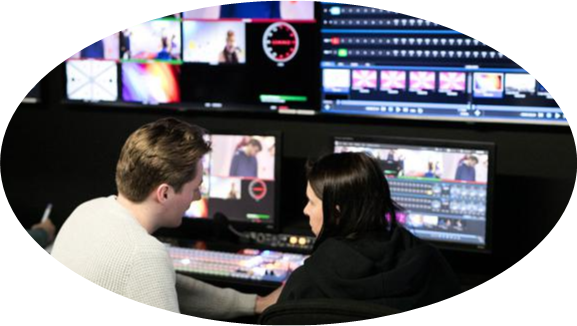 venue in the city. Ralph Edwards/Stu Billett Productions received nearly $4 million in tax credits in fiscal year 2016, spending just over $13 million in the state on a number of prominent program productions.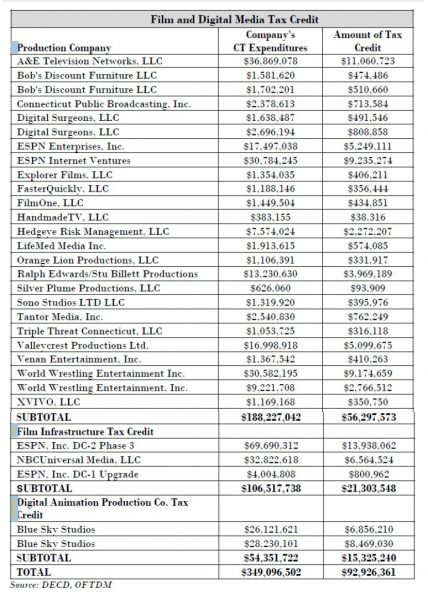
 The backdrop is offered by more than 700 global companies that have subsidiaries here, employing more than 100,000 people, the Organization for International Investment points out. The state’s convenient access to a variety of transportation options all provides access; there were 4.6 million tons of cargo carried on Connecticut rails in 2015, for example, and 11.4 million tons of freight shipped through Connecticut ports in 2013.
 l and freight movement by rail and highway makes Connecticut a prime location for domestic and international trade,” the report points out. Leading exports include: Aerospace/Transportation Equipment, Non-Electrical Machinery, Computers and Electronics, Chemicals, Electrical Equipment, Fabricated Metals Production, and Primary Metal Manufacturing.
 s specific to their industry.
 The five-story building will see researchers will move in to the new space this summer, beginning in July. It will be the first structure on the Storrs campus to utilize an “open lab” concept for research. The shared research space and open floor plan is intended to make it easier for scientists from different disciplines to collaborate, fostering innovation,