PERSPECTIVE: Driven by Discovery
/by Dr. France A. Córdova You deserve hearty congratulations for this remarkable achievement. This is an important milestone – you now have a degree, and all the expertise and knowledge that slip of paper implies, and you are charged with venturing out into a big world – full of possibilities. After all, you are ENGINEERS – you design and make things. The world is open to your creativity.
This is also a particularly special milestone for your University, since you are UConn Engineering's centennial graduating class. You join a long lineage of top-flight engineers, including the man this very arena is named after, Harry A. Gampel.
I'm not sure that Harry, a 1943 civil engineering major, knew what a powerhouse the Huskies would become when he pledged to help build this arena. But I guarantee he would be disappointed if I did not also congratulate the men's and women's basketball teams on another spectacular year.
Gampel Pavilion has become a home of excellence: the men's team with another appearance in the national tournament, and the women's team undefeated for a record-breaking fourth year. For some of you, they have been national champions every year of your time at UConn Engineering! It may seem inevitable at this point, but I can promise you nothing about being a champion is inevitable.
It takes teamwork and dedication, early mornings and late nights, risk and redemption. It takes, in other words, the same qualities you will have to demonstrate as engineers.
 Nothing is inevitable about being a scientist or an engineer – and that's one of the most frustrating and wonderful things about our chosen field. Experiments fail and hypotheses crumble. Data might not be as neat, as revealing as you'd hoped, technology might break at the worst moment, you might spend years chasing a question only to have the answer continually slip away. But then there are wonderful moments of discovery -- and I promise you the euphoria makes up for all the frustration.
I am driven by discovery. As a young girl, I wanted to be a detective. Parents – think Nancy Drew – I wanted to be Nancy. I love a difficult problem, putting the puzzle pieces together. This passion drew me to astronomy, a field with lots of Big Mysterious Questions: What are the origins of stars? Does life exist on distant planets, and what might it look like? Surely not like you or me! What is the nature of 95% of the mass energy content of the universe? It turns out that we know so little…
It took me a while to actually get to astronomy – the path of a scientist or engineer is always more of a random walk than people think – but once I got my own science degree, my own entry into the "real world," all I wanted to do was be a cosmic detective.
As a Ph.D. student I studied x-ray astronomy, then a nascent field. I used a high-energy satellite, controlled by the Goddard Space Flight Center, to collect data on close binary stars. One night I got word that one of these stars had gone into visual outburst. I ran to my thesis advisor and told him we must stop the satellite scanning and point it directly at the star.
My advisor asked me if I was absolutely sure I would detect something extraordinary – after all, pointing that satellite was an expensive proposition. I took a deep breath, crossed my fingers behind my back and said without pause, "Absolutely."
Graduates, remember this – because one day you will be asked the question by your boss, “Are you sure [you want to do that]?” You’ll have to rely on all your reading, your knowledge, your experience, and your intuition before you respond. I said “Absolutely” and I was rewarded. When I received my data, there it was, a beautiful signal: the first-ever detection of rapid x-ray pulsations from a collapsed star accreting matter from a normal star like our Sun.
It was a message that had traveled thousands of light years, through space and time, to me. That discovery remains one of the highlights of my life.
You will make your own discoveries, suffer your own frustrations. Prepare for them, as best you can. UConn has already done an exemplary job of preparing you for the hard work it takes to be a discoverer, an inventor, a champion.
You are graduating at an exciting time in engineering. The field is becoming increasingly intertwined with other disciplines. STEM fields are melding together, creating a rich breeding ground for new discoveries and new inventions. The grand challenges of our time – building smarter cities, improving access to clean water, harnessing sustainable energy – will be tackled by engineers like you, working in concert with designers, social scientists or computer scientists or biologists. A team of new discoverers and inventors.
For any team, the road to success is not an easy one. From my own experiences, ones that led me to become head of NSF, I have learned this: find great people to be a part of your team, those you can depend on. Find a mentor/coach who will continue to teach you how to navigate high-risk and high-reward career plays. Find someone who will become your number one fan in your personal cheering section. And find worthy opponents – those real and abstract – who challenge you, keep you guessing, and drive your passion.
As I close my remarks I want to leave you with a quote from my virtual mentor, Einstein. … Actually, my favorite quote from him is “Gravity cannot be held responsible for people falling in love.” But that really has nothing to do with my narrative today, so, I’ll leave you with this one instead: Einstein said "I have no special talents. I am only passionately curious."
I encourage you to always be passionately curious, for this leads to discovery, to invention. Know that you are in control: technology will continue to shape our lives, but you – our future engineers – can shape technology to better human life. We are counting on you!
______________________________
Dr. France A. Córdova is Director of the National Science Foundation. These remarks were delivered to the graduates of the University of Connecticut School of Engineering at commencement ceremonies on May 7, 2016.
Dr. Córdova, was sworn in as director of the National Science Foundation (NSF) on March 31, 2014. Nominated by President Barack Obama to head the $7.2-billion independent federal agency, she was confirmed by the United States Senate. Córdova is president emerita of Purdue University, where she served as president from 2007 to 2012. Previously, she led the University of California, Riverside, as chancellor and was a distinguished professor of physics and astronomy. From 1993 to 1996, Córdova served as NASA's chief scientist.
PERSPECTIVE commentaries by contributing writers appear each Sunday on Connecticut by the Numbers.
LAST WEEK: An Intervention in History
 the University must reaffirm and recenter itself on our source of pride, our intellectual mission. Although it is a sign of our times, opting for digitization and screen culture has only encouraged students (and not only students) to view faculty as “resources,” reducible to delivery mechanisms; the result is no longer contemplative learning, but the passive quantifiable consumption of information without attentiveness to pedagogy.
 determine the campus climate or that it gives students the same sense of belonging as their non-activist peers. Although students have demonstrated over the years and waged campaigns such as Diver$ity Univer$ity, AFAMIsWhy, Trans/Gender Group, and WesDive$t more recently, in the last decades, evident commitment to social justice on a global scale has been waning on this campus, just as it has nationally.
 Therefore, effective and sustainable solutions will not arrive from above. Students, staff, and faculty together must create a campus environment of mutual respect. That environment depends on shared and deliberately articulated community principles. In this regard, on the one hand, the Office of Equity and Inclusion needs to better define, articulate, and communicate the institutional commitment to diversity, equity, and inclusion. That office should also provide a clear policy framework. On the other hand, that environment will be shaped most powerfully by our collective community practices.

 Hathaway’s character is a smart, savvy young businesswoman, who doesn’t want to face overwhelming feelings of stress and unease. But she is being forced to recognize her lack of business management experience by her company’s Board of Directors. When Hathaway finally realizes DeNiro’s value, she opens herself up to learning from him, and even yields to his advice on major business decisions.
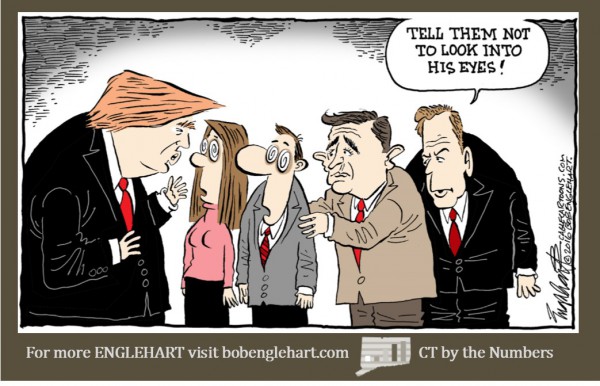

 What was once grassroots and organic now feels contrived, forced and flashy. With more paid content on your news feed than actual posts from your friends, and the rampant use of photo editing software rendering images of ourselves unrecognizable, I can’t help but think that we should be just as skeptical and wary of social media as we are of traditional advertising.
 With such an abundance of DIY image-altering resources, the deeper, more philosophical issue comes in the eyes of the beholder. Knowing what we now know, we can’t help but look at all photos with a critical eye. Whether it’s a vacation selfie your cousin posted or that photo of Ronda Rousey on the Tonight Show with Jimmy Fallon, we automatically assume what we’re seeing isn’t real and the image has been doctored (especially in the latter example). It is this skepticism that causes me to take pause. Didn’t we take to the Twitter-sphere because we wanted to avoid being misled and blatantly marketed to? That’s not what (Facebook) friends are for!