PERSPECTIVE: Why and How We Should All Be Concerned About College Student Retention
/by Victor Neves and David Johnston The degree to which college students are capable of successfully moving from matriculation to graduation, described as “retention” or “persistence,” should be a concern for all of us. Employers regularly complain that the skills needed for the workplace are lacking. Policy wonks lament the declining ratio of productive workers to retirees, now about three to one, down drastically from decades ago – an ominous threat to the solvency of the Social Security system, as well as the viability of the economy and the health care system.
All the more reason to maximize proven, but not always followed, ways that can boost college persistence to graduation and through to employment. The cost of implementing effective practices is one challenge, in light of steadily declining state support for higher education, especially for community colleges and state universities that take in the majority of our high school grads headed toward postsecondary education.
What are these strategies? Not quite a “top ten” list, but they’re not just catchy, they work:
- Colleges and universities are increasingly collaborating with high schools to both expose high school students to college life -so-called bridge programs – and to help students earn college credits, through early college or dual enrollment programs.
- Community-based agencies in our cities are increasingly practicing “seamless counseling” -- working with high school grads to avoid “summer melt,” to assure these young people make it to campus after earning acceptance to college. In some cases, these programs continue to support these students once they are enrolled. Currently, in Hartford, about 70 percent of high school grads are accepted into some form of higher education, but only 50 percent matriculate.
- Once on campus, more students, especially those from challenged backgrounds, are enrolled in first-year experience programs and/or learning communities that teach “college survival” – indispensable skills that can be the difference between staying and dropping out. These are required at some schools, but not all.
- More first generation college students are mentored by older students. For students of color, connecting with a mentor who looks like them is also a powerful retention factor. A national study of “black male college student success,” documented the value of such relationships. UConn’s recently-announced “black male dorm” arrangements are a step in this direction.

- More campuses are practicing “intrusive advising” that follows the progress of challenged students closely and intervenes quickly when they appear to be struggling academically or otherwise. Too many challenged students have non-academic obstacles that seriously disrupt their progress, and at times end their college careers before they’ve really begun. Less than half of community college students move on to achieve a degree.
- All students, but especially challenged students, are repeatedly encouraged to get involved on campus – a proven retention factor. Stepping up the “ask” can bring results that make retention more likely.
- At times controversially, colleges are encouraging, and hiring, faculty who use more “student-centric,” interactive teaching styles, with new technologies increasingly integrated into the curriculum. Some veteran faculty resist, others adapt. Traditional academic content will still be central – as it should be - but teaching, to be truly effective, has to accommodate today’s technology and media-savvy students, and build student-faculty relationships in non-traditional, interactive ways.
- Community college students, including older students, are increasingly being guided more quickly into career paths, ideally related to job growth areas, to reduce the confusion of too many choices and too little direction. Student majors can be changed, but a clear pathway from the get-go works wonders.
- Schools should also provide a platform in which students can showcase their accomplishments – for example, “E-Portfolios” that incorporate student work and achievements from enrollment all the way to graduation, providing students a tangible way of seeing their progress towards reaching their goals.

- Campuses, back-stopped by changing Federal policies, existing and proposed (e.g., free community college), are becoming more creative with financial aid; and lower-income community college and state university students have more access to more adequate financial aid.
These “wrap-around” strategies, and others, are effective. National research and anecdotal experience in Connecticut point clearly in these directions. However, they continue to be the exception in Connecticut, with progress towards implementation sporadic at best.
Employers, college administrators and faculty, community leaders, legislators, parents and students need to advocate for such effective creativity. The benefits will accrue not only to students and their families, but the communities and businesses of Connecticut in desperate need of the vitality and vibrancy that a new generation of ready, willing and able college graduates can bring to the state we share.
_____________________________________________________
Victor B. Neves is a graduate of Tunxis Community College who studies Business Administration at CCSU. He chairs the Student Committee of the Center for Higher Education Retention Excellence (CHERE), based in Hartford, a program partner of the Hartford Consortium for Higher Education. David Johnston is Executive Director of the Center for Higher Education Retention Excellence.
PERSPECTIVE commentaries by contributing writers appear each Sunday on Connecticut by the Numbers.
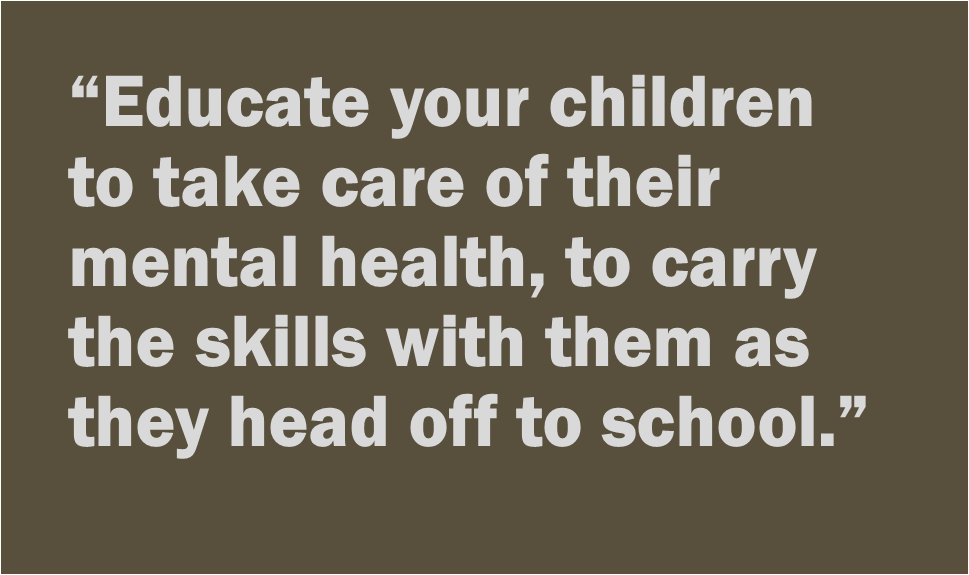
LAST WEEK: Back to School – Don’t Forget Your Child’s Mental Health
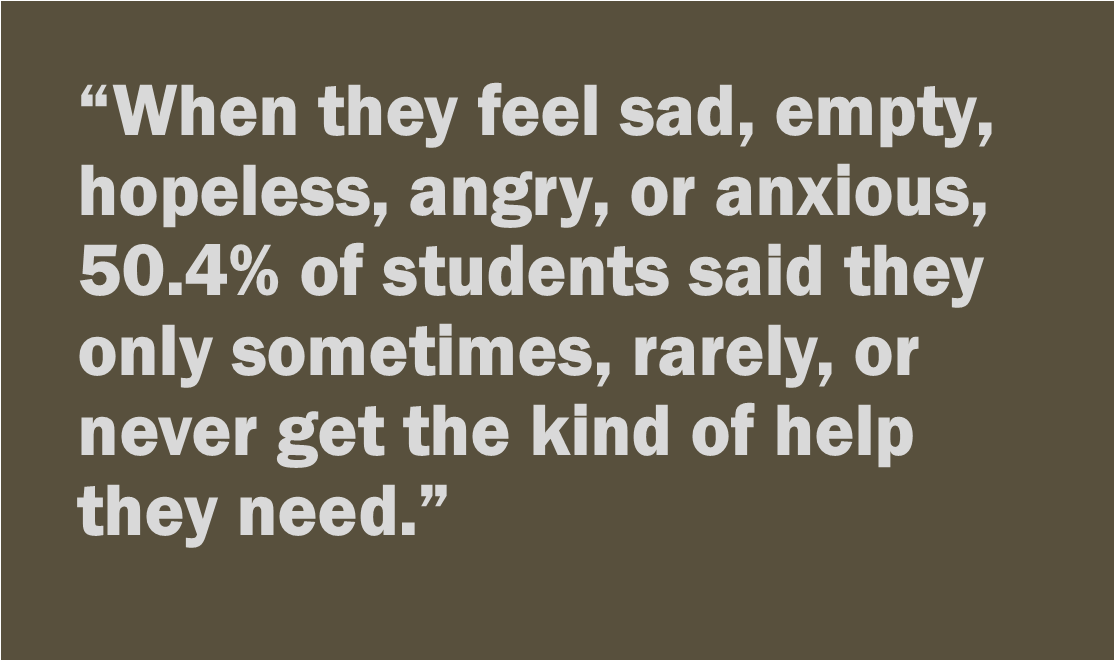 Connecticut Statistics
 The mission of the Jordan Porco Foundation is to prevent suicide, promote mental health, and create a message of hope for young adults.
 However, it is not just the alienation of population groups from each other that concerns me. I have spent much of the last twenty years in South Africa and one of the things I learned is that enduring reconciliation is not possible without eliminating historical illusions, dismantling deceptions and coming to grips with mis-teachings.
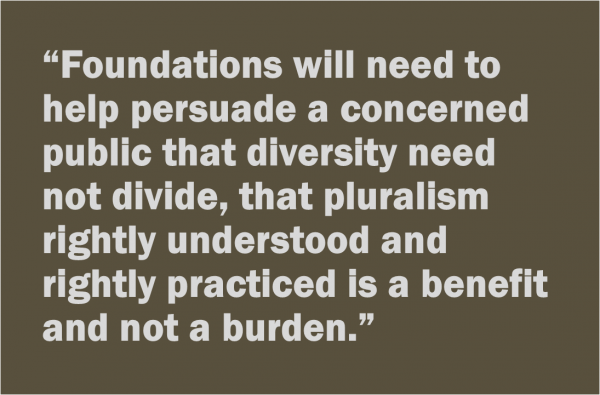
 vided millions of dollars for relief and governments provided billions for recovery, neither sector provided very much for reform. And yet it is this third stage that can have the most enduring impact. It can help sustain the public attention to what remains to be done and it can help change policies and practices that may have contributed to the disaster in the first place.
 I wrote my recently published book because I wanted the reader to imagine what the future community would be like if each of us were able to say “I want to be me without making it difficult for you to be you.”
 when strangers help strangers both those who help and those who are helped are transformed. When that which was their problem becomes our problem, the connection that is made has the potential for new forms of community. In other words, when you help someone who is homeless to find a home, when you help someone who is hungry to find food, when you help someone to find meaning in a painting or sculpture, when you help someone to fight bigotry or to find a job, you will be laying the groundwork for the genesis of community.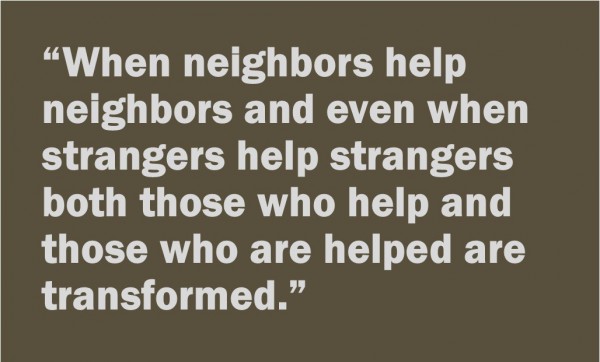
 here they do business in Europe and elsewhere. At least 82 UK-based companies are currently doing business in Connecticut.
 out the economic future.
 interest:

 Constant alertness is needed on a job site. Cars and pedestrians can appear quickly, seemingly out of nowhere, so both painter and assistant need to watch and listen attentively, especially when the paint machine is running. Reflective vests and pants are a safety must, and a flashlight should be hooked onto your clothing as well, to be ready at all times.
 is is a significant omission.
 To those of us who look to – or up to – them, we need an open, inquiring, compassionate mind. We need to set aside the rush to judgement, to listen to all sides of an issue, to take the time to search out the truth, to separate the hype from the reality.
 le, more active and transit-accessible downtowns. At the same time, an increasing demand for downtown living is paralleled with a general lack of diverse and affordable housing choices. Upper story space in existing older buildings is vacant and available, but expensive to renovate.
 for policies and regulations that support and enhance our main streets, as well as identifying more and better models of downtown management, including training, education, and communication for downtown professionals. Championing sustainable financing for these downtown organizations will also be a priority.