PERSPECTIVE: Reverse Mentoring – The Answer for Connecticut’s Seasoned Workers?
/by Frances J. Trelease The idea first caught on a couple years ago, with the popularity of the movie “The Intern.” In that film, A-list actor Robert DeNiro plays a retired professional who accepts an internship with a trendy online fashion company, to sharpen his skills and stay engaged. By the end of the film -- as you might have guessed – DeNiro earns his stripes as a valued team player who is looked to for his temperance and wisdom when chaos erupts.
The hit film brought to light the concept of reverse mentoring – millennials providing tutelage and guidance to their older counterparts in the workplace. It isn’t a new concept, but it’s rising to the surface as retired or downsized professionals seek novel ways to reenter the workforce. It plays off the “traditional” apprenticeship model, where a young trainee learns a craft or trade under the watchful eye of an older, more experienced worker. 
Jack Welsh, former CEO of General Electric, is widely credited with introducing the concept to the U.S. in 1999, when he charged his top officials with finding junior mentors to teach them the latest technologies. He was on to something, those 17 years ago.
According to U.S. Census Bureau projections, “the proportion of Connecticut’s population that is 60 and older is growing more rapidly than other sectors of the population.” The Bureau estimates that nearly 26 percent of Connecticut’s population will be 60 and older by the year 2030.
So for Connecticut’s aging workers, reverse mentoring makes good sense. Many have been phased out of jobs before they felt ready to go. Others voluntarily retired, but still have much to offer. But they face a changing work environment.
The largest hiring blocks in CT in 2016 were hospitality, transportation, financial and business services. (www.cga.ct.gov) Those fields challenge the training and skill sets of those born in the “baby boomer years” – 1948 to 1964 -- who attended college or trade school before today’s digital and electronic gadgets – nay, even basic computer systems -- were ubiquitous. For them, today’s millennials hold the key to the knowledge and skills needed to succeed in fields like social media marketing and applications development.
The younger set, in turn, gains insight into strategy, negotiation skills and “macro”’ views of the big picture. They become groomed to step into leadership roles when their time comes.
Who wins from this emerging trend? Both groups do. Intellectual property continues to be the singles biggest asset of corporations across the U.S. In Connecticut alone, service giants such as United Technologies Corp., The Hartford, and Stamford-based Deloitte rely on the best and the brightest minds to innovate, create and outpace the competition. Those best and brightest range anywhere from 25 to 75 years old.
Lisa Bonner is director of Change Management & Communications at Cigna in Hartford. In a recent TEDx talk, she spoke of the value of the younger set sharing social media and mobile technology knowledge with Cigna’s “senior leaders.” Bonner described “putting a 25 year old in the chairman’s office” a “leap of faith… but I knew we were going on to glory. It was difficult to take that step, but we did it. Once they opened up with each other, that’s when the magic started to happen.” (https://youtu.be/uCd7_0BTySY)
Michelle Manson is a blog writer for Chronus, (Chronus.com), which creates software to help run corporate mentoring programs. Manson writes that organizations such a Hewlett Packard, Ogilvy and Mather and Cisco have signed on to the concept.
She writes: “When Hartford Insurance started a reverse mentoring program in 2011, the aim was to train C-suite execs in the tools and culture of social media. With entry-level employees in their twenties as mentors, the business leaders soon began to appreciate the power of ‘searching’ for answers on the spot and they wanted others in the company to benefit from the same flexibility. As a result, they unlocked social networks that were previously off-limits to Hartford employees.”
 Other benefits to reverse mentoring – improved morale and retention across the generations, not to mention colorful tweets and pings that fly across social media platforms and engage the consumer.
In Connecticut, reverse mentoring addresses just the tip of the iceberg. There’s so much more to be done. Initiatives such as the Platform to Employment in Bridgeport provide subsidies of $6,000 to qualifying employers if they bring on unemployed – often senior -- people for eight-week training internships. The hope is that those employers will hire these men and women full-time when the internships end.
And Boomer Den, LLC of Oxford, CT works exclusively with adults ages 45 and older, to fit them to internships, temp-to-hire and permanent positions around the state. In many cases, candidates show up to work ready to learn from those a generation or two younger.
Independent forecasters estimate that half our U.S. workforce will be made up by workers born in the mid-1980s or later. It’s time in Connecticut to bridge generational gaps. It’s time we take a step back – and then a solid leap forward, toward pooling our talents for mutual gain.
_________________________
Frances J. Trelease is president of Boomer Den, LLC, a Connecticut agency that empowers adult workers through internships and job placement opportunities. She may be contacted at info@boomerden.com.
PERSPECTIVE commentaries by contributing writers appear each Sunday on Connecticut by the Numbers.
 For practitioners, thinking about a collaborative effort of this scope even five years ago would have been impossible. Finding money for buses for field trips, combined with the time-crunch of the classroom day and ‘teach to the test’ mentality made learning outside of school walls nearly impossible. Museum educators created one terrific program after another for school audiences, but invariably, visits dwindled. And students suffered the consequences. But as demonstrated time and time again in Connecticut’s history, state educators and historians rose to the challenge. Our story has a happy “middle” (the ending has yet to be written.) Not content with mediocrity, two groups of organizations led by people who care about Connecticut’s students approached this growing problem from two different angles.
 f conversations, phone calls, deep discussions and “ah-ha” moments that paved the way to unprecedented collaboration between educators, museums, public historians and academics. If, by working together, we could build bridges of communication and access between the people who steward Connecticut’s past, and the people who have daily interaction with our students, then wonderful, magical, life-long critical skills learning would happen. And it is working.
 s the state plans for the court-ordered overhaul of school funding and the creation of new standards for high school graduation and special education, I would like to offer the collective experience of this group of “power historians and educators” (yes, similarities to the Power Rangers are purposeful) as a resource for state planning.
 In fact, the current technology market is a vibrant and competitive one, where even big companies are required to constantly innovate in order to stay on top. This innovation has provided enormous benefits to consumers, who reap the rewards in the form of better and more advanced products and technologies.

 t cities. Bo Zhao, senior economist at the Boston Federal Reserve, wonders if such differences in taxes put some cities or counties at a disadvantage in economic competition. After all, he says, fiscal disparities occur when economic resources and public service needs are unevenly distributed across localities.
For the most part, it’s been up to cities and counties to attempt to address these growing disparities. There are any number of longstanding examples of regional taxation and regional tax-base sharing across the U.S., such as in Minneapolis-St. Paul. More recently, there are new innovations on the theme: The Scientific and Cultural Facilities District, for example, distributes roughly a tenth from a 1 percent sales and use tax to cultural facilities throughout the Denver metropolitan area.
t cities. Bo Zhao, senior economist at the Boston Federal Reserve, wonders if such differences in taxes put some cities or counties at a disadvantage in economic competition. After all, he says, fiscal disparities occur when economic resources and public service needs are unevenly distributed across localities.
For the most part, it’s been up to cities and counties to attempt to address these growing disparities. There are any number of longstanding examples of regional taxation and regional tax-base sharing across the U.S., such as in Minneapolis-St. Paul. More recently, there are new innovations on the theme: The Scientific and Cultural Facilities District, for example, distributes roughly a tenth from a 1 percent sales and use tax to cultural facilities throughout the Denver metropolitan area. ago enacted legislation to encourage a sharing economy statewide. The Minnesota Fiscal Disparities law has three important goals: reduce the impact of fiscal considerations on location of business; reduce interjurisdictional competition; and direct resources to communities facing the greatest fiscal pressures.
 tax base in the Minneapolis-St. Paul areawide pool has increased from 6.7 percent in 1975 to 37.6 percent by 2012. More than $588 million of taxes were shared among the participating localities in 2012. The distribution of shared revenue reduced incentives for cities to compete for businesses and infrastructure projects, and it created greater incentives for shared investments, especially in infrastructure.


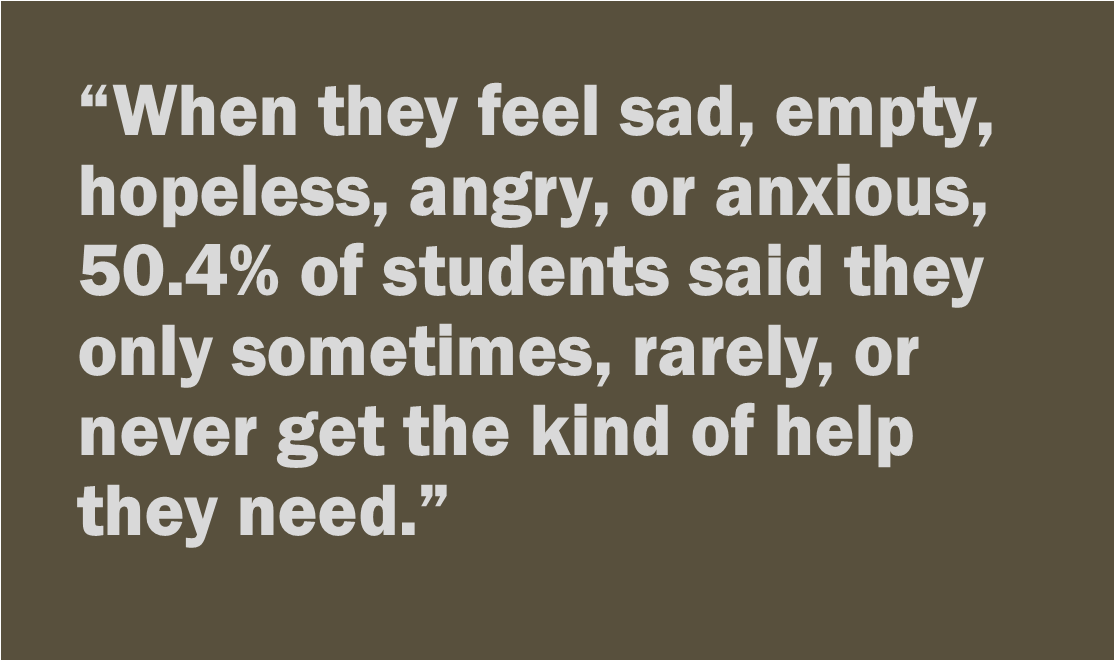 Connecticut Statistics
 The mission of the Jordan Porco Foundation is to prevent suicide, promote mental health, and create a message of hope for young adults.
 However, it is not just the alienation of population groups from each other that concerns me. I have spent much of the last twenty years in South Africa and one of the things I learned is that enduring reconciliation is not possible without eliminating historical illusions, dismantling deceptions and coming to grips with mis-teachings.
 vided millions of dollars for relief and governments provided billions for recovery, neither sector provided very much for reform. And yet it is this third stage that can have the most enduring impact. It can help sustain the public attention to what remains to be done and it can help change policies and practices that may have contributed to the disaster in the first place.
 I wrote my recently published book because I wanted the reader to imagine what the future community would be like if each of us were able to say “I want to be me without making it difficult for you to be you.”
 when strangers help strangers both those who help and those who are helped are transformed. When that which was their problem becomes our problem, the connection that is made has the potential for new forms of community. In other words, when you help someone who is homeless to find a home, when you help someone who is hungry to find food, when you help someone to find meaning in a painting or sculpture, when you help someone to fight bigotry or to find a job, you will be laying the groundwork for the genesis of community.
 here they do business in Europe and elsewhere. At least 82 UK-based companies are currently doing business in Connecticut.
 out the economic future.
 interest: