PERSPECTIVE: Hostility Instigated by Pride, Ambition, and Other Sinister and Pernicious Motives
/by George Washington The period for a new election of a citizen to administer the executive government of the United States being not far distant, and the time actually arrived when your thoughts must be employed in designating the person who is to be clothed with that important trust, it appears to me proper, especially as it may conduce to a more distinct expression of the public voice, that I should now apprise you of the resolution I have formed, to decline being considered among the number of those out of whom a choice is to be made…
 Observe good faith and justice towards all nations; cultivate peace and harmony with all. Religion and morality enjoin this conduct; and can it be, that good policy does not equally enjoin it - It will be worthy of a free, enlightened, and at no distant period, a great nation, to give to mankind the magnanimous and too novel example of a people always guided by an exalted justice and benevolence.
Who can doubt that, in the course of time and things, the fruits of such a plan would richly repay any temporary advantages which might be lost by a steady adherence to it? Can it be that Providence has not connected the permanent felicity of a nation with its virtue? The experiment, at least, is recommended by every sentiment which ennobles human nature. Alas! is it rendered impossible by its vices?
In the execution of such a plan, nothing is more essential than that permanent, inveterate antipathies against particular nations, and passionate attachments for others, should be excluded; and that, in place of them, just and amicable feelings towards all should be cultivated…
The nation which indulges towards another a habitual hatred or a habitual fondness is in some degree a slave. It is a slave to its animosity or to its affection, either of which is sufficient to lead it astray from its duty and its interest.
Antipathy in one nation against another disposes each more readily to offer insult and injury, to lay hold of slight causes of umbrage, and to be haughty and intractable, when accidental or trifling occasions of dispute occur. Hence, frequent collisions, obstinate, envenomed, and bloody contests. The nation, prompted by ill-will and resentment, sometimes impels to war the government, contrary to the best calculations of policy. The government sometimes participates in the national propensity, and adopts through passion what reason would reject; at other times it makes the animosity of the nation subservient to projects of hostility instigated by pride, ambition, and other sinister and pernicious motives. The peace often, sometimes perhaps the liberty, of nations, has been the victim.
So likewise, a passionate attachment of one nation for another produces a variety of evils. Sympathy for the favorite nation, facilitating the illusion of an imaginary common interest in cases where no real common interest exists, and infusing into one the enmities of the other, betrays the former into a participation in the quarrels and wars of the latter without adequate inducement or justification. It leads also to concessions to the favorite nation of privileges denied to others which is apt doubly to injure the nation making the concessions; by unnecessarily parting with what ought to have been retained, and by exciting jealousy, ill-will, and a disposition to retaliate, in the parties from whom equal privileges are withheld.
 And it gives to ambitious, corrupted, or deluded citizens (who devote themselves to the favorite nation), facility to betray or sacrifice the interests of their own country, without odium, sometimes even with popularity; gilding, with the appearances of a virtuous sense of obligation, a commendable deference for public opinion, or a laudable zeal for public good, the base or foolish compliances of ambition, corruption, or infatuation.
As avenues to foreign influence in innumerable ways, such attachments are particularly alarming to the truly enlightened and independent patriot. How many opportunities do they afford to tamper with domestic factions, to practice the arts of seduction, to mislead public opinion, to influence or awe the public councils. Such an attachment of a small or weak towards a great and powerful nation dooms the former to be the satellite of the latter…
Excessive partiality for one foreign nation and excessive dislike of another cause those whom they actuate to see danger only on one side, and serve to veil and even second the arts of influence on the other. Real patriots who may resist the intrigues of the favorite are liable to become suspected and odious, while its tools and dupes usurp the applause and confidence of the people, to surrender their interests.
__________________________________
George Washington was the first President of the United States, serving from 1789 to 1797. This is an excerpt from his 6,000 word 1796 Farewell Address to the nation. The full address appears on the website of the Lillian Goldman Law Library of Yale Law School, http://avalon.law.yale.edu/18th_century/washing.asp
 Other benefits to reverse mentoring – improved morale and retention across the generations, not to mention colorful tweets and pings that fly across social media platforms and engage the consumer.
 For practitioners, thinking about a collaborative effort of this scope even five years ago would have been impossible. Finding money for buses for field trips, combined with the time-crunch of the classroom day and ‘teach to the test’ mentality made learning outside of school walls nearly impossible. Museum educators created one terrific program after another for school audiences, but invariably, visits dwindled. And students suffered the consequences. But as demonstrated time and time again in Connecticut’s history, state educators and historians rose to the challenge. Our story has a happy “middle” (the ending has yet to be written.) Not content with mediocrity, two groups of organizations led by people who care about Connecticut’s students approached this growing problem from two different angles.
 f conversations, phone calls, deep discussions and “ah-ha” moments that paved the way to unprecedented collaboration between educators, museums, public historians and academics. If, by working together, we could build bridges of communication and access between the people who steward Connecticut’s past, and the people who have daily interaction with our students, then wonderful, magical, life-long critical skills learning would happen. And it is working.
 s the state plans for the court-ordered overhaul of school funding and the creation of new standards for high school graduation and special education, I would like to offer the collective experience of this group of “power historians and educators” (yes, similarities to the Power Rangers are purposeful) as a resource for state planning.
 In fact, the current technology market is a vibrant and competitive one, where even big companies are required to constantly innovate in order to stay on top. This innovation has provided enormous benefits to consumers, who reap the rewards in the form of better and more advanced products and technologies.

 t cities. Bo Zhao, senior economist at the Boston Federal Reserve, wonders if such differences in taxes put some cities or counties at a disadvantage in economic competition. After all, he says, fiscal disparities occur when economic resources and public service needs are unevenly distributed across localities.
For the most part, it’s been up to cities and counties to attempt to address these growing disparities. There are any number of longstanding examples of regional taxation and regional tax-base sharing across the U.S., such as in Minneapolis-St. Paul. More recently, there are new innovations on the theme: The Scientific and Cultural Facilities District, for example, distributes roughly a tenth from a 1 percent sales and use tax to cultural facilities throughout the Denver metropolitan area.
t cities. Bo Zhao, senior economist at the Boston Federal Reserve, wonders if such differences in taxes put some cities or counties at a disadvantage in economic competition. After all, he says, fiscal disparities occur when economic resources and public service needs are unevenly distributed across localities.
For the most part, it’s been up to cities and counties to attempt to address these growing disparities. There are any number of longstanding examples of regional taxation and regional tax-base sharing across the U.S., such as in Minneapolis-St. Paul. More recently, there are new innovations on the theme: The Scientific and Cultural Facilities District, for example, distributes roughly a tenth from a 1 percent sales and use tax to cultural facilities throughout the Denver metropolitan area. ago enacted legislation to encourage a sharing economy statewide. The Minnesota Fiscal Disparities law has three important goals: reduce the impact of fiscal considerations on location of business; reduce interjurisdictional competition; and direct resources to communities facing the greatest fiscal pressures.
 tax base in the Minneapolis-St. Paul areawide pool has increased from 6.7 percent in 1975 to 37.6 percent by 2012. More than $588 million of taxes were shared among the participating localities in 2012. The distribution of shared revenue reduced incentives for cities to compete for businesses and infrastructure projects, and it created greater incentives for shared investments, especially in infrastructure.


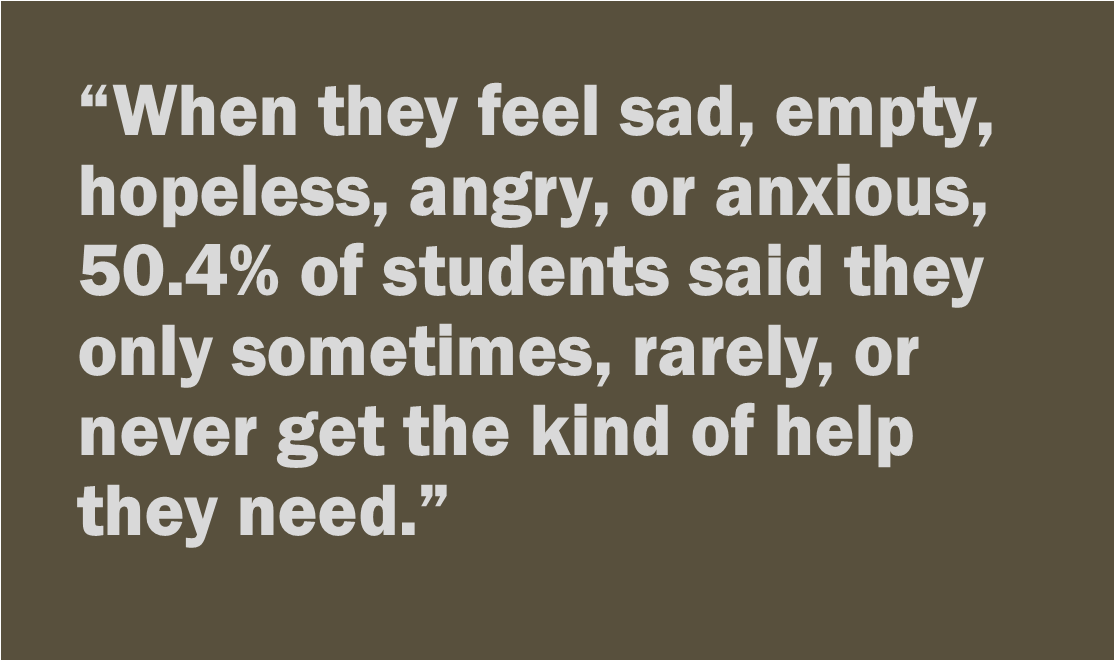 Connecticut Statistics
 The mission of the Jordan Porco Foundation is to prevent suicide, promote mental health, and create a message of hope for young adults.
 However, it is not just the alienation of population groups from each other that concerns me. I have spent much of the last twenty years in South Africa and one of the things I learned is that enduring reconciliation is not possible without eliminating historical illusions, dismantling deceptions and coming to grips with mis-teachings.
 vided millions of dollars for relief and governments provided billions for recovery, neither sector provided very much for reform. And yet it is this third stage that can have the most enduring impact. It can help sustain the public attention to what remains to be done and it can help change policies and practices that may have contributed to the disaster in the first place.
 I wrote my recently published book because I wanted the reader to imagine what the future community would be like if each of us were able to say “I want to be me without making it difficult for you to be you.”
 when strangers help strangers both those who help and those who are helped are transformed. When that which was their problem becomes our problem, the connection that is made has the potential for new forms of community. In other words, when you help someone who is homeless to find a home, when you help someone who is hungry to find food, when you help someone to find meaning in a painting or sculpture, when you help someone to fight bigotry or to find a job, you will be laying the groundwork for the genesis of community.
 here they do business in Europe and elsewhere. At least 82 UK-based companies are currently doing business in Connecticut.
 out the economic future.
 interest: