PERSPECTIVE - Suicide Prevention: Beyond the “13 Reasons Why”

by Rachel Papke The Netflix series ‘13 Reasons Why’ has sparked a national conversation about suicide. We see this happen a lot when there’s a big story to tell that strikes a controversial cord. But here’s my opinion: These conversations need to extend beyond the short lifespan of a big story or a popular movie or series.

Whether you know it or not, there are people and organizations working tirelessly year-round to bring suicide prevention into the light. When will those efforts take the spotlight? It’s their work that should be our focus, that we should support and reference throughout the year to have meaningful conversations about mental health and suicide prevention. Suicide prevention efforts exist, persist, and extend far beyond the ‘13 Reasons Why.’

What can you do?

Engage in conversations with each other, your children, your communities, and beyond.

Why do we need to talk about suicide with high school students?

  • 6% of Connecticut high school students said they felt sad or hopeless for 2 or more weeks in a row over the past 12 months*

  • 4% of Connecticut high school students seriously contemplated suicide in the past year*

  • 9% of Connecticut high school students attempted suicide in the past year*

  • 4% of Connecticut high school students said they got the kind of help they needed when they felt sad, angry, hopeless, or anxious*

  • Nationally, almost 1 in 4 high school females seriously considered suicide and 1 in 5 made a plan for how they would attempt suicide*

Suicide is a major public health concern, and we need to always have conversations using safe messaging,supporting help-seeking behavior.

Understand that suicide contagion is a real concern with decades of research to back up its existence. Because of the graphic and triggering content in this series the producers have a tremendous responsibility to adhere to safe messaging recommendations to prevent suicides.

Recently, Netflix responded to the myriad concerns from individuals and organizations regarding this and they are working to add more trigger warnings and place the www.13reasonswhy.info website at the start of the series so that it is visible and viewers know where to go if they need immediate help.

Talking about Suicide

If you’re not sure where to start, I’ve included links to help you start that conversation. Please take the time to educate yourself. Then, start the conversation utilizing these resources to help you. Please share these resources with your network to help keep the conversation going in a safe way that promotes mental health and prevents suicide.

Ask your child, “How are you feeling?”

Maybe they’re embarrassed to share their thoughts with others. Or, they’ve tried talking about it, but don’t feel anyone listened or understood. Help them understand that there are friends, family members, counselors, and therapists available that want to help and are ready to listen.

If you, a friend or family member is struggling emotionally, you, are not alone. The number for the National Suicide Prevention Lifeline is 800-273-8255.

___________________________

Rachel Papke is the Communications Manager at the Jordan Porco Foundation charity. She earned her Bachelor’s Degree in Journalism and Media Studies at Rutgers, The State University of New Jersey.

Resources

Note: The opinions expressed in this perspective piece are personal, and not those of the Jordan Porco Foundation. This content is provided for general informational purposes only and should not be construed as mental health advice from the individual author or the Jordan Porco Foundation. You should consult a mental health professional for advice regarding your individual situation.If you need support now, call the Suicide Prevention Lifeline at 1-800-273-8255, or, text HOME to 741741 to get help 24/7 from the Crisis Text Line. If you or someone you know needs help, you can visit the Jordan Porco Foundation’s resources page.

*2015 Youth Risk Behavior Survey data from the Connecticut DPH and the CDC

PERSPECTIVE: Cheers to Farm Brewers and Tomorrow’s Homegrown Jobs

by Brett Broesder Connecticut’s craft brewery industry is growing, and if lawmakers pass legislation that paves the way for farm brewers to grow statewide, the Nutmeg State will be in a better position to win tomorrow’s good-paying craft beer jobs.

Our state is currently home to more than 50 craft breweries; Connecticut brewers alone are producing more than 3 million gallons annually. The economic impact of the craft beer industry on our state is nearly $569 million every year.

Although craft breweries seem to be popping up everywhere, there’s still a lot of room for growth. In fact, nationwide over 1,000 cities with populations of more than 10,000 people still do not have a craft brewery, confirming that there is still room for growth in the marketplace.

Connecticut lags behind its neighbors. For example, in Massachusetts, there are currently more than 80 craft breweries with an annual economic impact of more than $1.4 billion. On the other hand, the Empire State is home to over 200 craft breweries with an annual economic impact of $3 billion.

The Nutmeg State’s craft beer industry is still growing. There are more than 40 new craft breweries in the planning stages across the state. Not only are craft breweries growing across the state, they’re booming nationwide. In fact, three decades ago, there were less than 125 breweries nationwide. Today, there are more than 5,300, accounting for more than 424,000 jobs.

Across the country, craft brewers created almost 7,000 jobs in 2016, bringing the total amount of industry jobs to nearly 129,000. Craft brewers also saw a six percent year-over-year rise in volume, producing over 24.6 million gallons of beer. Also, the rate at which craft breweries are opening is much faster than that which they’re closing.

One reason for our neighboring states having a leg up on craft brewery growth is their incentivizing farm brewing. In 2012, the New York State Legislature passed – and the governor signed into law – a bill creating a farm brewery license.

Since the license became available in 2013, more than 130 farm brewers have been permitted, creating jobs and growing the state’s economy. In fact, since 2013, craft beer production in New York State has increased by more than 50 percent.

Now, Connecticut has an opportunity to start the process of catching up if the General Assembly passes, and the governor signs, a bill that would create a farm brewers permit. This legislation – An Act Establishing a Manufacturer Permit for Farm Brewers (HB 5928) – allows for the manufacture, storage, bottling, and wholesale distribution and sale of beer manufactured at any place or premises located on a farm.

The permit also allows permitees to sell their craft beer at a farmers market, and requires permittees to use a certain amount of hops, barley, and other fermentable grown or malted in the state. After fulfilling these requirements, and purchasing a $300 permit, farm breweries can then advertise their products as “Connecticut Craft Beers.”

With this bill, state lawmakers have a real opportunity to help strengthen both the craft brewery industry and agriculture. And when a farmer and a brewery partner up, they create jobs, keep farmers farming, and help small businesses grow and thrive.

Connecticut’s House of Representatives recently passed the farm brewers bill unanimously. It’s now up to the State Senate to pass it, and for the governor to sign it into law.

_______________________________________

Brett Broesder is Co-Founder and Vice President of the Campaign for Tomorrow’s Jobs, which focuses on growing Connecticut’s economy for present and future generations in three key policy areas:  workforce preparedness, business growth & innovation and fiscal sustainability.   


PERSPECTIVE: Wildlife Watching, Not Hunting, Is Better Choice for State Residents and Economy

by Annie Hornish Proponents of HB 5499, expansion of Sunday hunting to include guns on private land, argue that this bill will reduce deer populations, but this is not true.

Deer will produce more fawns and breed at an earlier age after their numbers are reduced. The same pattern repeats: deer are killed by archers in the fall, yet their numbers bounce back by summer.

When doing the math, it is easy to see why HB 5499 won’t reduce the deer population. According to deer harvest figures provided by Connecticut’s Department of Energy and Environmental Protection (DEEP), from September 15, 2016 through January 17, 2017 (latest available), Connecticut archers removed 5,088 deer from private land, and 3,729 deer were killed by shotgun/rifle and muzzleloader.

We can assume that a similar number of deer would be killed on a Sunday as on a Saturday with the additional forms of hunting (i.e., shotgun/rifle and muzzleloader). The latest figures for Saturday volume were 1,218 (shotgun/rifle (961) + muzzleloader (257) (2014)). Assuming this number is similar for the 2016-17 deer hunting season, passage of HB 5499 would therefore remove another 1,218 deer.

The last statewide deer population estimate, which was done in 2006, yielded 124,000 deer. If we assume that the deer population has remained the same for the past 8 years, a liberal estimate of this additional “take” would be less than 1% of the deer population. If we assume that the population is higher now than it was 8 years ago (this is the widely-held assumption from proponents of this bill, including DEEP), the additional “take” would drop below 1%.

Factoring in the additional number of deer taken by archers on private land under special landowner hunting provisions allowed per DEEP, the grand total number of deer killed still amounts to only 1% of the deer population or significantly less, depending on the current size of the deer population, and removing an additional 1% of the deer population will not, even in the immediate short term, significantly reduce deer numbers in Connecticut.

Like with deer, trapping of coyotes does not decrease the population, and may make the problem worse. One study found that even when up to 70% of their numbers are removed, coyote populations bounce back quickly. This is because a stable pack has only one alpha pair, and they are the only ones who reproduce. When one or both members of that alpha pair is killed, other pairs form and reproduce (breeding at earlier ages and having larger litters). Also, unstable packs can attract transient coyotes. The solution to conflicts with coyotes is public education on removal of attractants (e.g., accessible garbage, pet food left outside), and hazing to curb undesired coyote behavior.)

Deer problem management programs that focus on site-specific solutions offer successful, long-term solutions to conflicts with deer (e.g., a Michigan-based “Don’t Veer for Deer” program reduced deer-car collisions 25% despite a 34% increase in herd size; PZP immunocontraception programs; public education on deer resistant plantings). These solutions are not only sustainable solutions, but humane solutions.

Per the latest survey by the U.S. Department of the Interior, Fish and Wildlife Service and U.S. Department of Commerce, wildlife watchers (defined as observing, feeding, or photographing wildlife) in Connecticut not only outnumber hunters by a margin of 29 to 1, but they also outspend hunters by 7.4 to 1, contributing about $510 million to the economy annually.

Further, the survey also shows the following 10-year trends for Connecticut: a 42% increase in the number of wildlife watchers (from 774,000 to 1,102,000), and a 39% decrease in the number of hunters (from 62,000 to 38,000).

Connecticut should be forging policies that cater to wildlife watchers instead of pouring limited tax dollars into programs catering to a diminishing number of hunters.

___________________________________

Annie Hornish is Connecticut State Director of The Humane Society of the United States.

PERSPECTIVE: People, Not Cars, Should Be Union Station Priority

by Krysia Solheim The New Haven community has consistently voiced opposition to the State's plan to build a new $50 million parking garage for Union Station in New Haven, and the State has failed to adequately respond to our concerns, requests, and comments on the design and the environmental impact assessment.

The New Haven community wants new infrastructure and development to prioritize people, not cars. Currently, 30 percent of New Haven residents, including myself, do not own a car.[1] We want a city with better mass transit and better cycling and pedestrian infrastructure and connectivity. We do not want more parking garages or more public space allocated to cars.

We also want development to support healthy lifestyles and enable a vital New Haven.

New Haven residents suffer from the highest rates of asthma hospitalization in the state - the neighborhood surrounding Union Station is an asthma hot spot.[2] Air quality will continue to worsen if the garage is built because more people will drive to Union Station instead of using more sustainable modes of transportation to get there.

The State has committed to reducing greenhouse gas emissions by 80 percent below 2001 levels by 2050 and the City of New Haven is in the process of committing to the same target. Transportation emissions account for 36 percent (2013 inventory)[3] of Connecticut's greenhouse gas emissions. They account for about 26 percent of US greenhouse gas emissions. It is astounding then, that the State wants to spend $50 million on a garage that will only induce more people to drive instead of investing funds to induce more people to walk, bike, and take transit.

Greenhouse gas emissions are a regional and global issue and the State should be seriously considering environmental impacts and how to protect people, especially low-income environmental justice communities who have long borne the brunt of pollution and are the most vulnerable to climate change impacts.

The City of New Haven and the New Haven Parking Authority understand what the community wants and should be allowed to continue to manage Union Station. They have invested in multimodal connectivity to the station, including a free downtown shuttle with GPS and bike parking infrastructure, and have plans for further transportation oriented development in line with this area’s needs.

I have lived most of my life abroad and have seen wonderful examples of cities that have invested in their train stations and multimodal connectivity to ensure that their communities have reliable access to jobs, that they have clean air, and that they do not have to spend a burdensome portion of their income on transportation or subsidizing the increasing costs of maintaining infrastructure for cars.

I strongly believe that the City of New Haven and the New Haven Parking Authority are best equipped to bring similar forward thinking planning and infrastructure to Union Station and the Greater New Haven region.

_____________________________________

Krysia Solheim is the owner and founder of Viosimo, an environmental sustainability consulting firm. She holds a Bachelor of Science with Honors in Environmental Science from the University of Arizona with minors in Spanish, Arabic, and Chinese; and a Masters in Environmental Management from the Yale School of Forestry & Environmental Studies. Born in Arizona, Krysia grew up in Nicaragua, Costa Rica, Thailand, Cyprus, Venezuela, and Qatar.  She speaks English, Spanish, and Greek fluently and intermediate Chinese and Arabic, has dual American and Greek citizenship, and is a resident of New Haven.


[1]www.governing.com/gov-data/car-ownership-numbers-of-vehicles-by-city-map.html

[2] http://www.ct.gov/dph/lib/dph/hems/asthma/pdf/asthmadatabrief_2013.pdf

[3]www.ct.gov/deep/lib/deep/climatechange/2012_ghg_inventory_2015/ct_2013_ghg_inventory.pdf

PERSPECTIVE: Don't Overlook Your Foreign Assets

by Sharon K. Brune Are you subject to IRS penalties of $10,000 or more -- and don’t even know it?

Do you have a foreign bank account or other foreign asset? If you neglected to properly report such accounts or investments, you may be liable for civil and criminal penalties that start at $10,000 – even if you don’t owe any taxes on that foreign money!

There is a laundry list of forms the IRS may require from people who hold foreign bank accounts or other assets.  Chief among them is the FinCEN Form 114, colloquially known as the FBAR (Report of Foreign Bank and Financial Accounts).  It has a fairly low threshold for reporting, and requires not only direct account holders to report, but also requires reporting by those with signature authority over foreign accounts and majority owners of business entities with foreign accounts, among others.  In short, you might think your account is too small or your connection to a foreign asset is too minimal to require reporting, but you may well be wrong.

Frequently taxpayers are surprised to learn they were required to file forms related to foreign assets.  Commonly heard laments include these and countless other variations:

  • I’ve only got two accounts of $5,000 each.
  • I only have $10,000 in a single account that I haven’t touched in years.
  • It’s not my account – I only have signature authority over an account in case something happens to my parents who live in another country.
  • I’m a citizen of another country but living in the US – I don’t need to report my foreign assets, do I?
  • My accounts are in Canada. That’s not foreign, is it?
  • I own a corporation or partnership that does business abroad. We have foreign bank accounts for these branches.  They’re not mine.
  • My grandfather, who lives in a foreign country, created a trust for my benefit. I didn’t receive any money this year.

In each of the above scenarios, there is a strong likelihood that a reporting requirement exists – even if you don’t owe taxes on the accounts.

Bank accounts aren’t the only assets that need to be reported.  Various other forms address reporting investments in foreign businesses, receipt of bequests from foreign persons, ownership of foreign rental property, loans to a foreign party, to name but a few.

Individuals aren’t the only ones required to file these reports.  Some forms require business entities, trusts, or estates to file as well, if there are involvements with foreign assets.

New for forms filed in 2017 is a change in the due date.  Formerly required to be received by the Department of the Treasury by June 30, the revised receipt date is now April 15 with an automatic extension allowed to October 15.

Hopefully no one will be shocked to learn that income from all sources, including foreign, is required to be reported on a tax return filed by a US person or entity.

If you have overlooked filing any foreign reporting informational forms, getting “right” with the IRS will be less complicated if any income associated with foreign holdings was properly reported.  The IRS is trying to encourage compliance, knowing that in many cases people were truly unaware of the requirements.  There are disclosure programs and approaches that can allow you to get caught up, and may mitigate some of the possible penalties associated with non-filing.

Note that there is no statute of limitations when it comes to forms that were not filed – the IRS can come looking for you well beyond the typical three years’ statute of limitations normally associated with a routine Form 1040.

Burying your head in the sand and procrastinating will not make this problem go away. Better to get professional advice and take all necessary steps to comply with IRS requirements.

_______________________________

Sharon K. Brune, CPA, is a partner in the New Haven office of Beers, Hamerman, Cohen & Burger, P.C. She can be reached at 203.787.6527 x109 or sbrune@bhcbcpa.com


PERSPECTIVE: Don’t Block Emerging Technologies, Consumer Choice in Eye Care

by Gary D. LeBeau With the advent of e-commerce and new technologies involving telemedicine, the healthcare industry is transforming and is now giving consumers greater freedom than ever before.  More and more consumers are receiving their health care and health products in new ways and the Internet has been a huge asset in lowering prices, increasing access and helping working families get what they need even outside of so-called “regular” business hours.  This convenience is quickly becoming a necessity in today’s world.

For example, federal law states that patients can leave their eye doctor’s office with a copy of their prescription, giving them the choice of how they will fill it. Whether it’s through their desktop computers, an app on their mobile device or tablet, through the mail, or at a discount retailer, the choice is up to the patient to decide in consultation with their doctor.

These innovations, however, create new challenges in the legal, legislative, and regulatory arenas, as established providers often seek to restrict competition and protect their market share from emerging threats.   .  This has been especially evident in the contact lens market, which has been repeatedly targeted by protectionist legislation that ignores the reality of modern day technologies in telemedicine.

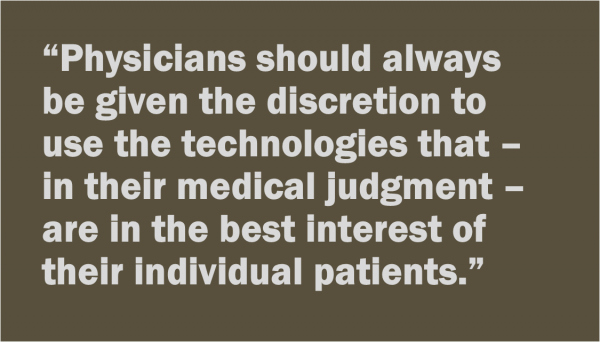
Proposed legislation frequently uses “protecting public health” as a rationale for restricting the use of new technology in eye care.  In fact, there is not a single reported instance of a patient being harmed using these new technologies and there are multiple tools used to screen patients and direct them to a medical provider when appropriate.  In addition, physicians should always be given the discretion to use the technologies that – in their medical judgment – are in the best interest of their individual patients.

Here in Connecticut, H.B. 6012, An Act Concerning Consumer Protection in Eye Care, looks to amend general statues to require various mandates on industry and requirements for consumers before permitting a remote or in-person eye assessment using automated equipment or an application designed to be used on a telephone, computer or Internet-based mobile device.  If enacted, this legislation will make Connecticut stand alone as the state with the most stringent restrictions on consumer choice.  Other states, including Virginia, have recently passed legislation going in the opposite direction to specifically allow the use of this ocular technology.

Connecticut Legislators should resist attempts to stifle innovation and prevent consumers from making their own decisions.  Connecticut should not place itself at a competitive disadvantage with other states when it comes to emerging technologies and innovation in the health care sector.

____________________________

Gary D. LeBeau was a Connecticut state representative (1991- 1995) and a state senator (1997-2015) during which time he served as co-chair of the Commerce Committee.  He also served as co-chair of the National Council of State Legislators Commerce and Labor Committee from 2010 to 2014 and first chairperson of the state legislature’s Manufacturing Caucus, 2012-2015.

PERSPECTIVE: Connecticut’s Upside-Down Property Tax System

by Ellen Shemitz and Ray Noonan There is something terribly wrong with taxes in Connecticut, but it is not what the conservative think tanks would have you believe. State and local taxes in our state are not troubling because they are too high across the board; they are troubling because they are wildly unfair, asking those with the least to pay far higher rates than those with the most resources.  This upside-down tax system hurts not only working families struggling to make ends meet, but it also harms the long term economic health of the state, making us less competitive by holding back thousands of children and parents from contributing their full potential.

Thriving communities are made possible by good schools, clean streets, safe neighborhoods, and other public services. To support these building blocks of economic development, Connecticut towns need a stable revenue system that provides them with adequate resources.  Addressing that need requires a hard look at our property tax system, which largely leaves towns on their own to fund local services and as a result creates huge disparities in opportunity.

For the 2015-2016 school year, Greenwich homeowners paid $1,127 in property taxes for every hundred thousand dollars of home value and in return received education funding of $21,331 per pupil. In contrast, Bridgeport homeowners paid $4,220 per hundred thousand dollars of home value yet received $14,343 per pupil in return—in other words, far higher taxes for far fewer educational resources. Since education funding affects educational and life outcomes, these differences result in differences in opportunity for Connecticut’s children based solely on where they are born.

Connecticut didn’t arrive at this situation by accident. Decades of “redlining,” or systematically denying investment to communities of color, prevented these communities from sharing in America’s postwar wealth. Years of restrictive covenants—contracts mandating that property be sold only to whites—excluded families of color from wealthier communities. Today, exclusionary zoning policies limit affordable housing across the state, denying low-income families the opportunity of a better education for their children. Inequalities that took generations of intentional policy to enact will take big ideas to fix.

One big idea Connecticut should consider comes from neighboring Vermont. To fund its schools, Vermont levies a statewide property tax that ensures equal education dollars for equal property tax rates. Applied here, children in Greenwich would still benefit from $21,331 per student in education funding, but the tax rate needed to raise that amount of money would be the same in Greenwich as it would be in every other town in the state. Conversely, Bridgeport could continue to spend $14,343 per pupil, but would no longer be compelled to charge as high taxes solely because of its restricted property base. We found that such a system in Connecticut would benefit 75 percent of residents in 117 cities and towns.

This system would also revitalize economic development in Connecticut by reinvigorating growth in our dense urban cores and inner-ring suburbs. Currently, large disparities in property tax rates between neighboring communities discourage development in the very places to which businesses and young families want to move. The state program in place to alleviate this problem, Payment in Lieu of Taxes (PILOT), has never been fully funded. By fully funding PILOT and reducing these disparities, a statewide property tax would better align business incentives with state priorities.

For too long our laws have unfairly limited who is entitled to the benefits of living in a community that can afford good schools. Surely changes in the law today can ensure that, at the very least, those benefits are not afforded at a steep discount.

______________________________

Ellen Shemitz is Executive Director and Ray Noonan is Associate Policy Fellow for Connecticut Voices for Children.  

PERSPECTIVE: Public + Private = Powerful

by Rie Poirier-Campbell It’s no secret that the Hartford Public Schools are facing severe budget challenges, tied largely to our city’s and state’s grave financial pains. In fact, the magnitude of the problem in the school district is unprecedented, with a gap of as much as $20 million predicted for next school year.

Recently, Aetna, Travelers and The Hartford stepped up to help our city in a big way: pledging a combined $10 million each year for five years to ease the budget crisis, and – equally important – calling on other corporations to join them. This is the kind of fresh, civic-minded, business-smart, public/private approach that can help our community begin to dig out and move forward.

Public/private partnerships aggregate and focus new resources to public needs in a way that a strict reliance on tax dollars never can. They also bring highly creative thinking, enthusiastic teammates and often more cost-effective systems for delivering needed services.

Public/private partnerships are more than just an extra source of revenue. They’re a new way of doing business. Like all partnerships, they may take more work and ramp-up time than going it on your own. And they take ongoing investment on both sides. But the payoffs are far greater.

That’s the idea behind Hartford Performs’ partnership with the Hartford Public Schools. A few years ago, when Hartford students’ test scores were at their lowest, our region’s vibrant arts community asked the school district how it could help. Many arts organizations and teaching artists had done some work in the schools and saw how adding music or theater techniques to a lesson could help children learn. They, along with classroom teachers, knew that when students get up and dance like planets in the solar system, they internalize abstract concepts such as rotation and revolution. When they act out a scene from a book, they better understand the characters’ motives and develop empathy.

What they also knew was that, while some students in Hartford had access to this kind of innovative teaching approach, most did not. What was needed was a system for making sure that every student, regardless of grade or school, have the benefit of arts experiences that would help them learn core subjects.

So the school district and the arts community created a public/private partnership to build that system. Hartford Public Schools invested financial resources; arts organizations invested human resources and innovation; and forward-thinking corporations and foundations created leverage by underwriting the infrastructure to make it all work.

The result is that, today, every Hartford Public School student from prekindergarten through eighth grade has teaching artists visit their classrooms several times a year to help them understand things like fractions, adverbs, the water cycle and the Emancipation Proclamation, by drawing, dancing, drumming and dramatizing. The students are not only learning, they’re enjoying what they’re learning. It’s such a powerful model. I will never forget seeing a student’s eureka moment when he finally figured out what one-eighth meant by coloring it out with a teaching artist.

The numbers bear out how well this approach works. Teachers who participated in a recent independent evaluation said that Hartford Performs programs helped their students develop vocabulary (92%), express themselves verbally (88%), develop active listening skills (96%), work collaboratively with other students (86%), develop problem-solving skills (75%), retain information (93%), develop social skills (89%) and express themselves in writing (65%).

None of this would have been possible without the public/private partnership that developed this broad-reaching and cost-effective system of services for Hartford kids. Further, it’s easy to see how this model can be replicated to serve Hartford students in other areas, such as sports, life skills, civics or vocational/technical learning.

Even – and I would argue especially – in tight budget times, this model is well worth continued investment by all partners, private and public, who are interested in advancing the achievement of Hartford students.

__________________________________

Rie Poirier-Campbell is Executive Director of Hartford Performs


PERSPECTIVE: Is Your School Fresh Check Day Cool?

by Rachel Papke Most people are surprised to learn that suicide is the second leading cause of death for individuals between the ages of 15-24.

The Jordan Porco Foundation’s mission is to prevent suicide, promote mental health, and create a message of hope for young adults. They accomplish this by providing engaging and uplifting peer-run programs on college campuses. Their signature program is Fresh Check Day.

Fresh Check Day is an uplifting mental health promotion and suicide prevention event that includes interactive expo booths, peer-to-peer messaging, support of multiple campus departments and groups, free food, entertainment, and exciting prizes and giveaways.

Fresh Check Day aims to create an approachable and hopeful atmosphere where students are encouraged to engage in dialogue about mental health and helps to build a bridge between students and the mental health resources available.

The program’s primary goals are to:

  • Increase awareness of mental health resources and services available to students
  • Reduce stigma and misconceptions around mental health and suicide that often deter individuals from seeking help
  • Empower peers to be gatekeepers by understanding warning signs and knowing what to do if a friend is exhibiting signs of suicide or a mental health concern
  • Increase willingness to ask for help if experiencing emotional distress

The Jordan Porco Foundation does not charge a fee for service for Fresh Check Day in consideration of varying capacities to fund large-scale mental health programming. Instead, they provide significant support and ask participating schools to provide the remaining essential components within their budgetary means.

This year they experienced incredible growth. They expanded Fresh Check Day to a national reach that includes 14 states, with 58 events this year alone. Currently, they have signed-on 90 schools in 28 states, plus the District of Columbia, and counting.

In Connecticut, 22 institutions are participating, including:  Gateway Community College on April 11, the University of Hartford on April 12, Norwalk Community College on April 19, University of Saint Joseph on April 19, University of Connecticut on April 22, Sacred Heart University on April 28, Three Rivers Community College on September 20, Connecticut College on September 22, Quinnipiac University on October 6, and Central Connecticut State University on October 17.

What can you do?  Bring Fresh Check Day to your school. You can connect with Student Activities, Residential Life, Health Services, your school’s counseling services, or anyone you can think of on campus, and have them get in touch with the Jordan Porco Foundation. Or, you can e-mail the Jordan Porco Foundation at info@jordanporcofoundation.org to introduce yourself, and the programming staff will help you.

“This was an eye opening experience,” said one college participant.  “It helped me feel like I wasn’t alone.”  Added another: “As someone whose mental health had limited my life for some time, I want you to know that these things change lives.  Your event made people feel valued and important and cared about.  You may never hear thank you from everyone that today changed their life but I can promise you our campus is a safe place because of Fresh Check Day.”

_________________________________

Rachel Papke is Communications Coordinator at the Jordan Porco Foundation

The Jordan Porco Foundation is a 501(c) (3) public charity. Their programs strive to start a conversation about mental health that reduces stigma while encouraging help-seeking and supportive behaviors.  Tickets to Jordan’s Journey Gala, their annual event in support of the Jordan Porco Foundation’s lifesaving programs are now available.  The event is on March 25.  Learn more at jordanporcofoundation.org or (860) 904-6041.


PERSPECTIVE: Fighting Fake News in the Classroom

by Lorenzo Burgio The struggle to tell fact from fiction in the digital age is the battle being fought recently by teachers and professors.

A Stanford study recently found that students in middle school, high school and college, are bad at verifying the news read online — which is worrisome.

The ability to verify news is something that has to be practiced in the nation’s classrooms, said Professor Sam Wineburg, who produced research for the Stanford study, to NPR.

In the study, Wineburg explained that the concept becomes even more worrisome because “many people assume that because young people are fluent in social media, they are equally perceptive about what they find there.” This makes young people a major factor, because they are susceptible to believing fake news and more prone to spreading it.

“How do they become prepared to make the choices about what to believe, what to forward, what to post to their friends, when they’ve been given no practice in school?” said Wineburg to NPR.

This idea is becoming even more prominent as the media is constantly being attacked or used for personal agendas, and this is something educators are aware of.


This is also a responsibility that is falling more and more into the hands of teachers and professors, because “fewer schools now have librarians, who traditionally taught research skills,” explained The Wall Street Journal.

As Facebook works with the Associated Press and other organizations to ensure fake news is not spread throughout the social media platform, efforts in the classroom can also help tame the spread of fallacies on the Internet.

“Teachers from elementary school through college are telling students how to distinguish between factual and fictional news — and why they should care that there’s a difference,” wrote USA Today.

Encouraging and teaching the ability to sift out fake news in the nation’s classrooms is necessary. This ability is vital to becoming a functioning and involved member of society and can only benefit future voters.

California lawmakers passed a bill in January that requires the state to teach courses that help students between grades seven and 12 distinguish fact from fiction and understand the repercussions of spreading fake news.

The dynamics of these courses are specifically designed to have students combat fake news by knowing proper reporting techniques. They teach students to ask questions such as, “Are other news sites reporting on it? How is the writing? Can I find the people in the story elsewhere online?”

There is also be a special emphasis on using tools such as Snope.com and FactCheck.org to validate all information and to always think twice before sharing something on social media.

These courses should be taught nationwide. In a digital world that is only becoming increasingly technologically based, these are necessary skills that students should be properly educated in and to combat the spread and influence of fake news. It is particularly significant because the young social media users play such a large role in spreading fallacies due to their familiarity and expertise with social media, and the perceived notion that news shared by them is of the same stature.

Lorenzo Burgio is editor of Central Recorder, the student newspaper of Central Connecticut State University, where this column first appeared.  Published with permission.