PERSPECTIVE: Reexamining Our Approach to College Access
/by Angel B. Pérez
Recently, I read yet another higher education professional’s case for standardized testing, specifically that making such tests free and universal would help level the playing field for low-income and minority students seeking access to top colleges. But while the SAT’s hefty $57 fee contributes to the bar riers low-income students face, eliminating it won’t solve the problem. Access to higher education in America is much more complex.
The problem is our nation’s inability to offer consistent college preparation, academic rigor and counseling across varying socioeconomic communities. Data from the College Board show that the higher your family’s income, the higher your SAT scores are. Standardized tests then do more to keep low-income students out of top colleges than to invite them in. There is no shortage of talent in America. The shortage lies in its cultivation.
Many countries surpassed the United States in educational attainment because they believe in providing equal educational opportunity for all. In fact, the Organisation for Economic Co-Operation and Development, which measures global student performance, notes that the U.S. is not on the top 10 list of achievement in Math, Reading and Science. Canada and Japan on the other hand, are. What do these two nations have in com mon? Both made equal access to educational opportunity a top priority.
In Japan, students may live in a poor neighborhood, but they don’t attend poor schools. In Canada, one third of young people come from immigrant families and, when given the same educational opportunities, perform at the same level as their peers. Equity has clearly benefited Canada tremendously since it is the only nation in the world where more than half its citizens have a college degree. Unfortunately, the U.S. lags behind on this issue. Instead of exerting energy investigating “affirmative action” in college admissions, perhaps the current administration could address the educational inequities that have resulted in America being knocked off the world stage.
A study by the National Association for College Admission Counseling shows that the average public school counselor has a caseload of 476 students and spends only 22% of his or her time on postsecondary counseling. This is in stark contrast to the 55% that private school counselors spend. Most low-income high schools can’t afford to offer expensive test-preparation courses to their students, and while free or low-cost online options are available, the services offered to students who pay for preparation courses are unparalleled.
Yet knowing how stark the contrasts are in preparation between low- and high-income students in America, most colleges still insist on using an exam that was created in 1926 by Carl C. Brigham to “test” America’s intelligence. The exam was originally touted as a tool of meritocracy, the great equalizer among students in America. We all know that dream never actualized. Our world has evolved tremendously since then, and a one-size-fits-all approach cannot be used to evaluate whether a student is ready to succeed in college. Our nation’s talent abounds. It’s higher education’s job to identify it.
From my own experiences as a vice president and teacher at several of America’s most selective institutions, I know it’s easy to dismiss an applicant because he or she doesn’t meet the university’s average test scores, or even worse, would hurt its average on U.S. News and World Report rankings.
But research shows that rather than test scores, the best predictors of success in college are high school grades and academic rigor.
At Trinity College, I have led efforts to rethink how we admit students, and we’ve changed our admissions process to think differently about what it means to be “college ready.” One of the changes we made was to adopt a test-optional policy. Next month, the college will welcome the most diverse first-year class in its history. It includes the highest number of low-income and first-generation students in Trinity’s history. In addition, the academic profile has increased tremendously. The Class of 2021 has twice as many students at the top of our academic evaluation scale as last year’s entering class. We focus on grades, rigor, curriculum and all quantitative data high schools submit to us. But we also pay very close attention to personal qualities that we know will help students succeed in college—qualities such as curiosity, love of learning, perseverance and grit.
Since we’ve redefined our admissions process, members of our faculty have told us that their students are more curious, engaged and involved. Isn’t that what we want from all of our students?
 If our educational system in America provided equal educational opportunity to all students regardless of income level, making the SAT and ACT free might significantly increase the number of low-income students in college. However, since this is a far cry from our current reality, it is higher education’s responsibility to think more creatively about whom it allows in the door. We are a long way from ensuring that every citizen has equal access to high-quality education, but in the meantime, universities can play a significant role in ensuring inclusivity of all talent.
The demography of the U.S. is shifting dramatically. Our population is younger, more diverse and less wealthy. If we are going to prepare the nation for future challenges and regain our status on the world stage, we must rethink our approach to college access. We either fundamentally change student preparation for college or make our admissions processes more inclusive of diverse talents and less traditional—but more predictive—measures of success. Actually, our nation’s future depends on our doing both.
________________________
Angel B. Pérez is vice president for enrollment and student success at Trinity College in Hartford. This article first appeared in the New England Journal of Higher Education.
 These research findings have important implications for society. If early childhood programs produce healthier adults, investing in these programs could reduce the burden on the health care system. If children who participated in early childhood programs grow up to experience higher employment rates and earnings, requests for public assistance should decrease. If these children are less likely to engage criminal activity, their communities and society as a whole should benefit.
 Nationally, rescinding DACA would be disastrous to our economy. Removing 800,000 people from the workforce nationwide would be short-sighted and harmful. It would cost the country $433.4 billion in GDP loss over a decade. It would cost employers $3.4 billion in unnecessary turnover costs. Contributions to Medicare and Social Security would be cut by $24.6 billion over a decade.

 s of their sex, race, gender, ethnicity, orientation or religion.
 We must admit that with a Connecticut College education we are more than ready to take on some of the most important challenges that the human population faces today. At a time in our world where poisonous hatred has already ripped apart communities and destroyed lives, our education and our experiences are the much-needed antidote that can heal and rebuild.
 The words were almost around the corner—in fact, my preceptor went right on to the next question—when I interrupted him and said, "You know, you just said 'I'll jump that bridge when I come to it,' and the expression is I'll cross that bridge when I come to it. Are you upset about the thought of one day being alone?" Her smile evaporated and she started crying. She was not only depressed, which helped explain what was bothering her 8-year-old daughter, but she was suicidal, and we immediately arranged for treatment. That moment was simultaneously the most exhilarating and the most terrifying moment of medical school. What if I had missed it? What if we had just gone on to the next question? What had I already missed with other patients? And what was I going to miss in the future?


 However, fewer and fewer businesses are organized as corporations. Personal taxation of pass-through business income now drives state business tax revenue. Different taxes and different rules for businesses that differ in form only. There are also many other types of Connecticut business taxes determined solely by the nature of the product or service provided.
 Early in Nikole's recovery, she knew she had to do something to help combat motor vehicle crashes caused by young drivers, the number one killer of teens in America. She met members of !MPACT (an acronym for Mourning Parents Act, Inc.) at a presentation she made at Cromwell High School. Not long afterwards, she began delivering her safe teen driving message with the !MPACT moms at high schools across Connecticut and into greater New England.
 So what does this mean for you? It means that, as you begin your career in the law, it is essential for you to understand that your obligations as an attorney extend far beyond the interests of your clients. They extend to the justice system, to the legal profession, and to society at large.

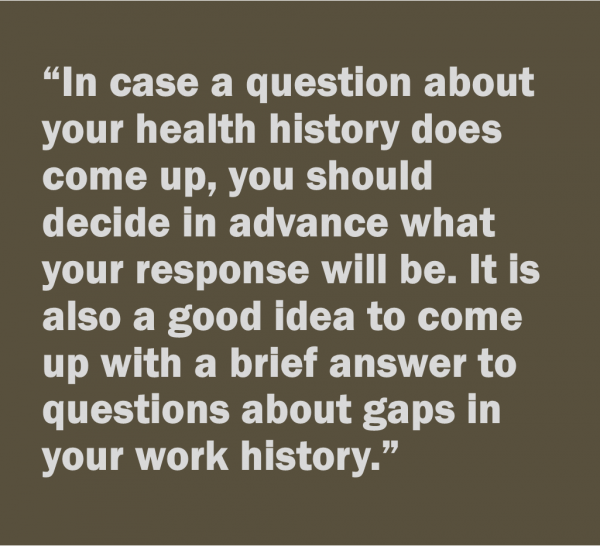 When answering, tell stories about your achievements and use concrete examples – but keep your answers brief and meaningful. Stay composed, and don’t let an interviewer’s quirky questions rattle you. Unless a question or request is discriminatory, just go with the flow.