PERSPECTIVE - The Bond Lock: A Threat to Connecticut´s Economy
/by Ray Noonan and Rachel Silbermann Connecticut's future lies in opening new pathways to economic growth and opportunity for businesses, families, and communities. To achieve these goals, Connecticut needs a predictable and coherent fiscal policy that enables lawmakers to make the strategic choices that can spur economic growth. Unfortunately, a set of fiscal restrictions added to the budget in the final hours of negotiations last year might bring significant uncertainty on future fiscal policy and leave legislators unable to respond to current and future crises.
The fiscal restrictions - spending cap, bonding cap, volatility cap, appropriations cap, and Bond Lock - place a set of rules to guide Connecticut´s fiscal policy. When well-designed, fiscal restrictions can help create a strong foundation for the state´s budget practices, enabling legislators to focus on forward-looking investments to generate opportunity and spur economic growth. When hastily designed, however, restrictions may constrain fiscal policy to the point of making it wholly ineffective. 
One of the fiscal restrictions, the Bond Lock, might have this effect. The Bond Lock as a policy is untested to the point it could introduce unprecedented levels of uncertainty and potential instability to Connecticut´s fiscal future. The Bond Lock stipulates that, whenever the state issues a bond after May 15, it must vow not to change any of the new fiscal restrictions for the life of the bond except in extraordinary circumstances. As bond covenants are legally binding contracts, the Bond Lock will force the state to keep the fiscal restraints in place, preventing the governor and legislature from pursuing critical investments. In effect, it will prevent lawmakers adapting the budget for any changes—expected or unexpected—for more than a decade.

The consequences of the Bond Lock go beyond limiting the General Assembly´s fiscal authority. The uncertainty created by a broad-reaching bond covenant, once in place, could potentially damage Connecticut's credit rating and increase our borrowing costs. Under the Bond Lock, any attempt by the General Assembly to fix or amend its own fiscal rules would face the risk of expensive litigation and penalties. Even if the state were to prevail, the prospect of having state obligations tied in court might be enough to scare investors away.
National experts and bond rating agencies have warned that the Bond Lock could increase uncertainty. The Tax Policy Center pointed out that locking in strict fiscal restrictions might have unexpected long-term impacts, warning that enforcing them through bond documents brings new risks. Moody´s has talked about how the Bond Lock reduces budgetary flexibility. According to their analysis, the impact of the Bond Lock on Connecticut´s long-term credit rating is unclear. S&P wrote about how a violation of a bond covenant would create questions on who can sue the state and how.
Recent events show that the scenario of a possible Bond Lock violation is far from unlikely. Both the Democratic and Republican budget proposals introduced last week include provisions that, were the Bond Lock implemented, would break the fiscal restrictions: the Democratic plan proposed spending over the limit, while the Republican plan included some changes to the volatility cap. Either of these budget proposals would have left the state open to litigation if the Bond Lock were already in place.

Fortunately, the General Assembly is currently considering a bill (H.B. 5590) that mitigates the immediate impact of the Bond Lock by delaying its implementation on the spending cap and bonding cap and requiring various state agencies to study the cap. The bill does not, however, delay the implementation of the Lock to the volatility cap or appropriations cap, leaving the state still open to all of the uncertainty and risk associated with the Bond Lock.
We believe that the potential impacts of the Bond Lock warrant a full delay without exclusions. The General Assembly must fully evaluate and implement a set of fiscal restrictions that can genuinely produce lasting budgetary stability without taking on new credit risk, leaving it at the mercy of litigation-happy investors.
Connecticut needs an economy built on equitable opportunity to remain competitive. Our future lies in our cities, our workforce, and our willingness to connect and engage with the world at large. The Bond Lock, paired with the other fiscal restrictions, would undermine Connecticut´s fiscal reputation and would leave our state unable to respond to current or future challenges. We urge the General Assembly to assert its authority and repeal the Bond Lock this session.
_______________________
Ray Noonan is Associate Policy Fellow and Rachel Silbermann, Ph.D. is Fiscal Policy Fellow, Connecticut Voices for Children. The organization's mission is to ensure that "all Connecticut children have an opportunity to achieve their full potential regardless of race, income or zip code."
 therefore are not necessary to fulfill the requirements of Section 2. The last time the immigration question was asked in a decennial census was in 1950.
 Enter the Benefit Corporation (known as B Corp). There are two types of B Corps. One is a certification through B Lab, an NGO that codified the structure. The other is a type of business incorporation, and is obtained by application through the Secretary of the State. Both give legal protection to leaders who consider the interests of all stakeholders - not just shareholders or a board of directors - when making business decisions.
 Our work is crucial to the stability of our state’s finances, securing federal funding, and ensuring state agency compliance. The work we do on whistleblower cases, in conjunction with the Attorney General, provides all citizens the opportunity to expose waste, fraud and corruption without threat of retaliation.
 However, when it came to their personal finances, 88 percent of those surveyed said they wish they started to save for their overall financial goals much sooner.
 It is impossible to assess the AT&T / Time Warner merger without taking into consideration the impact that the Trump Administration FCC’s proposed net neutrality rollback would have. AT&T is the third-largest broadband provider in the United States, with 15.7 million subscribers. And they own DirecTV, by far the largest satellite television provider, with over 20 million subscribers. If the Trump Administration is successful in fully implementing its net neutrality repeal, but is unsuccessful in blocking the AT&T / Time Warner merger, it would create a nightmare scenario for consumers.
 Opportunity: Talent
  Making the Connection
 But those weren’t the answers I was really looking for. I didn’t want a death count. I wanted an estimate of the number of years of life lost. I wanted a numerical answer to how many times over the next 40 years their parents would stare into the smiling eyes of their 5-year-old’s school photo and try to imagine them with acne or facial hair or wedding dresses. I wanted a hypothesis at the number of prescriptions filled out for PTSD from the other students. I didn’t want to know the weapon. I wanted to know how he had come across it. I wanted to know how their lockdown drill had failed as naively as a duck-and-cover method from the atomic bomb.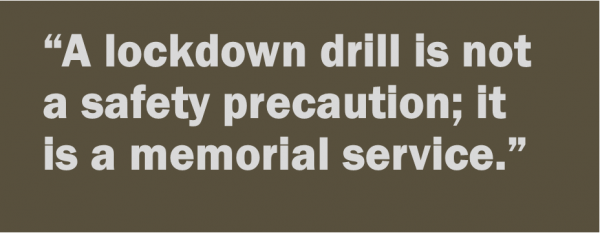
 I am a girl who is going to be a teacher. Teachers don’t take an oath to protect and serve, yet they are the front lines in a battle that America is losing. There isn’t a single teacher – or student – in America who hasn’t wondered what they would do in a school shooting. I’d be willing to bet that most of the teachers, administrators, and security guards around the country have come to the same grim conclusion: that there is a unspoken clause in their job description.
 But why girls?
 Confidence, we’ve heard, comes from execution. Early results from
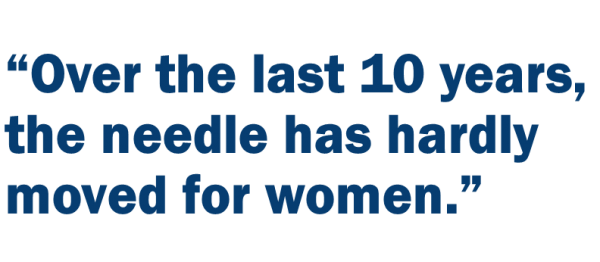
 While pay equity details that a woman should be paid the same as a man when doing equal amount of work in the same job, the gender wage gap differs. It describes the measured statistical difference in income between men and women. In Connecticut, the wage gap results in full time working women losing collectively $15 billion (Connecticut Women and the Wage Gap 2017).