PERSPECTIVE: A Needed Credential to Advance Infant and Early Childhood Mental Health
/by Abby Alter and Heidi Maderia
Professionals who care for young children play an important role in promoting social-emotional development, positive mental health, and relational health, as well as identifying problems early and connecting young children to intervention and treatment services when necessary. Unfortunately, most pre-professional education and training programs lack specific courses or modules related to infant and toddler mental health, and many professionals lack the critical skills needed to work with very young children.
Many states, including Connecticut, are taking steps to ensure that professionals working with infants, toddlers, and their families are well-trained to promote optimal mental health, promote preventive strategies, and facilitate linkage to early intervention or treatment.
Attention to the Mental Health of Young Children is Critical for their Healthy Development
Infant and early childhood mental health is defined as a young child’s capacity to regulate and express emotions, form close and secure relationships, safely explore their environment, and learn. Young children develop these capabilities within the context of their family, environment, community, and culture, as well as through relationships with their primary caregivers. Infants and toddlers who develop healthy and strong social and emotional competency are better prepared for school and have healthier and more prosperous lifelong outcomes.
 A System of Professional Endorsement is Improving Connecticut’s Workforce
The Connecticut Association for Infant Mental Health (CT-AIMH) purchased a license in 2010 from the Michigan Association of Infant Mental Health to provide the Endorsement for Culturally Sensitive, Relationship-Focused Practice Promoting Infant Mental Health®. The license was purchased with support from the Children’s Fund of Connecticut, the Connecticut Head Start State Collaborative Office, and others. Since obtaining the license, CT-AIMH has built a statewide competency system known as the CT-AIMH Endorsement® for providers caring for children up to age 3. The system provides professional development through training and education programs with a goal of building a more skilled workforce. In 2017, with help and guidance from a national workgroup, the endorsement system was expanded to include professionals working with children from 3 to age 6.
Becoming endorsed demonstrates that an individual has completed specialized education, related work, in-service training, and reflective supervision/consultation experiences that have led to competency in the promotion and/or practice of infant or early childhood mental health. The credential does not replace licensure or certification, but is meant as evidence of a specialization in the promotion and practice of infant and/or early childhood mental health within each professional field, such as child development, early care and education, pediatrics, psychiatry, psychology, social work, and others. To date, 56 professionals in Connecticut are endorsed in Infant Mental Health through this system, and three providers have earned the Early Childhood Mental Health Endorsement® (currently in its pilot phase). CT-AIMH plans to revise the endorsement program based on lessons learned during this pilot, and offer the Early Childhood Mental Health Endorsement® to professionals in 2019.
Additional Measures to Build a More Competent Infant and Early Childhood Workforce
Connecticut agencies and stakeholders have taken several steps to build a more competent infant and early childhood workforce. Examples include: increasing support for reflective supervision/consultation groups in Birth to Three and home visiting programs; committing to having at least one endorsed infant mental health professional on staff for every Birth to Three operated program; and providing a bi-annual infant mental health training series for child welfare and Head Start staff through a partnership with Head Start, the Department of Children and Families, and CT-AIMH.
While these measures are expanding the capacity of the early childhood workforce in Connecticut to address the social and emotional needs of young children, more can and should be done. Recommendations for Connecticut include:
- Increase public funding to support endorsement activities, including funding for: infant and early childhood mental health training, release time for staff to attend training, reflective supervision/consultation, deployment of a university-level cross-discipline Faculty Infant Mental Health Training Institute with accompanying materials.
- Ensure that all State and/or public agencies serving the most vulnerable children and their families have infant/early childhood mental health endorsed staff in every region.
- Follow Michigan’s practice requiring Endorsement® in infant and early childhood mental health for practitioners who bill Medicaid for mental health services provided to infants and toddlers. Additionally, Medicaid and commercial insurers should pay for infant and early childhood mental health services delivered to young children birth to 6 years who show signs of risk (without a diagnosis) if delivered by a professional holding the Endorsement.
- Require state institutions of higher education to include infant and early childhood mental health competencies in their infant, young child, and family related courses (e.g., nursing, social work, education, psychology) and/or support an Endorsement requirement to develop a pipeline of professionals who can pursue endorsement within their careers. Use the Faculty Infant Mental Health Training Institute to help faculty across disciplines to incorporate infant mental health into existing courses.
These additional actions can advance and sustain a statewide system of professionals who are endorsed and credentialed in infant and early childhood mental health. In that way, we can best promote optimal mental health and preventive strategies, and facilitate, as needed, early intervention or treatment.
_____________________________
Abby Alter is Senior Associate for Early Childhood Initiatives at the Child Health and Development Institute, and Heidi Maderia is Executive Director of the Connecticut Association for Infant Mental Health. To learn more, visit www.ct-aimh.org or read "The Infant Mental Health Workforce: Key to Promoting the Healthy Social and Emotional Development of Children." This article was adapted from an Issue Brief developed for Child Health and Development Institute of Connecticut, Inc, a catalyst for improving the health, mental health and early care systems for children in Connecticut.
 One of the most common ways lawmakers in marijuana states have attempted to address traffic safety concerns is to establish an impairment threshold for marijuana, a ‘per se’ standard for it, (similar to the 0.08 BAC standards in every state for alcohol).
 These numbers are high, but they correspond to previous research showing that on any given day, one-third of children consume fast-food… Furthermore, parents’ purchases of fast-food for their children increased significantly during the years examined, with parents reporting increased frequency of visits to most individual fast-food restaurants from 2013 to 2016…
 Unhealthy options, including main dishes, sides, and desserts, remain on kids’ meal menus at most restaurants, and purchases of a kids’ meal plus another menu item for their child have increased. Although future research is required to explain the reasons for these trends, they do indicate that restaurants’ voluntary pledges, as currently implemented, are unlikely to substantially reduce children’s fast-food consumption overall, or increase their selection of available healthier drink and side options.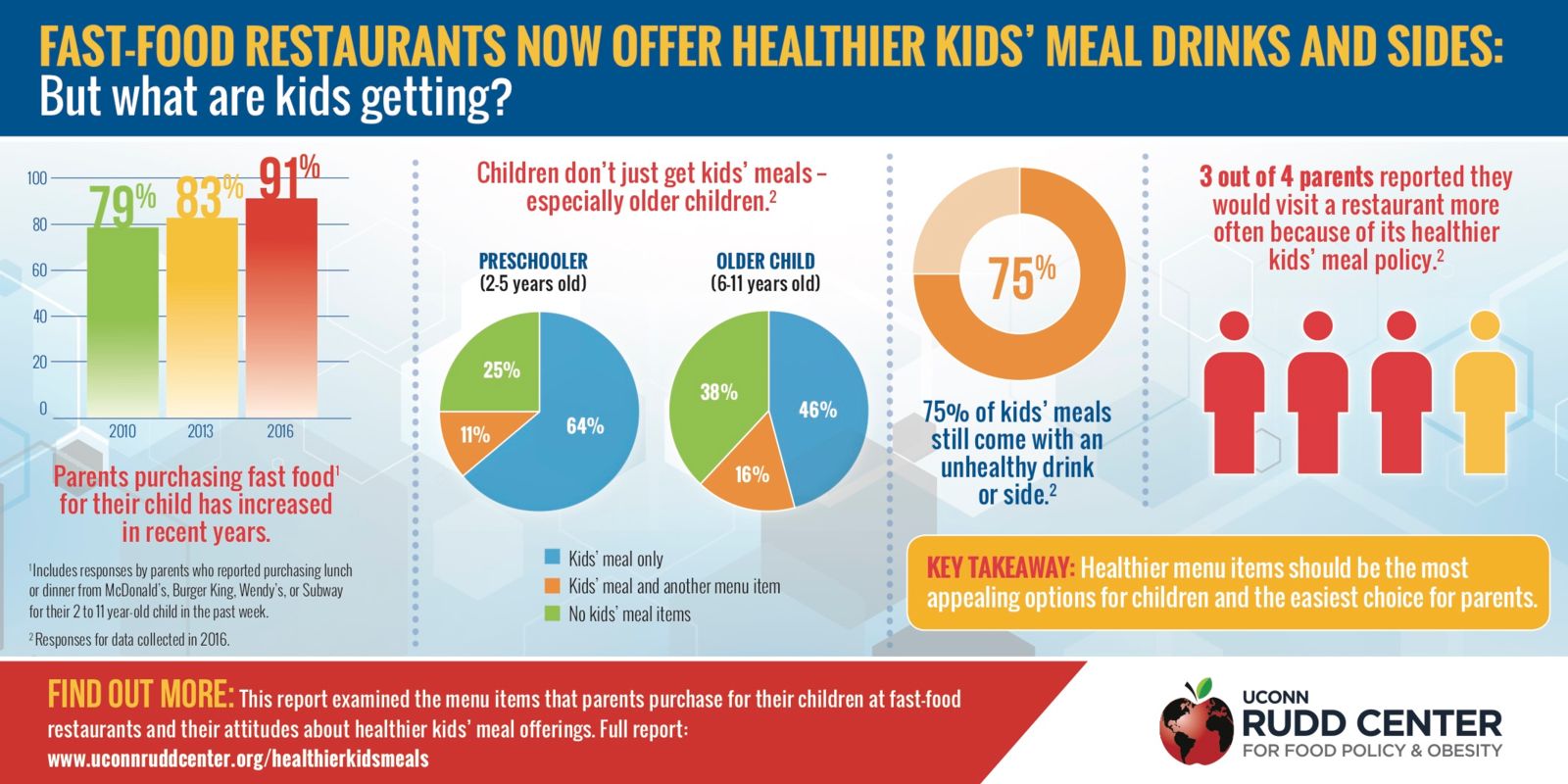
 While we are pleased to see that you share our concerns about the potential impact of Texas v. U.S. on people with pre-existing conditions, as evidenced by your recent introduction of the Ensuring Coverage for Patients with Pre-Existing Conditions Act (S.3388), the safeguards presented in this legislation fall far short of the patient protections encompassed in existing law. This bill as written is far from an adequate replacement for the protections for individuals with pre-existing conditions that are provided under current law.

 Finally, there is the “Stupid Hat Syndrome.” I first heard this expression from a successful businessman, famously generous with both his money and his volunteer board service. He coined the phrase to express his frustration after years of observing “some of the smartest and most successful business people he knew join a nonprofit board and immediately put on their Stupid Hat.” In other words, they habitually checked their immense brain power and experience at the door. The Stupid Hat metaphor may be hard edged, but the phenomenon is real and all too commonplace in the sector. It’s the 800-pound gorilla in the corner, and it’s as true as the truism that in general “you get what you pay for.”
 Several years ago, town leaders in Litchfield County implemented a program to share heavy equipment. Ten towns in the area benefit from this program, the Litchfield Hills Public Works Equipment Cooperative, which allows the towns to share major equipment for road maintenance. Two street sweepers and one catch basin cleaner were purchased through the program, which was made possible by a $700,000 grant the council received from the state’s Regional Performance Incentive Program.
 After a lot of hard work in recruitment and creating lesson plans, we had our first meeting in September of 2017. We were both excited and anxious that this day had finally arrived and that our hard work had paid off.
 One student wrote on the before side of the poster that they feared “we might not be able to get along.” However, after our lesson they wrote on the after side of the poster that now they know “we are so similar and can be close friends.” It was truly inspiring to see how much new knowledge they acquired regarding the similarities between the two religions in just one short hour. The kids were so excited to learn this material and fascinated by the common ground.
 I sit before you now as someone past 70 wondering why you - strangers to me, members of this Public Health Committee as well as your colleagues in the CT General Assembly - get to decide what my end of life is going to be like. This is very real … and gets more real every day for me and thousands of other people in Connecticut.
 Instead of seeing the similarities that lie within these differences, and appreciating the uniqueness of culture, and finding ways to share our blessings… our nation has pushed them away. They have become a "them", divided from our population out of fear of these differences and blindness to the multitudes of commonalities. If you could talk to Reyna about her dream of being a doctor and how much she loves learning new words, if you could talk to Munir about his favorite songs and how he tells jokes to make friends… then you would see the similarities we share, and yet how many differences they face. However, do not be mistaken, this doesn't stop them.
 If you could see them the way I see them, as hard-working individuals that will do anything to provide for their family (like many of us would do), as welcoming neighbors who will open their doors to anyone...and as people. Not Mexicans, not drug-traffickers, not prostitutes, not foreigners, not aliens, not "them"...humans, people, children. These 11.6 million US citizens have names, stories, hopes, and families. The 303, 916 people who were apprehended at the Mexican border in 2017 have names, stories, hopes, and families. As do we.
 In the Connecticut State Colleges and Universities (CSCU) system, unstable housing - or the lack of housing altogether – is a barrier to academic success and stability for many students. Faculty, counselors and deans report that students are living in cars and “couch surfing” at friends’ or relatives’ homes while, at the same time, they are trying to attend college because they know that education is their path to a better future. During Town Hall meetings across the state during the 2016-17 academic year, CSCU President Ojakian was approached by many students who said that they were homeless and needed additional support.
 Of those schools reporting more than 30 individuals surveyed, the schools with the largest percentages of students experiencing a housing crisis are as follows: 38% at Gateway Community College with 42 students surveyed; 21% at Middlesex with 71 students surveyed; 26% at Eastern CT State University with 117 students surveyed; 19% at Housatonic with 320 students surveyed; 14% at Manchester Community College with 290 students surveyed; 13% at Three Rivers Community College with 164 surveys completed; 10% at Northwestern CCC with 88 completed surveys;11% at Asnuntuck with 81 surveys completed; 9% at Naugatuck Valley Community College with 243 completed surveys; 13% at Norwalk Community College with 72 surveys completed, and 38 surveys completed at Tunxis Community College with a 13% rate of housing instability and homelessness.