Economic Divide Evident in Comprehensive Statewide Survey; Residents Generally Happy in CT, But 1/3 Face Barriers, Financial Challenges

The largest-ever quality of life survey of Connecticut residents, conducted during the past six months,  has found that four out of five adults report feeling happy and satisfied with where they live; but one-third of adults report just barely or not getting by financially.  The disparities in quality of life across the state’s population were a constant running through the survey results. In-depth interviews were completed with 16,219 randomly-selected adults in every Connecticut city and town. Although Connecticut does well when compared to national and international averages of health, income, and education, survey officials said, results reflect that disparities are still great, with a sizeable share of residents continuing to face significant barriers to economic success, safety, health, and other critical aspects of well-being.datahaven

The 2015 DataHaven Community Wellbeing Survey, which asked more than 100 questions of survey respondants, created a detailed portrait of social and economic conditions in towns throughout Connecticut and adjacent sections of New York State.  DataHaven, a non-profit group leading the collection and study of neighborhood-level public data on key social and economic trends, undertook the survey with assistance from Sienna College in New York. It is said to be the most intensive effort of its kind in the United States, according to the survey’s leaders.  Among the key findings:

  • 74% of men and 75% of women in Connecticut report feeling mostly or completely happy during the previous day. However, this measure varied widely by income, ranging from 53% among adults earning less than $15,000 per year to 89% among adults earning $200,000 or more.
  • Although official unemployment rates have fallen substantially since 2012, 14% of Connecticut workers are still considered “under-employed,” meaning that they have no job and would like to work or they are currently working part-time but would prefer to have a full-time job. Within the Greater New Haven region, the “under-employment” rate among workers fell from 21% in 2012 to 13% in 2015.
  • Two-thirds (66%) of Connecticut residents say that they are either doing alright or living comfortably when asked how they are managing financially these days. However, 11% are finding it difficult or very difficult, and an additional 21% say that they are just getting by.
  • Many in Connecticut still struggle to afford food, adequate housing, and reliable transportation. One out of every ten adults identifying as white or Asian-American, and one out of every four adults identifying as African-American or Latino, reported that they did not have enough money to buy food for themselves or their family at some point during the past 12 months – in some cases, facing this situation almost every month of the year. About 6% of adults reported that they did not have enough money to provide adequate housing for themselves or their family, and 13% reported a lack of reliable transportation, at some point in the past year.survey_says

“The purpose of the DataHaven Community Wellbeing Survey is to produce the highest-quality, neighborhood-level information on issues that are most meaningful to local residents,” explained Mark Abraham, Executive Director of DataHaven.  Abraham also pointed out that “the initiative is helping to strengthen collaborations between dozens of organizations and agencies that are working together to measure social progress and improve population well-being at the statewide and local levels.” The metrics in the survey complement traditional statistics on topics such as employment, personal income, reported crimes, tax base, and industry output.

More than 50 of Connecticut’s leading foundations, hospitals, community institutions, and government agencies have supported the survey initiative.  Major funders are located in Hartford, New Haven, Bridgeport, Stamford, Waterbury, New Britain, Norwalk, Danbury, Greenwich, Middletown, Derby, Bristol, Norwich, New London, Manchester and other cities across the state.

The survey also found that residents of some urban neighborhoods have substantially lower rates of overall satisfaction with where they live as well as much greater concerns about government responsiveness, police effectiveness, and public services. On the other hand, cities such as Stamford, Norwalk, Bridgeport, and New Haven have relatively higher proportions of adults who are optimistic that their neighborhood is improving, and residents of higher-income neighborhoods within these city centers are in some cases significantly more satisfied with local quality of life than the average resident.
Connecticut"The Connecticut Council for Philanthropy along with other funding partners invested in the first ever statewide Community Wellbeing Survey, a scientific survey of the state’s entire adult population that will provide timely, powerful knowledge about our communities and enable us to better know the people and places we care about,” added Maggie Osborn, President of the Connecticut Council for Philanthropy.

In a departure from most statewide and national surveys, officials said, the DataHaven program brings together existing grassroots efforts across the state – effectively unifying more than a dozen pre-existing regional or local surveys into a single, high-quality effort that now covers all areas in Connecticut. The power of the survey results was greatly enhanced both by the number of respondents, as well as by having the same questions being asked of respondents in many different areas.

DataHaven designed its 2015 Community Wellbeing Survey with the support of nearly 100 local government, academic, health-care, and community partners as well as a panel of epidemiologists and survey research experts. The 20-minute survey, conducted by the Siena College Research Institute (SRI) in Loudonville, New York, involved landline and cell phone interviews with nearly 17,000 randomly-selected adults throughout Connecticut and adjacent sections of Westchester County between April and October, 2015.

CT Ranks 15th in Increase in Gun Permit Background Checks in Recent Years

Last Friday – Black Friday – the number of background checks in the U.S. hit an all-time high for a single day, up five percent from the same day a year ago.  The increase shouldn’t have come as a surprise to those watching the trends in recent years. In seven states, the number of federal firearm background checks more than doubled from 2008 to 2014. No states reported a decrease. Connecticut’s increase ranked the state 15th highest in the nation.pic

The 50 states and the District of Columbia were ranked by the percentage increase in number of NICS firearm background checks from 2008 to 2014, in an analysis of data from the National Instant Criminal Background Check System done by Bloomberg media.

The largest increases during the six year period were in North Carolina (240%), Indiana (194%), Delaware (137%), New Jersey (127%), Illinois (118%), Alabama (107%), Florida (105%), D.C. (97%), California (89%) and Tennessee (88%).

The number of background checks in Connecticut grew from 155,885 in 2008 to 270,297 in 2014, and increase of 73.4 percent.Picture2

The largest number of background checks in 2014 were in Kentucky (2,492,184), California (1,474,616), Texas (1,465,992), Illinois (1,344,096), North Carolina (1,182,349) and Florida (1,034,546).  Connecticut, with 270,297 background checks in 2014, ranked 25th in the nation.

Because of varying state laws and purchase scenarios, Bloomberg points out that the statistics do not represent the number of firearms sold.

On Black Friday, a record 185,345 background checks – roughly two a second – were processed, according to published reports of FBI data.

Blumenthal is 20th Most Popular Senator Among Home State Constituents; Murphy Ranks 43rd of 100

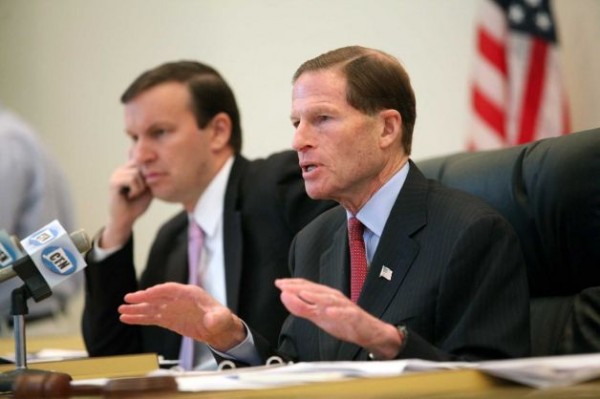
U.S. Sen. Bernie Sanders, the Vermont independent running for the Democratic presidential nomination is the nation’s most popular United States Senator, with an approval rating surpassing 4 out of 5 voters in his home state.  A comprehensive survey of more than 75,000 voters in all 50 states, conducted over several months by Morning Consult, shows Sanders has the highest approval rating of any U.S.  Senator among his own constituents, at 83 percent, with only 13 percent disapproval of the job he’s doing representing them in the nation’s Capitol. The ratings for Connecticut’s Senators:  Richard Blumenthal:  58% approval, 29% disapproval; Chris Murphy:  52% approval, 27% disapproval.  Both Senators were among the top 50 among the Senate’s 100 members.Blumenthal, Murphy

Blumenthal is tied for 12th among Democratic Senators, and tied for 20th overall among Senators of both parties (and independents).  Murphy ranks 43th overall, tied with seven colleagues.

The top 10 Senators with the highest approval ratings in their home states, after were Bernie Sanders (D-Vermont) 83%; Susan Collins (R-Maine) 78%; John Barrasso (R-Wyoming) 73%; Patrick Leahy (D-Vermont) 71%; John Hoeven (R-North Dakota) 69%;  Amy Klobuchar (D-Minnesota) 67%; Mike Enzi (R-Wyoming) 67%;  Joe Manchin (D-West Virginia) 66%; Angus King (I-Maine) 65%; John Thune (R-South Dakota) 65%;

The next nine include Elizabeth Warren (D-Massachusetts) 64%; Al Franken (D-Minnesota) 63%);  Tom Carper (D-Delaware) 61%; Chuck Schumer (D-New York) 61%; Barbara Mikulski (D-Maryland) 60%; Ron Wyden (D-Oregon) 60%; Patty Murray (D-Washington) 59%; Mike Rounds (R-South Dakota) 59%; Shelly Moore Capito (R-West Virginia) 59%.114th_United_States_Senate_(with_independents_outlined_in_blue).svg

Tied ranking 20th are nine Senators including Blumenthal:  Chris Coons (D-Delaware) 58%; Mazie Hirono (D-Hawaii) 58%; Heidi Heitkamp (D-North Dakota) 58%; Jack Reed (D-Rhode Island) 58%; Mark Warner (D-Virginia) 58%; Maria Cantwell (D-Washington) 58%; Thad Cochran (R-Mississippi) 58%;  Kelly Ayotte (R-New Hampshire) 58%;

And while voters continue to disdain Congress as a whole, they have much more positive views of their home-state Senators: the polling shows 69 of 100 United States senators have approval ratings of 50 percent or higher among their own constituents, according to Moring Consult.

Only one senator has a disapproval rating higher than 50 percent among his own constituents: Senate Majority Leader Mitch McConnell (R-KY), who is still recovering from tens of millions of dollars in negative campaign ads thrown against him when he won re-election in 2014, the website reported.

The polls, conducted between May and November, asked a total of 76,569 registered voters whether they approve or disapprove of the job their state’s senators are doing. Voters were identified based on their Zip codes and other factors, and each state’s sample was weighted based on gender, age and race, using data from the U.S. Census Bureau’s Current Population Survey.

murphy, blumenthalNo state has a higher opinion of its two senators than Vermont. Sanders’s colleague, Patrick Leahy (D), the longest-serving member of the Senate, begins his campaign for re-election with a 71 percent approval rating, the fourth-highest job performance mark in the Senate.

Sen. Susan Collins is the most popular Republican in the Senate; 78 percent of the 654 registered Maine voters interviewed said they approve of her job performance, while just 16 percent disapprove. Maine voters give Sen. Angus King (I) a 65 percent approval rating.

Democrats had an average approval rating of 54 percent, while Republicans have an average approval rating of 51 percent. Both parties are blown out of the water by the two hugely popular independents, Sanders and King, Morning Consult highlighted.  Margins of error varied according to sample sizes. The median sample size was 1,172 respondents.


Housatonic Community College Expands as Enrollment Down 800 From Peak

Even as enrollment has tumbled, Housatonic Community College has begun expansion and renovation of Lafayette Hall with a new 46,000 square foot addition, including a new Welcome Center to better serve students, officials have announced. The renovated spaces will also enlarge the college library and academic support center, and create new science labs and additional offices for student services. The $37.5 million project is expected to create more than 600 construction-related jobs, according to published reports.Housatonic CC

“The new space will allow us to expand academic programs and provide new ones to meet today’s employment requirements,” said college president Paul Broadie. “We are projecting adding programs specifically in STEAM (Science, Technology, Engineering, Arts, Math) courses.”

Enrollment as of September 2015 was 5,257 students, just slightly lower than last year’s 5,286 but significantly down from a peak of 6,197 in 2010 and 6,077 in 2012.  Officials told the Fairfield County Business Journal that enrollment had steadied at 5,369 students this month.  Enrollment topped 5,000 for the first time in 2008, and continued to rise before declining in recent years.

The Bridgeport college moved from its location in the former Singer Metric Building at 510 Barnum Ave. to Lafayette Hall at 900 Lafayette Blvd. backHousatonic CC Logo_Full in 1997. At that time, the college had approximately 2,700 students enrolled and immediately experienced a significant enrollment increase, according to the college.  But the peak years now appear to be in the rear view mirror.
Enrollment is down across the state’s community college system.  Combined full-time and part-time enrollment at the 12 community colleges stands at 52,851, down 4.2 percent from fall 2014, according to state data, the Hartford Business Journal reported.  Enrollment this year is the lowest it has been since 2008.  Year-by-year fall enrollment at Housatonic Community College:

  • 2006 – 4,431
  • 2007 – 4,475
  • 2008 – 5,081
  • 2009 – 5,609
  • 2010 – 6,197
  • 2011 - 5,975
  • 2012 – 6,077
  • 2013 – 5,813
  • 2014 – 5,286
  • 2015 – 5,257

According to College Navigator, 58 percent of students at Housatonic are age 24 and under, 42 percent are 25 or older.  Just over two-thirds of current students (68%) attend on a part-time basis.

Seven years ago, in 2008, a ribbon-cutting ceremony was held for the opening of a $55 million addition and renovations.  Gov. M. Jodi Rell was joined by state Public Works Commissioner Raeanne V. Curtis, HCC President Anita Gliniecki, Mayor Bill Finch and other officials in the college’s courtyard at the front of the new facility, Beacon Hall, which formerly was the Sears Building.

The new college building opened in 2008 included 174,500 square feet of new and renovated space, housing 30 classrooms, 10 computer classrooms, computer repair and networking rooms, early childhood education facilities, labs for foreign languages and English as a Second Language, and an academic department and faculty offices.  Also included were a new college bookstore; wellness center for aerobics, cardio and dance; satellite cafeteria, and a 500-seat event center.HCC studnets

At that time, Housatonic was one of the fastest growing community colleges in the nation, according to officials. The college had 5,081 students, representing a 13.8 percent increase from the previous year and a 92 percent increase from 12 years previous, just before HCC moved out of its old East Side location to Lafayette Street.

As the new construction gets underway this year, the college will continue all normal procedures and activities.  Construction is expected to be completed in 2017, in time for the college’s 50th anniversary.

Earlier this year, Dr. Paul Broadie II became Housatonic’s 5th president: “Housatonic Community College has been, and will continue to be, the premier community resource for education, training, community service, and quality of life enrichment,” he said in a message featured on the college website.  “I am driven by the academic focus and culture of care and support that runs throughout the college, resulting in goal attainment and student success.”

Psychiatric Nurses to Bring Annual Convention to Hartford in 2016

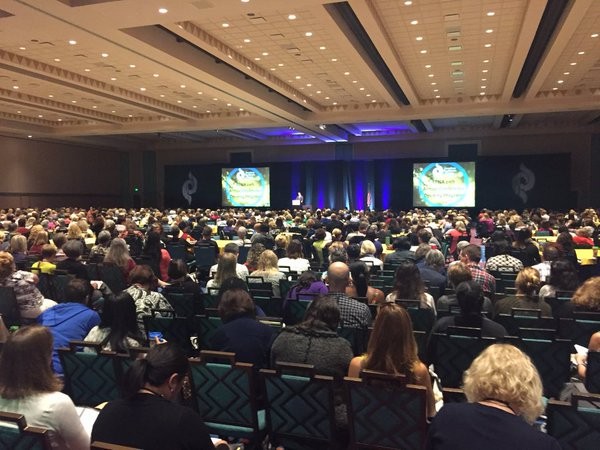
The American Psychiatric Nurses Association 30th Annual Conference will take place next October at the Connecticut Convention Center.  It is the first time that the organization will hold its annual event in Connecticut.  This year’s program was held at Disney’s Coronado Springs Resort in Florida, where attendees had the opportunity to earn up to 29.5 continuing education contact hours onsite and an additional 100 plus contact hours online afterwards.  The 2016 APNA Annual Conference will be held October 19-22 in Hartford. nurses logo The APNA Annual Conference delivers more than 100 varied educational sessions and invaluable networking opportunities to the more than a thousand psychiatric-mental health RNs and APRNs who attend each year. The organization has more than 10,000 members nationwide.

Last month, the APNA joined a White House initiative to address the ongoing epidemic of prescription drug abuse and heroin use across the nation. With organizations from both the public and private sectors participating, the effort seeks to train health care providers, improve access to treatment, and raise awareness of the risks of prescription drug misuse.CShDUVLWoAAGIc9

Approximately 2.3 million US citizens aged 12 and older have opioid use disorder, and most states have higher rates of treatment need than capacity to treat. In this context, educating health professionals and encouraging them to apply best-treatment practices is critical to improve the health of the nation. APNA is one of 8 nursing groups to pledge to be a part of the solution over the next two years.

The American Psychiatric Nurses Association (APNA) was founded in 1986. In the ensuing 28 years, APNA has grown to be the largest professional membership organization committed to the specialty practice of psychiatric-mental health (PMH) nursing and wellness promotion, prevention of mental health problems, and the care and treatment of persons with psychiatric disorders.

The APNA Annual Conference is held in a new location every year to encourage regional participation, add adventure, and provide a venue to connect with other psychiatric-mental health nurse professionals from across the globe, officials point out.

Plans for the convention in Connecticut include programs designed to “advance the profession through networking and education” and opportunities to “celebrate psychiatric-mental health nurses’ outstanding contributions” through the presentation of the APNA Annual Awards.

psych nurse 2In Florida last month, more than 1,800 attendees were on hand for a program “packed with psychiatric-mental networking, updates, and continuing education targeted to psychiatric-mental health nurses.” Session recordings from the Annual Conferences are made available in the APNA eLearning Center in podcast form, along with up-to-date session slides and other relevant materials.


APNA is the only PMH nursing organization whose membership is inclusive of all PMH registered nurses (RN) including associate degree (ADN), baccalaureate (BSN), and advanced practice (APN) comprised of clinical nurse specialists (CNS), psychiatric nurse practitioners (NP), and nurse scientists and academicians (PhD). The American Psychiatric Nurses Association is accredited as a provider of continuing nursing education by the American Nurses Credentialing Center's Commission on Accreditation.family

The Journal of the American Psychiatric Nurses Association (JAPNA), with more than 10,000 subscribers, provides quality, up-to-date information to promote PMH nursing, improve mental health care for culturally diverse individuals, families, groups, and communities, as well as shape health care policy for the delivery of mental health services.

https://youtu.be/AIys4qoQ5q8


CT Drug Overdose Death Rate Above National Average, 20th Highest in US; Doubles Since 2001

In every state, the rate of young people dying from drug overdoses increased in the past decade, according to a report by Trust for America’s Health. In the past 12 years, the overdose rate for people ages 12 to 25 has more than doubled in 35 states and quadrupled in five, Governing magazine reported.  In 1999, not one state had a drug overdose death rate of more than 6.1 per 100,000 young adults. Fast forward 14 years, and 33 states had drug overdose deaths of 6.1 per 100,000 or higher from 2011 to 2013. The national average is now 7.3 per 100,000 youths.deaths In Connecticut, the average rate between 1999 and 2001 was 4.1 per 100,000.  Between 2010 and 2013, the drug overdose rate had risen to 8.3, above the national averusa mapage but unchanged from a previous three-year period, 2005-2007.  The data was compiled from the Centers for Disease Control and Prevention.  Males are 2.5 times as likely to overdose as females (10.4 vs. 4.1 per 100,000), according to the report.
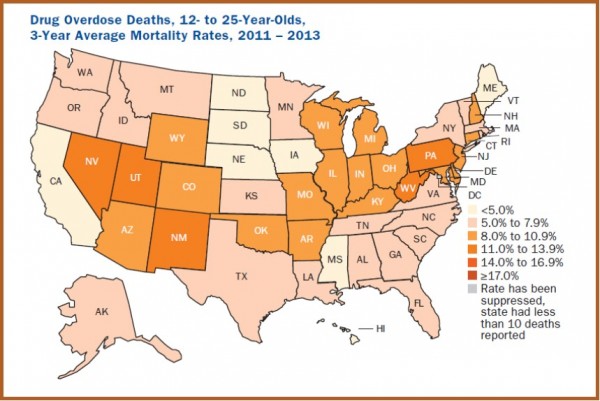

In a report this month, Reducing Teen Substance Misuse: What Really Works, Connecticut ranked 31st lowest (20th highest) for the number of youth drug overdose deaths, with the rate of 8.3 per 100,000 youth, ages 12 to 25. Connecticut is one of 18 states where the overdose death rates have more than doubled in the past dozen years, according to the report.

West Virginia, New Mexico and Utah have the highest rates of young adult overdose deaths, with each around 12 deaths per 100,000 youths in 2013. This is more than five times higher than South Dakota, North Dakota and Nebraska, which had rates around 3 deaths per 100,000 teens and young adults.

The statistics, and the use of opiates and heroin across the country, have been featured in recent weeks on 60 Minutes and The New York Times, focusing on Ohio and New Hampshire, respectively.  Both reports indicated it is a national problem of unprecedented proportion. logo

Drug overdose death rates have increased everywhere since 1999, but the rate has gone down Florida, Louisiana, Maine, Mississippi and Tennessee in the past 8 years. Nevertheless, the rate increased in 13 states since 2007 -- and 11 of those states have overdose death rates above 6.1 per 100,000.

In July, Governor Malloy hosted a bill signing ceremony at a New London treatment center to commemorate the final passage of legislation he introduced aimed at reducing heroin and prescription opioid abuse.  The legislation law improves the prescription monitoring program and prescribing practices, with increased education and tools available to health care professionals, and greater accessibility of the overdose reversing drug naloxone in cases of emergency, according to the Governor’s office.

"We have to treat addiction like a public health issue not a crime,” Malloy said.  “Connecticut is taking a stand against a nationwide prescription opioid and heroin overdose epidemic to become a leader in combating opioid and heroin abuse, preventing drug addiction and overdoses.  This common sense legislation will help save lives and address a pressing public health need."

The legislation streamlines the procesheroins to help practitioners identify potential abuse that leads to over prescribing by requiring them to check patient history to verify if patients seeking certain prescriptions have recently received these medications from multiple other prescribers or pharmacists.
Under the Connecticut law, in cases of overdose or medical emergency, the drug naloxone will be more widely available, allowing pharmacists, after being trained and certified to prescribe it to Connecticut families, first responders, and the treatment community across the state.  In Connecticut, State Police Troopers have saved more than 30 lives from drug overdose by administering NARCAN.

The Reducing Teen Substance Misuse report also includes a review of 10 key indicators of leading evidence-based policies and programs that can improve the well-being of children and youth and have been connected with preventing and reducing substance— alcohol, tobacco or other drugs—misuse.  Connecticut was one of two states scoring  nine out of 10 and, nationally, 24 states scored a five or lower. Minnesota and New Jersey received the highest score of 10 out of a possible 10 points, while four states scored the lowest, Idaho, Louisiana, Mississippi and Wyoming, with three out of 10 points, according to the report.

Those states with drug overdose death rates above the national average, in addition to Connecticut, include Arizona, Arkansas, Colorado, Delaware, Illinois, Indiana, Kentucky, Maryland, Massachusetts, Michigan, Missouri, Nevada, New Hampshire, New Jersey, New Mexico, Ohio, Oklahoma, Pennsylvania, Utah, West Virginia, Wisconsin and Wyoming.

Rates have more than tripled in twelve states (Arkansas, Delaware, Indiana, Iowa, Michigan, Minnesota, Missouri, New Hampshire, New York, Oklahoma, Utah and West Virginia); and more than quadrupled in five states (Kansas, Montana, Ohio, Wisconsin and Wyoming).4 5

Overall, the report found a significant jump in overdoses from teen to young adult years. Overdose rates for 19- to 25-year-olds are eight times greater than people 18 and younger.  There isn’t a clear answer for why heroin addiction and overdose deaths have grown so dramatically, although the availability of prescription drugs might have something to do with it, Governing reported.

The New York Times reported that:

  • Heroin-related deaths jumped 39 percent from 2012 to 2013, and the longer-term trends are equally disturbing: from 2002 to 2013, the rate of heroin-related overdose deaths nearly quadrupled, according to the Centers for Disease Control and Prevention.
  • Researchers have found that prior to the 1980s, whites and nonwhites were equally represented among first-time heroin users. Now, nearly 90 percent of the people who tried heroin for the first time in the past decade were white. And a growing number are middle-class or wealthy.
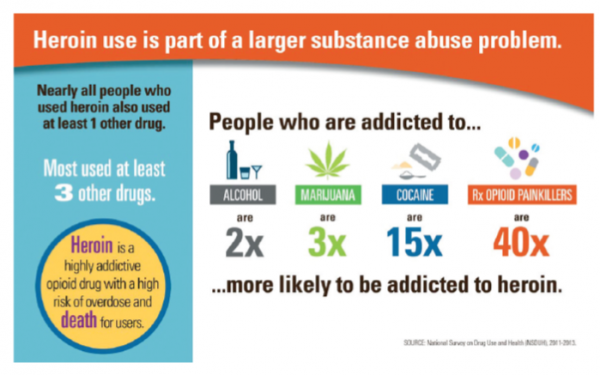
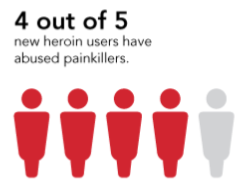
  • Three out of four heroin addicts started out by using prescription drugs. The C.D.C. reports that 45 percent of people who used heroin between 2011 and 2013 were also addicted to prescription painkillers. People who are dependent on prescription opioids are 40 times more likely to abuse or be dependent on heroin, according to the C.D.C.
  • Opioid deaths were up 76 percent in New Hampshire in 2014, with 325 people dying from an opioid overdose, according to state figures. Emergency room visits from heroin have more than tripled there since 2013. In Massachusetts, opioid deaths rose 20 percent in 2014, and are up 63 percent over 2012, The Boston Globe reported.

https://youtu.be/CQFITcdG8_4

Wanna Buy A Ghost Town? Connecticut Has One Ready and Waiting

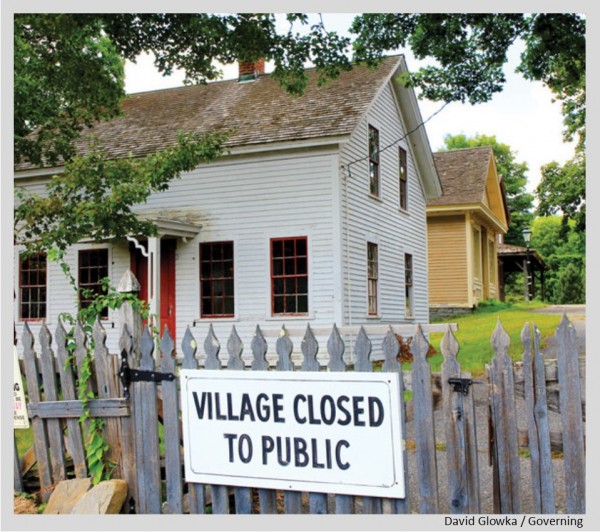
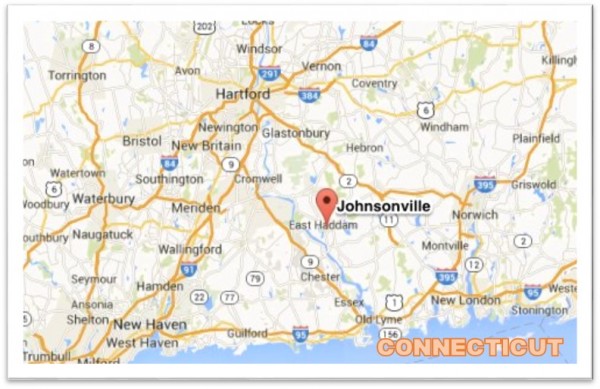
For $2.4 million, an adventurous buyer can become the proud owner of Johnsonville Village, Connecticut. The once bustling hamlet, now a virtual ghost town, is for sale -- again. Originally home to Connecticut’s twine industry in the 1830s, Johnsonville Village, which is located in the Moodus section of East Haddam, along Johnsonville Road just 30 minutes from Hartford and two hours from Boston and New York City, has sat mostly deserted since the Industrial Revolution put it out of business, according to Governing magazine.village

Industrialist Raymond Schmitt bought the property in the 1960s and began traveling New England looking for period buildings in an effort to turn the place into an 18th-century Victorian village, Governing reported. Today, its 62 acres house eight antique buildings, including a schoolhouse, general store, chapel and livery stable. All empty, and awaiting what’s next.

Johnsonville never took off as a tourist attraction, and after a disagreement with local officials, Schmitt abandoned the village in 1994.  It has had its moments, according to published reports.  Lightning struck the mill in the 1970s and burned it down. The village appeared in Billy Joel's music video for the 1993 song "The River of Dreams (In the Middle of the Night)," which topped Billboard’s music charts are received four Grammy nominations, according to Wikipedia.

The current owner, Meyer Jabara Hotels of Danbury, initially put the town up for auction last October. It sold for $1.9 million, but the winning bidder was unable to secure financing.

Now Johnsonville is back on the market, and according to the listing earlier this year, “presents a unique redevelopment opportunity to combine the historic value of the 19th-century village with 21st-century living.”map

"We've got buyers at the table, from developers to summer camps and beyond," the current owners told The Hartford Courant earlier this year.  But a sale and closing has yet to be announced.  The property has eight historic buildings on the western side of Johnsonville Road and, on the eastern side of the road, Johnsonville Mill Pond with a covered bridge, a wooden dam and a waterfall.

Interested parties run the gamut from individual investors to outdoor organizations and religiously affiliated summer camps. There was also an effort by “a bunch of people on Twitter, led by a man named Dan Sinker, trying to pool their money and buy Johnsonville,” according to a report published by Business Insider. The film industry, utility companies, local vineyards and hotel companies are thought to be among the possible buyers.

But not yet.

https://youtu.be/o6fTivyBNak

https://youtu.be/hSq4B_zHqPM

Sciences at Southern Get Dynamic New Home; Local Companies Help Along the Way

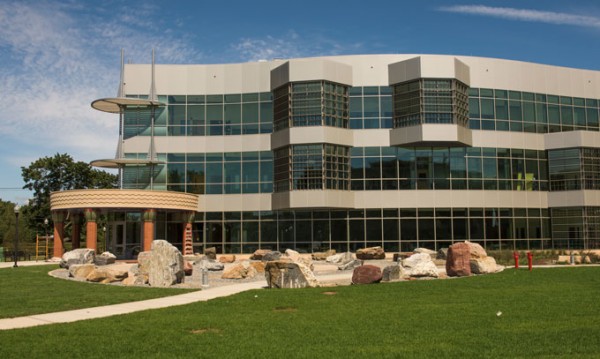
Students attending Southern Connecticut State University this semester are the first to use the campus’ new Academic Science & Laboratory Building, opened this fall, with local companies playing an integral role from design and construction to providing scientific equipment for the new facility. Officials say Southern's ongoing expansion of its science programs has been greatly enhanced with the construction of the 103,608-square-foot, four-level academic and laboratory science building. Situated adjacent to Jennings Hall, the existing home for the sciences on the New Haven campus, the new building extends the university’s capacity to educate more students in the STEM disciplines – science, technology, engineering and mathematics.15_ScienceBuilding-1161-680px

The new science building also features a high-performance computing lab for research in theoretical science, bioinformatics, and computer science, two aquaria, and six rooftop telescope stations.  A collaboration between Southern and PerkinElmer, based in Massachusetts and with offices in Shelton, has also provided a boost. Equipment includes several analytical instruments to improve research capabilities and provide students with opportunities to do cutting-edge work.

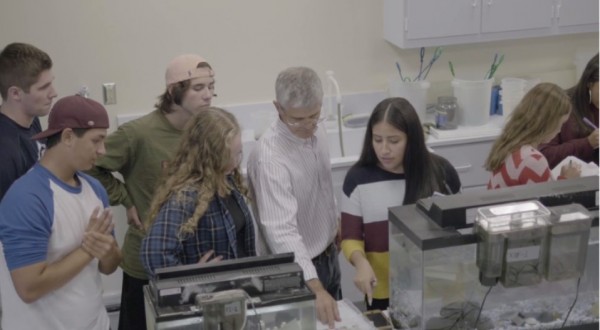
Configured in the shape of an “L,” the new building works in concert with two pre-existing science buildings — Jennings and Morrill halls — to enclose a new “science enclave.” With very visible scientific displays and instrumentation inside and outside the building, the new center has quickly assumed a symbolic as well as actual role for the sciences on campus.students at sci bldg

Embracing innovative sustainable design, it houses teaching and research training laboratories for nanotechnology, physics and optics, the earth sciences, the environmental sciences, cancer research, astronomy, molecular biology and chemistry.

“Built to the latest standards in sustainability, this signature building will truly enhance our ability to foster the next generation of Connecticut scientists,” Southern president Mary A. Papazian said at last month’s ribbon-cutting ceremony.

The Werth Center for Marine and Coastal Studies –named in honor of the Werth family following a $3 million gift from the Werth Family Foundation -- is housed on the second floor.  The center will have several new labs, including an analytic lab (where mercury levels can be determined) and a sediment coastal science lab (where levels of sediment can be tested).

The Center for Nanotechnology will be located on the ground floor, where the laboratory space is designed to isolate the building's vibrations -- considered important when dealing with microscopic materials.  A saltwater aquaria room with a touch tank is featured in the new building, providing a “centerpiece of outreach to area schools and the community.”

science buildingThe building includes expanded wings for Earth Science, Environmental Science, Molecular Biology, Chemistry, and Physics teaching and research laboratories.  There are scientific displays throughout, illustrating the research interests of faculty and the students, including a replica of a nanotube — a focal point in the center of the building.  Rain water collection, which is being used to water the science quad and faculty garden was also integrated into the design. Designed for LEED Silver certification, many sustainable design features can be seen throughout the building’s footprint.

PerkinElmer delivered instruments and services “designed to help improve human and environmental health,” Christine Broadbridge, SCSU’s director of science, technology, engineering and math initiatives, recently told the Fairfield County Business Journal. “At Southern, we are proud to have a strong relationship with PerkinElmer, an important leader of business and science here in Connecticut.”

Ted Gresik, senior director of PerkinElmer, expressed his appreciation in being given the opportunity to work with Southern and accelerating its science through access to its innovative technologies.  At the ribbon-cutting, he said “We recognize the opportunity for Southern Connecticut State University and Perkin Elmer to work together on research, and technology initiatives toward developing programs where students can acquire a diverse set of scientific and technical skills which will facilitate a transition to career opportunities within the science industry.”

CSU2020_002Plans for the new Academic Science & Laboratory Building at Southern began back in 2007 with a comprehensive 10-year capital improvement plan, dubbed CSUS 2020, for upgrading the four institutions of the Connecticut State University System.  Approved by the state legislature and signed into law by Gov. M. Jodi Rell, the plan was developed during the administration of Chancellor David G. Carter.  It included upgrades and repairs to existing facilities, as well as construction of a new Visual & Performing Arts Center at Western Connecticut State University, which opened in September 2014, a new academic and classroom building at Central Connecticut State University, which opened two years ago, and a Fine Arts Instructional Center at Eastern Connecticut State University, scheduled to open early next year.
The Science Building at Southern was designed by Centerbrook Architect and Planners of Centerbrook, CT, with construction by FIP Construction of Farmington.  (see video about the Academic Science & Laboratory Building)

Hartford, Stamford Among Nation's Most Congested Highways

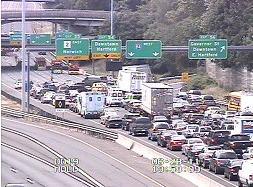
A new study by the American Highway Users Alliance identifies America’s 50 worst bottlenecks and finds that the very worst bottleneck, as measured by hours of delay, is in Chicago, IL. Los Angeles, CA owns the next six of the top 10.  While Connecticut’s highways did not reach the top 50, two bottlenecks did receive honorable – or dishonorable – mention. The I-84 section in Hartford between Trumbull Street and Park Street, and the I-95 section in Stamford between Fairfield Avenue and Elm Street, both made the list of 43 “Other Zones of Congestion” in the U.S. -thereby earning status as among the nation's 100 most congested traffic tie-ups.  According to the data, the average length of the back-up in Hartford is 1.4 miles; in Stamford 1.3 miles.  The average total annual delay at the Hartford bottleneck is 705,000 hours; in Stamford 494,000 hours of lost productivity.84-west-closed-backup-6-28-11

Speaking at the American Highway Users Alliance press conference where the report was released, U.S. Transportation Secretary Anthony Foxx said, “This report furthers the unassailable truth that America is stuck in traffic. The good news is that this problem is solvable, and Congress can be part of the solution. As a long-term surface transportation bill moves through conference, I urge our elected leaders to provide the funding growth and policies that are necessary to improve commutes, to raise the bar for safety, and to keep the country moving in the 21st century.”

Hartford and Stamford were among 43 “zones of congestion” around the country that were noted in the report in addition to the top 50.  The report indicated that “although congested, the worst segments of highway do not have the same severe delays/mile as the nationally ranked bottlenecks.”  They are, the report points out, in many cases “the most congested in their states.”report

I-84 in Hartford may be receiving a re-make over the next decade.  The Department of Transportation is in the midst of determining the preferred option among three possibilities - to replace the I-84 raised viaduct or replace it with a ground-level highway or dig a tunnel.  The various options have been presented in a series of public meetings in recent months, and a decision is anticipated early next year.

into_graphic_profile02The work, which has yet to be funded, is likely to include moving or eliminating some exits and entrances – and possibly adding others in new locations - to improve traffic flow.  Cost estimates range from $4 billion to $12 billion, depending on the option selected. Upcoming public meetings are to be held in East Hartford on Dec. 2 and Hartford on Dec. 10.

In the top-ranked Chicago traffic bottleneck highlighted in the report, the Kennedy Expressway (I-90) between the Circle Interchange (I-290) and Edens junction (I-94), was found to extend 12 miles, costing motorists 16.9 million hours’ worth of time, equivalent to $418 million in 2014. More than 6.3 million gallons of fuel is wasted on I-90 while cars idle or crawl in traffic.i84

Besides identifying and ranking the nation’s 50 worst traffic bottlenecks, the study, Unclogging America’s Arteries 2015, examines the top 30 chokepoints closely and details many of the major benefits that will accrue to society by fixing them. In addition to improving mobility and quality of life for motorists, the report indicated that fixing the top 30 bottlenecks alone would, over 20 years:

  • Save $39 billion due to lost time,
  • Save 830 million gallons of fuel,
  • Reduce over 17 billion pounds of greenhouse gas emissions (CO2), and
  • Prevent 211,000 vehicle crashes

“These findings are critically important and mean that our nation will derive huge benefits from fixing the worst gridlock in our nation’s highway system: benefits that go way beyond improving mobility for highway users,” states Greg Cohen, President and CEO of the American Highway Users Alliance.

Amongst the top 10 was New York City with the 8th and 9th worst bottleneck at the notorious Lincoln Tunnel and on I-95 from Manhattan across the Bronx. Metropolitan New York also had the 18th, 19th, 21st, 31st, 33rd, 37th, and 42nd – ranked chokepoints.

As for the bottlenecks themselves, the study’s top 50 list includes trouble spots in the following Metropolitan Areas: 12 in Los Angeles, 9 in and around New York City, 3 in Chicago, 3 near Washington DC, 3 in Houston, 3 in Boston, 3 in Dallas, 3 in Miami, 2 in Atlanta, 2 in Philadelphia, and 2 in San Francisco/Oakland.

The report notes that bottlenecks can be fixed and points to specific chokepoints that have been addressed and, as a result, were not included in the rankings. Projects cited include the Woodrow Wilson Bridge replacement on I-495 in the Washington, DC area, the Marquette Interchange in Milwaukee, and the Katy Freeway reconstruction in Houston.

Will CT School Buses Be Required to Add Seat Belts? New Federal Policy May Spur Change

When word came down from the National Highway Traffic Safety Administration last week that the longstanding preference for school buses without three-point lap/shoulder seat belts was being reversed, one Connecticut town could say: been there, done that. Wilton, which has about 4,200 school children on busses each day, has had the three-point safety belt system installed on its school busses since August 2012.  They apparently were the first in the state to do so.every bus

Earlier this year, Massachusetts legislators considering a requirement for seat belts on school buses were told that passenger restraint systems would add between $11,000 and $13,000 to the cost of buses, which currently range from $90,000 to $105,000.

Frank Underhill, executive director of the School Transportation Association of Massachusetts, which includes more than 100 school bus contractors and municipalities who run their own school buses, told members of the legislature’s Public Safety Committee that six states require seat belts on school buses, but said that none of those states has fully implemented the requirement, due to a lack of funding.

Those states - California, Florida, Louisiana, New Jersey, New York and Texas -- have some sort of legislation in place requiring seat belts on school buses, according to Governing magazine. The states’ laws vary in levels of enforcement; some simply require two-point seat belts to be present on school buses, while others require that all passengers use the more secure, three-point belts.  Connecticut does not have a statewide requirement.students on the bus

Wilton Transportation Coordinator Mary Channing isn’t aware of other Connecticut communities that have followed her community’s lead.  The town included the three-point belt as an option in their most recent RFP, in 2012, for student transportation, and the winning bid included the lap/shoulder belts.  It is not a board policy.

Statewide, nearly 500,000 children are transported on buses to and from school each day.  National policy, based on numerous studies, has been that buses are designed to be inherently safer than cars because of the high backs/fronts creating a “compartmentalization” and providing better crash protection.  It has been noted, however, that when students lean outside the seating “compartment” – which can occur as students, backpacks, winter gear, overcrowd seats – their level of safety diminishes.

The National Highway Traffic Safety Administration is endorsing three-point seat belts on school buses for the first time.  NHTSA Administrator Mark Rosekind acknowledged that the agency "has not always spoken with a clear voice on the issue of seat belts on school buses. The position of the National Highway Traffic Safety Administration is that seat belts save lives," Rosekind said. "That is true whether in a passenger car or in a big yellow bus. And saving lives is what we are about. So NHTSA's policy is that every child on every school bus should have a three-point seat belt."

The issue of seat belts on schools buses garnered considerable attention in Connecticut in 2010 when 16-year-old Vikas Parikh was killed in a school bus accident. The Rocky Hill High School student sustained a traumatic head injury while riding a school bus that tumbled down an embankment off of I-84 after hitting another car.  As a result, state lawmakers reopened the debate on whether to require Connecticut's roughly 10,000 school buses to install three-point seatbelt systems.  They did not.

CT state lawInstead, Public Act 10-83, created a Connecticut School Bus Seat Belt account to help school districts respond to the cost of equipping school buses with lap/shoulder (3-point) seat belts, should they choose to do so.  In June 2010, the office of then-Gov. M. Jodi Rell announced that “under the law, the Department of Motor Vehicles will begin offering a program in July 2011 that offsets a portion of the sales tax bus companies pay for school buses equipped with three-point seatbelts. The program will be funded through a $50 increase in the fees paid for restoring suspended or revoked driver’s licenses, commercial driver’s licenses and vehicle registrations. The program will run through at least 2018. During the 2018 legislative session, lawmakers will hold a hearing on the program and decide whether it should be continued.”

Said Rell: “This law provides a modicum of state assistance to districts wanting to add seat belts to their fleet but does not impose a costly new mandate on all districts –- striking a good balance between incentive and choice.”

It is unclear if funds have accumulated in that account, or if any towns or companies have sought the assistance.  Some published reports suggest that the funds have been diverted to other uses in recent years.  The law requires that “school district participating in the program shall provide written notice concerning the availability and proper use of such seat belts to a parent or legal guardian of each student who will be transported on such school bus,” and that participating  school districts “instruct such students on the proper use, fastening and unfastening of such seat belts.”

A 2010 editorial in The Hartford Courant noted that “A study of emergency room visits by Columbus (Ohio) Children's Hospital found 17,000 schooschool-seat-beltsl bus injuries in the U.S. every year — two to three times National Highway Traffic Safety Administration estimates, which use only a sampling of data and exclude field trips like the one on which Vikas Parikh died.  Seat belts work best in rollover and side-impact collisions in which students are thrown out of their seats, as Vikas was. The American Academy of Pediatrics supports restraints on buses.”

The website of the Connecticut School Transportation Association (COSTA) points out that a three-point system, “similar to the ones in automobiles, works with compartmentalization and, according to NHTSA, could provide some additional benefit to occupants of school buses, if it is consistently and properly used. But the federal government does not believe that a mandate for lap/shoulder belts is justified, because the safety benefits are very small and the cost is high. Furthermore, there are several potential negative factors, such as children wearing the shoulder portion improperly, that could mitigate the benefits of the restraints and result in a net loss of safety.”

The organization goes on to “emphasize that school buses without restraints are still safer than any other current mode of transportation—whether it’s walking to school, riding bikes, or traveling in parents’ cars,” adding “the biggest mistake that districts could make is to reduce the number of students who qualify for transportation in order to afford new buses with restraint systems. Any possible benefit of the restraints would be completely overshadowed by the increased risk to students who were denied school bus transportation.”

Last week, however, the Parikh family was among those lauding the federal change and looking for follow-through from Connecticut policy makers.  Vikas’ mother told NBC Connecticut, “If it can save at least one life, it is worth it.”

https://youtu.be/LGqmgUy2BrM