Tourism Awards Recognize Diligence in Promoting State
/The 2016 Connecticut Governor’s Tourism Awards — individuals and organizations "who go above and beyond to enhance both the appeal of our state as well as the health of our economy," were presented at the 2016 Governor's Conference on Tourism, held in Hartford. Sessions at the day-long conference included Using Creativity to Reimagine Tourism, Digital Marketing, Social Media Practices, and Innovative Trends in Cultural Tourism.
The ctvisit.com website was also highlighted, and key stats reflecting the success of the state's Still Revolutionary campaign were promoted. Among them: 3 million visits to the tourism website, 250,000 followers on social media, 25 percent visited Connecticut after seeing an ad, summer tourism was up 12 percent last year, leaf-seaon visits were up 16 percent, hotel occupancy was up 4 percent and room tax revenue up 7 percent. Total economic impact is $14 billion.
Award recipients recognized during the conference include:
Tourism Volunteer of the Year - Jeffry and Maryan Muthersbaugh, Nehemiah Brainerd House B&B
As valuable members of the Central Regional Tourism District’s Board of Directors and members of the Executive Committee, Jeff and Maryan are tireless in their efforts to support statewide and regional tourism marketing. In addition to being owners and operators of the Nehemiah Brainerd House B&B in Haddam, CT, Jeff also serves as the Vice President of the CT Lodging Association and Chairman of the Bed & Breakfast Association. They have been instrumental in forming the CT Bed & Breakfast Association under the CLA umbrella.
Tourism Rising Star Award - Regan Miner, Norwich Historical Society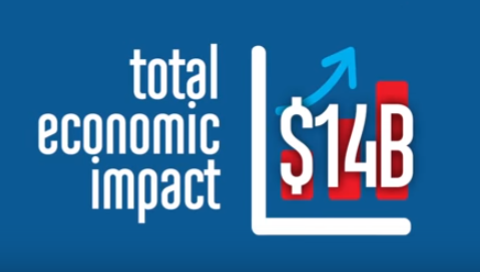
At the age of 23, Regan has already accomplished more in the area of regional tourism than some seasoned professionals. A life long native of Norwich, she worked with Norwich Historical Society to unite the city’s many historical entities into a comprehensive destination, securing a grant to open the Norwich Heritage and Regional Visitors Center on the Norwich town green in 2015. Ms. Miner has also developed a series of “Walk Norwich” trails and seasonal events hosted by volunteers and supported by a strong social media presence.
Tourism Partners of the Year Award - Carmen Romeo, Fascia’s Chocolates and Howard Pincus, Railroad Museum of New England
Fascia’s Chocolates and the volunteer-run Railroad Museum of New England have truly laid the track for a sweet collaboration. They’ve joined forces to operate special train tours, including a wine-and-chocolate-themed sunset ride and Halloween event for families, and are adding a regularly scheduled “Chocolate Train” in 2016 to market to charter groups such as bus tours. This partnership has resulted in a unique experience that has attracted high interest at recent ABA and NTA conferences and is a model for other partners statewide.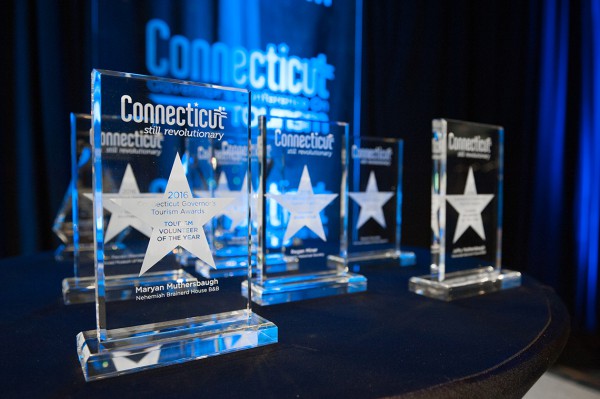
Leader of the Year - Stephen Tagliatela, Saybrook Point Inn, Marina & Spa
An influential proponent for the tourism industry as a board member of the Connecticut Restaurant Association, Lyme Academy College of Fine Arts and University of New Haven, Stephen is a strong advocate for arts and culture, education, and both historic and environmental preservation in the state. Under Stephen’s direction, The Saybrook Point Inn, as well as Spa and Marina, have won numerous awards for its often best-in-class green practices, including the first Connecticut hotel to be named a Certified Energy Hotel in 2007.
John Lyman is a member of the 8th generation of the Lyman family to farm the land in Middlefield, CT. An early proponent of what has become known as “agritourism,” he has helped to steer his 275-year-old family business toward becoming one of Connecticut’s leading tourist destinations, attracting more than 600,000 visitors a year. Fostering working partnerships with other tourism leaders in the state and region, John initiated cause marketing with unique Sunflower and Corn Mazes, contributing $1 to charitable causes for every person who “gets lost” in the maze, currently surpassing $500,000.
https://youtu.be/-5Nc59LkxqI
https://youtu.be/PnG7hmhpDLg


 Already, 2.9 million freelancers earned more than $100,000 last year, up from 2 million who hit the six-figure mark just four years earlier, according to MBO Partners. The report indicated that 60 percent of freelancers surveyed said they started freelancing by choice—up from 53 percent last year—and 67percent of freelancers agree that more people are choosing to work independently today compared to three years ago.
 Overall in Connecticut, the chronic absenteeism rate dropped from 11.1 percent in 2011-12 to 10.6 percent in 2014-15. The State Department of Education website explains that “improving and sustaining good attendance requires the active engagement of district and school-based leaders and administrators along with a clear articulation of roles and responsibilities.”

 the University must reaffirm and recenter itself on our source of pride, our intellectual mission. Although it is a sign of our times, opting for digitization and screen culture has only encouraged students (and not only students) to view faculty as “resources,” reducible to delivery mechanisms; the result is no longer contemplative learning, but the passive quantifiable consumption of information without attentiveness to pedagogy.
 determine the campus climate or that it gives students the same sense of belonging as their non-activist peers. Although students have demonstrated over the years and waged campaigns such as Diver$ity Univer$ity, AFAMIsWhy, Trans/Gender Group, and WesDive$t more recently, in the last decades, evident commitment to social justice on a global scale has been waning on this campus, just as it has nationally.
 Therefore, effective and sustainable solutions will not arrive from above. Students, staff, and faculty together must create a campus environment of mutual respect. That environment depends on shared and deliberately articulated community principles. In this regard, on the one hand, the Office of Equity and Inclusion needs to better define, articulate, and communicate the institutional commitment to diversity, equity, and inclusion. That office should also provide a clear policy framework. On the other hand, that environment will be shaped most powerfully by our collective community practices.

 He added, “We advised him that there are ways to be close to family and friends in Connecticut on occasion that are perfectly legal. We're trying to send a more welcoming message to the high earners as a group." Homeowners who spend more than 183 days in the state are considered residents for tax purposes.
 wealthiest individuals, had relocated from Greenwich to Florida, the second individual in that tax bracket to do so recently. The exits, the Courant reported, “leave Connecticut with 13 billionaires, including Ray Dalio ($15.6 billion) and Steven Cohen ($12.7 billion), both hedge fund owners who live in Greenwich.” Eight of those 13 state residents list Greenwich as their home address, according to



 The Child Care metrics included Day-Care Quality, Child-Care Costs, Access to Pediatric Services, and WalletHub’s “Best School Systems” Ranking. The Professional Opportunities category included Gender Pay Gap, Ratio of Female Executives to Male Executives, Median Women’s Salary, Percentage of Families in Poverty, Female Unemployment Rate, and Gender-Representation Gap in Different Economic Sectors. The Work-Life Balance category included Parental Leave Policy, Length of the Average Woman’s Work Week, and Women’s Average Commute Time.
 The recommendations are drawn from the experiences of nine communities in Connecticut that explored researched-based strategies over the past year, to link supports for social-emotional and literacy skills. The effort was part of the Connecticut Peer Learning Pilot on Social-Emotional Development and Early Literacy, developed and led by the Campaign for Grade-Level Reading, in partnership with the National Center for Children in Poverty and with support from the Irving Harris Foundation and others.

 “Parental voices can be influential in mobilizing advocacy efforts, and enacting policy change affecting children’s health,” said Rebecca Puhl, a study author, professor in UConn’s Department of Human Development and Family Studies, and deputy director of the Rudd Center.