

CT Is National Microgrid Leader, Seeking Electricity Resiliency
/The cover story in this month’s edition of State Legislatures magazine, published by the National Conference of State Legislatures, examines new technologies that are keeping the lights on when disasters strike the electric grid. And it turns out that New England – especially Connecticut – is showing the way for states across the country in one of the new approaches, the electricity microgrid.
The sit-up-and-take-notice event that has sent state legislature scurrying to act was SuperStorm Sandy, which knocked out power to nearly 8 million people across 15 Eastern states, including wide swaths of Connecticut. One of the primary responses aimed at making the electric system more resilient has been the development of microgrids, and Connecticut has been swifter than most in seizing the technological advance. 
Microgrids are an example of how state legislators are seeking to make the electrical grid more reliable and resilient through strategies that strengthen infrastructure and shorten the time it takes to restore power, reporter Dan Shea explained in the article. The whole idea is to minimize the damage and disruption of a disaster.
The article was drawn from research for the NCSL report, State Efforts to Protect the Electric Grid, published in April. The report points out that nearly 40 percent of the U.S. population—over 123 million people—live in coastal shoreline counties, according to U.S. Census Bureau data.
“We had Irene. We had Sandy. We had a snowstorm that went on forever. We had people in the dark, substations threatened by flooding and power out for eight, 10, 12 days,” Connecticut State Representative Lonnie Reed (D-Branford) told the publication. “We began to see just how vulnerable the whole interconnected system is.”
Many Northeastern states have taken action on microgrids, but the Connecticut General Assembly has been the most active legislative body, Shea reports, passing or updating microgrid-inclusive bills in each of the past four years (2012-2015). These laws offer a range of options for potential microgrid developers—and could even incentivize distributed generation developers to expand their projects to incorporate microgrid technologies.
The three main incentives are:
- A microgrid grant and pilot program;
- The Connecticut Green Bank’s commercial sustainable energy program;
- And municipal energy improvement districts.

The Connecticut General Assembly passed legislation enacting a microgrid pilot program in 2012 – the first in the nation according to the Connecticut Department of Energy and Environmental Protection (DEEP). Initially, the program granted $18 million to nine projects. The initiative was later extended and given an additional $30 million to expand microgrid deployment, Shea reports.
Eligibility was extended to municipalities, electric distribution companies, municipal electric companies, energy improvement districts and private entities. On March 6, 2014, Wesleyan University in Middletown became the first of the CT microgrid projects to come online, according to the DEEP website.
The State Legislatures article reports that in 2015, lawmakers in 17 states, including New York and New Jersey, introduced more than two dozen bills on microgrids, six of which have been enacted. Several pending bills direct state agencies to study microgrids, while at least six states are considering legislation that would offer grants, loans or other incentives to develop them. Microgrids, although growing most rapidly in the Northeast, are taking root elsewhere, including California, State Legislatures reports.
In addition, a growing number of businesses and organizations are also investing in resilient systems that allow them to operate independently whether the grid is up or down.
“You’re really talking about having an economic leg up if you have the capacity to stay open and operational when others aren’t,” Reed told State Legislatures.
The state legislature has also directed the Connecticut Green Bank to include microgrid projects within its definition of “energy improvements” that the bank is authorized to make appropriations and issue bonds or other obligations to help finance.
The legislature has also authorized any municipal government to establish an energy improvement district by vote of its legislative body. The state statute outlines how the district’s affairs will be managed and authorizes a board to fund the development of energy improvement projects within the district.
Nationally, more than a dozen states introduced legislation in 2015 that calls for greater diversity in power sources—from expanding renewables to supporting nuclear and fossil fuels. The State Legislatures report indicates that those efforts are likely to intensify in the years ahead, as weather events are predicted to become more frequent and more severe.


 Nothing is inevitable about being a scientist or an engineer – and that's one of the most frustrating and wonderful things about our chosen field. Experiments fail and hypotheses crumble. Data might not be as neat, as revealing as you'd hoped, technology might break at the worst moment, you might spend years chasing a question only to have the answer continually slip away. But then there are wonderful moments of discovery -- and I promise you the euphoria makes up for all the frustration.



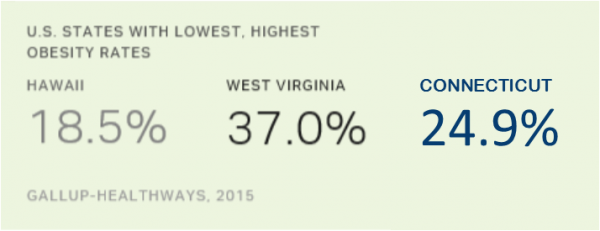
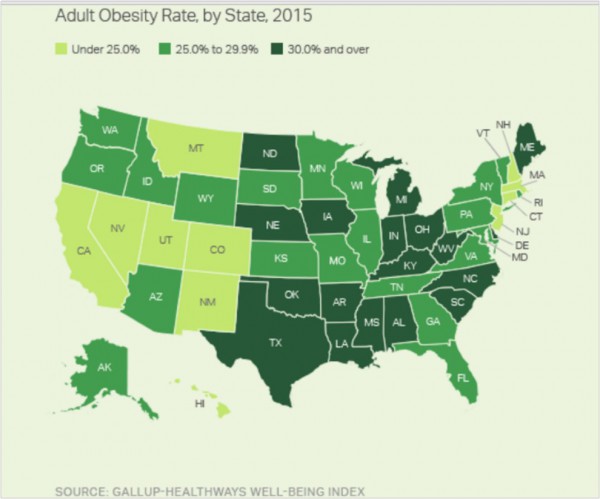
 no state registered a statistically significant decline. Maine, West Virginia, Idaho and Oklahoma experienced the sharpest upticks in obesity.
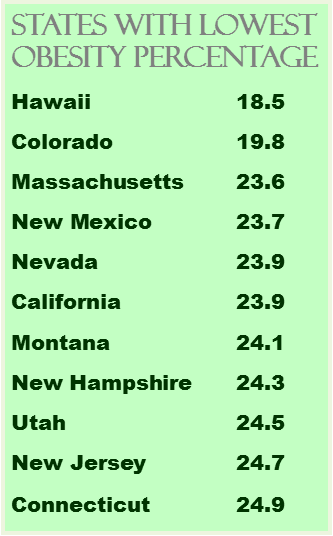 In the five most obese states, the annual incremental cost of obesity per 100,000 residents averages $54 million. By contrast, the average cost is $34 million in the five least obese states. In other words, per capita medical costs attributable to obesity are about 1.6 times higher in the five states with the highest obesity rates than in the states with the five lowest rates. The cost in Connecticut for the obese adult population was estimated at $39 million, for the entire adult population, $1.07 billion.





 Already, 2.9 million freelancers earned more than $100,000 last year, up from 2 million who hit the six-figure mark just four years earlier, according to MBO Partners. The report indicated that 60 percent of freelancers surveyed said they started freelancing by choice—up from 53 percent last year—and 67percent of freelancers agree that more people are choosing to work independently today compared to three years ago.

 Overall in Connecticut, the chronic absenteeism rate dropped from 11.1 percent in 2011-12 to 10.6 percent in 2014-15. The State Department of Education website explains that “improving and sustaining good attendance requires the active engagement of district and school-based leaders and administrators along with a clear articulation of roles and responsibilities.”

 the University must reaffirm and recenter itself on our source of pride, our intellectual mission. Although it is a sign of our times, opting for digitization and screen culture has only encouraged students (and not only students) to view faculty as “resources,” reducible to delivery mechanisms; the result is no longer contemplative learning, but the passive quantifiable consumption of information without attentiveness to pedagogy.
 determine the campus climate or that it gives students the same sense of belonging as their non-activist peers. Although students have demonstrated over the years and waged campaigns such as Diver$ity Univer$ity, AFAMIsWhy, Trans/Gender Group, and WesDive$t more recently, in the last decades, evident commitment to social justice on a global scale has been waning on this campus, just as it has nationally.
 Therefore, effective and sustainable solutions will not arrive from above. Students, staff, and faculty together must create a campus environment of mutual respect. That environment depends on shared and deliberately articulated community principles. In this regard, on the one hand, the Office of Equity and Inclusion needs to better define, articulate, and communicate the institutional commitment to diversity, equity, and inclusion. That office should also provide a clear policy framework. On the other hand, that environment will be shaped most powerfully by our collective community practices.





















