New Facilities at Southern, UConn Stress Science Education, Careers

In the fall of 2015, Connecticut’s efforts to encourage science careers among students attending state colleges ramped up with the opening of a new Science and Laboratory Building on the campus of Southern Connecticut State University in New Haven, and the groundbreaking for a Science and Engineering Building at the University of Connecticut in Storrs. Both projects are back in the news.

Southern’s Academic Science & Laboratory Building has been certified LEED® Gold, placing it among the top one-third most sustainably designed certified buildings in the state.  The building saves the university 34 percent on its energy consumption and reduces water use by 20 percent.

Designed by Centerbrook Architects & Planners, the nearly 104,000-square-foot building exceeded expectations with its sustainable features. Originally targeted for LEED® Silver, the Academic Science & Laboratory Building scored 63 points on the LEED® scale to earn BD+C (Building Design + Construction) Gold.  The $49 million project was created entirely through state bonding, and predominantly features interactive laboratory spaces, with only two traditional lecture halls.

In Storrs, UConn’s new Engineering and Science Building is now 75 percent complete, and will be operational this fall.  It is expected to provide room for some of the university’s fastest growing research fields – systems genomics, biomedical sciences, robotics, cyber-physical systems (think drones) and virtual reality technology.

The five-story building will see researchers will move in to the new space this summer, beginning in July. It will be the first structure on the Storrs campus to utilize an “open lab” concept for research. The shared research space and open floor plan is intended to make it easier for scientists from different disciplines to collaborate, fostering innovation, according to UConn Today. The new structure will also give scientists access to a high-speed broadband network can process large amounts of data quickly – a necessity in many research fields today.

The building’s first floor is to include a Robotics and Controls Lab, Computational design Lab, Adaptive systems, Intelligence, and Mechatronics Lab and Manufacturing Systems Laboratory.  The second and third floors will feature the Institute for Systems Genomics, Center for Genome Innovation, Computational Biology Core and Microbial Analysis.  The top two floors will include labs focusing on Cellular Mechanics, Neuroengineering and Pain research, Interdisciplinary Mechanics, Membrane Separations, Advanced Solar Cells and Computational Atmospheric Chemistry.

Southern's Academic Science and Laboratory Building features Connecticut’s only center for nanotechnology and training labs for high performance computing, astronomy, cancer research, and molecular biology. It is also home to the Werth Center for Coastal and Marine Studies. Stressing the connection between education and employment, Southern notes that the Greater New Haven area is home to the second-largest cluster of biotechnology companies in New England.

https://youtu.be/0GLnUUlsQ7g

https://youtu.be/kSkgezEqcJs

PERSPECTIVE: Don't Overlook Your Foreign Assets

by Sharon K. Brune Are you subject to IRS penalties of $10,000 or more -- and don’t even know it?

Do you have a foreign bank account or other foreign asset? If you neglected to properly report such accounts or investments, you may be liable for civil and criminal penalties that start at $10,000 – even if you don’t owe any taxes on that foreign money!

There is a laundry list of forms the IRS may require from people who hold foreign bank accounts or other assets.  Chief among them is the FinCEN Form 114, colloquially known as the FBAR (Report of Foreign Bank and Financial Accounts).  It has a fairly low threshold for reporting, and requires not only direct account holders to report, but also requires reporting by those with signature authority over foreign accounts and majority owners of business entities with foreign accounts, among others.  In short, you might think your account is too small or your connection to a foreign asset is too minimal to require reporting, but you may well be wrong.

Frequently taxpayers are surprised to learn they were required to file forms related to foreign assets.  Commonly heard laments include these and countless other variations:

  • I’ve only got two accounts of $5,000 each.
  • I only have $10,000 in a single account that I haven’t touched in years.
  • It’s not my account – I only have signature authority over an account in case something happens to my parents who live in another country.
  • I’m a citizen of another country but living in the US – I don’t need to report my foreign assets, do I?
  • My accounts are in Canada. That’s not foreign, is it?
  • I own a corporation or partnership that does business abroad. We have foreign bank accounts for these branches.  They’re not mine.
  • My grandfather, who lives in a foreign country, created a trust for my benefit. I didn’t receive any money this year.

In each of the above scenarios, there is a strong likelihood that a reporting requirement exists – even if you don’t owe taxes on the accounts.

Bank accounts aren’t the only assets that need to be reported.  Various other forms address reporting investments in foreign businesses, receipt of bequests from foreign persons, ownership of foreign rental property, loans to a foreign party, to name but a few.

Individuals aren’t the only ones required to file these reports.  Some forms require business entities, trusts, or estates to file as well, if there are involvements with foreign assets.

New for forms filed in 2017 is a change in the due date.  Formerly required to be received by the Department of the Treasury by June 30, the revised receipt date is now April 15 with an automatic extension allowed to October 15.

Hopefully no one will be shocked to learn that income from all sources, including foreign, is required to be reported on a tax return filed by a US person or entity.

If you have overlooked filing any foreign reporting informational forms, getting “right” with the IRS will be less complicated if any income associated with foreign holdings was properly reported.  The IRS is trying to encourage compliance, knowing that in many cases people were truly unaware of the requirements.  There are disclosure programs and approaches that can allow you to get caught up, and may mitigate some of the possible penalties associated with non-filing.

Note that there is no statute of limitations when it comes to forms that were not filed – the IRS can come looking for you well beyond the typical three years’ statute of limitations normally associated with a routine Form 1040.

Burying your head in the sand and procrastinating will not make this problem go away. Better to get professional advice and take all necessary steps to comply with IRS requirements.

_______________________________

Sharon K. Brune, CPA, is a partner in the New Haven office of Beers, Hamerman, Cohen & Burger, P.C. She can be reached at 203.787.6527 x109 or sbrune@bhcbcpa.com


Insurance Department Recovers $7.5 Million for Policyholders, Taxpayers in 2016; Highest Total in 4 Years

Connecticut’s Insurance Department recovered $7.5 million for policyholders and taxpayers in 2016, helping individuals, families and employers with their claims and complaints.  That is the highest amount in four years and an increase from the $6 million that the department saved taxpayers and policyholders the previous year. “Connecticut consumers turn to us every year to help them with claims and coverage issues or to just answer questions about their insurance,” said Insurance Commissioner Katharine L. Wade. “Our intervention in 2016 helped thousands of policyholders get much-needed answers, resolution and the benefits to which they are entitled.”

Consumer recoveries and industry fines totaled approximately $6.3 million in 2014, $7.3 million in 2013 and approximately $8.7 million for policyholders and state taxpayers in 2012, the high water mark in recent years.

Commissioner Wade said among the many cases the Department worked on during 2016 was a dispute that involved nearly $170,000 in hospital bills for a victim of a car accident. The patient had health care coverage under two plans – through his employer and as a dependent on his parent’s health insurance. When a dispute arose over which plan was the primary payer, the Department stepped in and determined it was the employer’s plan, which then covered the claims.  Another case involved a motorist whose car was totaled in an accident. When motorist’s insurer initially denied her claim, the Department required that the insurer review the case further. The insurer subsequently paid 100 percent of the motorist’s claims.

The Department’s Consumer Affairs Unit (CAU) fielded more than 5,800 complaints and inquiries and helped policyholders recoup nearly $6 million from January 1 to December 31, 2016, according to officials. Also in 2016, the Department’s Market Conduct division levied approximately $1.6 million in fines against carriers and returned that money to the state’s General Fund. The fines resulted from a variety of violations and settlements ranging from untimely claim payments to improper licensing, the department said.

The majority of the funds recovered for policyholders stemmed from complaints over health, accident, homeowners and life and annuities policies. The  breakdown of funds recovered in 2016:

  • Accident, Health - $3.63 million
  • Auto - $432,000
  • General Liability - $33,710
  • Homeowners and Commercial Property - $874,250
  • Life, Annuities - $820,000
  • Miscellaneous - $160,000

The department announced this month that licensing renewal notices for casualty adjusters and motor vehicle property damage appraisers will now be handled online, with an anticipated savings of nearly $40,000 in processing and mailing costs.The renewals also are now processed online through the National Insurance Producer Registry (NIPR). The licenses expire on June 30, 2017 and are good for two years. The casualty adjuster renewals are expect to generate approximately $6 million for the General Fund.

“The Department is now emailing renewal notices to the 73,000 casualty adjusters and motor vehicle property damage appraisers in Connecticut improving efficiency by saving time and shedding thousands of dollars in mailing and postage costs,” Wade said.

The Department calculates its consumer recoveries based on what the policyholder received as a result of the Department’s intervention. The inquiries and complaints also help the Department identify industry trends that may adversely affect consumers and trigger investigation by the Market Conduct division.  Complaint data also help determine topics for consumer education and serve as tools to help the Department monitor the industry.  The Market Conduct enforcement actions are posted on the Department’s Web site at www.ct.gov/cid

Strong Defense: Where CT's Jobs Will Be

“As a convergence of technological advancements, changing military demand and shifting workforce demographics force a major period of transformation across the (defense) industry, Connecticut must adjust its approach to workforce development and retention, or risk losing its competitive edge to other regions.” That’s the conclusion of a 23-page policy brief issued by CT21 which analyzed the pitfalls and potential of the aerospace and defense industries - a “significant pillar of Connecticut’s economy” - and the state’s workforce, on the brink of what the report describes as “an inflection point” for the state.

“With a workforce that is aging into retirement faster than the current pipeline of workers can fill the gap, existing training programs are being strained to both produce higher numbers of qualified graduates and keep their programs current with the skills industry needs,” the report indicated.

To solve this multi-faceted challenge, CT21 calls on state officials to:

  • Expand existing training programs and launch new ones
  • Increase industry input into training program development
  • Expand the workforce applicant pool
  • Incentivize the retention of retiring industry expertise

“The full ecosystem around the defense industry in the state must come together to address these overlapping trends – and many of these collaborative initiatives are already producing significant results – but state government still has a unique role to play in bringing the right ideas to the table,” the report explains.

The report notes that the 2016 Aerospace and Defense Workforce Study conducted by Aviation Week and Space Technology found over a quarter of the nation’s A&D workforce is over the age of 55. To highlight the local impact, 35% of Electric Boat’s workforce is within ten years of retirement. Over 7,800 workers have 20 or more years of service, and nearly 950 have 40 or more.

By way of illustration, the report devoted attention to United Technologies’ Pratt and Whitney.

“Based on projections for deliveries of military and commercial engines, Pratt expects to double production by 2020 and again by 2027. As of last September, the company expected to hire nearly 8,000 new workers in Connecticut over the next decade, including 1,000 engineers and 1,000 manufacturers in the next year. Pratt operates a business model that also relies heavily on the supply chain, with 85% of its engine parts being manufactured elsewhere.”

The report calls on state government to take a range of actions, including:

  1. Expand existing training programs and launch new ones
  2. Increase industry input into training program development
  3. Expand the workforce applicant pool
  4. Incentivize the retention of retiring industry expertise
  5. Create additional professional growth opportunities
  6. Take steps to improve the quality of life – both real and perceived
  7. Expand existing training programs and launch new ones
  8. Increase industry input into training program development
  9. Expand the workforce applicant pool
  10. Incentivize the retention of retiring industry expertise

Among the challenges the report cites are increasing competition from other industries and variable quality of life across the state. To respond, CT21 urges that state to create additional professional growth opportunities and improve quality of life statewide. CT21 stresses that the state must “leverage the opportunity before us to truly put Connecticut on a path towards a prosperous future.”

The Connecticut Institute for the 21st Century provides continuing opportunities for its members and other organizations to understand and discuss economic activity in the state and obstacles to its success. For more information, visit www.CT21.org

Will 12 Become One? Community College Consolidation Proposed

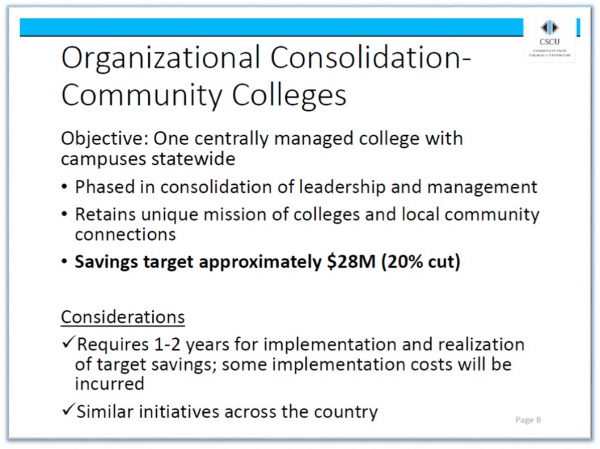
The stated objective is “one centrally managed college with campuses statewide.”  In the Land of Steady Habits, that recommendation is akin to being struck by lightning. Connecticut currently operates 12 community colleges across the state, and has for decades.  As a means of cutting 20 percent of the collective community colleges budget, a reduction of approximately $28 million, the leadership of the Connecticut State Colleges and Universities (CSCU) is calling for implementation of the comprehensive consolidation proposal to begin immediately.  It would require “1-2 years for implementation and realization of targeted savings,” according to the outline developed by CSCU officials.

Some would suggest that implementation got underway in advance of the formal proposal.

Earlier this year, the CSCU Board of Regents, which oversees the colleges and four state universities, announced Housatonic Community College President Paul Broadie II and Asnuntuck Community College President James P. Lombella would be the interim presidents of Gateway Community College and Tunxis Community College, respectively, in addition to their existing duties and for no increase in pay, when the institutions’ current presidents depart later this year.

The plan also calls for the CSCU system to “leverage core competencies of Charter Oak State College to serve all colleges and universities.”  Charter Oak State College is Connecticut's public online college offering master's, bachelor's and associate degree programs for adults.

Other options to reduce costs by making major administrative changes to the state’s college and university system (not including UConn) were considered, and rejected.  “We examined the closing of community college campuses and the operational consolidation of our universities. We looked at regional consolidation of the universities and colleges and elimination of system office. Those options did not meet our guiding principles, were not feasible for long-term growth, or were potentially more costly,” CSCU president Mark Ojakian said in an open letter on the CSCU website.

Officials noted that state funding has declined by 12.4 percent in recent years, after a consolidation of the state university and state college systems in 2011.  The proposal, to be considered by the Board of Regents this week, also calls for integrating operations such as IT, Human Resources, Purchasing and Contracts, Facilities and other “back office” functions, according to CSCU.

The “significant reduction” and “phased in approach” for the “consolidation” of leadership and management at the colleges are described as the “first step towards a sustainable path forward.”

The community colleges are Asnuntuck Community College, Norwalk Community College, Capital Community College, Quinebaug Valley Community College, Gateway Community College, Three Rivers Community College, Housatonic Community College, Tunxis Community College, Manchester Community College, Middlesex Community College, Naugatuck Valley Community College, and Northwestern CT Community College.

They date back to the 1960's and 1970's  in most cases, with the bulk of changes coming in the 1990's.  Housatonic Community College started in 1966 as a branch of Norwalk Community College. In 1967, HCC became an independent institution. Quinebaug became Connecticut’s 11th community college in 1971 with a service area to include towns in Windham County. Asnuntuck Community College was established in 1969 by an act of the Connecticut state legislature as the twelfth institution in the Connecticut state community college system. Classes began in 1972.

Gateway Community College was formed on July 1, 1992 from the consolidation of two other secondary institutions. The former South Central Community College (at Long Wharf) combined resources with the former Greater New Haven State Technical College in North Haven.  Capital Community College is the result of the 1992 merger of Greater Hartford Community College (founded in 1967) and Hartford State Technical College (founded in 1946).Three Rivers Community College in Norwich, was formed in 1992 by the merger of Mohegan Community College and Thames Valley State Technical College. Norwalk Community College and Norwalk State Technical College were each founded in 1961.

In 1992, the state considered a proposal that would have merged the then-17 community and technical colleges into five regional institutions.  That plan would have eliminated 11 president positions, according to published reports at the time.

Pay Equity Gap Persists in CT, Nationwide

In Connecticut, median annual pay for a woman who holds a full-time, year-round job is $50,802 while median annual pay for a man who holds a full-time, year-round job is $61,666. This means that women in Connecticut are paid 82 cents for every dollar paid to men, amounting to an annual wage gap of $10,864.  Connecticut’s gap ranks as the 37th highest among the states. That’s according to the National Partnership for Women & Families, which released state-b-state pay gap data for Equal Pay Day on Tuesday that reveals the size of the gender wage gap and its detrimental effects on women’s spending power in all 50 states.

The gap varies by state, but the largest cents-on-the-dollar differences are in Wyoming (36 cents), Louisiana, West Virginia, Utah and North Dakota. The smallest cents-on-the-dollar differences are in New York (11 cents) and Delaware.

The data for Connecticut also indicate that the wage gap is even larger for women of color. Among Connecticut women who hold full-time, year-round jobs, Black women are paid 58 cents, Latinas are paid 47 cents and Asian women are paid 80 cents for every dollar paid to white, non-Hispanic men.

On average, Connecticut women who are employed full time lose a combined total of nearly $15 billion every year due to the wage gap, the National Partnership reported. “These lost wages mean women and their families have less money to support themselves, save and invest for the future, and spend on goods and services. Families, businesses and the economy suffer as a result,” the organization pointed out.

According to data highlighted by the National Partnership, in Connecticut more than 170,000 family households are headed by women.  About 24 percent of those families, or 40,431 family households, have incomes that fall below the poverty level. Eliminating the wage gap, they suggest, would provide much-needed income to women whose wages sustain their households.

If the annual wage gap were eliminated, on average, a working woman in Connecticut would have enough money for:

  • More than 11 additional months of child care;
  • Nearly one additional year of tuition and fees for a four-year public university, or the full cost of tuition and fees at a two-year community college;
  • Approximately 82 more weeks of food for her family (1.6 years’ worth);
  • More than five additional months of mortgage and utilities payments; or
  • Nearly 10 more months of rent.

“Equal Pay Day is a painful reminder that women in this country have had to work more than three months into this year just to catch up with what men were paid last year,” said Debra L. Ness, president of the National Partnership. “This analysis shows just how damaging that lost income can be for women and their families, as well as the economy and the businesses that depend on women’s purchasing power. Entire communities, states and our country suffer because lawmakers have not done nearly enough to end wage discrimination or advance the fair and family friendly workplace policies that would help erase the wage gap.”

In the nationwide data, the civilian industries that employ the most full-time employees – health care and social assistance, manufacturing, retail trade and educational services – pay women less than men. In the health care and social assistance industry, women are paid just 72 cents for every dollar paid to men. In manufacturing, just 76 cents. In retail trade, 79 cents. And in educational services, 88 cents. Across all industries, women are paid lower salaries than men.

The wage gap data reflects statistical analysis showing that 62 percent of the wage gap can be attributed to occupational and industry differences; differences in experience and education; and factors such as race, region and unionization. That leaves 38 percent of the gap unaccounted for, according to the analysis, leading researchers to conclude that factors such as discrimination and unconscious bias continue to affect women’s wages

The National Partnership for Women & Families is a non-profit, non-partisan advocacy group dedicated to promoting fairness in the workplace, access to quality health care and policies that help women and men meet the dual demands of work and family. Equal Pay Day marks how far into the new year women must work in order to catch up with what men were paid in the year before.

CT Is a Top Ten State - In A Good Way

Awash in a sea of negativity amidst yet another state budget deficit and intensifying concern about the prospects of additional fees, taxes, and service reductions, state residents now have an opportunity to accentuate the positive, courtesy of the 2017 Connecticut Economic Review. Noting that Connecticut is “at the epicenter of the Northeast” and “at the forefront of innovation,” the publication highlights an array of statistics that produce a “dynamic blend of advantages that make Connecticut a great place to start or grow a business.”

Among the key stats:

  • Connecticut ranks #3 in the country for the percentage of employees with advanced degrees - more than 400,000 employees have advanced degrees. And Hartford was identified as one of the 19 global Knowledge Capitals by the Brookings Institution.
  • Connecticut ranks #4 among the top states for private R&D investment per capita, at $2,227. Massachusetts, Delaware and California are the only states that rank higher. That’s also more than twice the national average.
  • Connecticut ranks #5 among the states for productivity per person, and #6 on the State Technology and Science Index, which benchmarks states on their science and technology capabilities and broader commercialization ecosystems that contribute to company growth, high value-added job creation and overall economic growth.

The state’s growing bioscience industry is responsible for more than 35,000 bioscience employees in over 2,000 companies. Connecticut also ranks #6 for academic R&D growth and #7 for state R&D investment.  Overall, the state ranks 5th in patents per capita and has 39 percent more patents than the U.S. average. Two Connecticut companies, Alexion and priceline.com, have been named by Forbes as among the nation’s most innovative companies.

In his introduction to the economic report, Governor Dannel Malloy points out that “Connecticut has grown to become a global hub in bioscience, digital media and green technology. We enjoy a combination of a real entrepreneurial spirit, remarkable experience and one of the most educated and productive workforces in the world.”

The New Economy Index, which measures how states are positioned to drive economic evolution in today’s changing society, ranks Connecticut #8 in the U.S., indicating that the state “offers the kind of environment that is particularly conducive to growth for companies that are capitalizing on the latest global economic trends.  (The top seven are Massachusetts, Delaware, California, Washington, Maryland, Colorado and Virginia.)  The ranking is based on measures in five key areas:  Knowledge jobs, Globalization, Economic dynamism, digital economy, and innovation capacity.
Produced by the Connecticut Economic Resource Center, the publication was sponsored by Eversource.

PERSPECTIVE: Don’t Block Emerging Technologies, Consumer Choice in Eye Care

by Gary D. LeBeau With the advent of e-commerce and new technologies involving telemedicine, the healthcare industry is transforming and is now giving consumers greater freedom than ever before.  More and more consumers are receiving their health care and health products in new ways and the Internet has been a huge asset in lowering prices, increasing access and helping working families get what they need even outside of so-called “regular” business hours.  This convenience is quickly becoming a necessity in today’s world.

For example, federal law states that patients can leave their eye doctor’s office with a copy of their prescription, giving them the choice of how they will fill it. Whether it’s through their desktop computers, an app on their mobile device or tablet, through the mail, or at a discount retailer, the choice is up to the patient to decide in consultation with their doctor.

These innovations, however, create new challenges in the legal, legislative, and regulatory arenas, as established providers often seek to restrict competition and protect their market share from emerging threats.   .  This has been especially evident in the contact lens market, which has been repeatedly targeted by protectionist legislation that ignores the reality of modern day technologies in telemedicine.

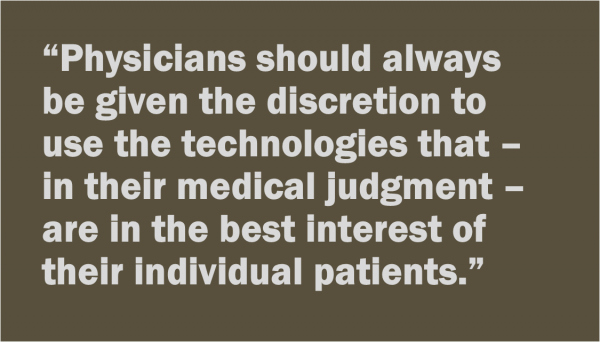
Proposed legislation frequently uses “protecting public health” as a rationale for restricting the use of new technology in eye care.  In fact, there is not a single reported instance of a patient being harmed using these new technologies and there are multiple tools used to screen patients and direct them to a medical provider when appropriate.  In addition, physicians should always be given the discretion to use the technologies that – in their medical judgment – are in the best interest of their individual patients.

Here in Connecticut, H.B. 6012, An Act Concerning Consumer Protection in Eye Care, looks to amend general statues to require various mandates on industry and requirements for consumers before permitting a remote or in-person eye assessment using automated equipment or an application designed to be used on a telephone, computer or Internet-based mobile device.  If enacted, this legislation will make Connecticut stand alone as the state with the most stringent restrictions on consumer choice.  Other states, including Virginia, have recently passed legislation going in the opposite direction to specifically allow the use of this ocular technology.

Connecticut Legislators should resist attempts to stifle innovation and prevent consumers from making their own decisions.  Connecticut should not place itself at a competitive disadvantage with other states when it comes to emerging technologies and innovation in the health care sector.

____________________________

Gary D. LeBeau was a Connecticut state representative (1991- 1995) and a state senator (1997-2015) during which time he served as co-chair of the Commerce Committee.  He also served as co-chair of the National Council of State Legislators Commerce and Labor Committee from 2010 to 2014 and first chairperson of the state legislature’s Manufacturing Caucus, 2012-2015.

Responding to Hunger with Capacity Building; Coalition Initiative Renewed

The University of Saint Joseph (USJ)  and Urban Alliance received a $30,000 grant from the Farmington Bank Community Foundation to support More than Food, a framework that helps food pantries with more capacity-building resources in addition to short-term food supplies to help address the root causes of hunger.  More than Food, developed by USJ, Urban Alliance and Foodshare, was initially launched with funding from the Farmington Bank Community Foundation in 2014. This latest grant supports the program over the next two years. “More than Food focuses on promoting healthy food in pantries and helping people access other resources to find a job. We’re proud to support a partnership that is trying to find a solution to the hunger problem,” said Chris Traczyk, executive director of the Farmington Bank Community Foundation.  “It’s a comprehensive, collective-impact project.”  Dr. Katie Martin, assistant professor and director of the Public Health Program at USJ, and her research team developed a nutrition stoplight system called Supporting Wellness at Pantries, or “SWAP”, which helps food pantry clients choose healthier foods.

USJ is collaborating with the UConn Rudd Center for Food Policy and Obesity and the Council of Churches of Greater Bridgeport to pilot the SWAP system in six food pantries in CT, which together serve over 5,000 people on average every month. Under the More than Food framework, the grant from the Farmington Bank Community Foundation will help expand this work to offer trainings and implement and evaluate the SWAP system in additional food pantries.

As part of the More than Food framework, Urban Alliance has developed various training series and toolkits to equip food pantry staff and volunteers to offer case management services and resource centers that help connect clients to necessary community programs through its Beyond the Basics initiative. Also, Urban Alliance is developing a training program to help pantries create a welcoming environment that fosters the dignity and respect of each person served.

A website, www.ittakesmorethanfood.org , has been developed to share information about the More than Food framework and provide practical guidance and tools to food pantries to help them offer healthy foods with choice, connect clients to needed services, and create a welcoming culture. The recent grant award will help refine, disseminate, and evaluate materials that will be shared through the website.

The website points to the mission ahead: "When the 'emergency' of hunger has lasted over three decades, and with strong evidence that food insecurity is associated with chronic health problems, it is time to rethink the way we provide food assistance and time to examine the effectiveness of food pantries. Through our work, we are changing the conversation about hunger away from emergency food to a person-centered and strength-based approach to help people set and achieve goals in their life."

“We are very grateful for the continuing support of the Farmington Bank Community Foundation, as well as the collaborative work of our partner organizations in making More than Food a holistic way to address hunger in our area,” said USJ's Martin. Currently there are multiple food pantries in Connecticut, Texas and Rhode Island that are implementing the More than Food framework to address the root causes of hunger.


North Stonington Entrepreneur Is CT's Small Business Person of the Year

Carla Bartolucci, President & CEO of Euro-USA Trading/Jovial Foods of North Stonington, has been named the U.S. Small Business Administration’s 2017 Connecticut Small Business Person of the Year, SBA’s top annual award. According to the company’s website, Jovial Foods, Inc. was founded by a husband and wife team who have always been passionate about food, farming and traditions. Carla and Rodolfo met in the 1980’s in Bologna, where she was spending a year abroad studying Italian and he was studying agriculture. Both were born into family of talented home cooks, he in Italy and she in New England, and food was at the center of their childhoods.

She began her work in the organic food industry by creating the bionaturae brand of organic foods from Italy in 1996, after losing both of her parents to cancer by her mid-twenties, her website biography says.

“As soon as I set foot into an organic food store, I knew I wanted to get involved in organic farming and food manufacturing,” Carla Bartolucci explains. “After losing my parents, I couldn’t help but feel compassion for anyone suffering from disease or hardship, and creating good food, true and pure, was my way of caring for others.”

“We are extremely excited to honor a truly amazing line up of small business owners and champions this year, said Anne Hunt, SBA’s Connecticut District Director.  It is important to recognize these outstanding small businesses in the state as they are the job creators, innovators and the fabric of our local communities!”  “We hope the small business community will join the SBA and our host, SCORE for an inspiring awards luncheon on May 2nd in New Haven, CT.”

2017 Connecticut SBA Honorees:

  • Woman-Owned Small Business - Elizabeth Florian, Grassroots Ice Cream
  • Family-Owned Small Business - Beverlee Dacey, Amodex Products Inc.
  • CT Microenterprise Award - Katalina Riegelmann, Katalina’s Bakery
  • Minority-Owned Small Business - Miguel Tomassio, Taco Loco
  • Young Entrepreneur Small Business of the Year - Ashley Stone, Beauty Entourage
  • Financial Services Champion - Kim Rodney, Connecticut Community Bank
  • Entrepreneurial Success - Flavia Naslausky & Camilla Gazal, Zaniac Greenwich
  • Exporter of the Year - Monica Goldstein, Recovery Planner
  • Home-Based Business of the Year - Mary Goehring, Transcription Plus

The slate of leading small businesses owners in Connecticut will be honored at the Annual Small Business Week Awards Luncheon at Gateway Community College in New Haven on May 2.

“Your hard work, innovative ideas, and dedication to your employees and community have helped you build an outstanding business that has strengthened your state’s economy. The SBA is pleased to celebrate your achievements and recognize your personal role in driving our nation’s economic growth,” said Linda McMahon, administrator of the Small Business Association and a longtime Connecticut resident. The 2017 National Small Business Person of the Year will be announced at the ceremonies, along with three runner-ups.

Every year since 1963, the President of the United States has issued a proclamation announcing National Small Business Week, which recognizes the critical contributions of America’s entrepreneurs and small business owners.  This year, the dates are April 30 - May 7, 2017, with national events planned in Washington, D.C., New York City, Indianapolis, Dallas, and Fresno, California.

For more information and a complete list of Small Business Week events during the week of April 30 - May 7, 2017, visit www.sba.gov/ct.

https://youtu.be/50DcZn-9ce0