Five in Connecticut Reach Forbes List of America’s Best Employers for Diversity

Studies published by Massachusetts Institute of Technology, Harvard Business Review, and numerous others during the past decade have consistently concluded that diverse teams – and diverse companies - have stronger financial performance.   With that backdrop, Forbes worked with research firm Statista to compile a list of the best employers for diversity in America. Two Connecticut-based companies, ESPN and Stanley Black and Decker made the top 100 list; ESPN at number 36, Stanley Black & Decker at number 67.  They were the only Connecticut companies to do so. The LEGO Group, with U.S. headquarters in Enfield, was ranked number 169.  Starwood Hotels and Resorts, headquartered in Stamford, was number 197 in the rankings.  Yale New Haven Health was just outside the top 200, at number 208.  Yale University also made the Forbes ranking, at number 242.

Statista surveyed 30,000 U.S. employees in August 2017 to inform the list, asking questions about diversity, gender, ethnicity, sexual orientation, age and disability, according to Forbes. Responses among underrepresented ethnic minorities, women and people aged 50 and older received greater weight in the ranking.

Bristol-based ESPN, the Worldwide Leader in Sports, launched in 1979 as 30,000 viewers tuned in to watch the premier episode of SportsCenter. ESPN aired its 50,000th episode of SportsCenter in 2012 and the channel is has been the main attraction for sports coverage despite challenges through the years.  A 2013 study by the Institute for Diversity and Ethics in Sports concluded that when it comes to diversity, the Worldwide Leader is leading the way.

Reporting on the study, the publication Think Progress indicated that “ESPN has a strong diversity hiring policy outlined on its web site and it has won numerous awards for hiring a diverse cast writers, editors, and columnists. It regularly features minority and female hosts, analysts, announcers, and journalists on both its scheduled programming and its live broadcasts. ESPN is proof that there are qualified minority and female reporters and editors out there, and it is also proof that the rest of the sports world needs to do a better job finding them.”

Other factors Statista incorporated, according to Forbes, were the gender split of companies’ management teams and boards, and whether a company proactively communicates about diversity. It also looked at the gap in diversity perceptions at a given organization. For example, if women, older employees and underrepresented minorities rated an employer poorly on diversity, but everyone else rated it highly, Statista considered that a negative indicator and adjusted the score downward. Only companies with 1,000 or more workers were eligible to qualify for the list.

Last summer, Stanley Black & Decker held its first-ever Global Diversity & Inclusion conference, joining together established affinity networks from around the company.  Affinity networks – voluntary, employee-driven groups – have been established throughout the company’s business and regions to “provide an environment where employees can engage around a particular shared interest or experience,” the company’s website explains.

“The objective of the groups is to engage, enable, and empower by providing networking opportunities, improve representation across the business and promote career advancement.  We embrace and respect differences – and diversity and inclusion are embedded into our company values and purpose,” the website points out.

The top 10 included:

  1. Northern Trust, Chicago
  2. The Smithsonian Institution, Washington D.C.
  3. Levy, Chicago
  4. Intuit, Mountain View, California
  5. Harvard University, Cambridge, Massachusetts
  6. Principal Financial Group, Des Moines, Iowa
  7. Emory University, Atlanta, Georgia
  8. Wegmans Food Markets, Austin, Texas
  9. Keller Williams Realty, Austin, Texas
  10. AbbVie, North Chicago

In addition to the Connecticut-based organizations named in the top 250, New York City-based NBC Universal Media, with a strong presence in Stamford, placed at number 42.  TIAA-CREF, which coordinates the state’s college savings program for the State Treasurer’s Office, was ranked at number 59.  GE, which departed Fairfield for Boston, also made the top 100 at number 85.

PERSPECTIVE: Dialogue, Diversity and Progress Amidst News of Dysfunction

by Martha McCoy What better way to spend the day than with a broad diversity of people from across Connecticut who want to make our towns, cities and state even greater places to live – who are working to create inclusive communities and make a difference on the issues we face.

For six years, Everyday  Democracy and the Secretary of the State’s office have been bringing together an expanding group of civic leaders to consider indicators of our state’s civic heath – such as how well neighbors relate to each other, how often people participate in community affairs, and how well we collaborate across differences. 

On a sunny day with day with a New England chill in the air, 75 Connecticut residents recently gathered for the first annual Connecticut Civic Ambassadors Summit at the Hartford Public Library to celebrate our public life and find ways to improve it. During an afternoon of sharing food and conversation, we deepened our understanding of the “civic health” of our state and continued to find ways to take action together.

State news coverage often focuses on dysfunction. Our state was one of the last in the country to pass a budget. We are struggling to pay for important services, develop the economy, and address large racial and economic inequities. When we hear about towns and cities, it’s often about ways they are pitted against each other.

But the tone of the recent Saturday gathering was completely different. While we all acknowledge that our state faces tough issues, we believe that there are ways “we the people” can address them, working with each other and public officials in more inclusive and democratic ways.

Throughout the day, we heard from people of all ages (grade school to senior citizens) and all backgrounds and walks of life who are using their voices, generating productive collaborations, standing up for justice, and making a tangible difference in their homes, schools, communities, and regions.

Here are just some of the things we heard:

  • “People are yearning to have discussion, to understand the world, and to come together to transform dialogue into action.”
  • “Use the gifts you have to change the world around you…”
  • “Young students have the power to change the world.” “Teachers need support so that they know how to help their students talk about divisive public issues in respectful ways.”
  • “We need to start talking about things before they become hot-button issues. A tweet is not action.”

At the close of the Summit, 40 Civic Ambassadors were sworn in, pledging to be a dedicated and engaged community member to uphold civic values of civility, respect for our democratic institutions, principles of social justice, and nonpartisan civic action toward community improvement.

The goal of the Summit was to engage more people as Connecticut Civic Ambassadors.  Join us.  Civic Ambassadors are everyday people – all of us have a voice and can make a difference. We all need ways to resist the cynicism and polarization that are so prevalent both in our state and across the nation.  Whether you live in or outside of Connecticut, please call us so that you can learn about the civic health work going on in your state.

---------------------------------------------

Martha McCoy is Executive Director of Everyday Democracy.  A national organization based in Hartford,  Everyday Democracy works to strengthen democracy by making authentic engagement and public participation a permanent part of the way we work as a country. Since their founding in 1989, the organization has worked with hundreds of communities throughout the U.S., first by offering small, structured dialogues that led to positive and lasting change, and now offering an array of flexible resources, discussion guides, coaching and technical assistance.


https://youtu.be/jVue1tX-eI0

Yale, UConn Fall Among Peers as Full-Time MBA Enrollment Continues Nationwide Decline

Full-time two-year MBA programs in the United States have seen declines in application volumes since 2014. Last year, only one-third (32%) of programs reported increased application volumes; 64 percent saw declines, according to the Graduate Management Admission Council’s Application Trends Survey 2017. When Bloomberg Businessweek ranked the nation’s business schools offering two-year full-time MBA programs, Harvard, the University of Pennsylvania’s Wharton School and the MIT Sloan School of Management topped the list, issued in late-2017.  Among Connecticut business schools, Yale University ranked at number 16 and the University of Connecticut placed at number 66.  Yale dropped two places from the previous year, UConn dropped three.  In 2015, Yale ranked #11.  A total of 85 schools nationwide received rankings.

Each school’s ranking is based on surveys of recruiters, alumni, and students, as well as recent graduates’ success at landing jobs and securing high starting wages. The methodology Bloomberg Businessweek uses to arrive at its annual MBA ranking involves weighting each of five principle factors: 35 percent for the Employer Survey score, 30 percent for the Alumni Survey score, 15 percent for the Student Survey score, 10 percent for the Job Placement Rate score, and 10 percent for the Starting Salary score.

UConn’s employer survey rank was 77 among the 85 business schools tallied, the job placement rank was 67, and the student survey rank was 73.  The bright spots in the rankings were UConn’s alumni survey rank, 48th, and salary rank, 39th.

Yale’s top rankings were in the alumni survey (9th) and salary survey (15th), with the School of Business ranked 21st in the employer survey, 27th in the student survey and 42nd in the job placement rankings.

The Graduate Management Admission Council report, issued in September 2017, pointed out that “For many years, U.S. programs have come to rely on international candidates to add to their application pipeline. However, the recent change in political administration became a concern among potential international candidates. Three-quarters (75%) of programs reported declining international application volumes.”

That same month, the Wall Street Journal reported that “applications to full-time M.B.A. programs in the U.S. fell for a third straight year, the latest signal that business schools are struggling to entice young professionals out of a strengthened job market.”  Fortune later reported that “while applications to business school overall have declined over the past three years, this isn’t necessarily the case across the board. On the contrary, the top-ranked business schools are seeing a massive influx of interest from students. Yale University’s School of Management, for example, has seen a whopping 45% increase in applications since 2013.”  Harvard increased by 11 percent during that period; UPenn’s Wharton School by 3 percent.

In addition to Yale and UConn, full-time MBA programs are in place at Connecticut schools including Fairfield, Quinnipiac, Sacred Heart, Central Connecticut, and the universities of Hartford and New Haven.

Number of World Language Students in Connecticut More Than Triples Over Past 25 Years

In 1991, 65,252 students were enrolled in world languages in Connecticut’s K-12 schools.  A dozen years later, in 2003, that number had climbed steadily, reaching 95,154.  By 2015, another 12 years later, the number of students taking language instruction had more than doubled, to 208,627 during the 2015-16 academic year. Data provided to CT by the Numbers by the state Department of Education also showed that nearly one-quarter of those students were taking Spanish.  Also, during those two and a half decades, the number of students taking Chinese language instruction has grown from less than 100 to more than 5,500.

Twenty-five years ago, in 1991, the most popular languages taught were Spanish, with 37,963 students; French, with 17,281; Latin, with 4,764; and Italian, with 2,989.  There was also a smattering of German (1,290 students), Russian (318), and Portuguese (193).  The number of students other languages was relatively tiny – 72 were learning Chinese, 67 were taking Japanese and 36 were in Polish language classes.   

By 2003, the most frequent world language choices for Connecticut students had not changed, but the numbers had jumped.  Spanish grew from just under 38,000 students to just over 62,000.  The number of French students was virtually unchanged, and would drop slightly in the years following, as the number of Latin students grew from just under 5,000 to just over 7,500 and the number of students taken Latin closed in on doubling from just under 3,000.

By 2015-16, there were 54,308 taking Spanish, plus another 2,142 taking Spanish for Native Speakers.  Just under 27,000 students were taking French, and 5,500 taking Chinese. The ratio of French students to Chinese students had dropped from more than 200 to 1 in 1991 to about 5 to 1 by the 2015-16 school year.

Slightly more than 7,000 students were learning Italian in 2015-16, more than double the number in 1991. Arabic, which barely registered in 1991, was being taken by 343 students and Russian was the language of choice for 86 students by 2015-16.

According to “The State of Languages in the U.S.: A Statistical Portrait,” Connecticut was one of seven states, along with New Jersey, Pennsylvania, Maryland, Vermont, New Hampshire and Wisconsin, where more than 30 percent of K-12 students were enrolled in language. As of 2014, only twelve states had more than one in four elementary- and secondary-school students studying languages other than English.

The report was published by the American Academy of Arts & Sciences in 2014, noting in the introduction that “While English continues to be the lingua franca for world trade and diplomacy, there is an emerging consensus among leaders in business and politics, teachers, scientists, and community members that proficiency in English is not sufficient to meet the nation’s needs in a shrinking world.”

“What a lot of Americans remember is language as an academic pursuit,” Marty Abbott, director of education for the American Council on the Teaching of Foreign Languages told the nonprofit organization Great Schools in 2016.  “They learned a lot about a language, how to conjugate every irregular verb. Today, the emphasis is on developing students’ communications skills — what they can do with a language. That’s a radical departure.”

There were approximately 191,000 students taking a world language in Connecticut in the 2013-14 and 2014-15 school years; that number jumped to more than 208,000 the following year, in the most recent data available from the state Department of Education.  Data for specific languages may vary, as course descriptions differ from district to district in Connecticut.

PERSPECTIVE: Access to Healthy Foods: How Far Are You Willing to Go?

by Garth Graham For the first time in the history of the United States, today’s youth are expected to have a shorter life-span than their parents. With medical, scientific and technological advances, this notion seems dumbfounding. But when we step away from the science and technology and take a deeper look at our communities, you can find the root causes.

Access to healthy food, public safety and environmental factors are all driving forces behind this decline in longevity. These social determinants of health are becoming increasingly influential to our health as individuals and as communities.

Increasing access to healthy foods is one of the primary social determinants of health that the Aetna Foundation is trying to address. We know that living closer to super markets or retailers that provide healthy food lowers health issues related to obesity, such as diabetes. Providing a community with healthier food doesn’t just benefit the well-being of the people that live there – it has also been show to increase economic activity.

While many of us are lucky enough to have full pantries and fridges, a large portion of the country is not as fortunate. More than 23 million Americans, including 6.5 million children, live in food deserts—places where fresh fruit and vegetables (and healthy foods in general) are largely inaccessible. A significant percentage of this group live in low-income neighborhoods, both urban and rural.

It will require more than a merger between Whole Foods and Amazon to reduce the number of food deserts across the country. Solving this problem starts by giving communities direct access to healthier options, which can help address the fact that more than 90 percent of people don’t eat the recommended amount of fruits and vegetables.

One approach that is helping communities across the country is the development of community gardens and farmer’s markets. The Aetna Foundation is committed to helping communities with this approach and has already supported 5,538 garden beds that have been planted across the country. More than three-quarters of nutrition education participants say that they consume more fruits and vegetables as a result of these activities. Some of the programs that are already making a difference in their local communities include:

  • The e3p3 Live Well Perris in California is establishing community gardens and providing healthy food education and resources to its residents.
  • Healthy St. Pete Empowering Change in Florida serves children, adults and seniors in low-income or low access areas of the city and designated food deserts, and also encourages policy change regarding nutritional access and availability.

Aetna is also working with groups like Meals on Wheels America to combine improved access to healthy food with innovative models for patient care coordination. Aetna recently announced a collaboration that will integrate Meals on Wheels’ daily nutritious meals, social support and critical safety checks into a continuum of care required as people age. Meals on Wheels and Aetna will pilot this model in several markets, and identify best practices intended to improve vulnerable seniors’ health outcomes.

Access to healthy food remains a pressing issue when it comes to determining the health of individuals and communities. We must find sustainable and scalable solutions that can be implemented in communities across the country. By improving access to healthy food, we can increase healthy behaviors, drive economic growth, and lower costs associated with obesity – one community at a time.

Garth Graham, M.D., MPH, is a leading authority on social determinants of health. President of the Aetna Foundation since 2013 and Vice President of Community Health for Aetna, Inc., Dr. Graham is a former deputy assistant secretary at the U.S. Department of Health and Human Services under the Obama and Bush administrations where he also ran the Office of Minority Health. Dr. Graham holds a medical degree from Yale School of Medicine, a master’s in public health from Yale School of Public Health and a bachelor of science in biology from Florida International University in Miami. He holds three board certifications including internal medicine, cardiology and interventional cardiology and serves as an Associate Professor of Medicine at the University Of Connecticut School Of Medicine.  This article first appeared on HuffPost and is published here with permission of the author.  

WalMart Dominates National Map, But Not in Connecticut

Connecticut’s largest employers – after the state itself – are Yale New Haven Health Systems, Hartford Healthcare, Yale University and United Technologies Corp, General Dynamics Electric Boat, and the University of Connecticut, according to a list published last year by the Hartford Business Journal.  Wal-Mart Stores ranks eighth in the state, followed by Sikorsky (Lockheed Martin) and Travelers and The Hartford Financial Services Group. Connecticut is one of a dozen states where the dominant employer is the healthcare.  The others include Rhode Island, Massachusetts, Vermont, Alaska, Delaware, Minnesota, North Dakota, South Dakota, Oregon, Idaho, and Utah, according to data published by Visual Capitalist.

In nearly as many – 11 states – higher education institutions are the largest employer, including New York, Michigan, Wisconsin, Iowa, Nebraska, New Mexico, California, Maryland, Pennsylvania, and North Carolina.

Maine’s largest employer is Hannaford Supermarkets.  In New Jersey it is Wakefern Food Corporation, the largest supermarket cooperative in the United States, including ShopRite and PriceRite stores in Connecticut.

In an era where Amazon steals most of the headlines, it’s easy to forget about brick-and-mortar retailers - especially Walmart, which remains dominant across much of the nation's retail landscape.  The company is the biggest private employer in America in a whopping 22 states -  and employs 1.5 million people nationwide.

In New England, Wal-Mart is the largest employer in New Hampshire, with more than 8,000 employees.

In Walmart’s home state of Arkansas, the company employees 53,310 people, or about 4% of the non-farm work force. That includes about 18,600 jobs at the HQ in Bentonville, AR.

Despite the company’s obvious influence in the state where it was founded, Walmart is also the largest employer across the South in general. Whether it is Texas (171,531 employees) or Virginia (44,621), there are Walmarts aplenty in the states surrounding Arkansas.


Michelle Obama Influences Children's Trick-or-Treat Choices, Yale Study Says

The conclusion is striking:  Michelle Obama’s initiative to reduce childhood obesity has influenced children’s dietary preferences. Researchers estimated that viewing a photograph of Michelle Obama’s face caused children to be 19 percent more likely to choose fruit over candy, on Halloween.  The experiment – Yale University researchers - was conducted on a New Haven porch over three consecutive Halloweens, and the results are published this month in a journal of the Public Library of Science (PLOS). The participants were 1,223 trick-or-treaters in New Haven over three years; on average, 8.5 years old and 53 percent male (among children whose gender was identifiable). To be eligible for inclusion in the study, trick-or-treaters had to be over the age of three.

The porch of a home had photographs clearly visible in front of the trick-or-treating children.  One was of Michelle Obama.  The other side, the “comparison” side in the study, “had a photo of Ann Romney (2012), a photo of Hillary Clinton (2014, 2015), or no photo (2014, 2015).”

At both sides of the porch, children were asked their age and whether they would prefer to receive fruit (a box of raisins) or candy (a more typical small packaged piece of name-brand chocolate such as Snickers or Milky Ways). Each child was given the option (fruit or candy) that they requested.

“The experimental set-up allows us to measure what proportion of children chose fruit instead of candy when in the presence of an image of Michelle Obama’s face, as well as the proportion of children who chose fruit instead of candy when not in the presence of an

image of Michelle Obama’s face,” the researchers pointed out.

Publishing the research are Peter M. Aronow, Dean Karlan, Lauren E. Pinson.  Peter Aronow is Assistant Professor of Political Science and in the Institute for Social and Policy Studies and of Public Health at Yale University; Dean Karlan is a Professor of Economics at Yale; Lauren Pinson is a Ph.D. candidate in Political Science at Yale University.

The experiment was conducted in the East Rock neighborhood of New Haven, which is about one mile from the Yale University campus, and contains many single family homes owned by Yale faculty, as well as some multi-family homes in which many graduate students live, the study explained. “There are also low income neighborhoods within a mile of this neighborhood,” and “due to the high level of activity during Halloween, many families drive from further away in order to trick-or-treat in this neighborhood.”

The study provides background, explaining that “During her tenure as First Lady of the United States, Michelle Obama has spearheaded one of the largest public health initiatives focused on childhood obesity. In 2010, Obama unveiled her Let’s Move Initiative, aimed at fostering a healthy lifestyle and reducing childhood obesity. As the public face of the campaign, Obama urged healthy eating and exercise in a variety of classic and social media venues accessible to minors and their parents, including appearances on Sesame Street and Oprah and posts of online videos.”

In regards to the results, the researchers caution that “we ran the experiment on a day where candy is readily available, the influence on children’s dietary preference for fruit instead of candy may differ from other days of the year; for instance, perhaps children are more willing to choose fruit since it is unique for the holiday, or children are less willing to choose fruit because they are under the influence of sugar consumption.”

PLOS was founded in 2001 as a nonprofit Open Access publisher, innovator and advocacy organization with a mission to accelerate progress in science and medicine by leading a transformation in research communication.

Harp Stands Out as Number of Big-City Black Mayors Diminishes Nationally

Last April, New Haven Mayor Toni Harp was sworn in as the first woman selected as president of the African American Mayors Association (AAMA).  In November, she was elected to a third two-year term leading the Elm City, earning more than 70 percent of the vote. In doing so, she ran counter to an apparent national trend – fewer African American Mayors in the nation’s largest cities.  According to an analysis by Governing magazine, in 2000, 19 of the largest cities in the country by population either had, or would soon have, black mayors.  By 2017, that number had fallen to six. Today, the Wall Street Journal recently reported, that number is four.

African Americans, and African American women, continue to be elected to City Hall.  Charlotte and New Orleans both elected their first black women mayors in November.  St. Paul and a number of smaller cities elected their first black mayors ever, the publication reported.

Among Connecticut’s largest cities, the mayors of Bridgeport, Hartford, Stamford, Waterbury, and Danbury are white males.  Hartford, which elected Thirman Milner and Carrie Saxon-Perry decades ago, hasn’t elected an African American since, but has seen two Latino men hold the office.

Carrie Saxon Perry was the first black woman to be elected mayor of a major New England city – in 1987. Milner was the first black mayor in all of New England, elected in Hartford in 1981. There hasn’t been a black mayor leading the Capitol City since Saxon-Perry’s term ended in 1993.

Were the current office-holder, Luke Bronin, to resign the office (a scenario that could result if he decides to run for Governor and if he is elected later this year) the newly elected City Council President, Glendowlyn Thames, could change that, if she succeeds to the office.

New Haven’s first black Mayor was John Daniels, who served from 1990 to 1993.  Like Harp, he previously served in the State Senate.

Across the country, Jacksonville, Memphis, Philadelphia and San Antonia had black mayors until recently, Governing reported.  Detroit elected its first white mayor in 40 years in 2013. The nation’s largest cities – New York, Los Angeles and Chicago – have each has one black mayor, years ago. Atlanta elected a black female as mayor in a run-off election, winning with just over 50 percent of the vote.

Harp is the only member of the AAMA from Connecticut.  The organization was formed in 2014.  Fifty years ago, the election of Carl Stokes in Cleveland in 1967 put him on the cover of TIME magazine as the first black elected mayor of a major U.S. city. Richard Hatcher, also African American, was elected mayor of Gary, Indiana that same year.


Norwalk, New Haven Among Communities Receiving Free Home Smoke Alarms

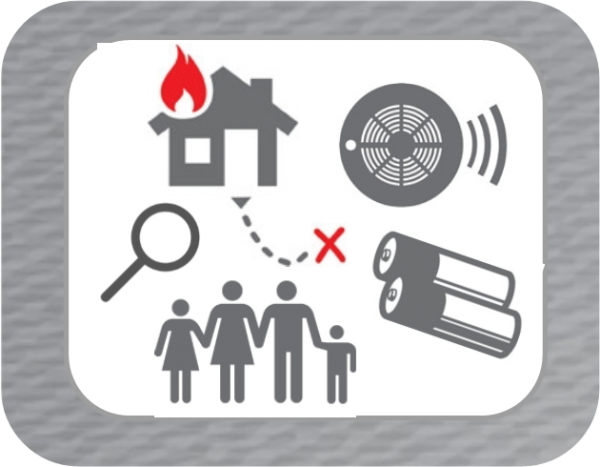
With the Connecticut Home Fire Campaign, the American Red Cross is working to reduce death and injury from home fires by 25% by 2020.  “Sound the Alarm. Save A Life.”, a series of home fire safety and smoke alarm installation events in Connecticut and nationwide, is deploying volunteers will install 100,000 free smoke alarms in high risk neighborhoods. In Connecticut, the initiative has been to 76 cities and towns, replacing nearly 1,000 smoke alarm batteries and installing more than 12,000 smoke alarms.  The program has conducted more than 700 in-home visits, making an estimated 4,400 households safer, according to officials.

Norwalk was the center of activity last month, and New Haven is next in line. 

Teams make visits to homes sharing fire safety and preparedness information and install smoke alarms in homes as requested. Volunteers help families understand the importance of fire safety and help them develop personalized family escape plans to use in the event a fire breaks out in their home.

The program was in Norwalk in December in conjunction with the City of Norwalk, and will be in New Haven in the spring.  A large-scale event is scheduled for New Haven to install 1,000 smoke alarms in and around the city on April 28, 2018.

“Our mission at the American Red Cross is to prevent and alleviate human suffering caused by disasters,” said Mario Bruno, CEO, American Red Cross Connecticut and Rhode Island Region. “Home fires are the biggest disaster threat faced in the U.S. On average, in our region, we respond to about two home fires each day. Our goal is to reach as many homes as we can with this program to help ensure people know what to do and are prepared in the event they experience a home fire. We want people to be safe.”

Nationally, the Red Cross just installed its one millionth smoke alarm last fall.  Since October of 2014, the Red Cross has worked with fire departments and community groups across the country as part of a multi-year campaign to reduce the number of home fire deaths and injuries.

Officials indicate that 60 percent of house fire deaths occur in homes with no working smoke alarms. The campaign initiative is in direct response to that “dire threat,” with the Red Cross committing to install 2.5 million free smoke alarms in neighborhoods at high risk for fires, and to educate those residents about fire prevention and preparedness.

Officials estimate that as of November 2017 the Red Cross and partners have saved more than 285 lives nationwide as part of the campaign.  In Connecticut, individuals can make an appointment by visiting http://www.redcross.org/local/connecticut/home-fire-safety-visit or by calling 877-287-3327 and choosing option 1 on the menu to request a smoke alarm installation.

PERSPECTIVE: Racism 101

by Debby Irving “Data is like a Rorschach test.” Brandeis University’s Tom Shapiro said this to me when I confessed to him how I would have once interpreted the below data.

  • US Racial Wealth Gap: Average Household Wealth
  • White              $ 656,000
  • Latino              $   98,000
  • Black               $   85,000     (2013 Institute for Policy Studies)

Only ten years ago, I would have seen the above as evidence that white people were smarter, harder working, and more financially responsible. Because I thought racism meant white people not liking people of color, I remained clueless about the vast racialized systems and structures that shape the lives of all Americans, including mine. The process of “Waking Up White” has been an education in how an entire population, myself included, can be duped into ideas about human superiority and inferiority along racial lines.

Data is fascinating in that, without drilling into the story behind the data, it can serve to reaffirm ideas we already hold. Which is what happened to me.

  • US Incarceration Rates by Race and Ethnicity
  • White   380     per 100,000
  • Latino   966     per 100,000
  • Black   2,207   per 100,000     (2010 Prison Policy Initiative)
  • CT Public School Graduates’ College Graduation Rates
  • White              53.8%
  • Hispanic          21.4%
  • Black               24.4%     (2008 Connecticut State Department of Education)

Pre-wake-up, the three sets of above data would’ve reaffirmed my embedded racial beliefs, ideas I’d ingested early and often about white people as harder working, more responsible, less threatening, smarter, and less of a drain on society. Can you see how this data could support each and every one of those beliefs?

What’s astounding to me is that in my white, suburban childhood no one even mentioned white people’s supposed superiority. My ideology formed around counterpart ideas that were more explicit; ones about black and brown people as lazy, irresponsible, criminal, dangerous, less intelligent, and content to live like sloths off of hard working white people.

My understanding was that the US specialized in fairness, offering everyone a chance at the “American Dream,” through sheer hard work and good character. In that scheme, those who achieved success had earned it. If white people were in positions of leadership -- more specifically, white male Christian people – that meant they got there on their own merit, right? This thinking allowed me, at a very early age, to form ideas that connected ability to biological type and, in my imagination, white trumped all other racial types. It felt obvious, and in my all-white world, no one ever challenged my racial beliefs. We didn’t talk about race. It was considered rude.

In the white silence, my ignorance deepened as I collected evidence in support of what I already thought was true. Images of thriving, white all-American prototypes saturated my world through real life, TV Shows, textbooks, literature, and dollar bills. It felt wonderful to be part of a country ruled by fairness. I was emboldened imagining myself part of the superior race. The seduction of contempt is powerful.

The reality is far from fair. Embedded in US society lives a web of systems that differentially distribute access to rights, resources, representation, and respect. Creating room for this far harsher reality has been the ultimate waking up challenge. I resisted it for decades. As I’ve learned that there is a drastically different explanation for the above data, I’ve had to do battle with feelings of defensiveness, guilt, shame, and entitlement.

Here’s just one example of what I’ve learned. Following WWII, the US government transferred $120 billion to private citizens through the housing portion of GI Bill, a benefit package offered to returning veterans. Despite that fact that 1.2 million African-American GIs, as well as Latino-, Indigenous-, and Asian-American GIs also fought in WWII, 98% of GI Bill housing wealth went to white GIs, like my father. Though the GI Bill didn’t specify “whites only,” US housing and lending policy at the time restricted who could live where according to racially “redlined” maps. The GI Bill was only good in white-designated neighborhoods. My socially engineered, racially segregated, white world, where stories of rags to riches abounded, all but guaranteed I’d have no exposure to real black or brown people to pull me from denial.

Racism 101 is about this paradigm shift. Until white people understand the degree to which “we don’t know what we don’t know,” data intended to explain racial disparities in health care, food supply, transportation, education, lending, housing, and law is more likely to reaffirm old ideas than to inspire new ones. Waking up is hard to do. It’s also the only option to make a fair and just America a reality.

__________________________________________

Debby Irving is a racial justice educator and author of Waking Up White: And Finding Myself in the Story of Race. She will be speaking on Saturday, Jan. 20 at First Church in West Hartford as part of “Racism 101” which begins at 9 a.m.