

Transportation Officials Announce "Stunning" Findings in I-95 Congestion Study
/“For years, the accepted thinking was that the only way to relieve congestion on I-95 was to add a lane in each direction from border to border. After a detailed study of alternatives, we have determined that strategic, directional widening on I-95 between New Haven and New York can significantly reduce congestion and can be built within existing right of way.” Those comments, from Connecticut Department of Transportation (CTDOT) Commissioner James P. Redeker , accompanied the release of a study on the impact of widening and improving both the western and eastern portions of Interstate 95 in Connecticut, and which also outlined “the consequences of failing to act.” The report indicated that “limited, directional and strategic widening yields major benefits.”
Redeker added that “Similar strategic, localized investments can also reduce congestion between New Haven and Rhode Island. These findings indicate that we can achieve congestion relief through strategic and much less costly investments far sooner than previously thought. In addition, the return on these investments would far exceed the cost of the projects.”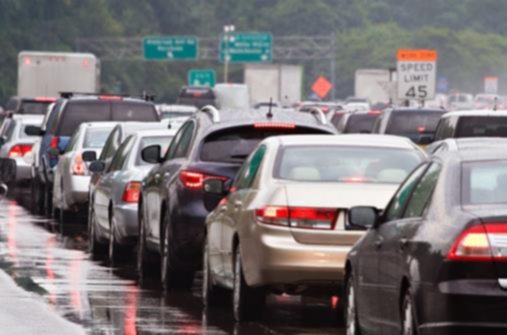
Currently, peak morning and evening congestion on the highway accounts for 54 million hours of delay and costs $1.2 billion in lost time annually. Key areas studied were Fairfield to Bridgeport Northbound (6.3 miles), Stamford to New York Southbound (9.3 miles) and Stamford to Fairfield Northbound (11.1 miles). The report noted that safety, as well as travel time, was a key element in the recommendations. For example, from Branford to the Rhode Island border, it was indicated that there were 3,380 crashes during 2014-2016, including 997 injuries and 23 fatalities.
The I-95 widening projects were included in the $4.3 billion in projects canceled or suspended by the CTDOT last month because of what the Governor’s office described as “long-term failure to adequately fund the Special Transportation Fund.” The Governor’s revenue proposal – which includes a seven-cent increase in the gas tax over four years and the implementation of electronic tolling – would allow for these investments to go forward, the Office said.
“CTDOT is excited to announce that after a detailed study of options for relieving congestion on I-95, we are able to report a stunning set of findings,” Commissioner Redeker said in releasing the report.
Among other findings, the report notes that just one of the projects proposed – adding one northbound lane between exits 19 and 28 – would reduce travel time from the New York border to Bridgeport from 63 minutes – if no improvements are made – to 41 minutes during weekday afternoon peak times. .Short-term, mid-range and long-range options were presented for I-95, including exists 54 to 55, 88 to 90, 80-74 80-82A, and the I-95/Route 32 interchange. Long-range improvements from exit 54 to 69 “requires further study” the report said. It also called for “strategic improvement” Northbound from Exit 19 to 28 to “remove bottleneck.”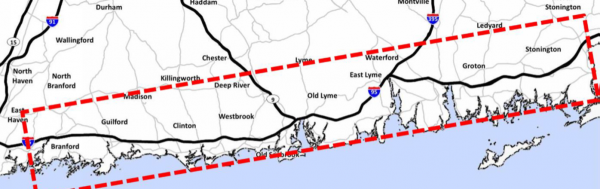
In announcing the report’s findings, Governor Malloy warned that without legislative action this session to shore up the Special Transportation Fund (STF), this type of investment will be impossible.
“These improvements shouldn’t be seen as optional,” Malloy said. “But without new revenue to stabilize the Special Transportation Fund, critical projects like the I-95 widening will not be possible. I put forward a reasonable proposal last month, and I look forward to working with the legislature this year to find real, long-term transportation solutions.”
“Connecticut deserves this rational, sensible and cost-effective investment to support our economic growth,” Redeker added. The DOT first announced a study of the I-95 corridor in October 2016.
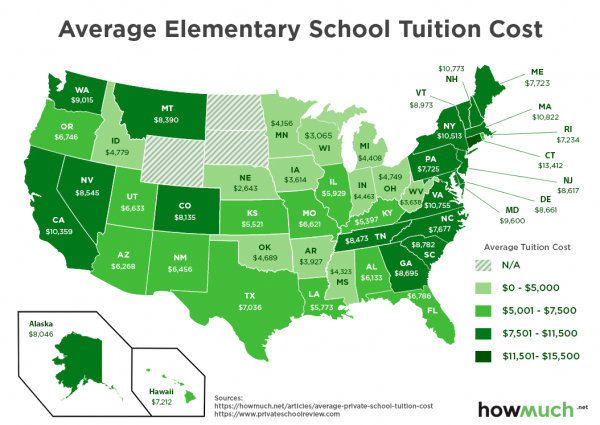
 The most expensive average elementary school tuition cost is also on the East Coast, and Connecticut leads the way. The average private elementary school tuition is $13,412, with Massachusetts ($10,822), New Hampshire ($10,773), Virginia ($10,755), and New York ($10,513) rounding out the top five.
 In a


 Sometimes these complaints are reinforced with evidence of adults’ lack of basic knowledge. For instance, after the national political conventions in 2016, just 37 percent of Americans


 The report defines Eastern Connecticut as the Community Foundation of Eastern Connecticut service area: 42 towns that include 453,000 people, 227,000 women. The population of the region is 80% white, 9% Latina, 4% Black and 4% Asian. Approximately 33,700 residents, or 7 percent, are foreign born. Looking ahead, the report noted that the population of women ages 65 and up is projected to grow significantly over the next decade; estimated to increase 44 percent by 2025.


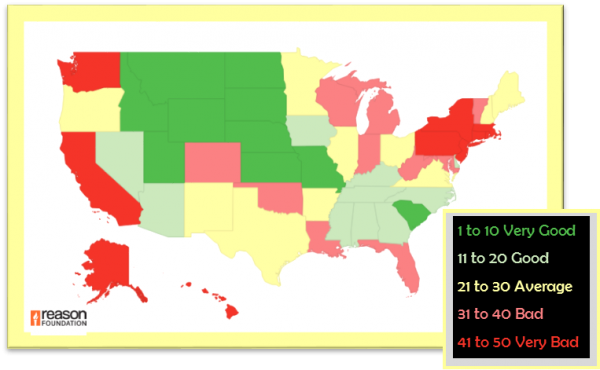 Reason Foundation’s Annual Highway Report ranks the performance of state highway systems in 11 categories, including spending per mile, pavement conditions, deficient bridges, traffic congestion, and fatality rates. At the bottom were New Jersey, Rhode Island, Alaska, Hawaii and Connecticut. Topping the list were North Dakota, Kansas, South Dakota, Nebraska, South Carolina and Montana. New York and Massachusetts were also in the bottom ten, ranked just above Connecticut.
 The report also considered costs related to state roads and bridges.


 A donor, for example, may want to ensure that people in our community do not go hungry. Rather than trying to figure out how to get meals to hungry people on their own, the donor gives money to a local food pantry that has programs to feed the hungry. In that way, the food pantry connects the donor to the outcome he or she is seeking.


 “It is no secret that




















