K-12 School District Regionalization May Do More Harm Than Good, Analysis Reveals
/“Generalizations about regionalization oversimplify a complex topic,” according to a new report on K-12 School District Regionalization in Greater Hartford, which warns that “K-12 regionalization can actually increase costs and harm educational outcomes.”
As some school districts in Connecticut have been considering regionalizing their K-12 education services as a way to reduce costs, the 23-page report prepared for the Hartford Foundation for Public Giving raises some red flags, noting that “policies that call for wholesale regionalization based on imposed criteria (e.g., minimum/maximum number of students) can have unpredictable, and often adverse, consequences.”
In an effort to get a clearer understanding of the potential educational and community impacts of school and district regionalization, the Hartford Foundation for Public Giving sponsored the comprehensive analysis to help inform those efforts gathering data on what is known about the effects of K-12 regionalization on education expenditures and educational achievement, based on recent empirical studies.
“The Hartford Foundation is committed to the availability of high-quality, impartial research,” said Scott Gaul, the Hartford Foundation’s Director of Research and Evaluation. “As policymakers continue to consider strategies to reduce the costs of government, the issue of regionalizing services continues to draw attention. This research is intended to provide a clearer picture on the potential benefits and challenges of regionalizing school districts in an effort to support a shared understanding and to support informed decision-making.”
K-12 regionalization generally includes combining school districts, boards of education, and central office staff. This can result in closing schools, eliminating teaching positions, reducing administrative staff, and increasing student-to-teacher ratios, among other consequences, according to the report. Connecticut, like other New England states, relies mainly on municipalities to provide government services, including K-12 education, to its residents. In 2017, there were 196 public school districts including town districts, charter school districts, regional districts, and regional education service center districts.
 The review of the research, conducted by Connecticut-based Rodriguez Data Solutions, points out that policymakers often promote K-12 regionalization as a way to achieve cost savings, but often fail to consider the consequences for student educational achievement. The report reviewed initiatives to promote K-12 regionalization in several states including Connecticut, Maine, New York and Vermont. Among the findings:
- While there is no definitive answer on optimum school size, research on Connecticut suggests that a district with 2,500 to 3,000 students may be both cost-effective and foster educational achievement. This roughly matches the range suggested in research from other locations. In at-risk communities, research suggests that elementary school enrollment should not exceed 300 students, and high school enrollment should not exceed 500.
- In rural communities, closing a town’s school can cause the social fabric of a community to unravel. Research also suggests that “impoverished regions often benefit from smaller schools and districts and they can suffer irreversible damage if consolidation occurs.”
- The literature review suggests that deconsolidation of large school districts be considered as an option for cost savings. In Connecticut, it is estimated that the total savings from the 129 smallest school districts would match the combined equivalent per-pupil savings from the three largest school districts. Consequently, a significant reduction in statewide education costs requires reducing per-pupil spending in urban areas, not just in small rural districts.
Researchers found that “regionalization may lead to diseconomies of scale resulting from: higher transportation expenses because of longer bus routes, overall increases (leveling up) in staff salaries because of seniority and/or contract renegotiation, and increases in the number of mid-level administrators and administrative support staff.”
Warning of the perils of large, consolidated schools, the report also included the finding that “Students who are involved in extracurricular activities (e.g., band, sports, clubs) have higher graduation rates and it is widely accepted that participation in extracurricular activities decreases as enrollment increases.”

The report also provides a cautionary tale regarding demographics and the impact of school closing decisions: “While it seems apparent that the closing of school buildings will reduce costs, savings are limited because there may not be buyers, and the facilities still must be maintained by the school district. In already struggling neighborhoods, these now empty school buildings (with boarded windows)
contribute to a downward economic spiral by attracting scavenging, dumping, drug users, and graffiti. The neighborhood children who previously attended the now closed school are then exposed to an increase in crime resulting from the blighted property.”
“Connecticut’s Black and Hispanic children,” the report adds, “are already disproportionately overexposed to crime in their neighborhoods.”
In addition, the report explains, “Students from advantaged (i.e., high socioeconomic status) households have similar educational achievement in both small and large schools. However, the situation is much different for students from low-income communities for whom “… smaller [school] size mediates the association between
socioeconomic status and achievement.” The potential for high educational achievement diminishes for at-risk students when they attend large schools that are disconnected from their communities.”
The report also included an update on the state’s student population. From 2010-2011 to 2016-2017, the state’s public school enrollment dropped by 25,606 students – a decline in enrollment of 4.5 percent. The analysis found that “most Connecticut school districts have declining enrollments and it is more prevalent in rural areas.”
The report also cited a survey of Vermont voters, who expressed preferences for saving money and maintaining local control of local schools. “Vermont voters had not grasped that saving money may inherently include loss of local control,” the report indicated, concluding that “Vermont voters had conflicting goals, which could also be expected from Connecticut voters.”
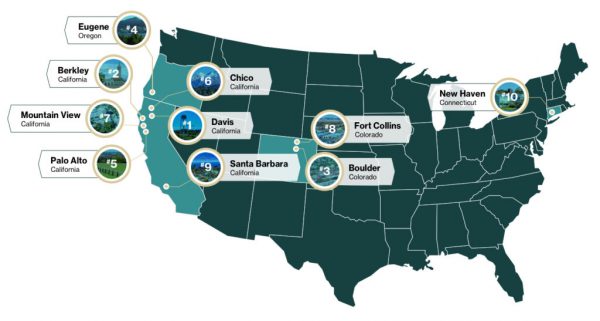
 The ranking saw Davis and Berkeley California named the safest cities for bicyclists, followed by Boulder, Colorado; Eugene, Oregon; Palo Alto, Chico, and Mountain View, California; Fort Collins, Colorado; Santa Barbara, California, and New Haven. Minneapolis ranked number 12.

 The state currently operates advanced manufacturing programs at Asnuntuck, Housatonic, Manchester, Middlesex, Naugatuck Valley, Quinnebaug Valley and Three Rivers community colleges.


 The three institutions will work during the next few months to develop the curriculum, establish an advisory board, create a virtual inter-institutional platform, and plan to start recruiting for the first cohort of students. All three institutions have a lengthy pedigree in engineering, and effective programs to advance entrepreneurship at the undergraduate level. UNH

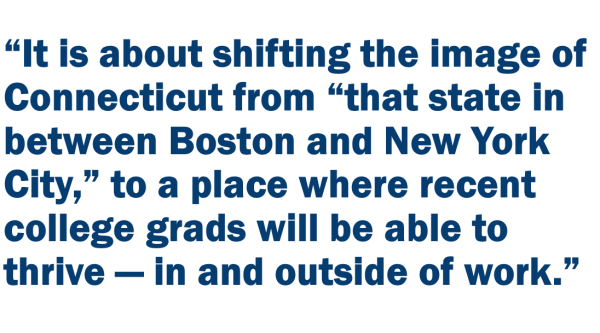
 If college students care more than ever about getting a job after graduation, then why are they struggling to find good jobs in a relatively strong economy? The disjunction here is apparent. Many potential factors can explain this disconnect, but one that I find prevalent on my campus is that all rising seniors seem to want to work in the same select few cities.


 The survey analysis is administered for the Points of Light Foundation by True Impact, a company specializing in helping organizations maximize and measure their social and business value, and analyzed by VeraWorks. The survey instrument consists of quantitative and multiple-choice questions that inform the Civic 50 scoring process. It is the only survey and ranking system that exclusively measures corporate involvement in communities.

 In its Corporate Social Responsibility
 prise 31 percent of Aetna’s employees, which was a key driver of our new program to provide up to $10,000 to qualified recent college graduates to help them repay education loans.”
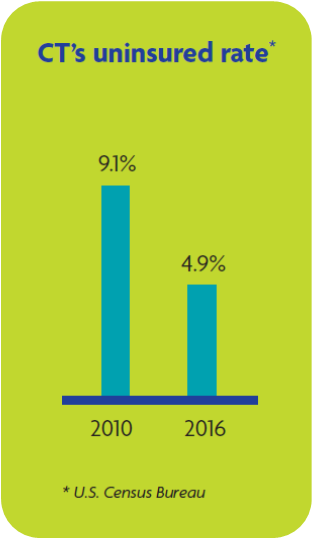
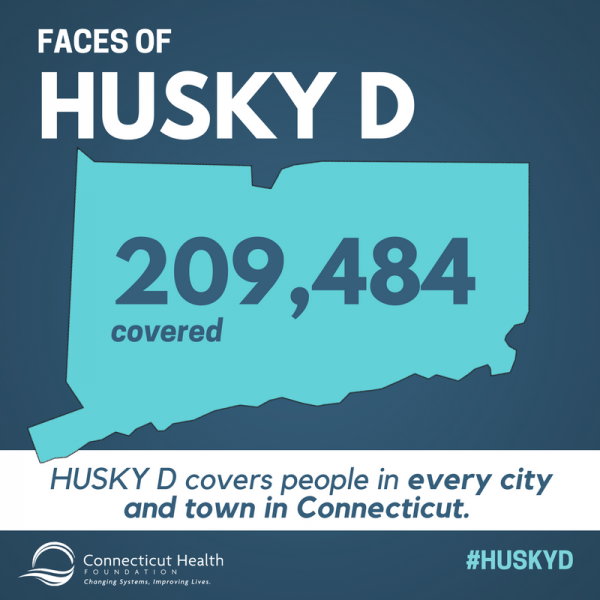 han 90 percent of the cost of the program, allowing Connecticut to cover more than 200,000 people with a relatively small budgetary impact.” Currently, the federal government pays 94 percent of the cost of coverage and the state pays 6 percent. The report also identifies challenges associated with HUSKY D, including concerns raised by health care providers about Medicaid payment rates and uncertainty in federal funding.
 The purpose of the pilot program, according to OPM, is to encourage and allow for the testing of fully autonomous vehicles (FAV) on local highways in Connecticut. The goal for the pilot program is to allow a variety of FAV testing to occur in four municipalities throughout the state, bringing Connecticut to the forefront of the innovative and burgeoning autonomous vehicle industry.
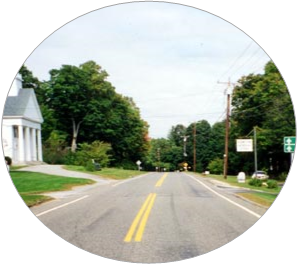
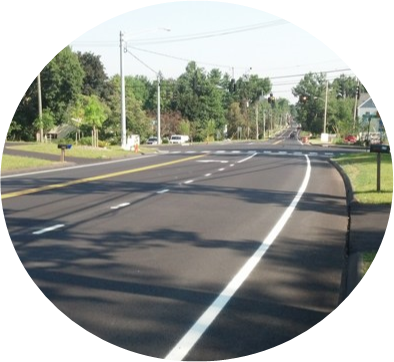 The state law outlines a framework of the minimum requirements to be included in agreements between municipalities and autonomous vehicle testers approved for participating in the Fully Autonomous Vehicle Testing Pilot Program (FAVTPP). The Connecticut law, according to the
 Congested highways, overflowing sewers, and corroding bridges, are constant reminders of the looming infrastructure crisis that jeopardizes our nation’s economic prosperity as well as the quality-of-life for our citizens. With new grades just published in 2017, the condition of our nation’s infrastructure has shown little to no improvement since receiving a collective grade of a C- in 1988 and with some areas even sliding toward failing grades.