From Students to Employees: Businesses Increasingly See Benefits of Hiring People with Disabilities

There are 2.4 million students with disabilities nationwide and 3 out of 5 of them are not currently employed - making this population important for employers to include in their hiring strategies.  That’s according to the website Getting Hired, which teamed up with Hire Potential on a recent webinar for inclusive employers to explain “why it’s important to tailor talent acquisition strategy to engage and hire students with disabilities.” The organizations recommend three organization “touch points” on campus for recruiting businesses: the offices of career services and disability services, and student support groups.  Each plays a different role on campus, and can offer effective connections to students for businesses seeking to considering hiring them.

For the opposite vantage point, for students seeking to evaluate businesses as prospective employers – and their willingness to hire individuals with disabilities - a relatively new national rating may be helpful.

The Disability Equality Index will be issued for the 5th year in 2019, evaluating the practices of leading national corporations.   The DEI measures a wide range of criteria within six categories, including Culture & Leadership, Enterprise-Wide Access, Employment Practices, Community Engagement, and Supplier Diversity.

Developed by the DEI Advisory Committee, a diverse group of business leaders, policy experts, and disability advocates, the DEI is a national, transparent, annual benchmarking tool that offers businesses an opportunity to receive an objective score, on a scale of zero (0) to 100, on their disability inclusion policies and practices. The Disability Equality Index (DEI) is a joint initiative of the American Association of People with Disabilities (AAPD) and Disability:IN.

Former Connecticut State Senator Ted Kennedy, Jr., a leading advocate for persons with disabilities and Board Chair of AAPD, said recently “we cannot achieve our goals without engaging our friends in the corporate community.”

On the 2018 Index, among the Connecticut-based companies scoring 100% were Aetna, Travelers, and The Hartford.   A score of 100 on the DEI means that a company adheres to many of the numerous leading disability inclusion practices featured in the DEI.

Companies can register through January 31, 2019 to be evaluated for inclusion in the 2019 Disability Equality Index when it is published later this year.

For companies making the commitment to hire individuals with disabilities, a recent report suggested they’ve made a good business decision.

Companies that embrace best practices for employing and supporting more persons with disabilities in their workforce have outperformed their peers, according to a research report issued in November by Accenture, in partnership with Disability:IN and AAPD.

“Persons with disabilities present business and industry with unique opportunities in labor-force diversity and corporate culture, and they’re a large consumer market eager to know which businesses authentically support their goals and dreams. Leading companies are accelerating disability inclusion as the next frontier of corporate social responsibility and mission-driven investing,” Kennedy said in the report.

The 45 companies that were identified as standing out for their leadership in areas specific to disability employment and inclusion had, on average over the four-year period, 28 percent higher revenue, double the net income and 30 percent higher economic profit margins than their peers, according to the report. The analysis also revealed that U.S. GDP could get a boost of up to US$25 billion if more persons with disabilities joined the labor force.

Added David Casey, VP, Workforce Strategies & Chief Diversity Officer at CVS Health: “People with disabilities tend to be some of the most creative, innovative and, quite frankly, most loyal employees. A person with a disability wakes up every day thinking about being innovative – that is a skill set. That ability to problem solve is innate to them. Our training programs quickly went from philanthropy to skill search.”


Navigating Post-Graduation Employment Metrics of Colleges Scrutinized

While students consistently rank the ability to get a good job as one of the most important factors in their college choices, too often this critical information is unavailable or misleading, according to a new analysis by The Institute for College Access & Success (TICAS). The three entities tasked with oversight of the U.S. higher education system—accrediting agencies, state governments, and the federal government—each issue their own uncoordinated set of requirements governing the calculation and provision of employment metrics, according to the report. 

“The resulting patchwork of data makes meaningful comparison across programs and colleges nearly impossible and leaves major questions about the accuracy and reliability of the available information,” according to the Institute.” Job placement rates provide a textbook example of how the wide variation in definitions and calculations render the rates almost impossible to compare across schools,” the report states.

The University of Connecticut reports a “positive outcome rate” of 88 percent for graduates of the most recent academic year, within six months of graduation, at a “knowledge rate” of 72 percent.  The destinations include 63% who are employed, 22% who are continuing their education, 1% serving in the military, and 1% participating in volunteer service.

The report, Of Metrics and Markets: Measuring Post-College Employment Success, describes the many misleading conceptions of employment rates and proposes two specific, verifiable measurements that could better inform student choices.

According to the UConn website, in 2014, NACE developed national standards and protocols for colleges and universities to use in collecting and reporting graduating student career outcomes data. The result of this effort is NACE’s First-Destination Survey, which captures information regarding how new college graduates fare in their careers within six months of graduation.

NACE is the leading source of information nationwide on the employment of the college educated, and forecasts hiring and trends in the job market; tracks starting salaries, recruiting and hiring practices, and student attitudes and outcomes; and identifies best practices and benchmarks.


The Institute report recommends federal, state, and accrediting agencies standardize the job placement rate—which measures the share of graduates employed in occupations for which they were trained—and that states collect the data needed to calculate verifiable rates at low cost. And second, it recommends the federal government calculate and publish a threshold earnings rate—which measures the share of graduates employed and earning above a certain amount—for all programs using a federal data match.

“Higher education proves a powerful lever of upward mobility for many Americans, but leaves too many worse off than when they started, with substantial debt and little or no increased earnings power to pay it off,” said TICAS president James Kvaal. “Simply put, students are entitled to this foundational information as they make key decisions about where to invest time and money.”

The report indicates that “A 2016 survey of incoming freshmen at four-year colleges found that 84 percent identified the ability to get a better job as a very important factor in their decision to attend college, a larger share than for any other factor cited.  Similarly, 41 percent of American adults believe the most important factor in choosing between colleges or universities is the share of graduates who are able to get a good job. Beyond students and families, other decision-makers need to be able to evaluate and compare colleges and programs when deciding where to allocate limited higher education resources.”

The Institute is based in Washington, D.C. and Oakland, California.

Pedestrian, Cyclist Deaths After Dark Rising Nationally; Highest Rate Among CT Metro Areas in New Haven Region

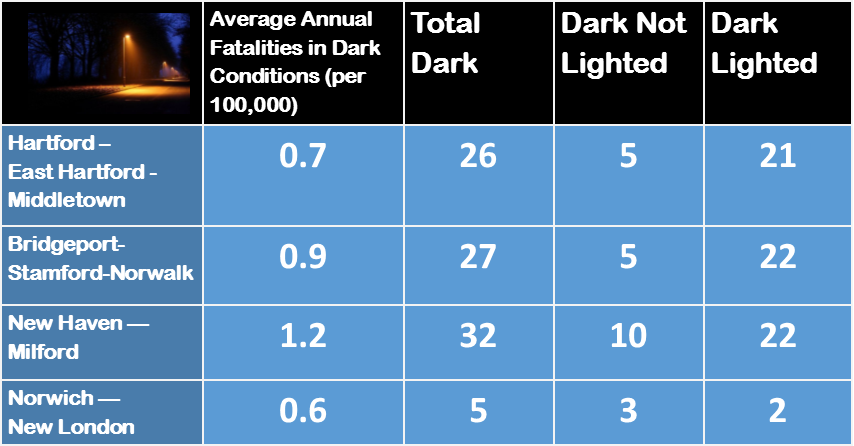
Across the United States, a total of 4,440 pedestrians and 364 cyclists were killed at night, in dark conditions,  in 2017.  A new analysis reveals that those after-dark fatalities account for the vast majority of all such fatalities each year. The share of all fatalities occurring in dark conditions is slowly rising, climbing from to nearly 72 percent in 2017 from 67 percent in 2010 and 65 percent in 2007.  Roughly a third occur in dark, unlighted conditions, while the other approximately 40 percent are reported near streetlights or other dark, lighted conditions. The analysis, by GOVERNING magazine, looked at the total pedestrian/cyclist deaths and per capita fatality rates for metropolitan areas with populations exceeding 200,000, including four metro areas in Connecticut, 2015-2017.  Total 2015-17 fatalities nationally were 20,004, with 14,153 during hours when it was dark.

The highest number of fatalities in that multi-year period in Connecticut during darkness occurred in the New Haven metropolitan area, 32.  The Bridgeport-Norwalk-Stamford region has 27 deaths, the Hartford area had 26.  The Norwich-New London region had 5 deaths.

Nationally, pedestrian and cyclist fatalities occurring in all lighting conditions have generally climbed in recent years nationally, but the largest increases are occurring after sunset.

Between 2010 and 2017, annual fatalities in dark conditions (both lighted and unlighted) jumped by 46 percent. Over the same period, they rose only 15 percent in daylight. Totals for dawn (+33 percent) and dusk (+43 percent) lighting conditions also increased significantly, although they accounted for just a few hundred such traffic deaths, GOVERNING reported.

The data breaks down whether the fatality occurred in dark but lighted or dark, unlighted conditions.  In each Connecticut metro area, the vast majority occurred in dark but lighted circumstances.  The numbers were 22-10 in the New Haven area, 22-5 in the Bridgeport region and 21-5 in the Hartford area.

The analysis used National Highway Traffic Safety Administration data, which records lighting conditions in its traffic fatality database. The federal Office of Management and Budget’s latest definitions for metro areas, current as of September 2018, were used.


Hartford Ranks #13 Among Best Metro Regions for STEM Professionals, Analysis Finds

A new analysis of the nation’s best metropolitan areas for workers in the STEM professions has Hartford ranked just outside the top 10 at number 13.  New Haven is ranked at number 55, Bridgeport/Stamford/Norwalk at number 80. The comparison of the 100 largest metropolitan areas in the country by financial services website WalletHub, included 20 key metrics, ranging from per-capita job openings for STEM (Science, Technology, Engineering, Math) graduates to annual median wage growth for STEM workers. 

According to the latest U.S. Bureau of Labor Statistics analysis, STEM — science, technology, engineering and math — professions grew at over twice the rate that non-STEM jobs did between 2009 and 2015, according to WalletHub. Most types of STEM jobs are expected to expand faster than all other occupations until 2024.

The top 10 in the new analysis were Seattle, Boston, Pittsburgh, Austin, San Francisco, Madison, Atlanta, Salt Lake City, Minneapolis and Cincinnati.  Just ahead of Hartford were San Diego and Columbus, and following Hartford in the rankings were Springfield and Worcester, MA.

While Hartford ranked 24th a year ago, the criteria were slightly revised for this year’s analysis.  WalletHub’s analyst explained that “An addition to this year's methodology is the presence of tech summer programs within a given metro area, which Hartford ranked well for. In these programs students start developing skills in coding, game development, robotics or design. Other new metrics that were added this year and contributed to Hartford's overall better ranking are utility patents and the number of tech meetups per capita."

In addition, “the unemployment rate in [metro] Hartford for adults with at least a bachelor's degree is the lowest in all the metropolitan areas analyzed, whereas last year, it was in the middle of the pack.”
The nearly two-dozen metrics were divided into three overall categories:  professional opportunities, STEM-friendliness and quality of life.  Hartford ranked tenth in quality of life category, 14th in professional opportunities, and 17th in STEM-friendliness, which included the quality of engineering universities, research & development spending and intensity, and mathematics performance.

The Quality of Life category included housing affordability, recreation and family friendliness, and singles friendliness.  The Professional Opportunities category included median wage, wage growth, STEM employment growth and job openings for STEM graduates.

Among the various individual metrics, the Bridgeport/Stamford/Norwalk metropolitan region ranked third nationally with among the highest annual median wage growth for STEM workers.  New Haven was eighth nationally in STEM-friendliness. The overall rankings for Bridgeport/Stamford/Norwalk and New Haven were relatively unchanged from a year ago.


Credit Union Branch Inside High School Encourages Financial Literacy

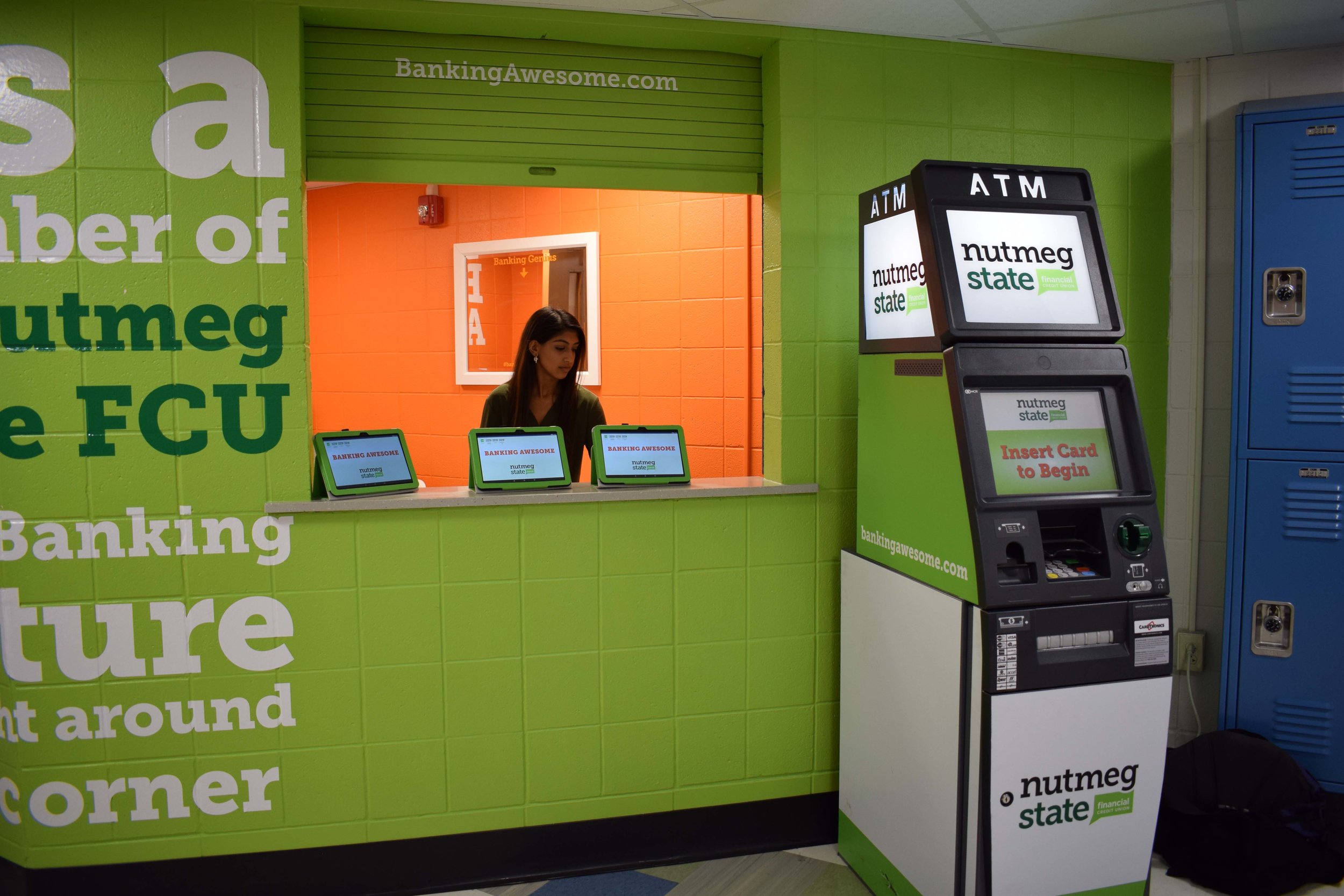
Getting banking business done – or being introduced to an array of personal financial services for the first time – has become easier than ever for students attending Rocky Hill High School.  That’s because they don’t even need to leave the confines of high school to visit a Nutmeg State Financial Credit Union branch – it’s just steps away from their school cafeteria. Credit union branches located inside high schools are not common.  In fact, this might be the first of its kind in Connecticut. The branch is a new step for the credit union and focuses on preparing students for their financial future. It features tablets, an ATM, and (coming soon) a self-service kiosk to be used by students and faculty for transactions such as account transfers, loan payments, and check and cash deposits or withdrawals.

Nutmeg State FCU President and CEO John Holt says his enthusiasm and the support from Rocky Hill High Schools administrators and teachers is matched by the student response.

“We want to give students first-hand knowledge and experience,” Holt explains, “to help them better understand banking and prepare them for smart decision-making in the future.”

The staff includes three Rocky Hill High School students who are specially trained not only in technology but in terminology, so they can pass along that combination of know-how and understanding to their peers. For many, understanding the differences between a credit union and a bank is an unexpected first lesson. And students are often intrigued by the credit union structure, including that it is a non-profit institution which allows them to become members (and therefore part owners of the credit union).

If the initial weeks are any indication, there is a receptive audience of students, very supportive teachers and administrators, and parents looking on approvingly from the sidelines. More than 100 accounts have been opened at the branch in the first few months of operation, and there have been many more conversations providing insight for high school students into the products and services a financial institution offers – plus some tips on how to manage money effectively.

“The need for financial literacy education has never been greater,” said Jeremy Race, President and CEO of Junior Achievement of Southwest New England, an organization with a strong classroom presence focused on financial education and entrepreneurship. “According to a recent Forbes article, 44% of Americans don’t have enough cash to cover a $400 emergency and 33% of adults have $0 saved for retirement.  This is staggering evidence that clearly demonstrates the critical need for young people to learn financial responsibility and financial ‘smarts’ at a young age.”

Because the technology is intuitive for most students, their transaction time can be used to talk about subjects they may be less familiar with – such as balancing a checkbook, how debit cards and account balances relate to each other, loans and interest rates, and what a credit score is all about.  Not the typical teen conversation, but Holt indicates that students have been quite interested in learning more.

“The younger generation has a passion for community,” Holt has observed, “and they see the practical value. This has really opened their eyes.”

Some of the lessons are already being integrated into the school’s business classes – which seem “real” with a financial institution’s branch office just down the hall.  The branch is open during lunch periods, study halls, and other times convenient to students, teachers and staff, without being a distraction from more traditional school curricula.

Outgoing Connecticut State Treasurer Denise L. Nappier, a longstanding proponent of financial literacy, has stressed that “Financial education is important during all stages of life, because economic opportunity can be a catalyst for change and enduring success,” adding that “information and training can help them build a better future.”

With the program off to a solid start, Holt said that Nutmeg State FCU would be interested in a similar initiative in another high school near one of their 11 credit union branches in Connecticut. They are headquartered in Rocky Hill, having been chartered in 1936. In addition to Rocky Hill, they’re located in Manchester, New Britain, Hartford, Glastonbury, West Hartford, Cromwell, Orange, Stratford, Milford and North Haven.

The Connecticut-based credit union also reaches out to local communities in other distinctive ways. In Milford and North Haven, they have added “DMV Express” services in conjunction with the state Department of Motor Vehicles, and three locations are within retail stores – the Walmart in Cromwell, and the ShopRite supermarkets in Stratford and Orange. To learn more about Nutmeg State Financial Credit Union, visit www.nutmegstatefcu.org.

Photos:  (Top right) - Rocky Hill High School Student Alisha Chhabra conveniently accesses the new Nutmeg State Financial Credit Union branch at her school.  (Midde left) - Rocky Hill High School recently celebrated the opening of its first on-site Nutmeg State Financial Credit Union branch. From left: Chuck Zettergren Assistant Superintendent, Dr. Mark Zito Superintendent, Mike Petti Vice Chairman, John Holt President & CEO, Ben Lukens Student, Alisha Chhabra Student, Michael Patano Student, Muhammed Bilal Student, Cynthia Latina Business Education Teacher, Timothy Bifolck Business Education Teacher, Mario Almeida Principal. (Bottom right) Nutmeg State FCU President and CEO John Holt.

Federal Government Shutdown Direct Impact on Connecticut Among Least in U.S.

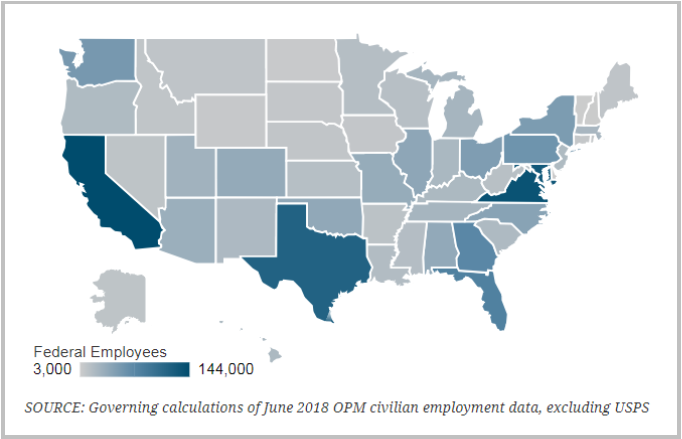
The impact of the continuing partial federal government shutdown in Connecticut is among the smallest among the 50 states, in terms of the number of federal employees affected, according to a new analysis. A total of 1,481 federal employees in Connecticut work for agencies that are without federal appropriations, as the political stalemate in Washington, D.C. has drifted into the new year.  That is 18.3% of all federal employees in Connecticut.  There are 6,595 federal employees in Connecticut working for agencies that currently do have federal appropriations.

Nationally, about 800,000 federal employees are working without pay or will be furloughed.  The partial government shutdown began on December 22.

About one-third of federal agencies have not received funding. The largest of the federal agencies not yet funded include the departments of Agriculture, Commerce, Homeland Security, Interior and Transportation. In these and other agencies, a sizable share of employees are furloughed or working without pay, according to published reports.

Only Maine, Delaware and Rhode Island have fewer federal employees employed by agencies without appropriations, according data compiled by GOVERNING magazine.  Connecticut’s share of the total number of federal employees who work for agencies that have not been funded is four-tenths of one percent.

States most affected – those with the most employees – are the District of Columbia (102,183), California (41,178), Texas (35,694), Virginia (34,344), Maryland (28,266), New York (16,657), Florida (15,992), Colorado (15,818), Georgia (15,735), Missouri (14,048) and Pennsylvania (14,024).

Connecticut’s Department of Labor reportedly hopes to help some of the approximately 1,500 federal employees likely affected by the partial federal government shutdown, and who work or live in Connecticut.  Published reports indicate that Commissioner Kurt Westby indicated that the agency can assist those workers who are eligible to collect unemployment benefits to navigate the unemployment compensation process. Federal employees who are on furlough are eligible to apply online for benefits, while those required to work during the shutdown but are not getting paid are ineligible to file for unemployment.

The impact in D.C. is the greatest.  About 32,000 Homeland Security and Justice department employees are stationed in D.C., GOVERNING reports, many of whom are continuing to report to work without pay. State Department, Securities and Exchange Commission and Smithsonian Institution employees are also heavily concentrated in the District, accounting for more than half the workforce for those agencies.

California is home to nearly 10,000 employees of the Department of Agriculture, which hasn’t secured funding. The state’s federal workforce also includes approximately 7,600 Treasury Department employees and nearly 6,800 in the Department of the Interior, the GOVERNING analysis indicates.  Among agency employees impacted in Texas are nearly 9,000 Treasury Department employees, along with about 5,700 Homeland Security employees and 4,300 in the Department of Transportation.

To determine federal employment in each state, GOVERNING compiled the latest data from the federal Office of Personnel Management (OPM). Data current as of June reflect all civilian workers, excluding those who work for the Postal Service and a limited number of smaller agencies.  The analysis does not include federal relationships that  impact private businesses.

Co-Working Headed to Sacred Heart University in Alliance with Verizon, Alley

Co-working in Connecticut will be gaining another player in the field, with a distinctive twist.  Sacred Heart University in Fairfield will be the site, as the university signs an agreement with Verizon and Alley, for the creation, management and operation of a coworking space on the university’s West Campus in Fairfield, formerly the corporate headquarters for General Electric. This new partnership, called Alley powered by Verizon, will be the first in Connecticut and the first time “Alley powered by Verizon” is located on a college campus. Verizon and Alley together have successfully built innovation hubs in New York, Cambridge, and Washington.  Locations in Palo Alto and Los Angeles were announced in September, described as “the next phase of its business that will fuel local innovation and entrepreneurship on the West Coast.”

“Fairfield County has several corporations and businesses that stand to benefit from the work that will be done here, not to mention its ideal location between New York City and Boston. We’re helping to create a startup mindset and environment that will provide members much-needed access to corporate resources typically unavailable to small businesses, from key relationship introductions to cutting-edge technology,” said Jason Saltzman, CEO of Alley.

Work on the new innovation coworking space is expected to be completed with the space open for business late next year.  It is slated to be a hub for innovation teams from large and small companies; for entrepreneurs who want to test their ideas, grow their businesses and work collaboratively in a supportive environment; and for individual professionals who want to work in a dynamic office environment, according to officials.

“A robust commitment to innovation is in keeping with the University’s dedication to educating our students on technology, emerging trends and entrepreneurship. This is exactly the kind of innovative and entrepreneurial platform that Connecticut desperately needs, and we’re delighted to be hosting it on our campus, working collaboratively with Verizon and Alley,” said SHU President John J. Petillo.

A dedicated SHU project coordinator will help identify, activate and create engagement between the innovation community and SHU’s faculty, staff, administration and student body.  As part of this venture, Alley will oversee marketing and advertising to develop a vibrant community of members, manage member experience and help coordinate events and programs. SHU also will establish a Student Concierge Service that members can use as a resource for making connections with various University programs, internships, recruiting, events, speaker sessions, office hours and mentoring.

The new center at Sacred Heart University will further Verizon’s commitment to cultivate strong relationships with academic institutions with emerging technology curricula, officials stressed.  The coworking spaces allow Verizon to tap into local startup and innovation networks, build relationships with potential partners and open new doors for ideas and technology. With Verizon, Alley is bridging the gap between startup and corporation by helping the community workspace build next-level ecosystems for entrepreneurs. Verizon provides entrepreneurs and start-up companies working on new products with the technology and services they need for growth.
As with other coworking spaces that have increasing taken root across Connecticut, the space is expected to offer various levels of memberships and services that include private office space, hot desks, meeting and conference room space, events, recruiting services, marketing services and programming services. The community also plans to draw on SHU faculty, staff, students and other resources to build an academic-focused environment that attracts local startups, entrepreneurs, corporations and other forward-thinking organizations and individuals.

“This is a major boost to Fairfield’s economic development efforts to bring more jobs and businesses to our town,” said Fairfield First Selectman Mike Tetreau. “I am very excited about this Sacred Heart University initiative as it certainly goes a long way to helping replace the loss of GE in our community.”


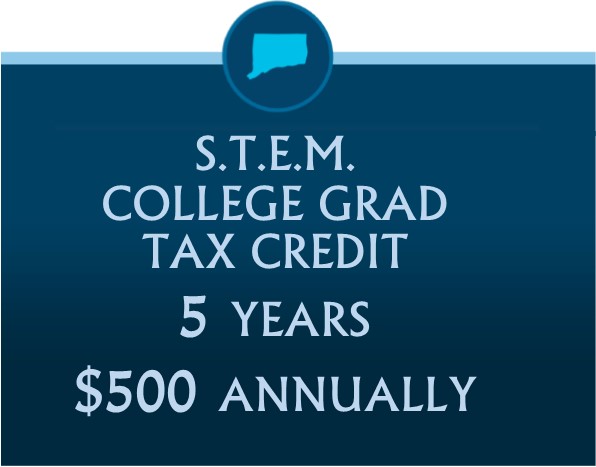
New Tax Credit of $500 Annually for 5 Years Offered to STEM Graduates Working in CT

Passed by the state legislature over a year ago as part of the 2017 state budget compromise, a new tax credit aimed at keeping college graduates in the technology fields in Connecticut – and attracting young professionals to the state - becomes effective this year. It is a “refundable personal income tax credit for college graduates who are employed in the state; receive, on or after January 1, 2019, a bachelor’s, master’s, or doctoral degree in a science, technology, engineering, or math (STEM) field; and live in Connecticut or move here within two years after graduating.”  The credit is $500 and may be claimed in each of the five years after graduation.

The initiative is new to Connecticut, but not New England.  Maine has had a similar initiative for a decade, Rhode Island for more than a year.

The tax credit approved in Connecticut was advocated by House Speaker Joe Aresimowicz. Testifying at the State Capitol in support of the proposal in March, 2017, the president of the Connecticut Conference of Independent Colleges, Jennifer Widness, pointed out that “projections included in our state’s Strategic Master Plan for Higher Education indicate that by 2025 Connecticut’s economy will require a workforce in which 70% will have some education beyond high school. Hitting that 70% target will require production of 300,000 more graduates than the current rates of production will yield.”

In his testimony supporting the proposal in 2017, State Rep. Christopher Rosario of Bridgeport noted that “This is not a new concept. Over the years, we tried to find ways to provide incentives for our constituents to not only pursue higher education, but to continue to live and work in our state.”  Added Milford State Rep. Kim Rose: “This is a way to not only encourage student success in our state, but also attract creative new ideas that add to our economy. Student success is Connecticut’s success, they are the future of tomorrow.”

The program in Maine is broader, and was started in 2008 as a retention tool for young professionals already living in Maine, CNN reported recently. It has been revised through the years into a tool to attract young workers in the STEM fields. The Opportunity Maine Tax Credit reimburses student loan payments for college graduates who live and work in Maine.

The state’s website declares” “The State of Maine recognizes the investment you've made in your education, and has puts its money where its mouth is – come here to live and work, and the State will reimburse your student loan payments via the Opportunity Maine Tax Credit.”

When you move to Maine, CNN reported, the money you spend toward paying your student loan debt each year is subtracted from your state income taxes.  For instance, if you pay $1,800 toward your loan and owe the state $2,000 in taxes, you’ll only end up paying Maine $200.

Rhode Island reopened their Wavemaker Fellowship Program last year. The program offers tax credits for taxpayers who work in a science, technology, engineering or mathematics (STEM) field at a Rhode Island-based employer. The credit is equal to the taxpayer’s annual loan payments -- up to $1,000 for an associate degree, $4,000 for a bachelor degree, and $6,000 for a master’s degree or higher. Taxpayers may use the credit to pay their state income tax, receive a refund of the credit amount, or both.