Career Pathways Commission Aims to Prepare Connecticut Students for Tomorrow's Jobs
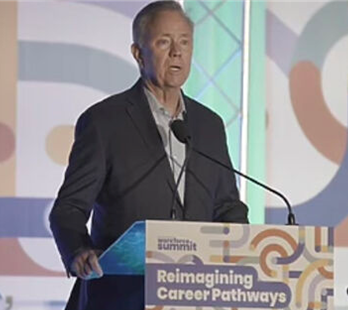
/“Connecticut’s long-term economic competitiveness depends on how well we prepare people not only for the jobs of today, but for the opportunities of tomorrow,” said Governor Lamont, in announcing creation of a Career Pathways Commission.
Chaired by Miguel Cardona, former U.S. Secretary of Education and former commissioner of the Connecticut State Department of Education, the commission is charged with developing a five-year strategic plan — for consideration by state executive branch leaders and legislators — to modernize Connecticut’s career pathways system.
The plan is to focus on aligning education and workforce needs, incorporating emerging technologies such as artificial intelligence and automation, and ensuring that students and jobseekers are prepared for high-quality, in-demand careers in a rapidly evolving global economy.
The commission’s work will be organized around four core pillars: Pathway Design and Delivery; Credentialing and Quality; Work Based Learning and Employer Engagement; and Policy, Funding, Data, and Accountability.
Among the first wave of appointees are University of Hartford president Lawrence Ward, Central Connecticut Sate University President Zulma Toro, Chair of the State Board of Regents Marty Guay, and Dr. Christina Royal, President of CT State Community College.
“That’s why I’m proud to appoint these accomplished higher education leaders to the Career Pathways Commission. They bring deep expertise in workforce development, a strong understanding of our state’s education system, and lived experiences that reflect the diversity of the students and communities we serve. Their perspectives will be critical as we build a career pathways system that is more aligned, more inclusive, and better equipped to respond to rapid changes driven by AI, automation, and global competition.”
Among the appointees with business expertise are Northwest Regional Workforce Investment Board President and CEO Catherine Awwad and Chris DiPentima, President & CEO of the Connecticut Business and Industry Association, Connecticut’s largest business organization.

Saying he is “grateful for the opportunity,” to collaborate on the plan’s development, DiPentima is among the growing roster of “stakeholders from education, business, labor, and government appointed to “develop a five-year strategic plan for overhauling the state's approach to workforce development.”
As Connecticut’s largest workforce engine, Connecticut State Colleges and Universities (CSCU) serves approximately 100,000 learners annually across its universities and colleges. Nearly 80% of CSCU graduates remain in Connecticut, contributing directly to the state’s economy and communities. Through its commitment to accessible, flexible, and career-aligned education, CSCU plays a central role in building strong, adaptable talent pipelines that meet employer demand, officials point out.
“Students and their families are increasingly focused on the cost and value of higher education, particularly its connection to meaningful career preparation. At the University of Hartford, we strive to integrate career readiness into nearly every aspect of the student experience. Our ability to link students with the expertise of our alumni and our broader network of community and industry partners is central to that work. As this commission engages voices from many fields, I’m excited to help advance a vibrant and resilient workforce for Connecticut’s future.”
The executive order directs the commission to engage stakeholders and gather public input throughout the planning process. The resulting plan will include recommendations for state statutory, regulatory, and administrative changes to strengthen and expand career pathways. Key areas of focus include streamlining state funding, aligning credentialing and credit-transfer policies, modernizing instructional delivery, and reducing administrative and regulatory burdens.
“Being responsive to the forward-looking requirements of a changing society, state, and region demands higher education to supply an interdisciplinary and applied educational model. I am thankful and excited that Governor Lamont has given me this opportunity. At Central we are already building on our existing strengths and industry partnerships to prepare our students for the careers of tomorrow. This work will be vital to the state and region,” said Dr. Zulma R. Toro, President of Central.
The ultimate goal of the initiative, the Governor pointed out in a news release announcing it, is “that Connecticut has a modernized career pathways system incorporating all the latest innovations in artificial intelligence, automation, and global competition that provides students and jobseekers with the tools needed to obtain good-paying, long-lasting careers and can quickly adapt as new state-of-the-art innovations are developed.”
Additional appointments are anticipated.