Passenger Traffic Gaining Altitude At Bradley - Gradually

Flying high?  Well, sort of.  Bradley International Airport reports an increase of 1 percent in passenger counts for 2013, including four consecutive months of growth at the end of the year.

The Connecticut Airport Authority assumed oversight of Bradley in July from the state Department of Transportation.  That effectuating Gov. Malloy’s proposal, approved by the state legislature two years ago, for a new quasi-state agency that would be more responsive to market opportunities and less grounded in the state’s bureaucratic procedures.

The numbers increased 1 percent in September, 4 percent in October, 3 percent in November, and a lofty 20 percent in December, the Hartford Business Journal reported.  The overall count of passengers getting on and off planes at Bradley was 5,421,875 in 2013, compared to 5,381,860 in 2012.

Looking slightlBradleyy farther back, in 2009 the total was 5,334,322.  The Bradley International Airport Strategic Plan for 2010-2013, prepared in 2009, anticipated 6,545,000 enplanements and deplanements in 2013 – about 125,000 more that the actual totals.  At that time, an annual average growth rate of 6.2 percent was projected.  The same report called for additional growth in passengers of 3.4 percent annually for 2013 – 2018.  The projections were provided in the InterVISTAS report, Bradley International Air Traffic Forecasts – Final Report, dated April 25, 2010.
So much for predictions.

Bradley continued its end-of-year growth pattern at the start of 2014, with passenger counts increasing 9 percent in January.  There is, however, a long way to go to achieve the numbers projected years ago, which are necessary to come within range of what’s needed to bring plans for a new terminal off the drawing boards and into construction.

Earlier this year, it was reported that if passenger counts increase as currently projected, and other conditions are realized, construction of a new Terminal B would tentatively begin in just under a decade, in 2022. The entire complex, with the additional new terminal, would be up and running by about 2024 at the earliest.  Picture2
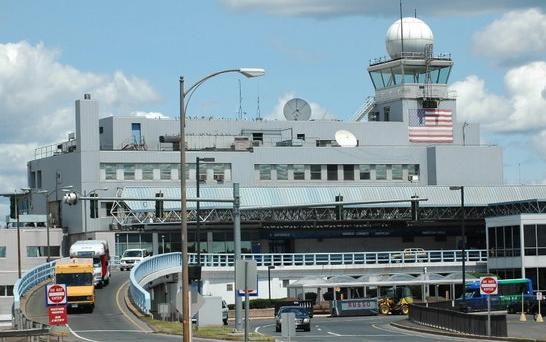
Before that threshold is reached – which remains uncertain – plans are to proceed with roadway realignment, scheduled to start in late 2015 or early 2016, with completion in late 2017 or early 2018.  That would include a rotary to be built where the Route 20 connector, off Interstate 91 Exit 40, to the garage’s exit road, and a new access road to a newly constructed transportation center.

The elevated road in front of Terminal A just past the Sheraton would remain, then all upper level traffic would be diverted to the lower level. The elevated roadway in front of Terminal B will be demolished.

That would make space for a new ground transportation center, which is expected to have a rental car facility, about 800 public parking spaces and a transit center with curbside services for limousines, taxis, and buses.  Just about anyone driving past the old, rusting and vacant terminal eagerly anticipates its demolition, as much as the array of new services that are planned to replace it.

Frequent Gamblers Prefer Atlantic City; Connecticut Casino Customers Satisfied As Competition Grows

A new study shows that the Atlantic City casinos continue to lead the way in attracting the gamblers who visit casinos most often, but Connecticut’s casinos are not far behind.  The review of players club members at casinos throughout the mid-Atlantic region reflects an industry becoming more competitive as frequent gamblers have more choices.  The study found that

Foxwoods- table

  • the region’s biggest gamblers are playing in Atlantic City, NJ
  • frequent gamblers at Connecticut's casinos bring more than $300 to gamble
  • gamblers frequenting upstate New York casinos have the lowest daily gaming budget in the Mid-Atlantic region
  • table gamblers generally have an average gambling budget of almost twice that of slots player,
  • 35-44 year olds bring the most gambling money to the casinos.

The casino markets included in the survey were New York, New Jersey, Pennsylvania, Connecticut, Delaware, Maryland and Massachusetts.  The survey, called Casino SCORES, conducted 3,000 interviews with individuals who live in one of the states, had made at least three visits to a casino in the region during the past year, and were members of at least one players club.

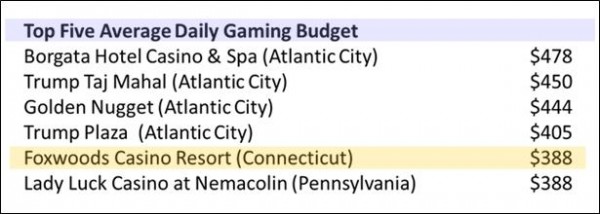
The study asked gamblers their average ddaily gamlingaily gaming budget when going to casinos in the  region. Of the 43 casinos evaluated in the study, the highest daily gaming budgets were among individuals that go to the Atlantic City casinos most often, followed by Foxwoods in Connecticut and Lady Luck Casino at Nemacolin Resort in Pennsylvania.

The top five average daily gaming budgets were:  Borgata Hotel Casino & Spa (Atlantic City), $478; Trump Taj Mahal (Atlantic City), $450; Golden Nugget (Atlantic City),  $444; Trump Plaza, (Atlantic City), $405; and Foxwoods Resort Casino (Connecticut), and Lady Luck Casino at Nemacolin (Pennsylvania), both at $388Mohegan Sun was further down the list at $324, but well above the majority of casinos.  The bottom five, all in New York, ranged from $205 down to $120 average daily individual gaming budgets.

The Average Daily Gaming Budget among those who said they play table games most often was $493, compared with $250 among those who responded that they play slots most often.

The survey also found that the 35-to-44 year old age bracket brings the most money with them to the casino they visit most often, compared with other age groups. 21 to 34 -  $334 35 to 44 - $359 45 to 64 - $308 65 and over - $288

Among those surveyed who had joined at least one casino's players club, 41 percent did so at an Atlantic City casino, 31 percent were members of Mohegan Players Club, and 25 percent joined Foxwoods Rewards.  Membership overlapped, as some individuals surveyed were members of more than one players program.

Competition To Retain, Attract Frequent Gamblers Intensifying

With Massachusetts moving forward with its  casino licensing process, the region will continue to see heightened competition in the coming years.  A new casino opened in Maryland last year, and two more are planned in the next three years.   The increasing competition is already having an impact on the revenue stream to the state in accordance with longstanding exclusivity agreements.  At the end of the fiscal year last summer, the two Connecticut casinos sent a total of $296.4 million to the state, a drop of almost $48 million from fiscal 2012.

Massachusetts’ regulators recently awarded a slot parlor license to Plainridge Racecourse which is just 20 miles from Twin River Casino in Lincoln, Rhode Island.  The Massachusetts gambling commission expects to award the license  for Western Massachusetts in May, with an MGM proposal for Springfield the only project left in the running after a Mohegan Sun proposal was defeated in a  local referendum in nearby Palmer. In addition, two proposals are competing for the license in the greater Boston region, Mohegan Sun in Revere and Wynn Resorts in Everett.

“As competition heats up, foxwoodskeeping and growing loyalty is going to be key,” said John Antonello, Managing Director of Travel and Leisure Entertainment for  Phoenix Marketing International (PMI).  “The more perks that are provided, the better.”  The trend is for loyalty programs to get “more sophisticated, so they can extend their reach,”   Antonello added.

Both Foxwoods and Mohegan Sun players club members indicated a “good level of satisfaction,” with the benefit program currently offered,” Antonello said, reflecting program elements including restaurant dining and shopping discounts, complementary hotel rooms on-site, reserved parking, VIP check-in and special gaming events.  Mohegan Sun, for example, offers three levels of benefits to cub members, Foxwoods offers five.

The data offered in the survey also includes cross-tabulations that indicate to which loyalty programs in other industries the club members at specific casinos belong  – which can provide individual casinos a road map suggesting which perks might be most attractive to their existing customers.  For example, 37 percent of Foxwoods club members are also members of Marriott Rewards, and one-third are members of airline prmohegan sunograms, such as Delta, American or JetBlue.  Those aspects of the survey are proprietary, and available to clients of Phoenix.

Antonello said that players club programs are rapidly evolving, and are reminiscent of the hotel loyalty programs of just over a decade ago, when they aggressively began adding new perks to retain customers amidst growing competition.  “Casinos are now looking for partnerships with other entertainment and travel companies as they go after a broader audience. The trend is to go beyond one industry,” he said.  Foxwoods Rewards partners program, for example, now includes discounts at businesses ranging from FTD Florist to Mystic Acquarium and the Connecticut Science Center.

Completed interviews were conducted in December 2013  in proportion to each state’s population and all counties within each state were represented.  Phoenix expects to repeat the survey later in the year.  Additional information is available at casinoscores@phoenixmi.com


Amateur Radio, Invented in Hartford, Will Celebrate 100 Years with National Convention Here

Before smart phones, before the internet, there was Amateur Radio, better known as Ham Radio.  And it began in Hartford – spreading quickly around the world a century ago.  The province of hobbyists and enthusiasts, Ham Radio often became a lifeline when disasters struck and traditional phone lines were rendered inoperable.

Technology has surely changed, but a thriving American Radio Relay League (ARRL), the national association for Amateur Radio, will mark the 100th anniversary of its founding this summer at the Connecticut Convention Center in its birthplace, Hartford.

The organization’s Centennial Convention will be July 17-19, 2014, according to ARRL President Kay Craigi.  The theme will be: Advancing the Art and Science of Radio—Since 1914.  Ham Radio remains a popular hobby and service in which licensed Amateur Radio operators (hams) operate communications equipment.  ARRL has over 162,000 members and eCentennial_Banner_Artmploys approximately 100 people, with national headquarters in Newington.
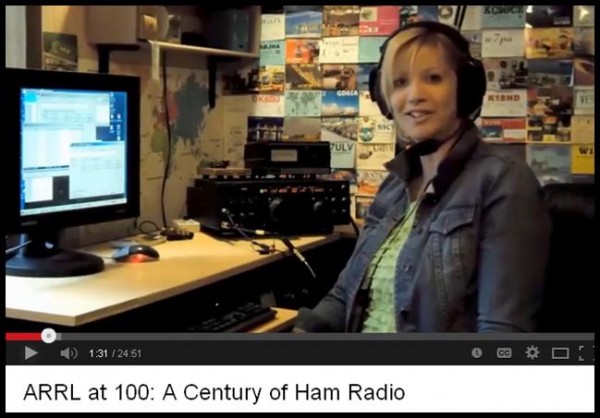
Federal Emergency Management Agency (FEMA) Administrator W. Craig Fugate, call sign KK4INZ, will be the keynote speaker at the ARRL Centennial Banquet on July 18.

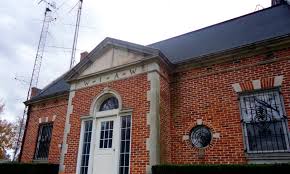
It all began in May 1914 when Hiram Percy Maxim (1869-1936), a leading Hartford inventor and industrialist, founded the American Radio Relay League (ARRL), together with Clarence Tuska, secretary of The Radio Club of Hartford.  ARRL headquarters moved to Newington in 1938 and is visited by nearly 2,000 groups and individuals each year. The site is home to The Hiram Percy Maxim Memorial Station, call sign W1AW. HAM radioARRL's mission is based on five pillars: Public Service, Advocacy, Education, Technology, and Membership.

Although Amateur Radio operators get involved for many reasons, officials say, they all have in common a basic knowledge of radio technology and operating principles, and pass an examination for the FCC license to operate on radio frequencies known as the "Amateur Bands." These bands are radio frequencies reserved by the Federal Communications Commission (FCC) for use by ham radio operators.

“The 2014 ARRL Centennial is a once-in-a-lifetime opportunity,” said ARRL Marketing Manager Bob Inderbitzen, who explained that the convention will include presentations and forums, exhibits, vendors, demonstrations, flea market, activities for youth, and a banquet.

 “We’ve also planned some very special ceARRL Newingtonntennial-themed activities,” Inderbitzen added, “including coach bus trips to ARRL headquarters and W1AW—the Hiram P. Maxim Memorial Station in nearby Newington. We want ARRL members to come with all of their experiences from the first one hundred years of Amateur Radio and ARRL, and leave with a shared vision for ARRL’s second century.”

More information about ARRL and Amateur Radio is online at www.arrl.org/what-is-ham-radio. Details on the centennial convention are available at www.ARRL2014.org.  The organization has also developed a 25 minute documentary about the history of Amateur Radio, which is available on You Tube.  Fans of the ABC Television show “Last Man Standing” may be aware that its main character, “Mike Baxter” — played by Tim Allen — is supposed to be a radio amateur, KAØXTT

Fastest Internet Download Speeds in CT? Killingworth, Storrs & Stonington Lead 26 Towns in Top U.S. 1,000

Killingworth is the Connecticut town that has the fastest internet download speed.  It is one of 26 towns and cities in the state to rank among the top 1,000 communities with the fastest internet speeds in America, according to recently compiled data.  The only other Connecticut towns to rank among the top three hundred nationwide were Storrs, Stonington, East Haddam, and Weston.   Of the state’s cities, only Stamford and Norwalk reached the top thousand fastest download speeds nationwide.

Recent data reflects that although the national average speed is 18.2 Mbps, the highs and lows – or have’s and have-nots – are quite apparent by region, with the Northeast, especially the I-95 corridor, fairing quite well.  ookla_reverse_color_800

Data from over 5,600 cities and towns represented in Ookla's Net Index, illustrated by Congressional district, shows relative download speeds across the contiguous U.S., from January through July 2013. (Blue means a faster download speed; red means a slower download speed, on the map.)  The disparities are clearly evident between different regions of the country.

The fastest internet speed in Connecticut is in Killingworth, at 30.28, ranking #179 among cities and towns across the country.  Close behind is Storrs (Mansfield) at 30.20, ranking #181.  Rounding out Connecticut’s top 10 communities with the fastest internet download speeds are Stonington (29.09, #262),  East Haddam (29.00, #269), Weston (29.88, #280), Westport (27.36, #454), Greenwich (26.14, #630), and Bloomfspeed mapield (25.99, #655), Mansfield (25.99, #656) and Guilford (25.92, #664).

Seventeen of the top 25 towns are in New York or New Jersey The fastest single location, with an average download speed of 85.5 Mbps belongs to Ephrata, Wash., a small town of 7,000 that happens to be home to its own fiber optics provider.   Kansas City, Kan., where Google developed a fiber optic network, comes in second, clocking in at 49.9 Mbps. The worst speeds can be found in Northeastern Arizona, where Chinle and Fort Defiance both clock in at less than 1.5 Mbps, according to Gizmodo, which published a report on the data.

The next ten fastest communities include the only cities to earn a spot on the top 1,000, Stamford and Norwalk.  Connecticut’s second ten are: New Canaan (25.88, #672), Redding (25.79, #691), Tolland (25.40, #734), Canton (25.36, #743), Orange (25.00, #786), Avon (24.62, #834), Torrington (24.58, #837), Darien (24.57, #839), Stamford (24.51, #851), and Norwalk (24.49, #854).

Six additional towns were among the top 1,000 nationally.  They are:  Woodstock (24.43, #865), Fairfield (24.43, #866), Mystic (24.34, #879), Milford (24.25, #894), Woodbury (24.21, #900), and Hebron (23.93, #950).  All are well above the national average.

Ookla's data are primarily coming from the site Speedtest.net.  For a complete list of cities and towns by speed click here.  The metropolitan Northeast, Florida, and most of Arizona come in pretty strong.

Reaching the next five hundred (between 1,000 and 1,500) from Connecticut were Winsted, Coventry, Bridgeport, Monroe, Groton, Southbury, Pawcatuck, Litchfield, Woodbridge, Watertown, Danbury, Brookfield, Newtown, Shelton, Stratford, Deep River and Gales Ferry, at number 1,477.  There were 43 Connecticut towns and cities  among the top 1,500 nationwide.


Fuel Companies, Home Contractors Top List of Consumer Complaints in 2013

Complaints about home improvement contractors, the perennial front-runner among Connecticut consumers, were eclipsed in 2013 by complaints about fuel-related companies, according to the state Department of Consumer Protection (DCP).   The two categories made up nearly one-third of all consumer complaints to the department.

The agency’s annual “Top Ten” list of consumer complaints, based on  a review of more than 6,000 written consumer complaints received in 2013, saw fuel-related complaints rise to the top for the first time.   Fuel companies were the subject of 17.5 percent of consumer complaints, while home improvement contractors caused 14.5 percent of complaints fiiled during the year.

Telemarketing, retail and Internet complaints, real estate and auto dealer complaints retained their place on the list, and some business closures also led to increased complaints in some areas, officials said.  Telemarketing continued to rank third, as it has in recent years.

consumer-complaints2The state agency received a total of 6,008 written complaints in 2013, while the number of phoned-in complaints and questions numbered in the tens of thousands.  The areas included in the ten leading causes of consumer complaints accounted for nearly 60 percent of the written complaints during the year.
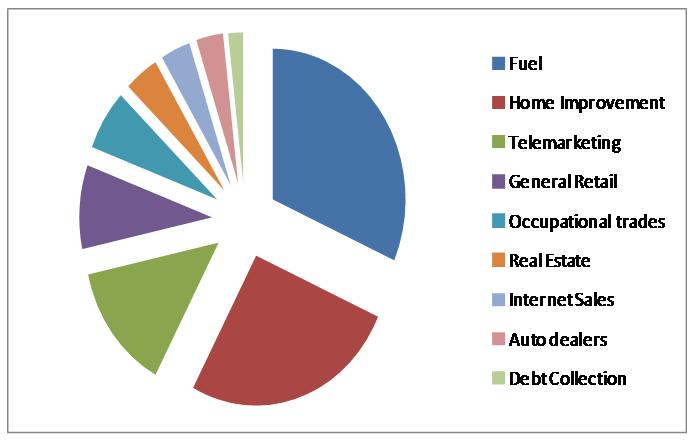
The Top Ten categories for consumer complaints received by DCP in 2013:

1. Fuel – gasoline, propane, oil  (17.5% of all complaints) –  The sudden closure of a home heating oil delivery company earlier last year helped to fuel a spike in consumer complaints involving fuel and fuel related categories. Gas pump “jumps,” bad or short firewood, gas pump signage and propane delivery were topics described in consumers’ complaints last year.  The agency is proposing legislation this year to further improve consumer protections under pre-paid fuel contracts.

2. Home improvement/New home (14.5%) – Up slightly from 2012, complaints about home improvement contractors and new home builders are common and typically involve issues such as unfinished work, improper contracts, damage to home or property, shoddy materials, non-return of deposit.  Contractors should be registered with the Department of Consumer Protection and consumer contracts should indicate that consumers have three business days to cancel the contract.

3. Telemarketing (7.6%) – This category often includes complaints about some entities not currently covered by the Do Not Call law, and includes complaints about numerous businesses flouting the Do Not Call law. Where a number can be traced to a Connecticut business, the Department enforces the Do Not Call law. However, non-traceable numbers, out of state and out of country numbers are provided to the Federal Trade Commission for enforcement.  consumer complaint chart

 4. General retail (5%) – These complaints involve bricks and mortar stores, and generally include problems with refunds, exchanges, warranties, rebates, advertising, or service.

5. Occupational trades (3.6%) – DCP investigates complaints related to the occupations that it regulates, including work performed by tradespersons such as plumbers, electricians, home inspectors, well drillers, heating and cooling contractors, and others.

 6. Real estate (3.3%) – DCP licenses and regulates real estate salespersons, brokers and appraisers, and it also responds to consumer complaints about contract errors, misleading advertising, buyer/seller agreement violations, alleged fraud, and property valuation.

7. Restaurant (2.3%) – In 2013, closures led to a spike in restaurant complaints which is not usually a major category of consumer complaints. A major wedding reception facility in the Hartford area closed, leaving brides-to-be without their deposits or a venue for their reception. Smaller restaurant closings and consumers’ subsequent loss of gift card value also contributed to a higher than normal complaint tally in 2013.CT DCP Logo

8. Internet Sales (2%) –  Problems in this category include include non-delivery of items or overcharges, companies that engage in repeat billings, unauthorized charges or ACH withdrawals, or that do not respond to “opt out” requests from consumers.

9. Auto Dealer  (1.8%) –  Issues include non-delivery of ordered vehicles, over-charges, warranties, rebates, advertising, or aggressive sales tactics.

10. Debt collection (less than 1%) –  Consumers report harassing behavior on the part of debt collectors. Sometimes consumers complain that they will not pay the debt for a service or product that doesn’t work.  Anyone who has a problem with something that they owe payments on must complain to the original seller about the problem, not to the debt collection agency, officials advised. Debt collectors are not allowed to be abusive, nor threaten any action that they cannot or will not reasonably undertake. Consumers have the right to dispute a debt in writing.

World Language Teachers Meet Amidst Growing Interest in Language Fluency

It’s a busy week at Central Connecticut State University.  With the aura of a presidential visit not quite faded, the university is preparing to host the 8th annual CCSU Conference for Language Teachers.  The one-day conference brings together teachers of world languages from across the state at a time when the global interdependency of businesses continues to ramp up the need for students fluent in languages – and cultures - beyond their own.

The conference, Teaching World Languages Today: Skills, Resources and Methodologies, will be held Saturday, March 8, 2014 from 8:00 a.m. to 4:00 p.m., and featuresWorld-Languages presentations focused on innovative techniques and new technology for teaching Spanish, Chinese, French, and Italian in the classroom.

Among the more than two dozen presentations, topics range from the use of social media to boost language acquisition, creating a literature-based Mandarin Chinese curriculum, developing cultural competence, how a Japanese “boot camp” was used to teach English to students in that nation, advantages of on-line technology to advance language skills, and the use of literature to impart language skills and cultural knowledge.

Connecticut is now two years away from the start of a graduation requirement in world language for all high school graduates in the state.  The new mandate, which was to begin this fall, was pushed back by last year’s state legislature and now will take effect with the class of 2020 – high school freshmen in 2016, according to officials at the Council of Language Teachers (COLT)

Connecticut General Statutes Section 10-221 requires that beginning that year, students must have two credits in world languages in order to graduate.  The National Journal has reported that only 10% of native-born Americans can speak a second language, compared to 56% of European Union citizens. Writing in Forbes magazine, strategy consultant Dorie Clark  noted a year ago that "the ability to speak a second (or third) language is clearly important for becoming a global leader."CCSU-Logo.fw

Those making presentations at the CCSU Conference include middle school, high school and college language teachers from across the state as well as some from beyond Connecticut, ranging from the East Hampton Middle School and Glastonbury High School to the United States Military Academy at West Point and the Consulate General of Italy in London.

Connecticut is not alone in looking at world language in the schools.  The state of Utah is currently in the midst of seeking public comment on revised world language core standard requirements for grades K-12.  In California , state legislators approved a seal of biliteracy , beginning in January 2012, that high school graduates can earn for their diplomas to indicate fluency in two or more languages. The Connecticut State University System, which has since become part of the Connecticut State Colleges and Universities under the state's reorganization of high education, had approved plans to institute new admission requirements beginning in 2015 at the four state universities to include two years of world languages.  header_1

The conference will focus on inter-disciplinary approaches and innovative trends in language education, incorporating new technologies into language teaching, and "flipping" the language classroom  It affords an opportunity for language teachers to share their knowledge, perspectives, and expertise, as World Language education evolves to meet the needs of a more intertwined and interdependent world economy - and the opportunities that presents for students.

Conference sponsors include the CT Council for Language Teachers (COLT), CCSU Department of Modern Languages, Chinese Culture Center, Confucius Institute, CT Italian Teachers Association, Italian Resource Center, and Summer Institutes for Language Teachers.

Volleyball to Overrun CT Convention Center Twice in 2015; New Event Coming to Hartford

2015 is shaping up as a banner year for the Connecticut Convention Center.  For the second time in the span of a few weeks, the convention center  has announced a new event will be coming to town.  The New England Region Volleyball Association (NERVA) will bring its first-ever Northeast Junior Championships to Hartford over Memorial Day weekend in 2015.

The tournament, featuring junior teams from throughout the Northeast, is expected to bring over 2,000 players, 400 coaches, 75 officials and volunteer tournament staff, and 3,500 family members and fans downtown, from Friday, May 22 through Monday, May 25, 2015.

Better yet, NERVA has committed to holding the event at the venue for the next three years, through at least 2017, with over 3,000 overnight rooms and 1,100 rooms anticipated for the new annual event. 2013 CTCC NERVA Winterfest

Tournament organizers are planning to fill the facility with 200 teams playing on 25 courts set up inside the Convention Center’s exhibit halls. They have experience in turning the space into an enormous multi-court facility, having held its annual Mizuno New England Winterfest at the facility in January over the long Martin Luther King, Jr. weekend, for each of the past five years.

Also on the docket at the Connecticut Convention Center in 2015 is the Museum Store Association national conference, to be held in Hartford for the first time next April.  It is the organization’s first conference in the Northeast in a decade.  They met in 2003 in Philadimage_logo1elphia, and will meet next month in Houston.
Other multi-year contracts continue.  ConnectiCon, which has been hosted at the Connecticut Convention Center since 2005, will return this year and next.  Mary Kay will return to the facility in 2015 and 2016.  And the National Association of Campus Activities (NACA), which has gathered at the Convention Center annually since 2007, will do so again this year and in 2015. The STITCHES-East regional knitting enthusiasts will be back every year through 2017.

“We have always valued our partnership with the Connecticut Convention Center and the Connecticut Convention and Sports Bureau,” states David Peixoto, NERVA Commissioner. “Our partnership has grown to develop Winterfest as the Premier Volleyball tournament in the Northeast. We look forward to making the Northeast Junior Championship just as successful.”6

The new four-day event does not require teams to qualify to participate. While it will serve as a season-ending tournament for some, the event will allow for additional preparation to teams continuing on to nationals. Participants are 12-18 years old, as NERVA follows USA Volleyball age guidelines.

Winterfest, which is the largest volleyball tournament held in New England, is designed to showcase female high school volleyball players to college coaches and recruiters from throughout the Northeast.  The event brings in around 6,000 visitors to the area every year.

The New England Region is one of many Regions in the United States that aid in the governing of the sport of volleyball. Regional Volleyball Associations (RVAs) are member organizations of USA Volleyball (USAV). The RVAs serve as the grassroots function for the USAV and individually and collectively serve as a catalyst for USAV functions.

The Connecticut Convention Center is the state’s premier meeting venue and the largest full-service convention facility between New York and Boston. Overlooking the Connecticut River, it features 140,000 square feet of exhibition space, a 40,000-square-foot ballroom and 25,000 square feet of meeting space, as well as ample sheltered parking.

Connecticut Gets An Additional Area Code - 959 to Join 860, Beginning in August

Some residents and businesses within Connecticut's 860 area code will have an additional area code to become familiar with beginning this summer.  The state Public Utilities Regulatory Authority (PURA) has announced that because of continuing local demand for telephone numbers, remaining unassigned telephone numbers in the 860 area code are expected to be exhausted by the end of this year.

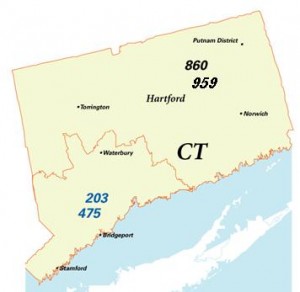
To meet the continuing demand, the PURA approved a new area code, 959, to be assigned as an overlay to the 860 region. An overlay is the addition of an area code to the same geographic region as an existing area code. An overlay does not require customers to change their existing area code, personal telephone numbers, or the manner in which they dial local calls.

Connecticut is far from alone in the introduction of new area codes across the country, and it's not the first time for an area code overlay in the state.

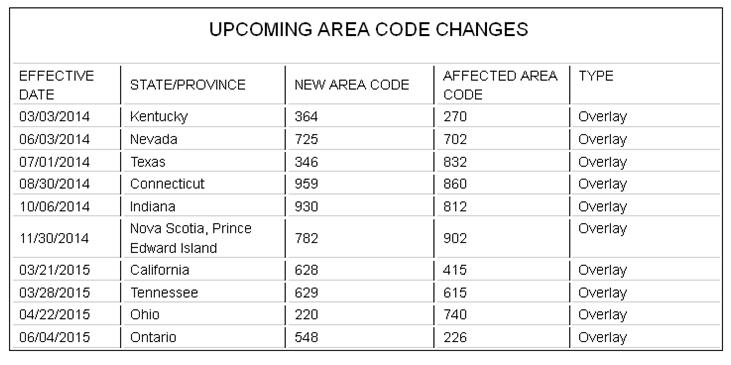
Kentucky residents in the 270 area carea code mapode saw the introduction of an overlay area code this week, as the 364 area code was introduced for some new customers.  Indiana introduced 10-digit dialing last week to prepare for the introduction of an overlay area code this fall.

According to the North American Numbering Plan Administration, which handles the allocation of additional area codes nationwide, sixty percent of the U.S. state regulatory commissions – a total of thirty - have ordered overlays as the method of area code relief.  Throughout 2014, 25 states will have overlays in place with five more states in various stages of implementation of their overlays.  Three states (Indiana, South Carolina and Tennessee) t ordered their first overlay late in 2013, while California, the most populous state in the U.S., recently approved what will be their sixth overlay – the 415/628 combination coming to San Francisco.

Current plans call for the new 959 area code in Connecticut to go into effect August 30, 2014. After that date, customers requesting new service, an additional line, or in some cases, moving their service may be assigned a number in the new 959 area code.  According to NANPA, area code 203, in the southwestern portion of Connecticut, has had an overlay of area code 475 available since December 12, 2009.  The first 475 phone numbers have been issued within the past year, according to PURA officials.

In Nebraska, however, overlay day is said to be four years away.  Published reports indicate that demand for new phone numbers has slowed as fewer people become first-time cell phone customers.

For most customers, the new 959 area code should have minimal impact:upcoming area code changes

  • existing telephone numbers, including current area code, will not change;
  •  customers will continue to dial area code + telephone number for local calls, and 1 + area code + telephone number for long distance calls;
  •  local calling areas will remain the same;
  •  prices for calls and coverage areas will not change due to the overlay;
  •  customers will still dial services such as 911 (211, 411, 811, etc.) with just three digits.

The North American Numbering Plan Administratin (NANPA) is an integrated telephone numbering plan serving 20 North American countries that share its resources. These countries include the United States and its territories, Canada, Bermuda, Anguilla, Antigua & Barbuda, the Bahamas, Barbados, the British Virgin Islands, the Cayman Islands, Dominica, the Dominican Republic, Grenada, Jamaica, Montserrat, Sint Maarten, St. Kitts and Nevis, St. Lucia, St. Vincent and the Grenadines, Trinidad and Tobago, and Turks & Caicos.

The Atlantic reported last month that for a brief period in the 1990s, Lockheed Martin oversaw the administration of area codes; after Lockheed got involved with telecom concerns, however, the FCC decided that it needed a neutral and non-governmental body to administer the nation's numbers. Lockheed's numbering division divested itself and became Neustar, which remains under contract with the FCC, according to the magazine.

Local Connecticut customers should contact their respective carriers with questions about the new 959 area code, and are advised that they can check PURA's website (www.ct.gov/pura) for updates.

Nearly Half of States Pushing Minimum Wage Higher Than Federal Level

Gov. Malloy’s proposal for Connecticut to raise its minimum wage to $10.10 by 2017 would extend the state’s longstanding status as consistently above the federal minimum wage.  But Connecticut is far from alone in outpacing the federal government.  The current federal minimum hourly wage is $7.25.

Data from the Pew Research Center and USA Today indicates that no fewer than 21 states have set higher minimums, ranging from $7.50 in Missouri to $9.32 in Washington State. Those states collectively include 45% of the nation’s working-age (16 and over) individuals, according to 2013 data compiled by Pew.  It is expected that by thestate wage rates end of 2014, an additional nine states may be above the federal minimum, marking the first time minimum pay in most states will be above the federal level, according to the National Employment Law Project, as reported by USA Today.

Thirteen states raised their minimum wage on January 1, 2014, including Connecticut.  On January 1, Connecticut's minimum wage moved from $8.25 to $8.70, the first of two scheduled increases in the state’s minimum hourly wage. A second increase is set to follow on January 1, 2015, bringing the state's minimum wage up to $9.00 per hour, based on legislation approved last year.   Malloy’s newly proposed three-year incremental increases would continue to bump up the hourly minimum through 2017.

Last February, a Pew Research Center survey found that 71% of people favored an increase in the federal minimum to $9.00/hour from $7.25. USA Today has reported that as many as 11 states and Washington, D.C., are expected to consider increases in 2014.

Adjusted for inflation, the federal minimum wage peaked in 1968 at $8.56 (in 2012 dollars), according to Pew researchers. Since it was last raised in 2009, tNewMinimumWageDistributiono the current $7.25/hour, the federal minimum has lost about 5.8% of its purchasing power to inflation, Pew points out.
Just over half (50.6%) of the 3.55 million U.S. workers who were at or below the federal minimum in 2012 were ages 16 to 24; an additional 20.3% were ages 25 to 34.  Pew indicated that both shares have stayed more or less constant over the past decade. The 3.55 million represents about 2.8% of all wage and salary workers.

An estimated 70,000 to 90,000 workers out of Connecticut’s total workforce of 1.7 million earn the minimum wage. It has been reported that a Connecticut resident working full time this year at minimum wage will make $18,096.  

The Bureau of Labor Statistics, which tracks the federal and state minimum wages, indicates that in 2000 the federal minimum was $5.15 and Connecticut’s was $6.15.  A generation ago, in 1972, the federal minimum wage was $1.65; Connecticut was at $1.85.

2014 increases

Number of Brewery Permits Nearly Doubles in CT in Past Five Years

The number of brewery permits in Connecticut has nearly doubled during the past five years, from 19 in 2008 to 36 in 2013, reflecting the rapid growth in the state – and nationwide – in the craft brewing industry.

Connecticut ranked #29 in the nation, between Georgia and New Jersey, in the state-by-state rankings, compiled by Bloomberg.com using data fbee brandsrom the Beer Institute and the Alcohol and Tobacco tax and Trade Bureau.  There were 3,699 permitted breweries in the United States last year, about 34 percent more than the previous year.
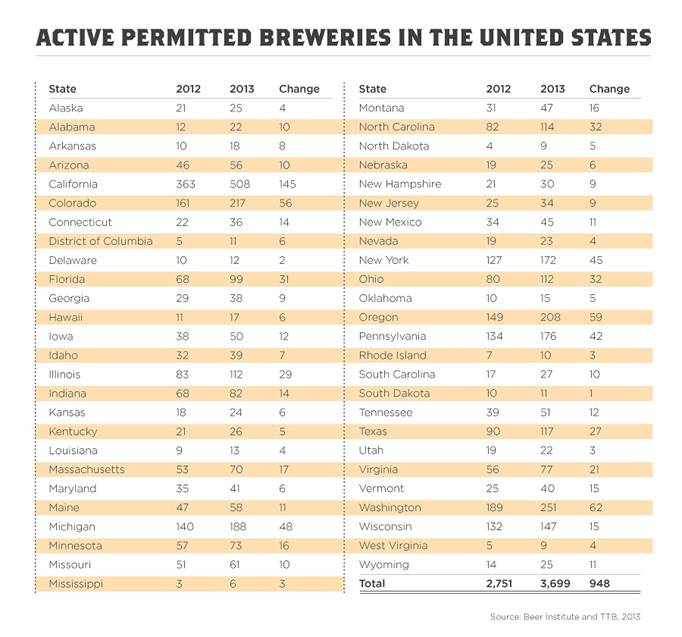
California led the nation with 508 brewery permits, followed by Washington State with 251, Colorado with 217, Oregon with 208 and Michigan with 188.  Rounding out the top ten were Pennsylvania (176), New York (172), Wisconsin (147), Texas (117), North Carolina (114) and Illinois and Ohio, each with 112 permitted breweries.  Every state in the nation saw an increase from 2012 to 2013.

According to the data, Connecticut had 19 permitted breweries in 2008 and 22 in 2012.  That number jumped to 36 last year.  In comparison to other states, Connecticut’s ranking dropped from 19th in 2012 to 29th in 2013, even as the number of permitted breweries increased by more than 50 percent.

 With 19 breweries and 16 in planning, according to the Brewers Association, Connecticut's economy and craft brewing industry could see tens of thousands of dollars of reinvestment.  In timage004.jpghe comparative survey, permitted breweries refer to manufacturers that have completed the appropriate paperwork and obtained the necessary permits to operate, though they may not be fully operational yet, according to Bloomberg.com .
Among our neighboring states, between 2008 and 2013, Massachusetts increased from 41 to 70 brewery permits, New York from 72 to 173, and Rhode Island, which ranked #48, from 5 to 10.   North Dakota, which had one permitted brewery in 2008, now has nine, moving from #50 to #49 in the nation.

The U.S. Department of Justice Bureau of Alcohol, Tobacco & Firearms (www.atf.gov) requires retailers and manufacturers of alcohol (i.e. brew pubs) to register. The Bureau also regulates the operation of distilleries, wineries, and breweries as well as, importers and wholesalers in the industry. In addition, the Liquor Control Division of the  Connecticut Department of Consumer Protection requires a liquor permit.

The state’s tourism website, “Still Revolutionary,” suggests that “Whether you’re looking for a relaxing Sunday afternoon with friends or a longer vacation with a significant other, take a few days to explore the Connecticut Beer Trail.”

The site states unequivocally that “Connecticut is home to some of the best breweries in the country!  The Connecticut Beer Trail spotlights the high quality and creative diversity of fresh, hand-crafted, locally-brewed beer, linking together some of the best breweries in the nation.”

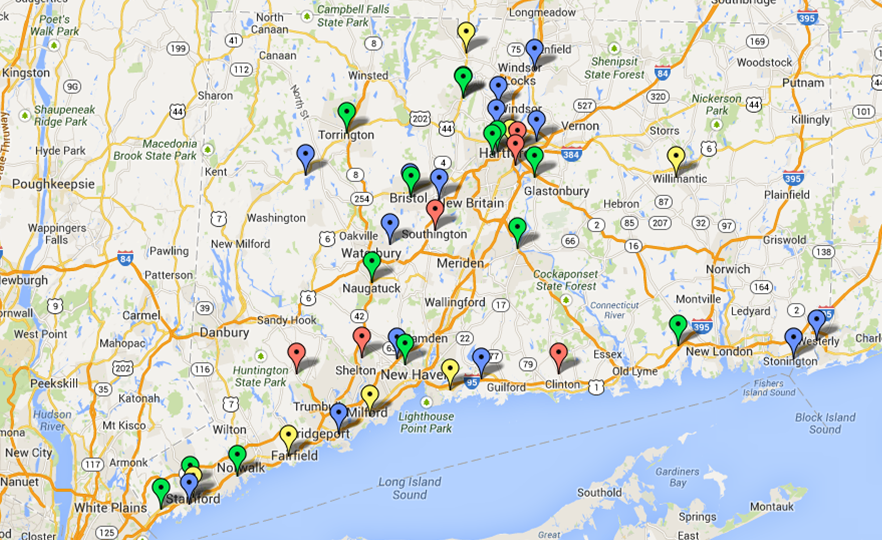
The Connecticut Beer Trail website, www.ctbeertrail.net, lists:

Other local brands included are:

Additionally, a number of breweries are in an early phase of development, according to the website:

CTBeerTrail.net was launched in 2010 by Byron Turner, according to the website ctbeerwine.com, to create a local craft beer social media community that was well-timed with Connecticut’s legislative push for a “Connecticut Brewery Trail.”  Gov. Malloy signed Senate Bill No. 464 into law on July 13, 2011, establishing a Connecticut Beer Trail by allowing the Department of Transportation to permit directional and other official signs or notices about facilities where Connecticut beer is made or sold, including signs or notices containing the words “Connecticut Brewery Trail”.  The website reports that as of December 2013, such signs have yet to be posted.     (Chart: Washington Post)