CT Ranks #21 for Working Women, New Analysis Finds
/Connecticut ranks 21st in the nation for working women seeking to balance the various aspects of work and family life, according to a new analysis by the Institute of Women’s Policy Research. The top five: New York, California, D.C., New Jersey and Rhode Island. The bottom five: Indiana, Utah, Montana, Mississippi and Wyoming.
Women make up almost half of the workforce, according to the report, which notes that “few families have someone who can stay at home to take care of health emergencies, pick children up from school and supervise ho mework, or take an elderly parent to a doctor’s appointment.” In half of all families with children, women are the primary or co-breadwinner, the report indicates, and low-income families are particularly likely to have all parents in the labor force.
“Yet, as mothers’ labor force participation has dramatically increased in the past decades (U.S. Bureau of Labor Statistics 2014) and the number of women and men aged 50 and older who provide care for a parent has tripled during the last 15 years (MetLife 2011), the development of an infrastructure to support workers with family caregiving responsibilities has been largely neglected," the report stresses.
The work and family composite compares states’ performance across three components of work-family policy—paid leave, dependent and elder care, and child care—and a fourth component, the gender gap in the labor force participation of parents of children under six, an indicator that highlights gender inequality in family care of young children.
Connecticut received an overall “C” grade in the analysis of work and family issues; no state received a grade higher than B. In breaking down the rankings, Connecticut ranked 5th in paid leave legislation, 27th in Elder and Dependent Care, 34th in Child Care, and 12th in the Gender Gap in Parents’ Labor Force Participation Rates. The report indicated that 11.6 percent of women in Connecticut have a person with a disability in their household.
 The analysis pointed out that nationally “many workers lack access to even the most basic supports such as earned sick days and job-protected paid parental leave. Quality child care is also out of reach for many families because it is not affordable. Women are the large majority of family caregivers, and in the absence of reliable family supports, too many women are forced to make difficult decisions between keeping their jobs and caring for their family members.”
New York, California, and the District of Columbia have the highest scores on the work and family composite index, which reflects, in part, high rankings on paid leave. None of the highest ranking states, however, consistently ranks in the top ten states for each of the four component indices, the analysis indicates.
The large majority of mothers are in the workforce, according to the data cited in the report, including 62 percent of mothers who gave birth within the last 12 months 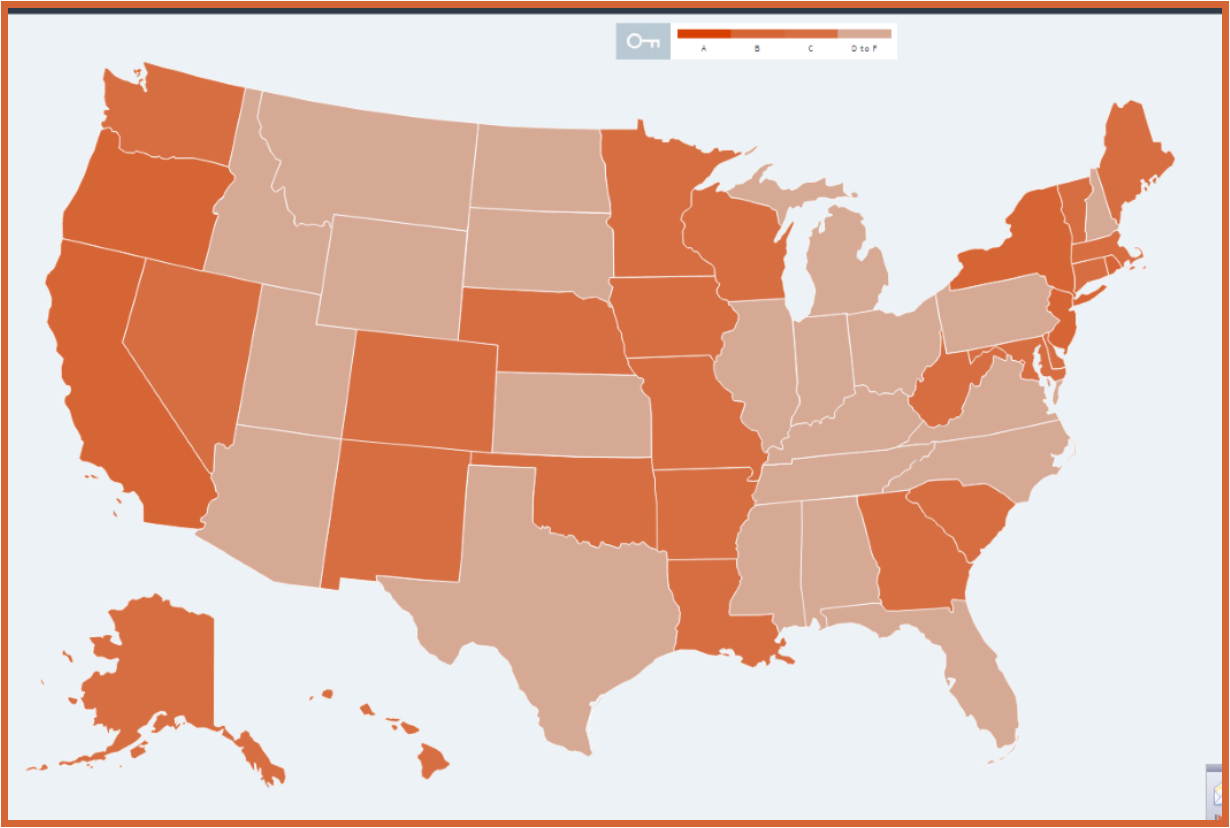 (U.S. Department of Labor Women’s Bureau 2015). The report indicates that Connecticut has 392,974 “breadwinner mothers in households with children under 18,” using 2013 data, ranking the state 25th in the nation at 29 percent.
The Work & Family index was one chapter in a larger report card developed by the Institute of Women’s Policy Research, in their Status of Women in the States report. Connecticut’s ranking was lowest in the Work & Family analysis. The state ranked as high as 4th in Poverty & Opportunity, 5th in Employment & Earnings, 6th in Reproductive Rights, 7th in Health & Well-Being, 12th in Political Participation, in addition to ranking 21st in Work & Family. Overall, Connecticut ranked 5th when all the areas researched were considered.
The Institute for Women’s Policy Research conducts rigorous research and disseminates its findings to address the needs of women, promote public dialogue, and strengthen families, communities, and societies. Among the partners in the study in Connecticut were the General Assembly's Permanent Commission on the Status of Women and Fairfield County's Community Foundation Fund for Women & Girls.

 The organization also accepts
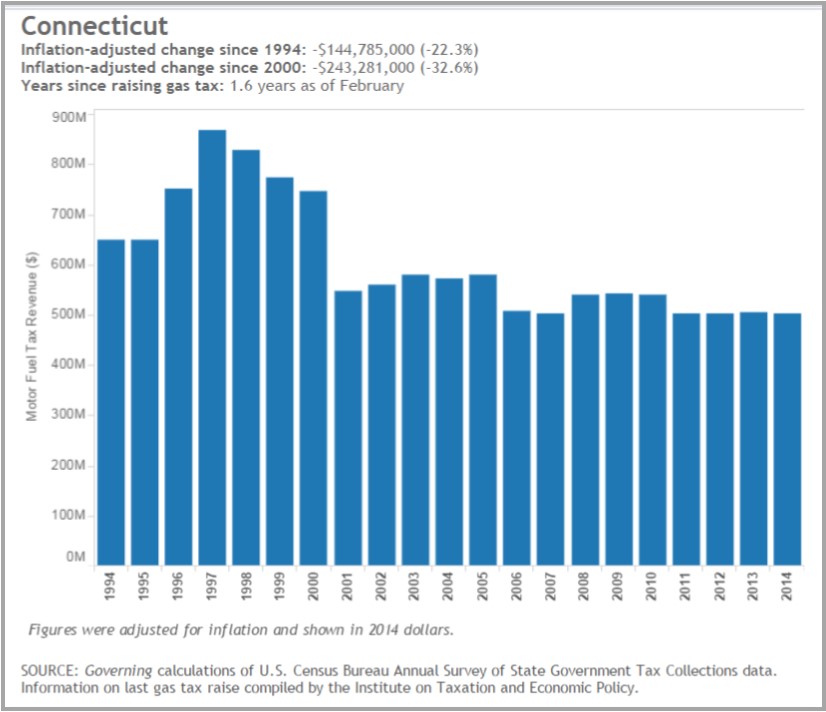 In Connecticut, the inflation-adjusted change is a reduction of in the value of the dollars provided by the tax of 32.6 percent since 2000 and 22.3 percent since 1994, according to the Governing analysis, using data from the U.S. Census Bureau and the Institute on Taxation and Economic Policy. Earlier this year, Governor Malloy announced a two-part transportation plan consisting of a

 Of a maximum five stars in the CEO ratings, Connecticut received 1.5 for Taxation and Regulations, 3.0 for Workforce Quality and 3.0 for Living Environment. The

 is to bring together professionals from every aspect of Connecticut’s tourism industry — including hotels, restaurants, casinos, tourist attractions, entertainment venues, historic sites, and cultural and arts institutions — to share best practices and learn from national tourism and travel experts. The statewide conference is managed by the DECD Connecticut Office of Tourism in partnership with the Connecticut Convention & Sports Bureau.
 igher education resources, a focus on New York City meeting planners, experts on capturing a share of the international tourist market, ways to maximize use of social media, Tourism Awards for outstanding industry leaders, and an array of workshops on areas including mobile marketing and group bus tours, as well as an exhibition of the most innovative products and services in the tourism sector, according to state officials. Cost for the conference is $99, for industry professionals.
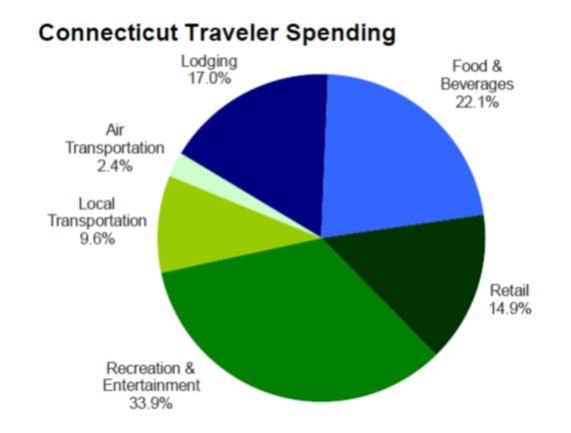 Traveler spending of $8.3 billion generated $14 billion in economic activity statewide in 2013, according to a study released recently by the office of Gov. Dannel P. Malloy. The study shows funds generated directly, through traveler spending, or indirectly, as employees, businesses and other beneficiaries turned around and paid for goods and services. Travelers to Connecticut destinations spent 3.0% more in 2013 than in 2012. Of all Connecticut travelers in 2013, nearly two-thirds were day travelers (66%). The tourism
sector supported more than 118,500 jobs in 2013, according to a recent state report.
Traveler spending of $8.3 billion generated $14 billion in economic activity statewide in 2013, according to a study released recently by the office of Gov. Dannel P. Malloy. The study shows funds generated directly, through traveler spending, or indirectly, as employees, businesses and other beneficiaries turned around and paid for goods and services. Travelers to Connecticut destinations spent 3.0% more in 2013 than in 2012. Of all Connecticut travelers in 2013, nearly two-thirds were day travelers (66%). The tourism
sector supported more than 118,500 jobs in 2013, according to a recent state report. irectors, a Greenwich-based live action production company, is producing a series of six on-air commercials for the Connecticut Office of Tourism, working in conjunction with Avon ad agency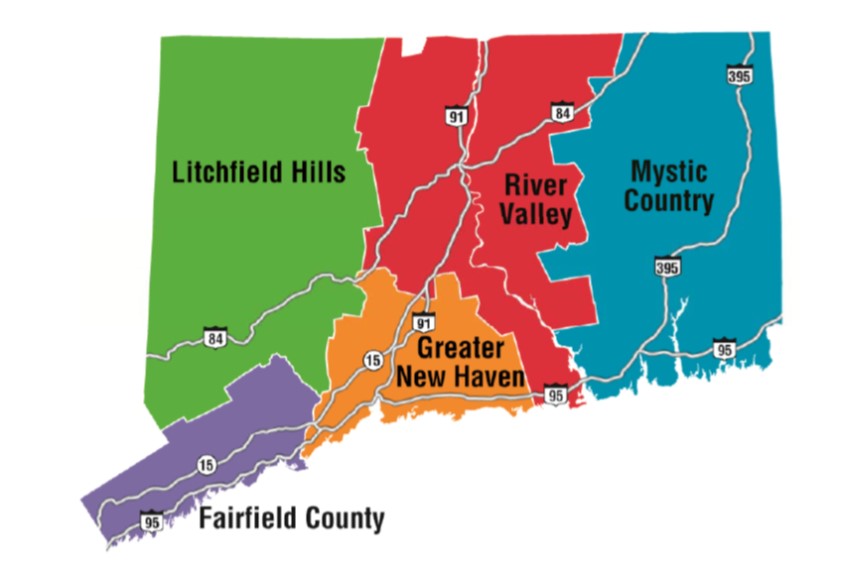


 Often referred to as a Tech Ethicist,


 Choose Hartford is a comprehensive initiative to scale up businesses that will create a sustainable regional economy with long-term growth prospects and jobs. The plan aims to increase access to innovative capital options along with an across-the-board effort to ensure collaboration of local, regional, state and federal partners to create the best entrepreneurial ecosystem in the country.

 The global Save the Children movement currently serves over 143 million children in the US and in more than 120 countries.