Coalition Calls for Public Input, Comprehensive Analysis, Greater Scrutiny of Cigna-Anthem Merger
/A coalition of consumer and medical organizations is calling for greater public input into the Connecticut Insurance Department’s review of the proposed Anthem-Cigna health insurance mega-merger, and is expressing concerns about the potential “negative impact on both the cost and quality of care in Connecticut” of that merger and the proposed Aetna-Humana merger. The groups – Universal Health Care Foundation, Connecticut Citizen Action Group and the Connecticut State Medical Society – formed the “Connecticut Campaign for Consumer Choice” coalition and urged state Insurance Commissioner Katherine Wade to “ensure an open, transparent hearing process in Connecticut, where policy holders, physicians and other interested parties are given maximum opportunity to share their views.”
In a letter to Wade, the organizations urged a series of actions as part of the Anthem-Cigna review “to protect our health care options in Connecticut” – that a public hearing be held at a time and place that “allows for maximum public participation,” that interested parties be granted intervenor status (which would allow witnesses to be called and cross examined), and that a department commission a study that will “analyze the potential impact on cost, access, and the Connecticut economy, including jobs,” as part of the agency’s deliberations on the merger proposal. 
Bloomfield-based Cigna and Indianapolis-based Anthem are two of the nation’s five largest health insurance companies. It is anticipated that a hearing would be held sometime this spring, but plans have not yet been announced. The coalition leaders indicated that “all eyes from around the country will be on Connecticut,” as home of two of the nation’s leading health insurance companies.
They also launched a new website, www.consumerchoicect.org, which will provide the public with information about the proposed mergers. The site states that “what’s really happening is that fewer choices mean higher costs for consumers and employers. With fewer insurers for the remaining three national companies to compete against, there will be less of an incentive to keep costs low or develop innovative serv ices to bring in new customers.”
Connecticut Insurance Department spokeswoman Donna Tommelleo said the department "is reviewing the proposed acquisition in accordance with all applicable Insurance Holding Company Statutes. The Form A application is posted on Home Page of the Department’s Web site for public view and the site is updated frequently as more documents are filed. After the application is fully reviewed and deemed complete by the Department there will be public hearing held within 30 days. The public will be given ample opportunity to provide both written and oral comment." She indicated that "the Department respects the coalition’s interest in the matter.” The Anthem-CIGNA merger was filed with the state Insurance Department last September.
In advocating for the merger, Anthem has established a website that highlights the company’s views on the benefits of a merged company, at www.betterhealthcaretogether.com The site indicates that “the combined companies will operate more efficiently to reduce operational costs and, at the same time, further our ability to manage what drives costs, helping to create more affordable health care for consumers.”
Matthew Katz, executive director of the Connecticut State Medical Society, said that the merger “could be the demise of already struggling private practices,” and will a dversely impact patient costs and access to care. "Goliaths will not benefit consumer choice," he said. The Society opposes the merger, as do the other organizations in the coalition. They indicated that a fair, open, transparent review process would make it more difficult for the merger to be approved as being in the public interest.
Noting that Wade serves as chair of the National Association of Insurance Commissioners working group on the Anthem-Cigna mercer, and that the working group’s proceedings are not open to the public, the coalition leaders stressed the importance of an open and comprehensive process in Connecticut.
The letter to Commissioner Wade, dated March 22, was signed by Frances Padilla, president of the Universal Health Care Foundation of Connecticut, Tom Swan, executive director of the Connecticut Citizen Action Group, and Matthew Katz, Chief Executive Officer of the Connecticut State Medical Society.
The Connecticut State Medical Society is a federation of eight component county medical associations, with total membership exceeding some 7,000 physicians. Universal Health Care Foundation of Connecticut is an independent, non-profit philanthropy, supporting research-based policy, advocacy and public education that “advances the achievement of quality, affordable health care for everyone in the state.” CCAG, founded four decades ago by consumer advocate Ralph Nader, has "created change on the issues members care about including quality, affordable health care, protection of consumers, the environment, and democracy."
 When asked to think about overall business conditions in Connecticut versus 6 months ago, respondents – for the first time in three quarters – said conditions are better now than 6 months ago. The margin was narrow - with 27 percent saying “better” and 25 percent saying “worse”, but that’s a reversal from the past two quarters, when more people were of the view that business conditions has worsened (22%-24% and 24%-28% in the two previous quarters).
 "There are some things that state governments can do to make their states more attractive to research and development," including R&D tax credits, Nariman Behravesh, chief economist at IHS Inc. in Lexington, Massachusetts told Governing magazine. "State governments — if they carefully target areas where they think they have a bit of a competitive advantage — they could develop a cluster around their universities, as well."

 As the agency’s Enforcement Bureau considers “an alleged violation of FCC rules,” the agency’s Media Bureau cannot proceed with a decision on whether or not to renew the station’s broadcast license. The application was placed on “enforcement hold,” amidst speculation that the action was related to use of the station’s airwaves by former Governor and station talk show host John Rowland, who was previously and subsequently convicted of federal corruption and campaign-related charges.
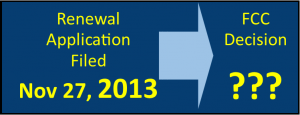
 Hartford Attorney Ken Krayeske filed an informal objection on October 1, 2014 to WTIC’s broadcast license renewal, alleging that the station “demonstrated serious malfeasance” and “helped conceal violations of federal law.”
 with the addition of headrest and ceiling speakers.

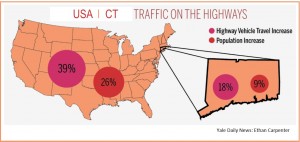
 The OLR report also indicates that a Federal Highway Administration pilot program permits up to three states to toll existing Interstate highways that they could not otherwise adequately maintain or improve, and increase funding available for public transportation initiatives. In addition, $2.6 billion is provided to Amtrak’s Northeast Corridor (and $5.4 billion to other Amtrak lines) over five years. It separates the Northeast Corridor, from Boston to Washington, D.C, from other Amtrak accounts to ensure that the amounts assigned to that Corridor are used there, OLR reports.
 ecessarily result in that many jobs,” according to the website
  . Boston may be in the running for similar relocations.
 The Crain’s article reports that headquarters began shrinking a decade ago, but the trend has accelerated in the past three years, according to Vinay Couto, a consultant in the Chicago office of Strategy&. In recent years, 16 companies have relocated their main headquarters to the city from the suburbs. Seventeen came from outside the metro area. The phenomenon, he points out, is driven by the outsourcing of shared services such as IT, accounting and human resources, as well as by a mindset borrowed from private equity to cut overhead and make every part of a business count toward profitability.

 Also making the list were Evariant of Farmington, a software developer, at number 272, and HP One, a software company in Trumbull at number 307. Biopharmaceutical company Alexion, in the midst of moving its headquarters from Cheshire to New Haven, was ranked at number 349, and etouches, a Norwalk software company ranked at number 357. Rounding out the Connecticut companies on the list is Wallingford oil extraction technology company APS Tecnhology, at number 466.
 rough technology’s continued disruption and proliferation across industries,” said Sandra Shirai, principal, Deloitte Consulting LLP and US technology, media, and telecommunications leader.
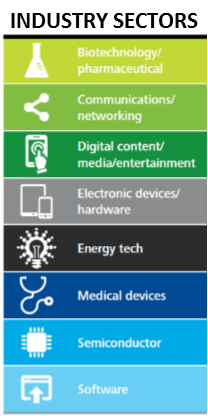 Overall, 283 of the 500 companies were in the software sector, and 67 percent of the 500 companies have received venture capital funding at some point in their company’s history. Topping the list was StartApp, with a growth rate of 21,984 percent from 2011 to 2014. Based in New York and founded in 2010, StartApp provides a free monetization and distribution platform that integrates with applications on mobile devices.

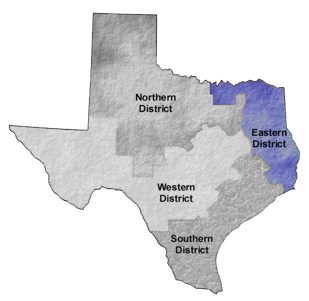 While action to combat the rapidly escalating challenge to businesses of every size has been unable to navigate through a divided Congress, the problem is growing. One jurisdiction in particular is a hospitable home for the legal attacks. Federal court in the Eastern District of Texas is the epicenter of patent troll litigation, and nearly 50 Connecticut companies are among those hauled into court there under dubious circumstances.