National Recognition for Charter Oak, Quinnipiac, Fairfield As State Stand-outs

Charter Oak State College, Connecticut’s public online college, has been ranked #2 of 100 colleges scored in the recently compiled Best College for Returning Adults. The national rank was awarded by College Factual and reported on the Forbes.com website. “We are very proud of this ranking. It speaks to the flexibility of and demand for our online workforce relevant programs, such as our new Master of Science in Organizational Effectiveness and Leadership, and the intense and successful focus on our mission of helping adults complete college degrees,” said Ed Klonoski, President, Charter Oak State College.

College Factual’s rankings specifically address “non-traditional students who actually make up the majority of degree-seekers” and include the following categories: students returning to college after dropping out or transferring; working adults seeking flexible options; students seeking distance learning options; and professional who want to utilize life experience to earn college credit.

Of Charter Oak, the website indicated “about 80% of the public school’s students are part-timers, and its online courses in liberal arts studies are among its most popular for returning adults.”  Factors deemed as “high importance” by College Factual were accreditation and early career salary boost.

Founded in 1973, Charter Oak State College is Connecticut’s only public online college, offering associate and bachelor’s degree completion programs in high-demand fields including Health Information Management, Health Care Administration, Cyber Security and Business Administration.

school logosAnother Connecticut school has received national recognition, as Military Times ranked the School of Business at Quinnipiac University as the best business school for veterans in Connecticut and the 24th best in the nation, according to its Best for Vets: Business Schools 2016 rankings.

The organization, made up of Army Times, Navy Times, Air Force Times and Marine Corps Times, focused on culture and curriculum that cater to military veterans when conducting and scoring the fourth annual Best for Vets: Business Schools survey, a highly respected analysis of a graduate business school's complete offerings for veterans. As with all of the Best for Vets rankings, Best for Vets: Business Schools is an editorially independent news project that evaluates the many factors that make an institution a good fit for military veterans.

"Veterans have told us they were attracted to a business degree because it wouldn't tie them down to a certain industry," said Amanda Miller, editor of Best for Vets. "The survey lets us recognize the graduate business schools with close military connections that truly take vets' success to heart."Forbes

Matthew O'Connor, dean of the School of Business, said, "The School of Business is proud to be selected as a 2016 Best for Vets Business School by the Military Times. As an AACSB-accredited business school, we offer a wide variety of high-quality business programs and student services”

He added, “Our excellent internship program and enviable track record for helping graduates secure full-time employment is particularly attractive to veterans. Quinnipiac is proud of the service of military personnel and veterans and celebrates the contributions they make to our University."

The rankings were published in full in the issues of Army Times, Navy Times, Air Force Times and Marine Corps Times and online.

Quinnipiac University also recently announced that the Hamden-based university will be adding a School of Engineering in the fall, breaking off from what has been the School of Business and Engineering, which offered engineering courses to students during the past four years.  The School of Engineering becomes that university’s ninth school leading to a bachelor of science degrees. It will of offer engineering degrees in civil, industrial, mechanical, software engineering and computer science.

Dr. Justin Kile has been appointed the founding dean of the new school after previously serving as Quinnipiac’s associate dean of engineering since 2013. He will guide the school through the Accreditation Board for Engineering and Technology’s yearlong approval process.

Regarding business schools in the state, Bloomberg recently concuded a study of the best U.S. undergraduate business schools, ranking Fairfield No. 1 in Connecticut with an overall national ranking of 43rd.The school jumped 15 spots from last year's rankings.

The other Connecticut business schools on the list were University of Connecticut, ranked 72nd; Quinnipiac University, 91st; Sacred Heart University, 92nd; University of Hartford, 101st; and the U.S. Coast Guard Academy, ranked at number 104. The elements that contributed to the rankings included an employer survey, student survey, starting salaries of graduates and internships available as part of the curriculum.

Another distinction for Fairfield University: the school is among nine universities nationwide to receive accreditation from the International Dyslexia Association (IDA) and its affiliate, the Center for Effective Reading Instruction, for having met the standards outlined in IDA’s Knowledge and Practice Standards for Teachers of Reading.dyslexia

The Certificate of Advanced Study (6th year), Reading and Language Development program in GSEAP received the designation.

The IDA Standards provide a framework for course content in university and other teacher preparation programs, offering research-supported documentation of what teachers ought to know and be able to demonstrate when teaching dyslexic students.  The standards also apply to the teaching of other struggling readers or the general student population.

The goal of the standards initiative is to promote consistent and high-quality teacher preparation to improve outcomes for those who struggle with written language. Fairfield’s Sixth Year Professional Certificate in Reading and Language Development is open to those who have received their master’s in education degree.

"We are very excited about this national recognition from IDA. Elementary teachers and even Reading Specialists are not prepared with the tools and training to diagnose and intervene with children with dyslexia; this program addresses that," said Robert Hannafin, Phd., Dean of GSEAP. "We are committed to helping all students read and particularly struggling readers."

CT An Also-Ran Among States in Entrepreneurial Growth, Despite Some Gains

Connecticut ranks 13th among the nation’s 25 smaller states – and 36th overall - in the growth of entrepreneurship, according to a new study and state-by-state analysis by Kauffman Foundation.  A year ago, the state ranked 17th among the smaller states, slightly improving its ranking in the latest data.  The rate of start-up growth in Connecticut increased to 45.5 percent in the 2016 report, compared with 23.6 percent the previous year. The “share of scale-ups” also increased, from 1.29 percent in last year’s analyses to 1.33 percent this year.  Scale-ups measures the number of firms that started small but grew to employ fifty people or more by their tenth year of operation as a percentage of all employer firms ten years or younger.report

One metric that dropped slightly measured high-growth company density – the number of private businesses with a least $2 million in annual revenue reaching three years of 20 percent annual revenue growth normalized by total business population.  Connecticut moved from 55.1 a year ago to 48.8 in the 2016 report.  Both researchers and entrepreneurs have suggested density as a key indicator of vibrancy in entrepreneurial ecosystems, and there is high variation on this indicator across U.S. states, according to the report.

The Kauffman Index of Growth Entrepreneurship, released this week,  is an indicator of business growth in the United States, “integrating several high-quality sources of timely informastatstion into one composite indicator of entrepreneurial business growth.”

In rankings by industry, Connecticut ranked in the top five among the 25 smaller states in two five categories – 3rd in Business Products & Services and 3rd in Software.  The state was ranked outside the top five in high-growth companies in the IT Services, Advertising & Marketing and Health industries.

Overall, the Growth Entrepreneurship Index rose in 2016 in thirty-nine states in the last year, indicating a continued return of broad-based business growth, the report concluded.

  • Among the twenty-five largest states, the five states with the highest Growth Entrepreneurship Index were Virginia, Maryland, Arizona, Massachusetts, and Texas.
  • Among the twenty-five smallest states, the five states with the highest Growth Entrepreneurship Index were Utah, New Hampshire, Delaware, North Dakota, and Oklahoma. (Connecticut ranked 13th)

While most states experienced an increase in growth entrepreneurship activity, changes in state rankings— which measure relative yearly performance across states, as opposed to performance relative to a state’s own growth entrepreneurship rates in the previous year—were different. Twenty-three states ranked higher than they did last year, seven experienced no changes in rankings, and twenty ranked lower, the report pointed out.

"Growth entrepreneurship directly contributes to the economy through creating jobs, innovation and wealth," said Arnobio Morelix, senior research analyst at the Kauffman Foundation, which conducts the annual study.

Virginia took first place in growth entrepreneurship activity among the 25 largest states, followed by Maryland, Arizona, Massachusetts and Texas. Kauffman researchers said it is no coincidence that two of the top states include the highly entrepreneurial Washington, D.C., metro area. Among larger states, 12 ranked higher than they did last year, four experienced no change in rankings and nine ranked lower.

Among the 25 largest states, the five that experienced the biggest increase in rank from 2015 to 2016 were North Carolina (15 to 8), Alabama (13 to 9), Ohio (16 to 12), Tennessee (18 to 14) and Arizona (6 to 3).

The five large states that saw the greatest decrease in rank in 2016 were, with a tie for fifth place, New Jersey (8 to 20), Pennsylvania (10 to 16), Illinois (14 to 17), Wisconsin (20 to 23), Louisiana (4 to 6) and South Carolina (11 to 13).

Among the 25 smallest states, Utah led growth entrepreneurship activity, followed by New Hampshire, Delaware, North Dakota and Oklahoma. Eleven states ranked higher than they did last year, three experienced no change in rankings and 11 ranked lower.

The five small states that saw the biggest increase in rank were Mississippi (22 to 10), Wyoming (23 to 15), North Dakota (11 to 4), Nevada (15 to 8) and Connecticut (17 to 13).

Next Digital Citizenship Summit will be at Twitter Headquarters, One Year After Hartford Area Launch

What a difference a year makes.  The Digital Citizenship Summit, launched last year in Greater Hartford at the University of Saint Joseph, will be hosted at Twitter headquarters in San Francisco on October 28 this year, as the launch event for U.S. Media Literacy Week at the social media giant’s global headquarters. The Digital Citizenship Summit, described as the only global network of summits and projects focused on the safe, savvy & ethical use of social media and tech, was developed locally and has quickly grown internationally, with sessions taking root across the globe. digcitsum

A major gathering of organizations, industry, parenting experts, students, and more, will bring together new, well-known, and unexpected voices from a wide variety of backgrounds for a fast-paced and energetic mix of presentations, panels, videos, and awards at Twitter headquarters this fall.

The day will be live-streamed to a large global audience, and seeks to broaden the appeal and accessibility to digital citizenship and media literacy. "Digital Citizenship" has been defined by Dr. Mike Ribble, author of Digital Citizenship in Schools, as "the norms of appropriate, responsible behavior with regard to technology use."

The Digital Citizenship Summit will serve as the kick-off event for Media Literacy Week (October 31-November 4) led by the National Association for Media Literacy (NAMLE). Media literacy “is the ability to access, analyze, evaluate, communicate and create using all forms of media,” and an area of heightened relevance so close to the presidential election.logo mix

“We are thrilled to be partnering with the Digital Citizenship Summit and Twitter on this event,” says Michelle Ciulla Lipkin, Executive Director of NAMLE. “We are excited about bringing thought leaders in digital citizenship and media literacy together. There is so much to be done to ensure a media literate world and exploring digital citizenship is a great way to get the conversation going.”

“Society has adopted new social media platforms and technologies before we have collectively had the chance to determine what constitutes safe, savvy, and ethical behavior,” says Digital Citizenship Summit co-founder David Ryan Polgar of West Hartford.

“There are multiple stakeholders who desire an active role in the process, including students, educators, parents, administrators, media specialists, and organizational leaders. All of these groups have crucial insight, and the Digital Citizenship Summit was setup to bring these voices together to solve current issues regarding social media and tech use,” Polgar said.

The issues, according to Polgar, are endless. “Some major areas of concern include how smartphones should or shouldn’t be used in the classroom, finding ways to improve civility online, adjusting to an Internet that never forgets our posts, and being able to determine the veracity of what we read online.”Polgar, Curran

By bringing together a broad range of experts, organizations, and interested parties, the Digital Citizenship Summit on October 28th aims to take a multi-stakeholder participatory approach to solving some of the vexing issues regarding social media and tech use.

Partnering organizations include the National Association for Media Literacy Education (NAMLE), Common Sense Media, Family Online Safety Institute (FOSI), #iCANHELP, ConnectSafely, iKeepSafe, and Trend Micro’s Internet Safety for Kids & Families.

The inaugural Digital Citizenship Summit in the United Kingdom was held earlier this year and another is already being planned in that nation, and plans are now being developed for similar initiatives in St. Louis as well as Ireland and Australia later this year.  A Summit was held in Wisconsin last month.

“We are thrilled to have the involvement of so many prominent organizations,” says co-founder Dr. Marialice B.F.X. Curran. “By collaborating on this event we can expose a wide audience with some incredible resources that can be used at home or in the classroom.” “At the same time,” chimes in her co-founder David Ryan Polgar, “the open and collaborative nature will bring forward new voices that can influence this important conversation around social media and tech use.”

“We want people impacted by tech and social media to feel empowered,” Curran continues. “Instead of being reactive, we want people to be active participants in the digital future. We want people to be the digital change.”

Media Literacy Week (#MediaLitWk) is designed to bring attention and visibility to media literacy education in the United States. Inspired by Canada’s Media Literacy Week, the National Association for Media Literacy Education is leading the efforts to create a media literacy week in the United States to showcase the work of amazing media literacy educators and organizations around the country. The mission of Media Literacy Week is to highlight the power of media literacy education and its essential role in education today.

The Digital Citizenship Summit is a global network of summits and projects focused on the safe, savvy, and ethical use of technology and social media. They are dedicated to creating a new culture in which everyone—particularly the next generation of digital natives, educators and parents—has a voice, and feels empowered to use it. The Digital Citizenship Summit brings diverse groups together to connect in person, join the conversation and take an active role in creating positive digital change on both a local and global level.

The first Digital Citizenship Summit was held on October 3, 2015 at the University of Saint Joseph in Connecticut. It drew over 220 educators, students, parents, administrators, organizations, and members of industry, and trended #1 in the nation (#digcitsummit).

Most CT Residents Concerned About Loss of Jobs, Access, Care in Aetna-Humana Merger, Poll Shows; Missouri Decision Points to Adverse Impact

The State of Missouri raised a red flag today, waving it directly into the headwind that is the pending merger between health care giants Aetna and Humana.  Missouri’s action came just as a public poll was released in Connecticut by consumer advocates opposing the merger which indicated a general lack of public awareness about the merger plan and substantial concern about potential job losses and adverse health care affordability and choices here if the merger goes forward. The Missouri Insurance Department issued an order banning Aetna and Humana from selling certain types of insurance in the state if the companies’ planned $37 billion merger comes to fruition. The order states that Aetna and Humana should “cease and desist from doing business” throughout Missouri with respect to individual and small group insurance and the group Medicare Advantage market if Aetna’s acquisition of Humana is completed.aetna humana

In Connecticut, the Connecticut Campaign for Consumer Choice coalition released results of a recent poll which found that most Connecticut voters “didn’t know that the five major national health insurance companies – UnitedHealth, Anthem, Cigna, Aetna, and Humana - are attempting to merge down to three companies from five. The new research found that only 27 percent of respondents were aware of the plans.Picture8

After they were given more information about the consequences of the mergers among the five national health insurance providers (Aetna-Humana and CIGNA-Anthem), 71 percent of Connecticut voters were opposed to State Insurance Commissioner Katherine Wade approving the mergers in Connecticut.

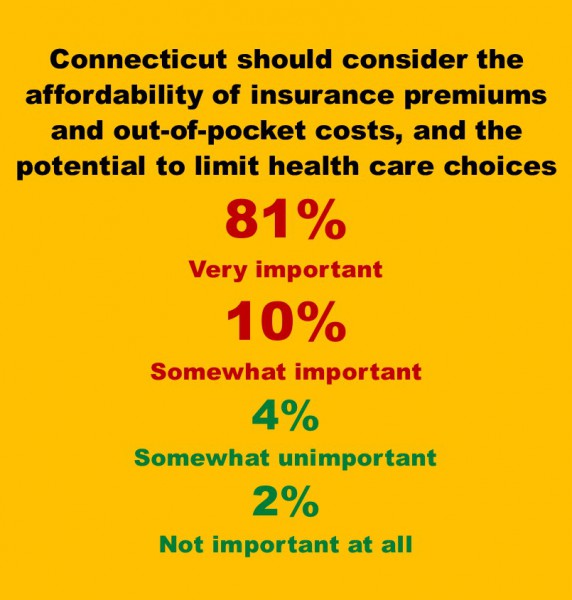
Nine in ten state voters (91 percent) think that it’s either very or somewhat important that Commissioner Wade “considers the impact of these mergers on the affordability of insurance premiums and out-of-pocket costs, and their potential to limit health care choices, in her decision making process.” And those surveyed were overwhelmingly concerned that the proposed mergers will lead to job losses in Connecticut.stat1

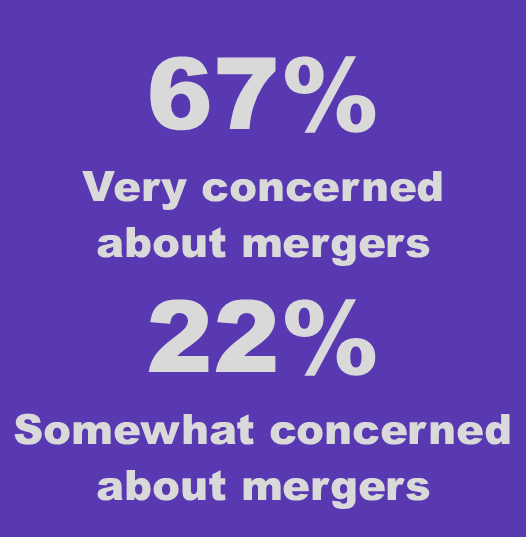
The Connecticut survey, conducted earlier this month by Public Policy Polling, found that 89 percent of Connecticut voters are either very or somewhat concerned that the proposed mergers will lead to job losses in Connecticut. Additionally, 89 percent of those polled believe it’s either very or somewhat important that the impact of these mergers on job losses in Connecticut be considered by state regulators.

Missouri is the first state regulator to release findings against the proposed deal, announced last year, published reports indicated. The deal is being reviewed by the U.S. Department of Justice, as well as state regulators and antitrust authorities, who are also reviewing competitor Anthem’s plan to buy Cigna Corp. Aetna has filed for regulatory approval in the 20 states where Humana is domiciled and of those, 15 have approved the deal thus far, including Connecticut.  Because of Humana's limited footprint in Connecticut, the review was more form than substance.  The Cigna-Anthem merger, however, is to receive a much fuller review, according to state insurance officials, as Cigna is a state-domiciled company.

Regarding Aetna-Humana, the Missouri Insurance Department “found that in its current, unmodified, form – as to a few specified lines of insurance – that the proposed acquisition would violate the competitive standard set forth in Missouri law, meaning that as to those lines the acquisition would substantially lessen competition in this state.”

The Missouri Insurance Department stressed that the decision “is not a final order. The statute provides that Aetna and Humana may submit a plan to remedy the anticompetitive effect of the merger as to those specified lines.”  If that step is taken, the department “would evaluate the plan and may modify or vacate” the order issued today banning the merged company from certain lines of insurance in the state.

"The Missouri order does not impede the Department of Justice approval process," Aetna said in a statement. "We're disappointed, but expect to have a constructive dialogue with the state to address their concerns."

Picture7In addition to the public poll, Connecticut Campaign for Consumer Choice – a coalition that includes the Universal Health Care Foundation, Connecticut Citizen Action Group and Connecticut State Medical Society -  released a letter to Commissioner Wade signed by 17 state legislators calling for multiple public hearings on the merger, intervenor status for interested consumer advocates, and a study that would “analyze the potential impact on cost, access, and the Connecticut economy, including jobs” and warning that if the merger is approved, “the resulting mega-insurer will cover 64 percent of covered lives in Connecticut, with an even greater concentration in some regions of our state.”

The Missouri decision comes following a public hearing held on May 16.  In testimony provided as part of the public record, Consumers Council of Missouri expressed “profound concern,” warning that the merger would result in a “significant reduction in competition (that) will most certainly result in increased cost to consumers,” adding that “the results will be catastrophic and we will have no power to undo it.”

The Missouri Hospital Association, in offering a detailed 21-page analysis, indicated that “Consolidation will affect the ability of hospitals and other health care providers to bargain competitively for contracts containing appropriate fees for medical services. In turn, such providers are less able to invest in the resources to maintain and improve the quality of care. An anticompetitive suppression of healthcare payments will suppress innovation, to the detriment of consumers.”

Colorado’s Governor Recalls Time at Wesleyan

The first time someone told Governor of Colorado and Wesleyan alumnus John Hickenlooper ’74 that he should run for public office, he nearly laughed them out of the room. “I said, ‘Why the hell would I ever do that,’” Hickenlooper said. “[Even growing up,] I never ran for student council or class president, and I didn’t really hang out with the people that did. This kind of caught me by surprise.”

If there ever was a perfect example of the triumph of a broad liberal arts education, Hickenlooper’s serendipitous path to the Governor’s mansion is it. The English major, turned geologist, turned brewpub owner ran for Mayor of Denver in 2003 as something of a joke.

“In 2001, some smart people who did work in politics—and they were my customers so I knew them—suggested I run for mayor,” Hickenlooper said. “They said, in a funny way, you’re perfect for who ought to be in politics. You’re a small-business person, someone in the service industry who understands restaurants, and somebody who understands science. So kind of as a joke, we decided to run. We didn’t do opposition research and I’ve never done a negative ad. Our focus was really on putting up a positive vision for Denver. And we did a few very funny TV ads that are still up on YouTube. And no one could believe it as we were running, because in 2003, we beat these lifetime politicians who had been in office since 1987 two to one.”hickenlooper

Hickenlooper may not have taken the most direct route to a career in politics, but growing up, he always had the sense that he wanted to leave a public legacy. Despite his initial disinterest in the political sphere, public service is actually in his blood: his great-grandfather Andrew Hickenlooper was a renowned Civil War general and both a Lieutenant Governor and U.S. Marshal for the Southern District of Ohio.

However, Governor Hickenlooper learned little about his family heritage growing up. His father died from cancer when he was eight, and he felt the absence acutely.

“Especially for men and boys, if your father dies you have to figure out [how] to raise yourself,” Hickenlooper said. “You know, showing yourself how to comb your hair, or what kinds of pants look good. Because you learn that stuff when you are very young.”

For a long time, Hickenlooper had little idea what he wanted to do with his life, but he believes there was something deeply existential about his lack of direction toward one set path. According to him, he internalized the family tragedy as motivation. He wanted to make enough noise in his life to leave a legacy that one day would be impossible to ignore.

“When I was a kid, I was skinny, had acne, and wore really thick, ugly black plastic glasses,” Hickenlooper said. “So I always sort of felt like I had to prove myself. After my dad died, there was this sense that you want your voice to be heard out in the cosmos. Kind of in a weird way, you want your father way, way out there to be able to hear your voice.”wesleyan

With his father absent, Hickenlooper taught himself many adolescent rites of passage. Yet, he discovered Wesleyan through family ties. He attended his half-brother’s graduation from the University in 1968, and reminisces fondly about how cool he thought it was that The Grateful Dead played a show on Foss Hill amidst widespread campus unrest in 1969. Beyond this trivia, Hickenlooper loved Wesleyan’s approach to diversity and its open-minded curriculum.

In going about his academic experience, Hickenlooper forged as eclectic a path as he could. Although he majored in English, Hickenlooper was dyslexic and felt that he could never keep up in classes where there was heavy reading. Thus, he took a course load that included piano, “how to design and fabricate stained glass windows,” dance, and electronic music.

“I took all different things I thought would help me,” Hickenlooper said. “I thought I wanted to be in some sort of creative role in life. But it turned out everything I taught, I was never very good at. But it’s nice, because I can still play the piano, guitar, and banjo to this day.”

It was only just before his undergraduate education came to a close that Hickenlooper finally found his niche. After sitting in on a lecture in one of his friends Earth & Environmental Science classes, he realized that he loved the subject more than anything he had ever studied.

Subsequently, Hickenlooper was accepted into Wesleyan’s Master’s program in geology for students with a non-science background. He then took chemistry and math classes for two years and over the summer at Harvard University. He did field work in the Beartooth Mountains of southern Montana, where he observed the most beautiful landscape he’d ever seen. After graduation, he drove a beat-up Volkswagen fastback from his brother’s house in Berkeley to do more fieldwork in Costa Rica.

If Hickenlooper’s post-college years seem like a narrative straight out of “On the Road,” their surrealistic nature has never escaped him, especially when he settled down in Denver to become a professional geologist in 1981. After working for the oil company Buckhorn Petroleum for five years, Hickenlooper realized that he was a pretty big extrovert, and a nine-to-five desk job was never going to do it for his more adventurous tendencies. Before he could make a career switch, the price of oil collapsed and most of his company was laid off, including Hickenlooper himself. Even though he was out of work for almost two and a half years, Hickenlooper faced this latest setback the same way he had dealt with adversity all his life: reinvention.

“It’s funny, when I first got laid off, I was lucky,” Hickenlooper said. “Our company had found a lot of oil and we had some anti-takeover provisions in our compensation, so I ended up getting a year of severance. You know, I was looking through my old letters and I was never moping around, I was kind of excited. This didn’t work out, now I have to find something else, and what am I going to try next.”

After trying to find another job as a geologist and even toying with becoming a writer, the next chapter in Hickenlooper’s life was spurred by a visit to a California brewpub, a trip made with the same brother who had inspired his interest in Wesleyan. Enamored by the self-sufficiency of the restaurant-brewery fusion, Hickenlooper began to talk incessantly about the superiority of the establishment’s beer.

Eventually his friends started to tell him to open a brewpub of his own. Despite no experience with running a restaurant, that is precisely what he decided to do. After going to the library to figure out how to write a business plan, Hickenlooper dove headfirst into his new life as a small-business owner and opened the WynKoop Brewing Company in 1988.

Initially, getting the business off the ground was grueling. Hickenlooper worked between 60 and 70 hours per week and paid himself a salary of less than $26,000. But soon, things started to pick up, and Hickenlooper and his co-owners began to open brewpubs all over the Midwest. It was the opening of Coors Field two blocks away in 1995 that caused the WynKoop to explode in popularity.

“All of a sudden, we became rich,”Hickenlooper said.

While Hickenlooper could have franchised his pub or enjoyed the revenue stability that Coors Field had provided, he was still restlessly searching for his place in life. He began to become deeply engaged with the Denver community, joining non-profit boards such as the Colorado Business Committee for the Arts and the Denver Art Museum. He got involved with the battle over the naming rights for the Broncos’ new stadium, and soon he become a well-known figure in the city.

Hickenlooper soon realized that his favorite part of the day was the time he spent in the non-profit community. The intersection between business, arts, and public relations work suited both Hickenlooper’s multifaceted interests and his extroverted personality. Becoming some sort of a public servant could fulfill the higher calling he had sought since the death of his father. While he laughs that he initially ran for mayor as a joke, considering this decision, you get the sense that deep down, his political move was serious and deliberate from the beginning.

In 2005, Hickenlooper was named one of Time Magazine’s top five big-city mayors, and after getting re-elected as mayor in 2007 with 97 percent of the vote, there was talk of him filling Ken Salazar’s vacated Senate seat. While that didn’t pan out, Hickenlooper got the call in 2010 from incumbent Governor Bill Ritter, asking him to run for the soon-to-be open governorship. Hickenlooper easily defeated challenger Tom Tancredo and became the first Denver mayor to be elected Governor of Colorado in over 130 years.

For a public servant who has thoroughly disproven the conventions of how to carve out a career in politics, he has been a remarkably shrewd and effective leader. Despite running a nonpartisan campaign focused on balancing Colorado’s deficit, Hickenlooper has acted on the front lines of implementing socially liberal policies. He took on the NRA to institute stricter gun control regulations. He questioned the practice of capital punishment. He’s championed criminal justice reform after originally embracing harsher policing policies as mayor.

Most famously, he’s spearheaded Colorado’s marijuana legalization efforts. However, in this case, he did not always agree with the pace of reform. While supporting the decriminalization of marijuana and its use for medicinal purposes, he has publicly expressed opposition to Amendment 64, which was passed in 2012 and legalized possession of up to one ounce of the drug. Has his mind changed in the following years?

“I was against it, because you don’t want to be in conflict with federal law,” Hickenlooper said. “You don’t want to be the first to create an entire regulatory framework. But, now that it’s been going for a few years, we have anecdotal reports that I think are reliable, that we have fewer drug dealers than we had before.”

Hickenlooper also wanted to dispel the notion that legalization is merely driven by a financial calculus.

“Some people said we wanted to do it just to get the tax money,” Hickenlooper said. “That’s stupid. Why would you risk the health of your kids and your citizens? If this is really bad for people, getting tax revenues is a pretty bad excuse. But if you end up sending less people to jail, and you end up with less drug dealers trying to sell drugs of all kinds to kids or anybody, that is reasonable. We’ve taken the tax revenues and we’ve helped fund programs for drug rehabilitation and kids that get derailed from a constructive life. We’ve dedicated a lot of money to try and get them back in a good life.”

If politics forces everyone to eventually take sides, Hickenlooper likes to at least preserve his nonpartisan, centrist appeal in tone. What has allowed him to push deeply progressive policies in a politically divided state has been pairing his utilitarian philosophy with the desire to keep his finger on the pulse of the communities he serves.

“I think mostly just by listening,” Hickenlooper said. “You know states and cities are made up of all different kinds of people, so you really have to listen hard to understand what is the rhythm behind all that noise out there. There’s a melody and a rhythm in there somewhere, and what is it that will make the greatest number of people happy and give the greatest value to the community.”

Staying true to his business and non-profit experience, he has also streamlined government in Colorado and filled his cabinet with many people who possess management skills. While he certainly doesn’t speak about the relationship between business and government in the way that Donald Trump does, he does agree that government benefits from employing individuals with diverse backgrounds, especially those with organizational management and leadership experience.

“We’re taking all this [management] training that people receive from getting MBAs, and we’re giving it very narrowly to just business,” Hickenlooper said. “If you look at it, government is about 30 percent of our economy. And non-profits are another 30 percent. And yet all the training in management and leadership goes into business.”

Hickenlooper operates in a tranquil space, and his desire to forge a consensus on major issues seems sincere. What, then, does he think of an election season that has been the complete opposite? Specifically, what would he do if Donald Trump becomes president? One has to wonder if another extended trip to Costa Rica is in his future.

“No, I’d have two more years of being a sitting governor, so I couldn’t leave and do that to my adopted state,” Hickenlooper said. “But I do think that he might be reinventing himself again. So, I’m not going prejudge him. I will say that he scares the living daylights out of me. Some of the things he says are just so provocative and difficult. If he somehow manages to get elected, which I’m going to work hard to make sure doesn’t happen, he’s the President of the United States. And I respect the system our country has created.”

There’s even a chance that Hickenlooper himself may play a direct role in the election to come. A longtime supporter of presidential candidate Hillary Clinton, Hickenlooper is one of the superdelegates that has already pledged support to her campaign. And while he has dispelled rumors of being a potential pick for the Vice Presidency, they persist anyway. Since Hickenlooper occupies a space between the establishment and outsider status, what does he say to students who are disillusioned by the DNC’s cozy relationship to Clinton, or their frustrations with the lack of viable alternatives?

“What I tell young people all the time is, ‘get your friends to vote,’” Hickenlooper said. “Don’t complain because the more experienced people in the party are supporting Hillary. Go out and get more people to vote.”

His take on the activism of today is similarly nuanced, if not a little nostalgic for the great battles for equality of the past.

“I say to kids, ‘I was you once,’” Hickenlooper said. “I marched on Washington to oppose the Vietnam War. I went to the first Earth Day in 1969. But, I also understood that there were people who were older and they thought they had answers, and maybe they were right and maybe they were wrong. But we had a system whereby everybody had a voice, and that is the amazing thing about America.”

If there’s anything that sticks out about Hickenlooper’s political philosophy, it’s his respect, and even admiration, for a democratic process that once seemed completely foreign to him. Then again, he didn’t expect to become a brewpub owner or a geologist either. Perhaps he’s still got a few more tricks up his sleeve.

This article was written by Aaron Stagoff-Belfort and first appeared, in a lengthier version, in the Wesleyan Argus.  Abridged and published with permission.

Hartford Foundation Growth Responds to Community Needs

The Hartford Foundation for Public Giving, the community foundation for 29 communities in Greater Hartford, awarded more than $33 million in grants to the region’s nonprofit agencies and educational institutions in 2015, according to the organization’s newly released annual report. The Foundation’s 2015 grantmaking was based on the recognition that "a vibrant and strong Greater Hartford region requires that all residents, especially those with the greatest need, have equitable opportunities to achieve and flourish," the report stated.  In order to make this possible, the Foundation provided support to nonprofit and public entities that "work to ensure everyone has access to the resources and services they need to thrive."

horiz HFPGThe Foundation invested 30 percent of its grants in education from birth through high school, and new and renewed college scholarship, according to the report. Grants for family and social services received 20 percent; health – 11 percent; arts and culture – 11 percent; community and economic development – 19 percent, general – 5 percent and summer programs – 4 percent.
“Thanks to the support of our generous donors, the Hartford Foundation, working with our many community partners, is leading and participating in collaborative approaches to harness resources and increase community impact,” said Linda J. Kelly, president of the Hartford Foundation.

The Foundation received gifts totaling $17.5 million and established 29 new funds, including a new giving circle, the “Black Giving Circle Fund,” to address issues facing Greater Hartford’s Black community.

“Our newly adopted strategic plan, with its focus on equity and opportunity, prioritizes learning from birth through college, vibrant communities and family economic security,” Kelly said. “We look forward to amplifying our efforts to address community needs to meet the broad-based and changing issues in our region, and create pathways to opportunity for all residents.”

The annual report highlights the wide variety of work the Foundation has supported throughout Greater Hartford, including:

Alliance District Grants (Bloomfield, East Hartford, Windsor): More than $1.5 million was awarded to three Greater Hartford school districts to establish or deepen each district’s partnerships with family and community, to improve student outcomes and promote equitable educational opportunity throughout the region.29 towns

  • Bloomfield was awarded a grant to significantly expand Bloomfield Public Schools’ family and community partnerships supporting an extended school day and increasing yearlong support of student learning.
  • East Hartford Public Schools received a grant to develop a new Teaching and Learning Center and other strategies that will enable it to support children’s learning, development, and success through increased family, school, and community partnerships.
  • Windsor Public Schools received a grant to establish a new Office of Family and Community Partnership to develop families, school staff, and community partners’ knowledge, skills, and other capacities to engage in productive partnerships focused on student success.

The Hartford Foundation has approved $3.95 million over three years in grants and technical assistance to support the Career Pathways Initiative, a collaborative, crosscutting approach to providing residents with education and workforce training that places them on a trajectory to ascend a career ladder in industries that have job openings. The initiative targets low-literate and low-skilled residents of the Capitol Region, including single parents, at-risk youth, immigrants, homeless heads of household, former offenders, and others who need a broad range of coordinated services to be successful. The initiative enhances or expands existing programs and pilots new approaches.HFPG 2015

Journey Home was awarded a three-year, $199,197 grant to support the region’s Coordinated Access Network, a collaboration of services providers whose goal is to establish a coordinated region wide placement and referral system for homeless individuals and families.

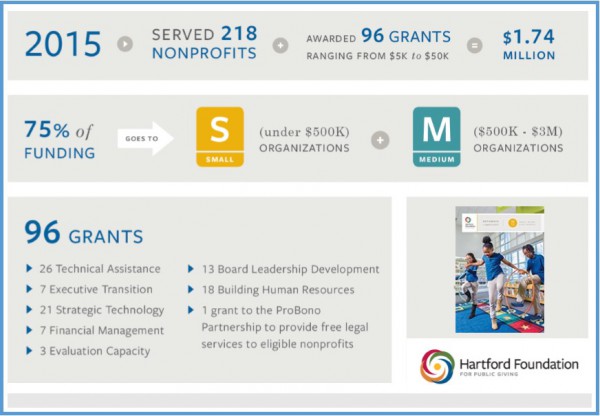
The Nonprofit Support Program continues to be a critical source of capacity building and knowledge sharing among our region’s nonprofit organizations.  In 2015, 218 nonprofits were awarded 96 grants totaling $1.74 million. These grants included support for technical assistance, strategic technology, human resources, board leadership development, executive transition, financial management and evaluation capacity.

Metro Hartford Progress Points, a partnership between the Hartford Foundation and eight other regional entities, launched the second edition of the Progress Points Report which focused on access to better schools, better jobs and stronger neighborhoods.

Since its founding in 1925, the Foundation has awarded approximately $654 million in grants.

CT Is National Microgrid Leader, Seeking Electricity Resiliency

The cover story in this month’s edition of State Legislatures magazine, published by the National Conference of State Legislatures, examines new technologies that are keeping the lights on when disasters strike the electric grid.  And it turns out that New England – especially Connecticut – is showing the way for states across the country in one of the new approaches, the electricity microgrid. The sit-up-and-take-notice event that has sent state legislature scurrying to act was SuperStorm Sandy, which knocked out power to nearly 8 million people across 15 Eastern states, including wide swaths of Connecticut.  One of the primary responses aimed at making the electric system more resilient has been the development of microgrids, and Connecticut has been swifter than most in seizing the technological advance. Cover_May2016_240

Microgrids are an example of how state legislators are seeking to make the electrical grid more reliable and resilient through strategies that strengthen infrastructure and shorten the time it takes to restore power, reporter Dan Shea explained in the article.  The whole idea is to minimize the damage and disruption of a disaster.

The article was drawn from research for the NCSL report, State Efforts to Protect the Electric Grid, published in April.  The report points out that nearly 40 percent of the U.S. population—over 123 million people—live in coastal shoreline counties, according to U.S. Census Bureau data.

“We had Irene. We had Sandy. We had a snowstorm that went on forever. We had people in the dark, substations threatened by flooding and power out for eight, 10, 12 days,” Connecticut State Representative Lonnie Reed (D-Branford) told the publication. “We began to see just how vulnerable the whole interconnected system is.”

Many Northeastern states have taken action on microgrids, but the Connecticut General Assembly has been the most active legislative body, Shea reports, passing or updating microgrid-inclusive bills in each of the past four years (2012-2015). These laws offer a range of options for potential microgrid developers—and could even incentivize distributed generation developers to expand their projects to incorporate microgrid technologies.

The three main incentives are:

  • A microgrid grant and pilot program;
  • The Connecticut Green Bank’s commercial sustainable energy program;
  • And municipal energy improvement districts.microgrid image

The Connecticut General Assembly passed legislation enacting a microgrid pilot program in 2012 – the first in the nation according to the Connecticut Department of Energy and Environmental Protection (DEEP). Initially, the program granted $18 million to nine projects. The initiative was later extended and given an additional $30 million to expand microgrid deployment, Shea reports.

Eligibility was extended to municipalities, electric distribution companies, municipal electric companies, energy improvement districts and private entities. On March 6, 2014, Wesleyan University in Middletown became the first of the CT microgrid projects to come online, according to the DEEP website.

The State Legislatures article reports that in 2015, lawmakers in 17 states, including New York and New Jersey, introduced more than two dozen bills on microgrids, six of which have been enacted. Several pending bills direct state agencies to study microgrids, while at least six states are considering legislation that would offer grants, loans or other incentives to develop them. Microgrids, although growing most rapidly in the Northeast, are taking root elsewhere, including California, State Legislatures reports.

In addition, a growing number of businesses and organizations are also investing in resilient systems that allow them to operate independently whether the grid is up or down.

“You’re really talking about having an economic leg up if you have the capacity to stay open and operational when others aren’t,” Reed told State Legislatures.

The state legislature has also directed the Connecticut Green Bank to include microgrid projects within its definition of “energy improvements” that the bank is authorized to make appropriations and issue bonds or other obligations to help finance.

The legislature has also authorized any municipal government to establish an energy improvement district by vote of its legislative body. The state statute outlines how the district’s affairs will be managed and authorizes a board to fund the development of energy improvement projects within the district.

Nationally, more than a dozen states introduced legislation in 2015 that calls for greater diversity in power sources—from expanding renewables to supporting nuclear and fossil fuels.  The State Legislatures report indicates that those efforts are likely to intensify in the years ahead, as weather events are predicted to become more frequent and more severe.

image


Tourism Awards Recognize Diligence in Promoting State

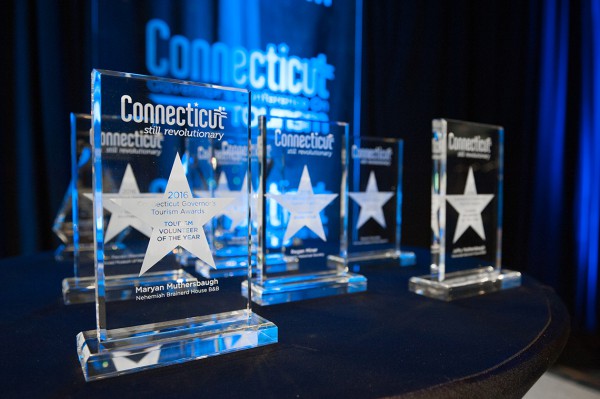
The 2016 Connecticut Governor’s Tourism Awards — individuals and organizations "who go above and beyond to enhance both the appeal of our state as well as the health of our economy," were presented at the 2016 Governor's Conference on Tourism, held in Hartford.  Sessions at the day-long conference included Using Creativity to Reimagine Tourism, Digital Marketing, Social Media Practices, and Innovative Trends in Cultural Tourism.

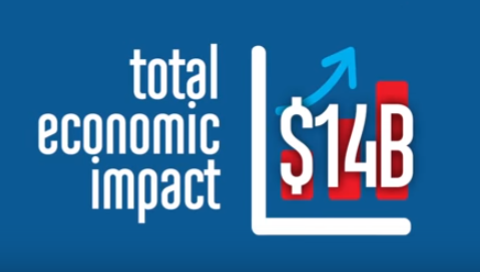
The  ctvisit.com website was also highlighted, and key stats reflecting the success of the state's Still Revolutionary campaign were promoted.  Among them:  3 million visits to the tourism website, 250,000 followers on social media, 25 percent visited Connecticut after seeing an ad, summer tourism was up 12 percent last year, leaf-seaon visits were up 16 percent, hotel occupancy was up 4 percent and room tax revenue up 7 percent.  Total economic impact is $14 billion.

Award recipients recognized during the conference include:

CTC_Logo_260px

Tourism Volunteer of the Year - Jeffry and Maryan Muthersbaugh, Nehemiah Brainerd House B&B

As valuable members of the Central Regional Tourism District’s Board of Directors and members of the Executive Committee, Jeff and Maryan are tireless in their efforts to support statewide and regional tourism marketing. In addition to being owners and operators of the Nehemiah Brainerd House B&B in Haddam, CT, Jeff also serves as the Vice President of the CT Lodging Association and Chairman of the Bed & Breakfast Association. They have been instrumental in forming the CT Bed & Breakfast Association under the CLA umbrella.

Tourism Rising Star Award - Regan Miner, Norwich Historical Societyimpact

At the age of 23, Regan has already accomplished more in the area of regional tourism than some seasoned professionals. A life long native of Norwich, she worked with Norwich Historical Society to unite the city’s many historical entities into a comprehensive destination, securing a grant to open the Norwich Heritage and Regional Visitors Center on the Norwich town green in 2015. Ms. Miner has also developed a series of “Walk Norwich” trails and seasonal events hosted by volunteers and supported by a strong social media presence.

Tourism Partners of the Year Award - Carmen Romeo, Fascia’s Chocolates and Howard Pincus, Railroad Museum of New England

Fascia’s Chocolates and the volunteer-run Railroad Museum of New England have truly laid the track for a sweet collaboration. They’ve joined forces to operate special train tours, including a wine-and-chocolate-themed sunset ride and Halloween event for families, and are adding a regularly scheduled “Chocolate Train” in 2016 to market to charter groups such as bus tours. This partnership has resulted in a unique experience that has attracted high interest at recent ABA and NTA conferences and is a model for other partners statewide.Tourism_Conference_high_res_01

Leader of the Year - Stephen Tagliatela, Saybrook Point Inn, Marina & Spa

An influential proponent for the tourism industry as a board member of the Connecticut Restaurant Association, Lyme Academy College of Fine Arts and University of New Haven, Stephen is a strong advocate for arts and culture, education, and both historic and environmental preservation in the state. Under Stephen’s direction, The Saybrook Point Inn, as well as Spa and Marina, have won numerous awards for its often best-in-class green practices, including the first Connecticut hotel to be named a Certified Energy Hotel in 2007.

  Tourism Legacy Leader John Lyman III, Lyman Orchards

John Lyman is a member of the 8th generation of the Lyman family to farm the land in Middlefield, CT. An early proponent of what has become known as “agritourism,” he has helped to steer his 275-year-old family business toward becoming one of Connecticut’s leading tourist destinations, attracting more than 600,000 visitors a year. Fostering working partnerships with other tourism leaders in the state and region, John initiated cause marketing with unique Sunflower and Corn Mazes, contributing $1 to charitable causes for every person who “gets lost” in the maze, currently surpassing $500,000.

https://youtu.be/-5Nc59LkxqI

https://youtu.be/PnG7hmhpDLg

204,000 Self-Employed in CT; Freelancers Increasing Nationwide

The ranks of the self-employed are growing in Connecticut, as the number of freelancers continues to expand nationwide.  In Connecticut, there are now an estimated 204,000 individuals who are self-employed, more than 11 percent of the state’s workers, which exceeds the national average. As of March 2016, approximately 15.3 million people in the United States designated their employment status as “self-employed,” according to the U.S. Bureau of Labor Statistics, and increase of about 700,000 since May 2014, just over 10 percent of all U.S. employment.state stat

In 2015, 29 states and the District of Columbia had self-employment rates below the U.S. rate of 10.1 percent, and 21 states had rates as least as high. Montana had the highest rate among states, 16.1 percent, followed by Maine (15.4 percent), Vermont (14.4 percent), and South Dakota (14.2 percent). The lowest rates were in the District of Columbia (7.1 percent), Delaware (7.2 percent), and Alabama (7.5 percent), according to BLS data.

Additionally, published reports last fall indicated that 54 million individuals report doing freelance work, either full-time or on the side, in the U.S., representing about one-third of the nation’s workforce.  That is an increase of 700,000 since 2014, according to a comprehensive study conducted by the independent research firm Edelman Berland.

“Americans who are freelancing already contribute more than $700 billion to our national economy and help U.S. businesses compete and find the skills that they need,” said Fabio Rosati, CEO of Elance-oDesk, which commissioned the survey with Freelancers Union.  The study identified five freelancer segments:stats

  • Independent Contractors (36% of the independent workforce / 19.3 million professionals)
  • Moonlighters (25% / 13.2 million)
  • Diversified workers (26% / 14.1 million)
  • Temporary Workers (9% / 4.6 million)
  • Freelance Business Owners (5% / 2.5 million)

In its scale, scope, and complexity, the transformation (of the workforce) will be unlike anything humankind has experienced before," Klaus Schwab, founder and executive chairman of the World Economic Forum, which organized the Davos gathering,  wrote earlier this year. "The speed of current breakthroughs has no historical precedent. ... These changes herald the transformation of entire systems of production, management, and governance."

2014 2015Already, 2.9 million freelancers earned more than $100,000 last year, up from 2 million who hit the six-figure mark just four years earlier, according to MBO Partners.  The report indicated that 60 percent of freelancers surveyed said they started freelancing by choice—up from 53 percent last year—and 67percent of freelancers agree that more people are choosing to work independently today compared to three years ago.
The survey commissioned by Freelancers Union and Upwork in 2015 found that than one-third of freelancers report that demand for their services increased in the past year, and 3 in 4 non-freelancers are open to doing additional work outside their primary jobs to earn more money, if such an opportunity was available.  The report stated that “freelancing is becoming a more prevalent, viable option for workers—a trend that spans across borders, industries and occupations.”

CT Aims to Keep Ultra-Wealthy in State; Tracks Tax Payments of 100 Top Earners

Connecticut is ranked second in the nation in the number of millionaires per capita.  Only Maryland has more.  But with Connecticut’s precarious financial situation amidst what has been described as a “new economic reality,” any drop in the plethora of extremely wealthy residents can almost instantly have far-reaching consequences, officials say. In Connecticut, as well as California, Maryland and New Jersey, the top 1 percent pay a third or more of total income taxes, The New York Times reported this month. “There's an outmigration trend. It's real,'' Sullivan recently told The Hartford Courant, describing the departure of wealthy residents from Connecticut.

But Connecticut is not sitting idly by.  The state is trying to keep its wealthy residents right here in the Land of Steady Habits.DRS

Connecticut, the Times reported, now tracks the quarterly estimated payments of 100 of its top earners. State Revenue Services Commissioner Kevin B Sullivan told Inside Wealth columnist and CNBC wealth editor Robert Frank that about five or six of the highest earners could have a "measurable impact on the revenue stream."

By way of example, Sullivan said that when one of the state's rich hedge fund executives planned to move his family and company to a lower-tax state, state officials met with him and persuaded him to leave some of his work force in Connecticut, the Times reported.  "We knew we were going to lose him," Sullivan said, "but we wanted to keep some of the higher-paying jobs."

chartHe added, “We advised him that there are ways to be close to family and friends in Connecticut on occasion that are perfectly legal.  We're trying to send a more welcoming message to the high earners as a group." Homeowners who spend more than 183 days in the state are considered residents for tax purposes.

The top 10 states in millionaires per capita, after Maryland and Connecticut, are Hawaii, New Jersey, Alaska, Massachusetts, New Hampshire, Virginia, Delaware and the District of Columbia, according to Phoenix Marketing International’s Global Wealth Monitor.

Earlier this year, the Courant reported that one of three Connecticut residents with an 11-figure net worth, according to the latest Forbes magazine list of the forbeswealthiest individuals, had relocated from Greenwich to Florida, the second individual in that tax bracket to do so recently.  The exits, the Courant reported, “leave Connecticut with 13 billionaires, including Ray Dalio ($15.6 billion) and Steven Cohen ($12.7 billion), both hedge fund owners who live in Greenwich.”  Eight of those 13 state residents list Greenwich as their home address, according to Forbes.

Connecticut is not alone in keeping a watchful eye on its billionaires.  New York is now more closely monitoring wealthy taxpayers who have homes in New York but claim Florida as their tax residence. And New Jersey is collecting data on all of the taxpayers who make more than $1 million to forecast their tax payments more accurately, the Times reported.phoenix

As is true in a number of states with wealthy residents, including New York, New Jersey and California, even as some of the state's wealthiest residents head to warmer climates and more favorable tax structures, the number of millionaires in the state grows.

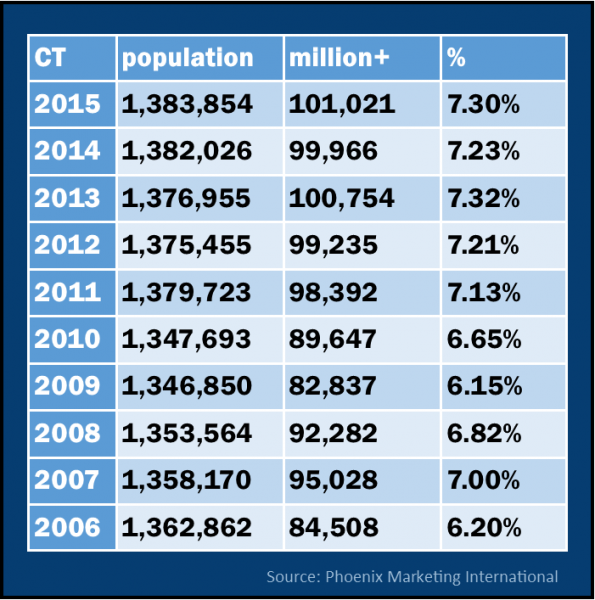
Just three years ago, in 2013, the number of millionaires in Connecticut topped 100,000 for the first time.  In 2015, it exceeded 101,000.  That compares with just over 84,000 in 2006.  Millionaires made up 6.2 percent of state residents that year, compared with 7.3 percent in 2015, based on data from Phoenix Marketing International.