

New Documentary, Travelers Championship Heighten Attention to ALS, Sports is Once Again Common Theme
/Public awareness of ALS - amyotrophic lateral sclerosis – has been intertwined with sports since Lou Gehrig played with the New York Yankees, and saw his career and his life, tragically shortened by the neurodegenerative disease eight decades ago. Gehrig’s Yankee Stadium speech in 1939 has endured as one of the century’s most memorable.
Earlier this month, the Travelers Championship on the PGA Tour raised more money for charity than in any previous year, when $2.8 million was raised with ALS as the primary charity. Travelers Executive Chairman of the Board Jay Fishman announced in August 2015 that he had been diagnosed with ALS.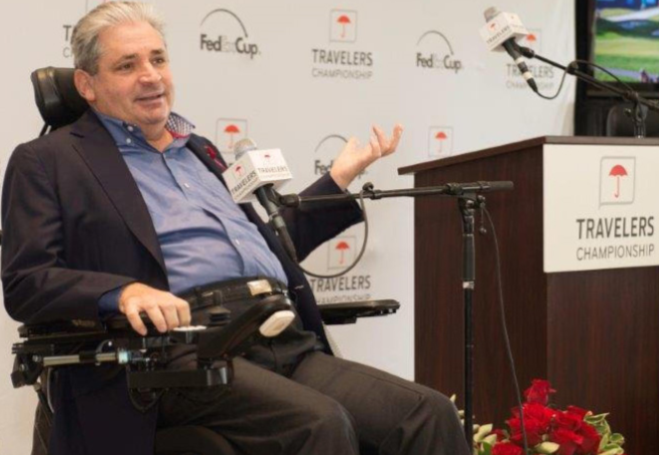
And now, a new motion picture documentary telling the story of a former NFL player afflicted with ALS is reaching theaters across the country, including Connecticut. The film, Gleason, goes inside the life of Steve Gleason, the former New Orleans Saints defensive back who, at the age of 34, was diagnosed with ALS and given a life expectancy of two to five years. Gleason played for the Saints from 2000-2008.
The primary beneficiary for the 2016 Travelers tournament was the ALS Clinic at the Hospital for Special Care (HSC) in New Britain. Each year, HSC cares for more than 250 Connecticut residents with amyotrophic lateral sclerosis (ALS). HSC is the only facility in Connecticut that is part of the ALS Association’s national network of Certified Treatment Centers of Excellence and is certified by the Muscular Dystrophy Association for ALS care.

According to the ALS Association, amyotrophic lateral sclerosis is a progressive neurodegenerative disease that affects nerve cells in the brain and the spinal cord. When a muscle has no nourishment, it "atrophies" or wastes away. "Lateral" identifies the areas in a person's spinal cord where portions of the nerve cells that signal and control the muscles are located. As this area degenerates it leads to scarring or hardening ("sclerosis") in the region. Motor neurons reach from the brain to the spinal cord and from the spinal cord to the muscles throughout the body. The progressive degeneration of the motor neurons in ALS eventually leads to their demise.
ALS burst back into the public conversation during the 2014 ALS Ice Bucket Challenge, as millions of people started talking about ALS. Recently, there have been some indications that the money raised during that social media explosion may have helped to advance research into ALS.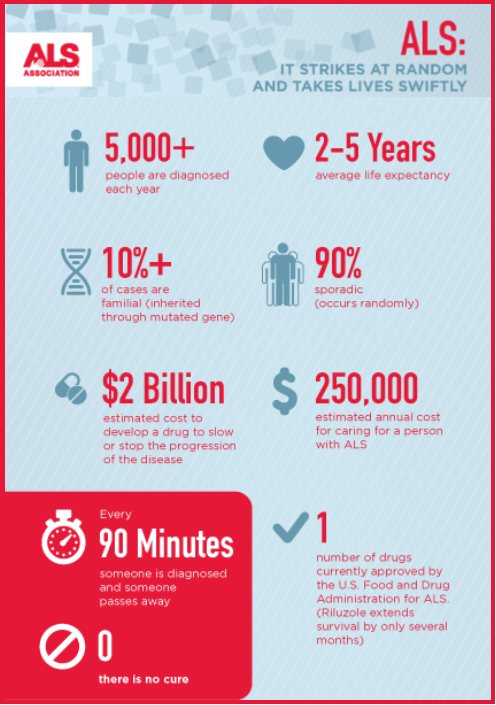
As the movie tells it, just weeks after his diagnosis, Gleason found out his wife, Michel, was expecting their first child. A video journal that began as a gift for his unborn son expands to chronicle Steve’s determination to get his relationships in order, build a foundation to provide other ALS patients with purpose, and adapt to his declining physical condition—utilizing medical technologies that offer the means to live as fully as possible, according to the movie synopsis appearing on the film’s website. The documentary was highly regarded at the 2016 Sundance Film Festival, and is making its Connecticut debut at Cinema City at the Palace 17 in Hartford.
ALS usually strikes people between the ages of 40 and 70, and approximately 20,000 Americans can have the disease at any given time (although this number fluctuates), the ALS Association reports. For unknown reasons, military veterans are approximately twice as likely to be diagnosed with the disease than the general public.
The Greater Hartford Walk to Defeat ALS will take place on September 25 in East Hartford. The New Haven Walk will be held on October 2 in New Haven.
https://youtu.be/WgkQU32XSFQ
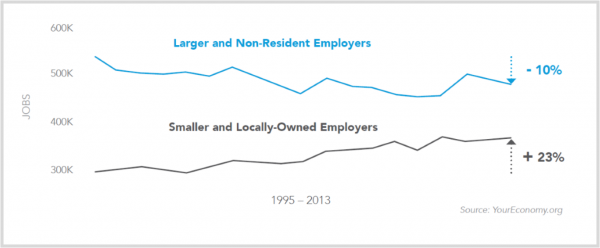 Local and regional organizations and associations, such as the MetroHartford Alliance’s HYPE, reSET, United Way’s Emerging Leaders and the Urban League’s Young Professionals “engage and connect millennials” and offer “business advisory services and other supports to help small businesses thrive,” the report explains, providing “a great start” on what needs to be done.
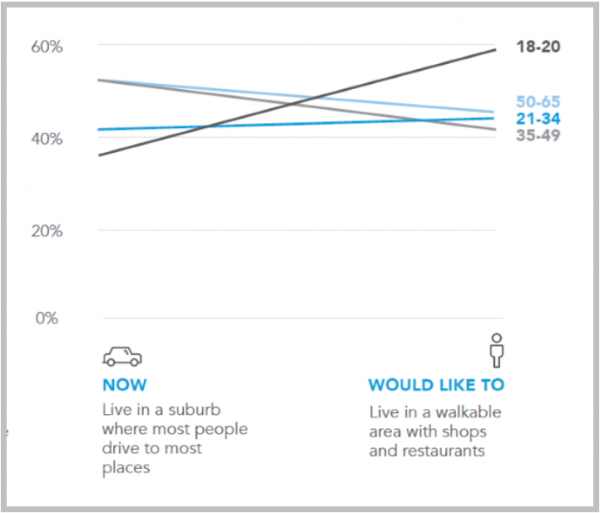 The report includes a timeline of past efforts aimed at addressing the region’s long-standing challenges, “not to be disheartening, but instead to highlight where positive changes have been made” and how collaborative efforts can “create opportunities for all Greater Hartford residents.” The report also indicates that:


 The entire statewide system in Connecticut, purchased through A&T, cost $13.26 million with annual maintenance costs of about $3.2 million, Stephen Verbil, a telecommunications manager with the Division of the Statewide Emergency Communications,
 The same measure showed the age 20-34 demographic group, at 0.22 percent, was considerably below the rate for other age groups. (This rate means that 221 out of every 100,000 adults in this age group became entrepreneurs in a given month.) The data also indicates that the rate of new entrepreneurs for the age 20-34 group is down from the high point for this age group of 0.28 percent in 1996.


 Individual municipalities and state agencies also have options to purchase additional products as needed, such as 3-D building footprints, planimetrics, landcover maps, impervious surface maps and more, according to company officials.

 "Our flight team did an exceptional job of outmaneuvering the unusual weather present during the collection period (in Connecticut)," says Shawn Benham, Sanborn project manager. "The savings truly are astronomical when you merge many smaller project areas into a single large project because of the fixed costs associated with each mobilization," added Arshat in statement released by the company.


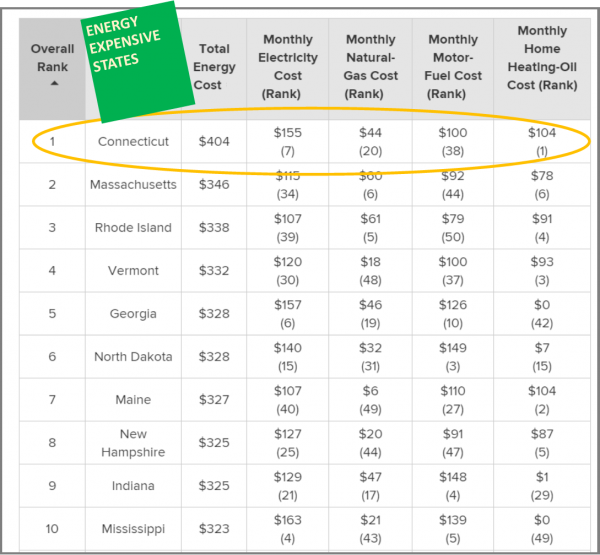
 necticut ranked as the most energy expensive state mainly due to its high retail prices for energy,” analyst Jill Gonzalez told CT by the Numbers. “The state has the third highest retail price for electricity and heating oil at $0.20 per kWh and almost $4 per gallon, respectively. Natural gas isn't cheap either, ranking 14th highest, at $14 per thousand cubic feet. These prices paired with high heating consumption in the winter months put Connecticut on top of these rankings."
 Describing Hartford’s prominent manufacturing history, Hinz said “Hartford, CT, is a classic story in the history of American technology. If you have ever wondered why people refer to “Yankee ingenuity,” this is what they are talking about.” He adds, “In the mid and late 1800s, the United States overtakes Great Britain as the world’s foremost economic superpower, largely on the strength of its prowess in inventing and manufacturing new technologies. Hartford is at the center of that revolution.”
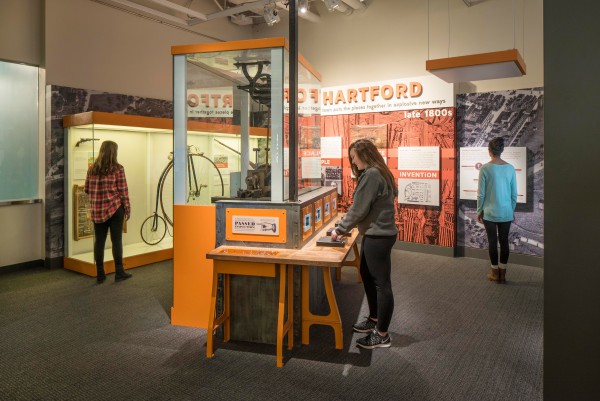 The exhibit notes that by the 1850’s “Hartford became the center of production for a wide array of products—including firearms by Colt, Richard Gatling and John Browning; Weed sewing machines; Royal and Underwood typewriters; Columbia bicycles; and even Pope automobiles.”

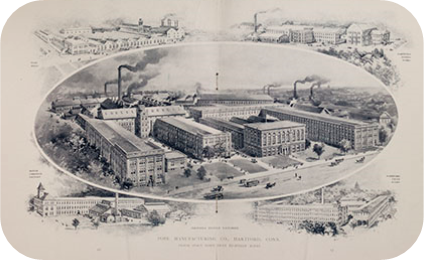 rode his high-wheeler from the station down Capitol Avenue to the Weed Sewing Machine Company.’”
 Jeanne Manzelli, a resident of Windsor, has a
 BFA in Sculpture from the Massachusetts College of Art and her MED in Art Education from the University of Massachusetts, Amherst. Her experience includes a 20 year career in design, manufacture, appraisal and sale of jewelry, two decades as mural artist working closely with interior designers as an industry professional, and 14 years teaching basic and advanced drawing, sculpture and 3D design as well as color theory at Tunxis Community College.
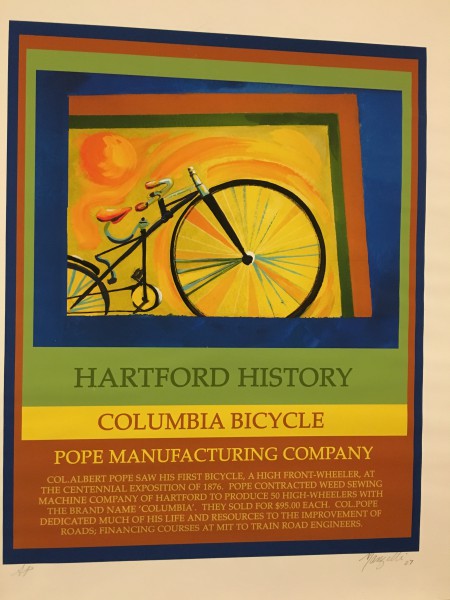
 The site said of
 s, including:




















