Travelers Initiative Aims to Predict Chronic Pain from Workplace Injuries

Can chronic pain, often the lingering result of a workplace injury, be predicted? The Travelers Companies, Inc. believes the answer is yes.  The company has developed what it describes as the first predictive model designed to reverse a sharp rise in chronic pain caused by workplace injuries.

The Travelers Early Severity Predictor (patent pending) identifies the likelihood of an injured employee developing chronic pain so that they can avoid it in recovery and reduce the need to use opioids or other painkillers.

“Millions of American workers are injured on the job each year, and the number of cases in which chronic pain interferes with an employee’s recovery has risen from less than 10 percent a decade ago to more than half of all serious injuries today,” said Dr. Adam Seidner, the National Medical Director at Travelers, when the initiative was announced in April.chronic-pain

According to A.M. Best, Travelers is the largest workers compensation carrier in the United States. The company manages more than 250,000 workplace injury claims and 3.5 billion medical treatments per year.

“When someone develops chronic pain, they are prescribed opioids or other painkillers more than 90 percent of the time. Our goal is to work with injured employees and their doctors to eliminate or substantially reduce the need for painkillers that can slow their recovery or lead to devastating long-term addiction.”

The Travelers Early Severity Predictor has been applied in more than 20,000 cases since early 2015. Of those, more than 9,000 injured employees were identified as being at risk of developing chronic pain. These employees received a customized, sports medicine-like regimen of treatment precisely sequenced to aid and accelerate their recovery, the company explained.

Injured employees who participated in the program in the past year have, on average, recovered and returned to work more quickly, the company said. They were also far less likely to receive a prescription for opioids, and when they did, it was typically a lower dosage or only for short-term use. At the same time, medical expenses, which cost American employers an average of nearly $40,000 per injury, were reduced by as much as 50 percent.

In 2014, there were 107.1 cases of nonfatal occupational injuries or illnesses requiring an employee to miss work for every 100,000 full-time American workers, according to the U.S. Bureau of Labor Statistics (BLS), the website IPWatchdog reported. Although this represented a decline from 2013’s workplace injury numbers, it still resulted in 1,157,410 days away from work among private, state government and local government employees. BLS statistics show that workplace injury incidence rates were highest in the industries of transportation and warehousing as well as health care and social assistance, according to the website.Travelers-Logo

Two patent applications published this year by the U.S. Patent and Trademark Office cover technologies associated with the Early Severity Predictor project, IP Watchdog reported.

The Centers for Disease Control issued a guideline earlier this year, the Insurance Journal reported, for primary care physicians for treating chronic pain. The new CDC guideline aims to lessen opioid use disorder and overdose. When opioids are used, doctors should prescribe lowest possible effective dosage, according to the guideline. The CDC guideline also suggests increasing the use of other effective treatments available for chronic pain, such as non-opioid medications or non-pharmacologic therapies.

According to research into physician dispensing of opioids, the Workers Compensation Research Institute (WCRI) noted that three out of four injured workers with pain are prescribed opiods, with the amount per claim varying by state, the Insurance Journal reported.  Nearly 1 in 12 injured workers given narcotics are still on them 3 to 6 months later as few doctors appear to be following recommended treatment guidelines to prevent abuse, according to WCRI research in 2012.

A 2012 study in the Journal of Occupational & Environmental Medicine found that when long-acting opioid painkillers are prescribed, workers’ compensation claims are nearly four times more likely to turn into catastrophic claims with costs tallying more than $100,000.

“Helping employees avoid chronic pain and the slippery slope to possible opioid dependency is critical to reversing this disturbing and costly health crisis,” Seidner emphasized.

The Travelers Companies, Inc. is a leading provider of property casualty insurance for auto, home and business. The company’s main offices are in New York, Hartford and St. Paul.  A component of the Dow Jones Industrial Average, Travelers has approximately 30,000 employees and generated revenues of approximately $27 billion in 2015.


New Documentary, Travelers Championship Heighten Attention to ALS, Sports is Once Again Common Theme

Public awareness of ALS - amyotrophic lateral sclerosis – has been intertwined with sports since Lou Gehrig played with the New York Yankees, and saw his career and his life, tragically shortened by the neurodegenerative disease eight decades ago.  Gehrig’s Yankee Stadium speech in 1939 has endured as one of the century’s most memorable. Earlier this month, the Travelers Championship on the PGA Tour raised more money for charity than in any previous year, when $2.8 million was raised with ALS as the primary charity.  Travelers Executive Chairman of the Board Jay Fishman announced in August 2015 that he had been diagnosed with ALS.jay fishman

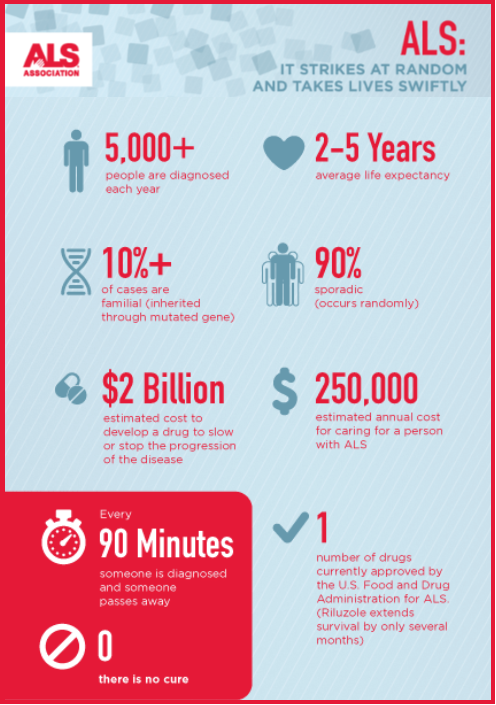
And now, a new motion picture documentary telling the story of a former NFL player afflicted with ALS is reaching theaters across the country, including Connecticut.  The film, Gleason, goes inside the life of Steve Gleason, the former New Orleans Saints defensive back who, at the age of 34, was diagnosed with ALS and given a life expectancy of two to five years. Gleason played for the Saints from 2000-2008.

The primary beneficiary for the 2016 Travelers tournament was the ALS Clinic at the Hospital for Special Care (HSC) in New Britain. Each year, HSC cares for more than 250 Connecticut residents with amyotrophic lateral sclerosis (ALS). HSC is the only facility in Connecticut that is part of the ALS Association’s national network of Certified Treatment Centers of Excellence and is certified by the Muscular Dystrophy Association for ALS care.

Copyright Michael C. Hebert

According to the ALS Association, amyotrophic lateral sclerosis is a progressive neurodegenerative disease that affects nerve cells in the brain and the spinal cord. When a muscle has no nourishment, it "atrophies" or wastes away. "Lateral" identifies the areas in a person's spinal cord where portions of the nerve cells that signal and control the muscles are located. As this area degenerates it leads to scarring or hardening ("sclerosis") in the region.  Motor neurons reach from the brain to the spinal cord and from the spinal cord to the muscles throughout the body. The progressive degeneration of the motor neurons in ALS eventually leads to their demise.

ALS burst back into the public conversation during the 2014 ALS Ice Bucket Challenge, as millions of people started talking about ALS. Recently, there have been some indications that the money raised during that social media explosion may have helped to advance research into ALS.ALS

As the movie tells it, just weeks after his diagnosis, Gleason found out his wife, Michel, was expecting their first child. A video journal that began as a gift for his unborn son expands to chronicle Steve’s determination to get his relationships in order, build a foundation to provide other ALS patients with purpose, and adapt to his declining physical condition—utilizing medical technologies that offer the means to live as fully as possible, according to the movie synopsis appearing on the film’s website. The documentary was highly regarded at the 2016 Sundance Film Festival, and is making its Connecticut debut at Cinema City at the Palace 17 in Hartford.

ALS usually strikes people between the ages of 40 and 70, and approximately 20,000 Americans can have the disease at any given time (although this number fluctuates), the ALS Association reports. For unknown reasons, military veterans are approximately twice as likely to be diagnosed with the disease than the general public.

The Greater Hartford Walk to Defeat ALS will take place on September 25 in East Hartford.  The New Haven Walk will be held on October 2 in New Haven.

https://youtu.be/WgkQU32XSFQ

Metro Hartford Progress Points Report Looks at Promise in Communities Amidst Considerable Challenges

First, the bad news.  The Metro Hartford region “has not produced meaningful job growth in the past 25 years, despite having advanced industries that offer a family-sustaining wage and having residents eager to work.”  The region’s spending on local schools continues to increase, even as enrollment declines, and the region “retains the fewest four-year graduates of any metro region in the country – with 60 percent of recent graduates citing jobs as their primary reason for leaving.”  Even in the region’s traditional strength in advanced industries, such as aerospace manufacturing and computer systems designs, “our competitive advantage may be eroding.” If the goal of the latest edition of the Metro Hartford Progress Points report, driven by the Hartford Foundation for Public Giving, is to push a region-wide conversation that spurs progress, the data highlighting five key issues impacting the region’s 38 communities may have just enough unsettling news and rays of hope to do just that.  “The need for systemic change,” the report indicates, “requires leadership and more regional coordination and integration.”progresspointslogo

The third annual edition of the report is the result of collaboration between nine stakeholders representing local government, businesses, nonprofits, academic and philanthropic institutions and organizations committed to making long-term progress in the region.

The 2016 report focuses on five related themes: attracting and retaining a skilled workforce; better connecting people to opportunity; aligning workforce and economic development strategies; ensuring a quality education for all despite scarce resources and building collaborative leadership and civic engagement to create long-term progress.

The data suggests that the region may be poised for greater success, but not without accelerated efforts, noting flatly that “more is needed.”

The report notes that the beginnings of “meaningful change” is evident, with towns creating walkable areas near transportation through transit-oriented development along the CT Fasttrak corridor and the New Haven-Hartford-Springfield rail line, expanding transportation options to meet the needs of today’s population and employers, an expanding presence of colleges in downtown Hartford, and regional collaboratives creating career pathways and bridging the divide among differing aspects of the education system from middle school through the workforce.

c1Local and regional organizations and associations, such as the MetroHartford Alliance’s HYPE, reSET, United Way’s Emerging Leaders and the Urban League’s Young Professionals “engage and connect millennials” and offer “business advisory services and other supports to help small businesses thrive,” the report explains, providing “a great start” on what needs to be done.

The report notes that “regional thinking is not new to Metro Hartford, even if successes have been intermittent. Without regional government, we must rely on informal, voluntary collaboration among leaders to address regional challenges.”

Among the findings:

  • Most job openings in the future will be in either high-wage jobs that require advanced degrees (27 percent) or low-skill jobs with wages that cannot sustain a family (72 percent).
  • While school enrollment in our region has declined by 7 percent since 2001, amounting to 29,000 additional empty seats in our region’s classrooms, education expenditures have increased 25 percent.
  • Millennials are projected to be the largest workforce segment by 2025, but who are they? Nearly half (43%) of the region’s 18- to 34-year-olds live in households that don’t earn family-sustaining wages.
  • Millennials and those aged 45-64 are moving out of our state in large numbers, along with those with post-secondary education, and are taking $912 million of their income with them. Overall, college graduates, individuals with advanced degrees and older residents are moving out of state, while younger and less educated people are moving in.

Regarding economic growth – or the lack thereof – the Hartford region ranks at the bottom of the list among Cleveland, Buffalo and New Orleans over the past quarter-century.  Topping the list are Austin, Las Vegas, Orlando and Raleigh.

c2The report includes a timeline of past efforts aimed at addressing the region’s long-standing challenges, “not to be disheartening, but instead to highlight where positive changes have been made” and how collaborative efforts can “create opportunities for all Greater Hartford residents.” The report also indicates that:



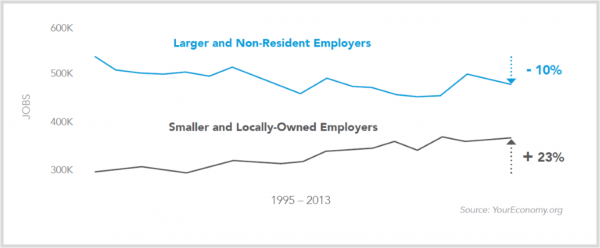
  • While net job growth in our region has been flat, the region’s smaller and locally-owned businesses have increased employment by 23 percent between 1995 and 2013. Unfortunately, larger and employers headquartered out of state have decreased employment by 10 percent during this same time period.
  • New and proposed rail, bus and highway projects offer the promise of access to jobs, housing and amenities that can spur economic growth.
  • Many of the region’s residents – of all ages – would like to live where they can walk to shops, restaurants and other amenities, compared to where they lie today. That is true of 60 percent of those ages 18-20, and more than 40 percent of other age demographics.

The Metro Hartford region consists of 1 million people living in Hartford, New Britain and the 36 surrounding communities.  The partners in the initiative expressed the hope that the latest edition of the Progress Points report creates the “sense of urgency necessary to address shared regional challenges.”

The Metro Hartford Progress Points Partners are: Capitol Region Council of Governments, Capital Workforce Partners, City of Hartford, Hartford Foundation for Public Giving, Hispanic Health Council, MetroHartford Alliance, Trinity College Center for Urban and Global Studies, United Way of Central and Northeastern Connecticut, and Urban League of Greater Hartford.

https://youtu.be/0zTQjsbNlw0

Connecticut Among 11 States Upgrading to Next Generation 911

Connecticut is one of 11 states that have upgraded, or are in the process of upgrading, their Emergency 911 system to what’s called Next Generation 911, to allow the emergency notification system to respond to text messages and utilize a range of new technologies.  Connecticut’s upgrade began last year, and is expected to be fully operational later this year. The National Emergency Number Association (NENA), which represents government agencies and private firms involved in the emergency system, and the National 911 Program, housed in the U.S. Department of Transportation, are pushing states and localities to adopt what they call Next Generation 911, according to a published report in Governing magazine. NG911CT

The urgency driving the upgrade effort was highlighted in recent weeks. Like most 911 systems in the U.S., Orlando’s emergency communication center cannot receive text messages, photos or videos. Nor can most 911 systems tap into other mobile device features, like detailed location services, Governing points out.

The magazine, which focuses on state and local government operations, notes that texting 911 could be valuable in emergencies like the Orlando shooting or a domestic violence incident, where it is unsafe to make any noise let alone talk out loud about the danger at hand. And sending text messages to 911 could allow people who are deaf or have speech impairments to communicate without other special devices.

One day last month, a computer glitch knocked out portions of the statewide 911 system briefly in Connecticut.  The Hartford Courant is reporting today that state officials have determined the partially installed high-tech 911 emergency dispatch system  became overwhelmed by duplicate messages July 15, leading to a breakdown that failed to connect callers at about half the call centers.  The state has temporarily halted a $13.2 million upgrade of the system, William Youell, director of the Division of Statewide Emergency Telecommunications, told the Courant.

Connecticut’s Department of Emergency Services and Public Protection (formerly Emergency Management and Homeland Security) reports that The Next Generation 9-1-1 system is Internet Protocol based and will utilize the new Connecticut Public Safety Data Network to deliver 911 calls to Public Safety Answering Points (PSAPs) in Connecticut.

The new system, according to the agency’s website, will provide the infrastructure to allow “Text to 9-1-1”, the ability to send images or video with a 9-1-1 call to a PSAP, and to call 9-1-1 directly via the Internet when telecommunication service providers make these features available to the public.cell

It has been estimated that full implementation of the system, which began in the spring of 2015, would take 18 months. Initial installation of the system call answering components first got underway at ten pilot PSAPs around the state in May 2015, in New Britain, Wilton, Enfield, Newington, Valley Shore (12 towns), Fairfield, Middletown, Mashantucket, Shelton, and Wolcott.  Training sessions for PSAP personnel have been held in New Haven, in collaboration with AT&T.

Four states — Indiana, Iowa, Maine and Vermont — already have moved to Next Generation 911, according to NENA. Another seven — Connecticut, Hawaii, Massachusetts, North Dakota, South Dakota, Tennessee and Virginia — are doing so, Governing points out. The goal is for there to be a nationwide changeover completed by 2020, as utility companies abandon old copper phone lines for fiber optic cables.

In at least five additional states — Florida, Illinois, Michigan, Ohio and Texas — city, county and local governments either have upgraded their systems or are in the process of doing so.  But in at least six states — Georgia, Missouri, Nevada, New Mexico, Oklahoma and West Virginia — it is unclear if any preparations for the switch have been made at the state or local level, according to the Governing update.

CT ESPPThe entire statewide system in Connecticut, purchased through A&T, cost $13.26 million with annual maintenance costs of about $3.2 million, Stephen Verbil, a telecommunications manager with the Division of the Statewide Emergency Communications, told the Day of New London last year.  The system uses Dell servers connected through a fiber optic network and is paid for through a surcharge on land lines and cellphones.

Finding callers who aren’t using landlines, which are registered to a physical address, has been a problem since cellphones became popular in the 1990s, Governing reported. Calls to 911 from cellphones are not routed based on the exact location of the caller, but on the location of the tower transmitting that call. This can lead to emergency calls getting answered by faraway call centers and make it hard for responders to locate the caller.  Next Generation 911 will be able to use technology like Wi-Fi, Bluetooth signals and geographic information systems to find mobile callers, Trey Forgety, government affairs director for NENA, told Governing.


Entrepreneurship May be Boomer, Rather Than Millennial, Phenomenon

Contrary to popular belief, entrepreneurship among Boomers is strong when compared to younger age groups, including millennials, according to a new analysis from The Kaufman Foundation of national research into entrepreneurship. The Kauffman Startup Index reveals that nationally the rate of new entrepreneurs ages 55-64 has increased from 0.34 percent in 1996 to 0.37 percent in 2014. (This rate means that 370 out of every 100,000 adults in this age group became entrepreneurs in a given month.)

EntrepreneurshipThe same measure showed the age 20-34 demographic group, at 0.22 percent, was considerably below the rate for other age groups. (This rate means that 221 out of every 100,000 adults in this age group became entrepreneurs in a given month.) The data also indicates that the rate of new entrepreneurs for the age 20-34 group is down from the high point for this age group of 0.28 percent in 1996.

For Connecticut, which has increasingly focused economic development attention and resources on entrepreneurial start-up businesses, the demographic findings may inform the state’s approach.

Connecticut Innovations, for example, “helps innovative Connecticut companies, or those that want to move here, no matter what stage of the business life cycle you’re in.”  CI describes itself as “entrepreneur-friendly, trustworthy and collaborative,” without mention of the demographics of the individuals driving the start-up businesses.

Connecticut’s self-identified “innovation ecosystem,” CT Next, equips “startups and entrepreneurs with resources, guidance and networks to accelerate growth and success.”  CT Next recently launched the Entrepreneur Learner’s Permit Program, which cuts fees that start-ups in specific industries are required to pay to the state.kauffman-foundation-squarelogo

Other organizations around the state, such as Hartford Area Young Professionals and Entrepreneurs (HYPE), focus on young people starting fledgling businesses.  The Connecticut Center for Arts and Technology (ConnCAT) in New Haven has developed an Entrepreneurial Academy, a hands-on program that coaches interested and capable youth on business fundamentals and entrepreneurship skills. ON the other end of the demographic continuum, AARP has launched an initiative called Encore Entrepreneurs, focusing on supporting and encouraging businesses launched by individuals age 50 and older.

There are competing views as to whether “success or hardship” is driving the growth of entrepreneurship for older Americans, according to the Kaufman analysis. “On one hand, working and starting business late in life might be a result of increased debt levels especially for younger female Boomers. On the other hand, some researchers have found that growth of Boomer entrepreneurship may be an indication of financial strengths rather than weaknesses.”

The oldest cohort of Baby Boomers turned 65 in 2011, and the last cohort of Boomers will turn 65 in 2029, the analysis indicates, stressing that the peak age for entrepreneurs is “closer to 40 than 20.”

The Kaufman review indicates that today’s millennials are “starting businesses at lower rates than other cohorts did when they were the same age.” Possible reasons suggested include growing student debt, timing of entry to workforce with the Great Recession, change in risk-taking attitudes, housing costs, among others. A poll by Young Invincibles, cited by the Kaufman presentation, found that Millennials identified student debt and lack of retirement savings as barriers to entrepreneurship.

CT Launches Entrepreneur Learner’s Permit to Cut Start-Up Fees

Connecticut’s Entrepreneur Learner’s Permit program, operated by CTNext, is underway.  The two-year pilot initiative, which reimburses first-time entrepreneurs for filing, licensing, and permitting fees associated with starting a business, is aimed at giving certain businesses a boost on the bottom line. A wholly-owned subsidiary of Connecticut Innovations, CTNext is Connecticut’s innovation ecosystem, designed to build a more robust community of entrepreneurs and accelerate early-stage growth by providing access to talent, space, industry expertise, services, skill development, and capital to foster innovation and create jobs in Connecticut.ctnext-logo

The Entrepreneur Learner’s Permit program, signed into law earlier this year, allows owners and executives of businesses in the information technology, bioscience, and green technology industries to receive reimbursement up to $1,500 for state and municipal business startup fees.

The Entrepreneur Learner’s Permit legislation sets a funding cap of $500,000 in Fiscal Years 2017 and 2018, equaling $1 million for reimbursable fees for entrepreneurs in the state.

Eligibility in the three industries has been defined by CTNext as the program gets started this month:ELP-CT

Bioscience: Defined as the manufacturing of pharmaceuticals, medicines, medical equipment, or medical devices and analytical laboratory instruments, operating medical or diagnostic testing laboratories, or conducting pure research and development in life sciences.

Information Technology: Defined as software publishing, motion picture and video production, teleproduction and post-production services, telecommunications, data processing, hosting and related services, custom computer programming services, computer system design, computer facilities management services, other computer related services and computer training.

Green Technology: Defined as the production, manufacture, design, research or development of clean energy, green buildings, smart grid, high-efficiency transportation vehicles and alternative fuels, environmental products, environmental remediation and pollution prevention.

Glendowlyn Thames, director of Small Business Innovation and CTNext at Connecticut Innovations, recently told Hartford Business Journal that “Starting and running a business in its earliest stages can be a massive undertaking, no matter the location. This benefit does more than cover fees — it is another step the state has taken to help create a more active ecosystem and assist entrepreneurs when they need it most. Entrepreneurs scrutinize every cost, so while the fees may not deter a company from coming to Connecticut, removing those fees can certainly serve as a benefit.”

The Connecticut Business and Industry Association has described the program as “a pro-small business, solid stepping stone toward paving the way for Connecticut to become a much more business friendly state.”  The legislation establishing the program was authored by State Rep. Caroline Simmons-D-144 and State Sen. Scott Frantz-R-36, the Stamford Advocate reported.CTI_Logo

“Our vision is to attract new businesses to Connecticut and to encourage entrepreneurship and job growth in our state,” Simmons told the Advocate. “This is a pro-business, bi-partisan bill that will benefit Connecticut's economy.”

The legislature’s Office of Fiscal Analysis (OFA) estimated the program will cost the state $27 million annually in lost fee revenue; other agencies like transportation and banking will lose $7 million annually. OFA assumes 25,000 startups launch in Connecticut every year.

CTNext, described as Connecticut’s innovation ecosystem, is tasked under revisions to the state’s economic development structure approved by the state legislature to “equip startups and entrepreneurs with resources, guidance and networks to accelerate growth and success.” CTNext launched in 2012, and has worked with more than 1,100 companies.

Companies need to certify that they are eligible for the Entrepreneur Learner’s Permit program, and after filling out a very brief online application, a “CTNext team member will reach out to you to collect receipts for reimbursement.”  At the end of the two-year program, CT Innovations is to evaluate its effectiveness and make a recommendation to the legislature regarding whether it should be continued, concluded, or revised.


https://youtu.be/U0vyYsDrl10

Project Undertakes Mapping CT With Precision From the Air

Unbeknownst to most of us, there is a world of difference between an aerial photograph and an orthophotography.  In fact, enough of a difference for the State of Connecticut to get behind an initiative to photograph the entire state. The results are to be made publicly available through the state’s Open Data Initiative.  The orthoimaging of Connecticut, now complete, was undertaken by the Sanborn Map Company, under a contract with the Capitol Region Council of Governments made possible by a grant from the state's Office of Policy and Management. It will provide Connecticut with its first statewide acquisition of datasets at this high level of accuracy, according to those involved with the project.PR_Mystic_Seaport_Connecticut_06142016

The Sanborn flight team overcame challenging spring weather conditions to successfully collect high-resolution imagery of the entire state of Connecticut and its coastline in just five weeks, according to the company.  Altogether, the firm collected more than 42,500 4-band, 3-inch resolution images during March and April, including more than 6,000 coastline images during low-tide conditions.

The Sanborn team, which included subcontractors, also collected more than 5,200 square miles of high-density light detection and ranging (LiDAR) data covering the entire state during the same time period. All of the data were collected during snow-free, cloud-free and leaf-off conditions, which makes them ideal for a host of products and applications.

A conventional perspective aerial photograph contains image displacements caused by the tilting of the camera and terrain relief, or topography. It does not have a uniform scale and one cannot measure distances on an aerial photograph as if it were a map.orthophotography

In orthophotography, the effects of tilt and relief are removed from the aerial photograph by a computer rectification process to create an orthophoto, which then becomes a uniform-scale photograph. Since an orthophoto has a uniform scale, it is possible to measure directly on it, as with traditional maps.

The product combines the image characteristics of a photograph with the geometric qualities of a map; thus, it is possible to get direct measurements of distances, areas, angles, and positions.

That distinction can make a big difference for governments and businesses seeking such images. Brad Arshat, Sanborn director of strategic accounts in the Northeastern United States, estimates that statewide collaboration on the project will result in several million dollars in tax dollar savings, as opposed to each of the state's 169 municipalities acquiring its own data.

Sanborn is now creating mapping products from the data, which will be delivered later this year. These include 3-inch ground sample distance (GSD) orthoimagery; U.S. Geological Survey (USGS) QL2 LiDAR data; bare Earth digital elevation models (DEMs); and 1-foot contour maps.

223284LOGOIndividual municipalities and state agencies also have options to purchase additional products as needed, such as 3-D building footprints, planimetrics, landcover maps, impervious surface maps and more, according to company officials.

"We need to support our communities by giving them the tools to do their jobs in a modern, efficient and effective way," Gov. Dannel Malloy pointed out in a Sanborn news release. "As a former mayor, I know how valuable this information is to municipalities. In addition, this information is critical to our state agencies."crcog-logo

Sanborn is a preeminent innovator in the geospatial industry, the company website indicates, delivering state-of-the-art mapping, visualization, Web GIS™ and 3-D solutions to customers worldwide. The firm, which marked its 150th anniversary in 2016, operates a fleet of 14 aircraft located strategically across the United States.

connecticut"Our flight team did an exceptional job of outmaneuvering the unusual weather present during the collection period (in Connecticut)," says Shawn Benham, Sanborn project manager. "The savings truly are astronomical when you merge many smaller project areas into a single large project because of the fixed costs associated with each mobilization," added Arshat in statement released by the company.

Home Grown Start-Up Business Aims to Help CT Grow

“Simply redeveloping economic development.”  That’s how the leadership of Help Grow CT, a fledgling business dedicated to helping other start-up entrepreneurial enterprises, describe their endeavor.  As a playful video summarizes the serious intent driving the effort, “Several years ago, a group of entrepreneurs utterly frustrated with the bad press their beloved state was receiving, just couldn’t accept Connecticut as being one of the worst places to do business in the country.” Christopher Sacchinelli and a handful of colleagues quietly began the venture a few years ago, having spent some time at a Norwalk accelerator program and with a track-record in business start-ups.  They tweaked and revised their business model and platforms, traveling and researching economic development strategies that have been successful elsewhere, and why. About 50 businesses signed on, and helped refine the effort. circular_HGCT

Six months ago they began a public push to grow the business and this month a new member platform is being launched. The immediate goal is 3,000 small business owners, about one percent of businesses in Connecticut.  The company is about one-third of the way there.

“We knew that there had to be a way we could catalyze change via our own actions,” Sacchinelli said, recalling the drive to start Help Grow CT. “The goal is to help and empower Connecticut businesses.  To make it cheaper and easier to grow a business.”

In surveying the new business landscape, it became clear to Sacchinelli that “the problem that most small business owners were experiencing was high costs, not enough time and low profits.”   What they did as a result was develop a business that provides opportunities for new businesses to band together to succeed as individual enterprises, and by doing so, “help grow CT.”  It is an endeavor that aims to bring other businesses together as a group to drive economies of scale, reduce costs, increase efficiencies and grow profits.  And in doing so, boost Connecticut’s economy and turn around the state’s less-than-stellar reputation.

“The number one business killer is lack of action.  We focus on solutions,” said Sacchinelli, a Trumbull resident and lifelong entrepreneur born and raised in Norwalk who turned 27 this month.  “Connecticut is my community.  I’m vested in Connecticut.”  A previous venture landed him on the cover of the Fairfield County Business Journal in 2013, soon after graduating college. He has authored a book to encourage young entrepreneurs like himself, and has endeavored to use his expertise to encourage and guide businesses and potential business owners in his home state.graphic

Through Help Grow CT, member companies are able to save up to 30 percent on dozens of exclusives partners, apps and platforms, and participating businesses are said to achieve, on average, 9 percent annual growth.  Individuals, called Growth Analysts, work with businesses to navigate through their specific business needs.

By offering savings on back room operations, such as bookkeeping, Help Grow CT not only allows business start-ups to focus more on their business product or service and less on the paperwork, without sacrificing the important detail that can lead a new enterprise to sink or swim.  They point out that businesses with healthy ledgers are 76 percent more likely to succeed over a 5 year period.

“HelpGrowCT has helped small business owners identify areas in their business where they can cut costs, invest in inefficiencies and grow their profitability,” the company’s website points out, offering support in branding, social marketing, and growth strategy development, responding to what is often new business owners “feeling overwhelmed” as they navigate all that is necessary to propel a new endeavor forward.  “We work with the nitty gritty that can hold a business back,” adds Sacchinelli.

Thus far, the initiative has been self-funded.  As members, who will pay monthly fees for the service, are added, Sacchinelli hopes the venture will be self-sustaining, and ultimately, profitable.  The number of members will largely determine that.  He is also cognizant of the potential social impact of the venture, and aims for it to be a “sustainable, evergreen accelerator program,” that will also deliver value to existing businesses.

In addition to the resources provided directly by Help CT Grow to member businesses, “we can listen to problems and crowd source solutions,” Sacchinelli explains, bringing the power of the network of members to bear on individual business challenges.  “The vast majority of small businesses have some of the same problems.  Together, we can guide a business toward the solution.”  He was encouraged recently by the positive feedback (and new members) from among attendees at the Connecticut Business Expo in Hartford, where he raised the profile of HelpGrowCT with the first visible foray into central Connecticut.

HelpGrowCT is also interested in the opinions of Connecticut's business community as their own business evolves.  A companion website, www.helpgrowct.org, includes a brief online survey for start-ups, business owners, investors, residents and students, aimed at propelling the venture and giving voice to the state's growing entrepreneurial community.   And HelpGrowCT continues to seek talent as it grows, actively seeking "energetic, self-driven community leaders who share our passion" and can apply their skills in journalism, event planning, advisory services, or community advocacy," according to the website.

Never too far from the surface is the drive to turn around Connecticut’s reputation as inhospitable to new businesses.  Says Sacchinelli, “After reading article after article about how Connecticut is a poor place to do business, we’re trying to build something that matters.”


https://youtu.be/tPIrcx3oEz8

https://youtu.be/xnac_ll-5I4

CT is Most Expensive Energy State in the Nation, Analysis Says

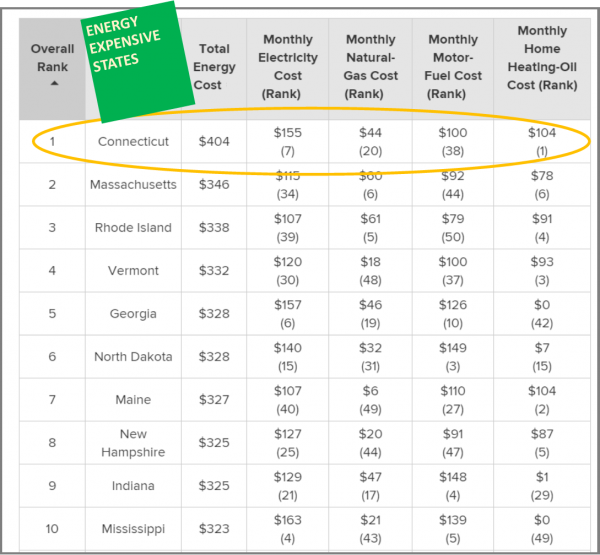
With an average monthly energy bill of $404 per consumer, Connecticut is the most energy expensive state in the nation, according to a new analysis. Using a formula that accounts for residential energy sources including electricity, natural gas, motor fuel and home heating oil, analysts at WalletHub compared the average monthly energy bills in each of the 50 states and the District of Columbia.  Connecticut ranked at the top of the list, with other New England states close behind.  The 10 most expensive states in the analysis, after Connecticut, were Massachusetts, Rhode Island, Vermont, Georgia, North Dakota, Maine, New Hampshire, Indiana and Mississippi.  Among the least expensive energy states for consumers were Oregon, Colorado and Washington, where the average monthly energy bill was $218.

top tenThe monthly consumer costs in Connecticut average $155 for electricity, $104 for home heating oil, $100 for motor fuel and $44 for natural gas.

Connecticut ranked third in the price of home heating oil and second highest in the nation for home heating oil consumption per consumer, for an overall ranking as highest in the nation for home heating oil costs.

Regarding electricity consumption, as a relatively small state, Connecticut ranked 37th.  However, for the price of electricity it ranked third, for an overall ranking of seventh when the two stats were combined for the overall Monthly Electricity Cost category.

"Constacknecticut ranked as the most energy expensive state mainly due to its high retail prices for energy,” analyst Jill Gonzalez told CT by the Numbers.  “The state has the third highest retail price for electricity and heating oil at $0.20 per kWh and almost $4 per gallon, respectively. Natural gas isn't cheap either, ranking 14th highest, at $14 per thousand cubic feet. These prices paired with high heating consumption in the winter months put Connecticut on top of these rankings."

The website notes that energy costs account for between 5 and 22 percent of families’ total after-tax income, with the poorest Americans, or 25 million households, paying the highest of that range.

Sources used to create the rankings, according to WalletHub, were collected from the U.S. Energy Information Administration, Federal Highway Administration, Environmental Protection Agency (EPA) and AAA’s Daily Fuel Gauge Report.

The report was issued this month, as July typically produces the highest energy bills for consumers.


Hartford’s Innovation, Manufacturing History Highlighted in Exhibits at Smithsonian and State Capitol

On Wednesday, July 13, the Smithsonian Institution’s National Museum of American History will make public a special portion of their collection with “Objects Out of Storage: Hartford, CT.”  The special exhibit, led by curator Susan Tolbert and historian Eric Hinz, will take place at noontime in the Lemelson Center for the Study of Invention and Innovation in the nation’s Capitol.banner-POI-sign-ET2015-4379_1 Describing Hartford’s prominent manufacturing history, Hinz said “Hartford, CT, is a classic story in the history of American technology. If you have ever wondered why people refer to “Yankee ingenuity,” this is what they are talking about.”  He adds, “In the mid and late 1800s, the United States overtakes Great Britain as the world’s foremost economic superpower, largely on the strength of its prowess in inventing and manufacturing new technologies. Hartford is at the center of that revolution.”

Hartford, described as “one of the birthplaces of American mass production,” is well represented in the ongoing exhibit, Places of Invention, which “takes visitors on a journey through time and place to meet people who lived, worked, played, collaborated, adapted, took risks, solved problems, and sometimes failed—all in the pursuit of something new.”

HartfordThe exhibit notes that by the 1850’s “Hartford became the center of production for a wide array of products—including firearms by Colt, Richard Gatling and John Browning; Weed sewing machines; Royal and Underwood typewriters; Columbia bicycles; and even Pope automobiles.”lemelson

The Lemelson Center is located at the Smithsonian's National Museum of American History, Constitution Avenue between 12th and 14th Street NW, in Washington, DC. The Lemelson Hall of Invention and Innovation is located on the Museum's first floor in its Innovation Wing. In the exhibit, which debuted  last summer, Hartford is featured with Silicon Valley and just four other locations: Hollywood, home of Technicolor; the Medical Alley of Minnesota, where cardiac innovations of the 1950s flourished; the Bronx, N.Y., birthplace of hip-hop in the 1970s; and the current, clean-energy innovations of Ft. Collins, Colo.

Among the featured innovations on display is the bicycle, manufactured for the first time in the United States in Hartford.  As the Smithsonian historian explains, “sensing a commercial opportunity, Albert Pope began importing bicycles from England and hatched a plan to produce them domestically in 1877. Within a year, Pope rode the train from Boston to Hartford, then, ‘to the amazement of the city’s onlookers, plantrode his high-wheeler from the station down Capitol Avenue to the Weed Sewing Machine Company.’”

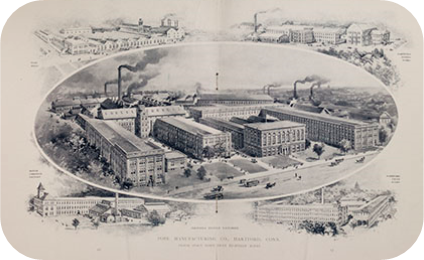
The history continues: “Pope approached factory superintendent George Fairfield with a proposal: would Weed agree to build a test run of 50 bicycles under contract? When Fairfield agreed, Pope (via the Weed Sewing Machine Company) became the first domestic manufacturer of bicycles in the United States. By 1895, Pope’s expanded Hartford operations included five factories set on 17 acres, employing 4,000 workers, making him Hartford’s largest employer.” Pope manufactured bicycles, motorcycles, and automobiles.

That chapter in Hartford history has recently captured the imagination of a well-known Hartford artist, whose cut-paper recreations of that chapter of the city’s transportation and recreation breakthrough is now available for display, having just completed an exhibition at the Connecticut State Capitol.

IMG_0185Jeanne Manzelli, a resident of Windsor, has a IMG_0176BFA in Sculpture from the Massachusetts College of Art and her MED in Art Education from the University of Massachusetts, Amherst. Her experience includes a 20 year career in design, manufacture, appraisal and sale of jewelry, two decades as mural artist working closely with interior designers as an industry professional, and 14 years teaching basic and advanced drawing, sculpture and 3D design as well as color theory at Tunxis Community College.


Her latest endeavor is a departure, and a salute to an innovation from a century and a half ago. The intricate designs, accompanied by information panels highlighting the history, are now available to be displayed at public facilities, such as schools, libraries, and community centers.  Manzelli looks forward to sharing her work (and is seeking a sponsor to underwrite the exhibit), as well as stimulating a conversation about innovation in Hartford, then and now.

IMG_0196