Prompted by Economy, Only Half of Nation's Millennials Plan to Work for Same Company Next Year, Gallup Survey Says
/Millennials are entering the workforce in increasing numbers, and are the intense focus both of governments – including Connecticut – and businesses seeking to attract and retain them. As Connecticut’s economic ranking among the states continues to hover near the bottom, the job choices of millennials become increasingly important to future economic vitality. Even amidst less than favorable comparisons in recent rankings, Connecticut has managed to achieve recent employment figures that show improvement. Last month, the state added some 3,000 jobs in the private sector and wages have also risen slightly in recent reports after a period of stagnation, WNPR reported recently.
Heather Ziegler, managing partner for Deloitte in Stamford, told WNPR that in her view the state is doing some things right, like encouraging high technology industries and fostering entrepreneurship. "But what I think is most effective, and one of the challenges at the same time," she told WNPR, "is getting individuals with the right skill sets interested in staying in the area and staying in Connecticut, versus moving on to the larger metropolitan areas that we are right between."
Millennials are already in a tough situation – they’re better educated, yet earning less than their counterparts in 1990, points out Christine Schilke of Young Energetic Solutions (YES CT), a statewide initiative seeking to empower young people to create a vibrant Connecticut. She indicates that “while 28% of millennials hold bachelor’s degrees compared to 24% in 1990, only 67% are employed, compared to 74% two decades ago. Those who are working earn an average $40,849, versus $46,569 by their predecessors.”
“Today’s millennials,” Schilke adds, “are also burdened with college debt, and are less likely to be married, live alone or drive. Adding to these challenges is the fact that Connecticut has some of the highest homeownership and rental costs in the nation (6th and 8th most expensive, respectively), creating a tough living environment for today’s young adults.”
Nationwide, according to a recent Gallup poll, six in 10 millennials say they're open to different job opportunities, and only 50% plan to be with their company one year from now. Millennials are cracking under the weight of too much debt, according to Merrill Lynch's 2016 Workplace Benefits Report, which points out that only 24% of millennials surveyed say that they are in control of their finances.
Technology is the primary facilitator of millennials' job research: 81% of millennials indicate that they view the websites of organizations they're interested in, and a majority (62%) report that they conduct a general web search to learn about job opportunities, Gallup reports.
Not surprisingly, “millennials are extremely digitally connected, and smartphones have become a ubiquitous accessory for them.” Gallup found that 91% of millennials owned smartphones in 2013, compared with 83% of those in older generations. And compared with other generations, millennials are:
- almost 40% more likely to say they sent or read email messages "a lot" within the past day
- 2.5 times more likely to say they posted or read messages on Facebook, Instagram or another social media site "a lot" within the past day
- 11 times more likely to say they used Twitter, including posting or reading tweets, "a lot" within the past day
- more than 2.5 times more likely to say they sent or read text messages "a lot" within the past day
To attract the best workers, Gallup suggests, “organizations need brand strategies that account for millennials' motivation and ability to find the best employers -- especially considering that millennials currently make up 38% of the U.S. workforce, and some estimate that they will make up as much as 75% of it by 2025.”
https://www.youtube.com/watch?v=OkOmyg5lJbQ

 Since their first store opened in July of 2007, the company reports they have donated over $635,000 to more than 250 non-profit organizations. In total, the company operates eight cafes: four cafes in Connecticut, two in Rhode Island, and two in Massachusetts.
 Wallingford-based
 Also reaching the Inc. 5000 were
  Votto Vines is a family-operated business focusing primarily on the importation and wholesale distribution of fine wines produced by leading boutique vineyards around the world as well as high-profile private label and wine licensing transactions.
 e company has an office in Boston.




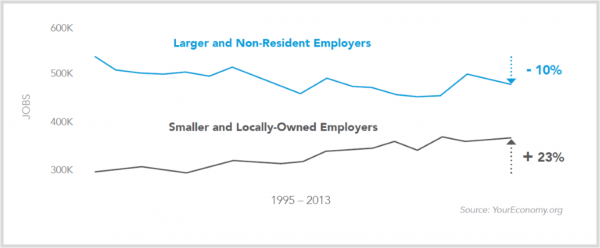 Local and regional organizations and associations, such as the MetroHartford Alliance’s HYPE, reSET, United Way’s Emerging Leaders and the Urban League’s Young Professionals “engage and connect millennials” and offer “business advisory services and other supports to help small businesses thrive,” the report explains, providing “a great start” on what needs to be done.
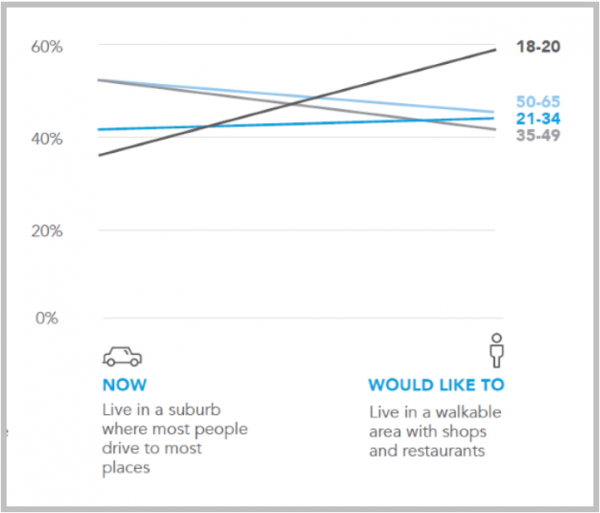 The report includes a timeline of past efforts aimed at addressing the region’s long-standing challenges, “not to be disheartening, but instead to highlight where positive changes have been made” and how collaborative efforts can “create opportunities for all Greater Hartford residents.” The report also indicates that:

 The entire statewide system in Connecticut, purchased through A&T, cost $13.26 million with annual maintenance costs of about $3.2 million, Stephen Verbil, a telecommunications manager with the Division of the Statewide Emergency Communications,
  The same measure showed the age 20-34 demographic group, at 0.22 percent, was considerably below the rate for other age groups. (This rate means that 221 out of every 100,000 adults in this age group became entrepreneurs in a given month.) The data also indicates that the rate of new entrepreneurs for the age 20-34 group is down from the high point for this age group of 0.28 percent in 1996.


 Individual municipalities and state agencies also have options to purchase additional products as needed, such as 3-D building footprints, planimetrics, landcover maps, impervious surface maps and more, according to company officials.
 "Our flight team did an exceptional job of outmaneuvering the unusual weather present during the collection period (in Connecticut)," says Shawn Benham, Sanborn project manager. "The savings truly are astronomical when you merge many smaller project areas into a single large project because of the fixed costs associated with each mobilization," added Arshat in statement released by the company.