Healthy Eating Not So Great Among Children, Community Can Help
/Only one-third of parents of children ages 4-18 feel they’re succeeding at fostering healthy eating habits in their kids, according to a recent national survey. The University of Michigan C.S. Mott Children’s Hospital National Poll on Children’s Health found that just over half of parents believe their children eat mostly healthy, and only one in six parents rate their children’s diets as “very nutritious,” according to a press release. A fourth of parents polled said their child’s diet is “somewhat or not healthy at all.” Common challenges – not surprisingly - get in the way, according to experts: price, picky eaters and convenience.
“Most parents understand that they should provide healthy food for their children, but the reality of work schedules, children’s activities and different food preferences can make meal preparation a hectic and frustrating experience,” poll co-director Sarah Clark explained. “The tension between buying foods children like, and buying foods that are healthy, can be an ongoing struggle. Many of us know the feeling of spending time and money on a healthy meal only to have our children grimace at the sight of it and not take a single bite.”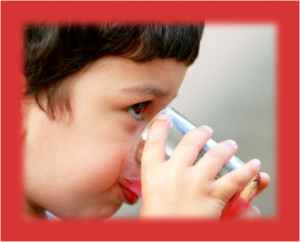
Other data from the poll – which involved 1,767 parents – include that one in five parents don’t think limiting their child’s intake of fast food or junk food is important, and that 16 percent said limiting sugary drinks is “somewhat or not important.”
In general, parents of teens were less worried about unhealthy eating habits compared to parents of younger children.
The C.S. Mott Children's Hospital National Poll on Children's Health measures current national public opinion, perceptions and priorities regarding major health care issues and trends for U.S. children and people in their communities.
Also this month, the Rudd Center for Food Policy and Obesity at the University of Connecticut found that residents of one Maryland county bought fewer sugary drinks after a campaign to reduce the consumption of sugar-sweetened beverages that included policy changes and public health outreach efforts.
The Rudd Center study, published in JAMA Internal Medicine, is the first to use objective retail sales data to measure the effectiveness of a community-led campaign to reduce consumption of sugary drinks.
“This study demonstrates the power of a community-based public health campaign that combines health-supporting policy changes with extensive outreach. The residents of Howard County have been engaged in every phase of this effort and their commitment to switching their drinks showed up in the supermarket sales data,” said Marlene Schwartz, Director of the UConn Rudd Center for Food Policy and Obesity, and the study’s lead author.
Beverages with added sugars are among the leading sources of empty calories—calories that supply little or no nutrients—for both children and adults, and overconsumption of sugar is associated with obesity and increased risk of heart disease.
The study’s key findings show that based on sales data from Howard County supermarkets:
- Sales of sugar-sweetened soda declined nearly 20 percent.
- Sales of 100 percent juice fell 15 percent.
- Sales of fruit drinks with added sugars fell a little more than 15 percent.
Comparing sales data in 2012, before the Howard County Unsweetened campaign, to sales data in 2015, researchers found notable declines in purchases over the three-year period.
In determining the campaign’s impact, researchers compared weekly beverage sales of top-selling brands in 15 Howard County supermarkets with a matched group of 17 supermarkets in southeastern Pennsylvania. The study did not include sales data from non-supermarket vendors such as convenience stores.
The Rudd Center for Food Policy & Obesity at the University of Connecticut is a distinguished multi-disciplinary policy research center dedicated to promoting solutions to childhood obesity, poor diet, and weight bias through research and policy. The study was funded primarily by the Horizon Foundation, with additional funding from the Robert Wood Johnson Foundation, and from the Rudd Foundation to support data collection. Voices for Healthy Kids, a joint initiative of the Robert Wood Johnson Foundation and the American Heart Association, is a strategic partner of both Howard County Unsweetened and Sugar Free Kids Maryland.
 ped the list in two additional categories: Lowest Percentage of Adults Who Experienced Pain in the Past Year Due to Oral Condition and Lowest Sugar-Sweetened Beverage Consumption Among Adolescents. The state also ranked in a tie for third for having the lowest percentage of elderly population with no natural teeth.
 serves as an expert resource on oral health policy; and publicizes oral health policy analysis and recommendations.
 “Unlike mental health consultation,” the report states, “overall health consultation is not supported with state level infrastructure and payments for health consultants to early Childhood Education sites. For private child care or preschool programs, the cost to hire a health consultant is borne by the program, with no system in place to ensure the quality of the CCHC workforce or ensure that health consultation is implemented to maximize the health and safety of children in child care.”

 The researchers say it’s important to look at the context in which foods are presented as well as the frequency, observing that the people they interviewed rarely noticed that food was mentioned in children’s books, nor what messages were being conveyed, UConn Today reported.


 Eligibility Requirements for Book Awards to be made in 2017:

 Tammy Sneed, Director of Gender Responsive Adolescent Services at Department of Children and Families and co-chair of DCF’s Human Anti-Trafficking Response Team, said: “Reports of children suspected to be victims of domestic minor sex trafficking are increasing every year -- and, in 2016, there were just under 200 such referrals. For every child victim, the number of buyers on a given day in Connecticut is unfathomable. Some children report 10 to 15 buyers per night, which leads us to estimate that a minimum of 2,000 buyers in Connecticut bought sex from children last year.”
 “Demand keeps sexual exploitation and trafficking profitable,” says Beth Hamilton, associate director of the Alliance to End Sexual Violence (formerly CONNSACS). “We’ve started seeing the criminal justice system hold traffickers responsible, but we do not often see the people who purchase sex being held accountable for their role in keeping the industry thriving. If we want to end commercial sexual exploitation, we need to focus on ending demand and creating survivor-centered services.”