New School Year Approaches Without Seat Belt Requirement on School Buses
/June 7 was the final day of the regular legislative session in Connecticut. It was also the day following the signing of a new law to require seat belts on school buses – in Nevada. Gov. Brian Sandoval signed legislation, approved overwhelmingly by his state’s legislature, which requires that any new school bus purchased by a school district on or after July 1, 2019, be equipped with a shoulder-harness-type safety belt assembly for passengers.
There was no similar bill signing in Connecticut. Legislation that would have imposed a similar requirement in Connecticut, effective in 2022, failed to get out of the Transportation Committee after a public hearing months earlier. The new school year approaches with no requirement in Connecticut, and no change in policy on the horizon, despite years of efforts.
Nevada joins only six other states — California, Florida, Louisiana, New Jersey, New York and Texas —in enacting laws requiring seat belts. In Louisiana and Texas, however, the requirements are contingent upon funds being appropriated by the state, which has yet to occur.
The Connecticut legislator leading the unsuccessful effort says cost, rather than safety, drove the result.
"While the bill did not get voted out of the Transportation Committee, it was given a public hearing and received some favorable comments from committee members,” Rep. Fred Camillo told CT by the Numbers this week. “The main hold up continues to be funding, something that will take out of the box concepts as the state fiscal situation has not been resolved. I look forward to continuing the effort until our goal is achieved."
It has been elusive here, and elsewhere, despite a change in position by the National Highway Traffic Administration, more than a year ago. The federal agency previously viewed school buses as safe without seat belts, because of their construction. That changed in 2015. Since then, as Connecticut’s Office of Legislative Research noted last year in a report to the legislature, “NHTSA has been exploring ways to make seat belts on schools buses a reality.”
The Connecticut Association of Public School Superintendents testified against the measure, calling for approval to be “postponed” until a series of questions – ranging from the use of bus monitors to the cost of seat belt maintenance to district liability from unused seat belts – could be answered.
The Connecticut Association of Boards of Education (CABE) – representing local elected school boards across the state – also voiced their opposition at the January 30 public hearing. CABE officials expressed concern about “years of busses” that would “need to be replaced or retrofitted.” They also noted that lap belts “would not work best for 5-year-olds and 18-year-olds alike.” In addition, questions were raised about students who might “unclick the belt” and the liability of bus drivers if they did.
Camillo initially proposed the bill in 2011 after a Rocky Hill student was killed in a school bus crash. earlier this year, in March, after a school bus accident in Canterbury sent five students to the hospital, public discussion on the pending proposal was renewed, but the legislature did not take action. “This accident today is just another reminder that we really need to do something regarding this issue. We don’t want to wait for another tragedy to occur,” Camillo told the Norwich Bulletin. Later that month, five people were injured after a crash involving a school bus in North Haven.
Federal law doesn’t require seat belts on the “big yellow school buses” that most students ride, Stateline reported earlier this year. The buses are designed to protect riders through “compartmentalization,” structural safety features such as high, energy-absorbing seat backs and closely spaced seats so children are kept snug like eggs in a carton, Stateline reporting explained.
However, published reports indicate that those features don’t necessarily protect children during side-impact crashes or high-speed rollovers because passengers don’t always remain within their seating compartment, according to the National Transportation Safety Board, which has recommended for nearly two years that three-point seat belts be included in new buses.
Over the past 10 years, NHTSA reports, 6.2% of fatal injuries in school bus related crashes were school bus occupants.
The American School Bus Council, urging people to “support the school bus,” points out that “students are about 70 times more likely to get to school safely if they ride in the school bus instead of a car.”


 In May, Jepsen announced that Connecticut joined with 46 other states and the District of Columbia in an $18.5 million settlement with the Target Corporation to resolve the states' investigation into the retail company's 2013 data breach. The settlement represented the largest multistate data breach settlement achieved to date. That breach affected more than 41 million customer payment card accounts and contact information for more than 60 million customers. Connecticut will receive $1,012,936 from the settlement, which will be deposited in the state's General Fund.
 A pilot partnership between the AGP and CCSU establishes a new base of operations for the

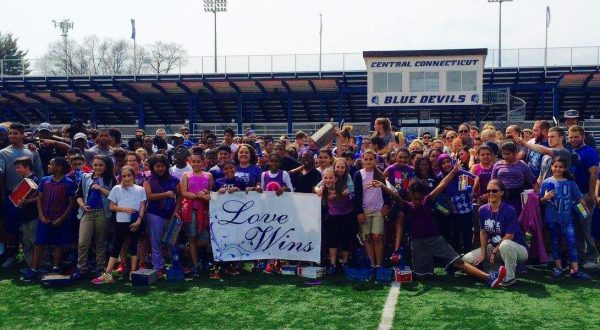 Márquez-Greene will also work with the School of Education & Professional Studies to establish a Center for Social & Emotional Learning to provide education, training, and research to the campus, community, and state. Other expected collaborations include the training of CCSU undergraduate and graduate students in the Marriage & Family Therapy, Psychology, and Counseling programs in the use of social-emotional curriculum in the classroom.
 Program organizers point out that “young children are naturally curious and full of life. Provided a supportive environment, they will joyfully splash, build and smash, pretend, sing, and dance.” While they are having a ton of fun, they are also making sense of the world and learning through exploration, experimentation and social interaction.


 Manchester’s Supervisor of Student Development, Karen Gray, says it became “obvious how developmentally appropriate it is for children to play, and to have fun, and to smile and to laugh.” As they did, teachers would “see them develop cognitively," although "they are not necessarily aware of the skills that they are actually developing.”
 The index publication is supported by the Anthem Blue Cross and Blue Shield Foundation. It is a scientific snapshot of the health and fitness status at a metropolitan level using data made up of personal health, community and environmental factors.

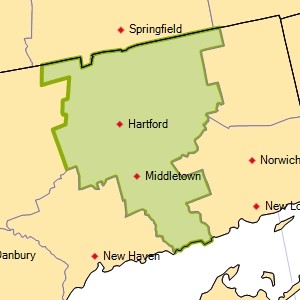 The region’s personal health rank was 13; its community/environmental indicators rank was 25, leading to an overall ranking of 13th. The analysis points to “Areas of Excellence,” in the region, including:


 Venture capital firms are typically deep-pocketed, small companies that bet on startup success by investing millions in exchange for an ownership interest and hopes of high returns. Published


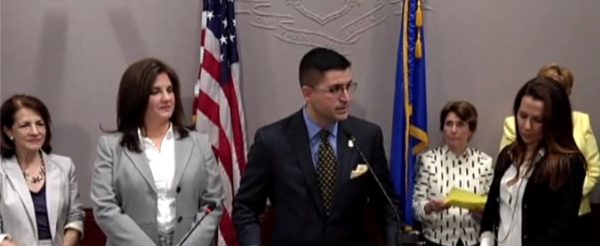
 ess to the issue of childhood drownings. Steven Hernández,, Executive Director of the Commission on Women,
 The statistics about children’s drowning deaths have not changed over time, implying that current strategies for prevention are not enough, officials said. Increasing children’s access to swim lessons, encouraging schools to teach water safety skills to students and giving parents easy-to-use and engaging tools to talk to their children about how to be safe around water are just a few actions that can have a big effect in reducing drowning rates, officials stressed.